New Semester
Started
Get
50% OFF
Study Help!
--h --m --s
Claim Now
Question Answers
Textbooks
Find textbooks, questions and answers
Oops, something went wrong!
Change your search query and then try again
S
Books
FREE
Study Help
Expert Questions
Accounting
General Management
Mathematics
Finance
Organizational Behaviour
Law
Physics
Operating System
Management Leadership
Sociology
Programming
Marketing
Database
Computer Network
Economics
Textbooks Solutions
Accounting
Managerial Accounting
Management Leadership
Cost Accounting
Statistics
Business Law
Corporate Finance
Finance
Economics
Auditing
Tutors
Online Tutors
Find a Tutor
Hire a Tutor
Become a Tutor
AI Tutor
AI Study Planner
NEW
Sell Books
Search
Search
Sign In
Register
study help
mathematics
calculus with applications
Calculus With Applications 12th Edition Margaret L. Lial - Solutions
In Exercises, graph each parabola and give its vertex, axis of symmetry, x-intercepts, and y-intercept.y = -2x2 - 12x - 16
Solve equation.4x = 64
In Exercises, graph each parabola and give its vertex, axis of symmetry, x-intercepts, and y-intercept.y = x2 + 4x - 5
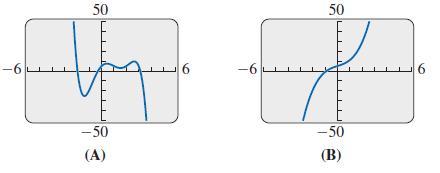
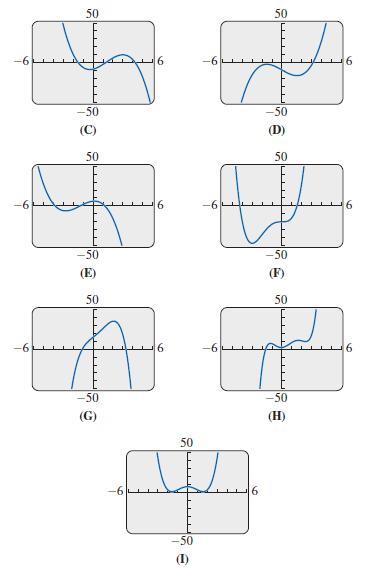
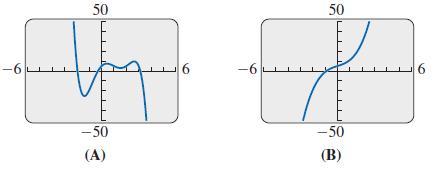
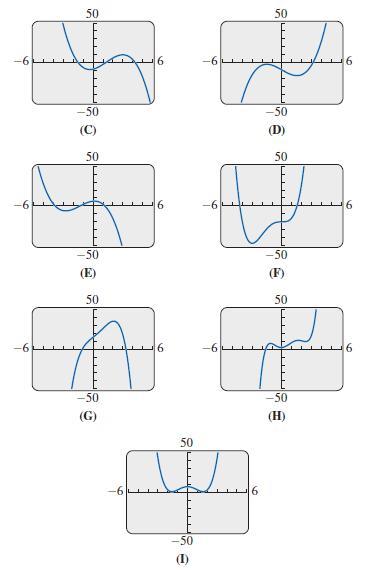
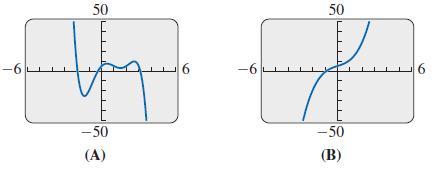
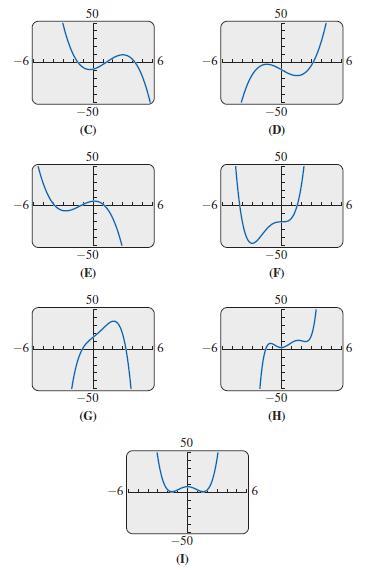
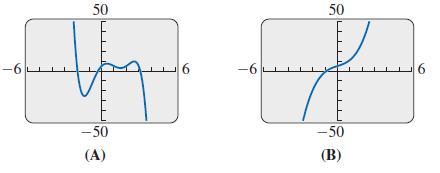
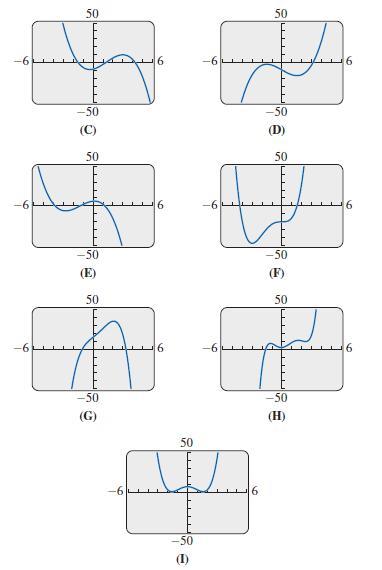
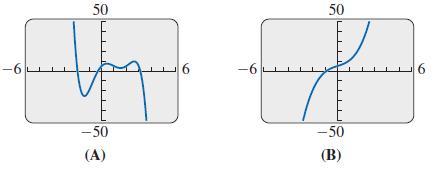
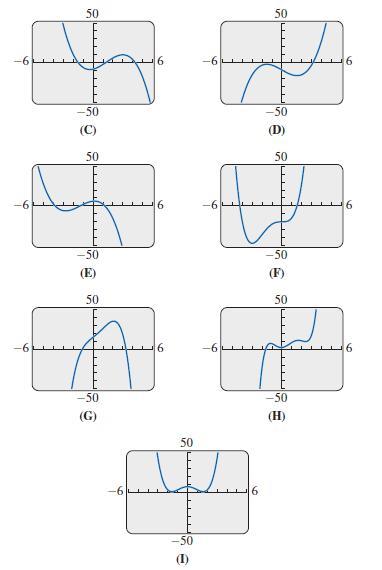
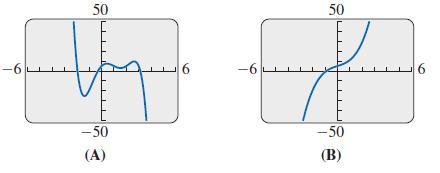
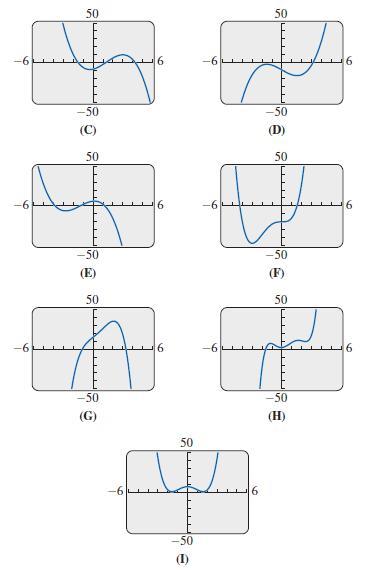
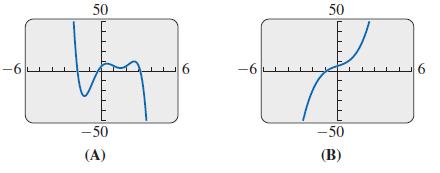
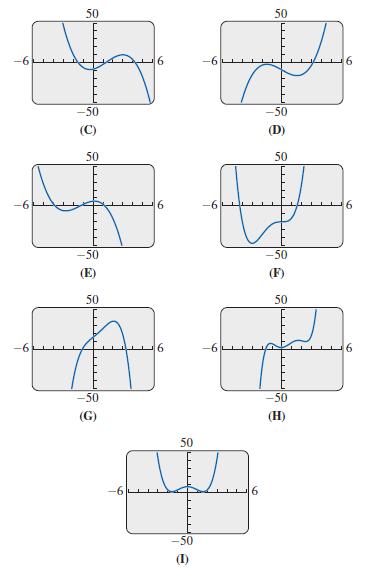
In Exercises match the correct graph A–I to the function without using your calculator. Then, after you have answered all of them if you have a graphing calculator, use your calculator to check your answers. Each graph is plotted on [-6, 6] by [-50, 50].y = -x4 + 2x3 + 10x + 15
In Exercises match the correct graph A–I to the function without using your calculator. Then, after you have answered all of them if you have a graphing calculator, use your calculator to check your answers. Each graph is plotted on [-6, 6] by [-50, 50].y = x4 + 4x3 - 20
Solve equation.2x = 32
After folding 50 times (if this were possible), what would be the height (in miles) of the folded paper?
In Exercises match the correct graph A–I to the function without using your calculator. Then, after you have answered all of them if you have a graphing calculator, use your calculator to check your answers. Each graph is plotted on [-6, 6] by [-50, 50].y = x4 - 5x2 + 7
Complete the square and determine the vertex for each of the following.y = -5x2 - 8x + 3
In Exercises match the correct graph A–I to the function without using your calculator. Then, after you have answered all of them if you have a graphing calculator, use your calculator to check your answers. Each graph is plotted on [-6, 6] by [-50, 50].y = 2x3 + 4x + 5
Complete the square and determine the vertex for each of the following.y = -2x2 + 8x - 9
A ream of 20-lb paper contains 500 sheets and is about 2 in. high. Suppose you take one sheet, fold it in half, then fold it in half again, continuing in this way as long as possible.In Exercises, there were more formulas for functions than there were graphs. Explain how this is possible.
In Exercises match the correct graph A–I to the function without using your calculator. Then, after you have answered all of them if you have a graphing calculator, use your calculator to check your answers. Each graph is plotted on [-6, 6] by [-50, 50].y = -x3 - 4x2 + x + 6
Complete the square and determine the vertex for each of the following.y = 4x2 - 20x - 7
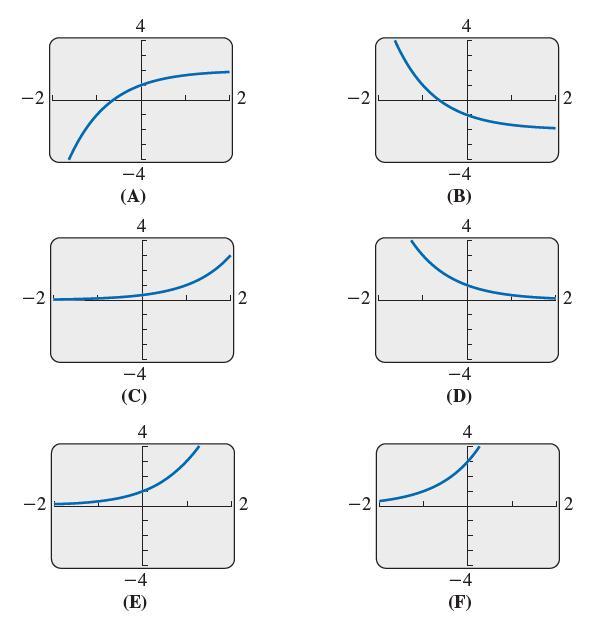
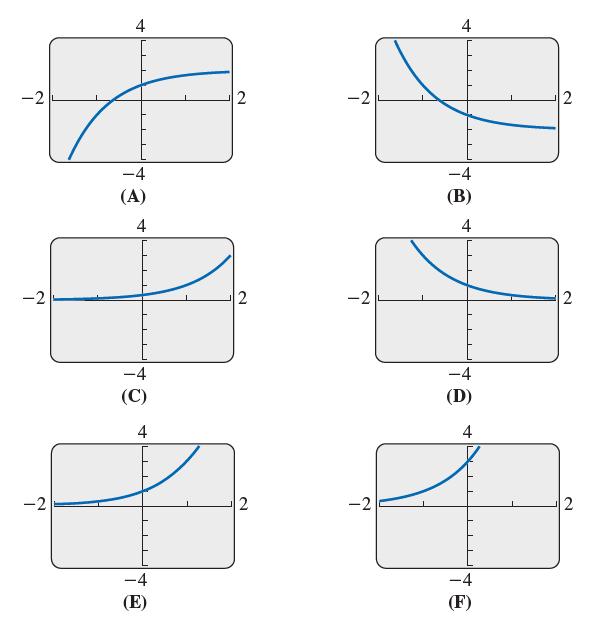
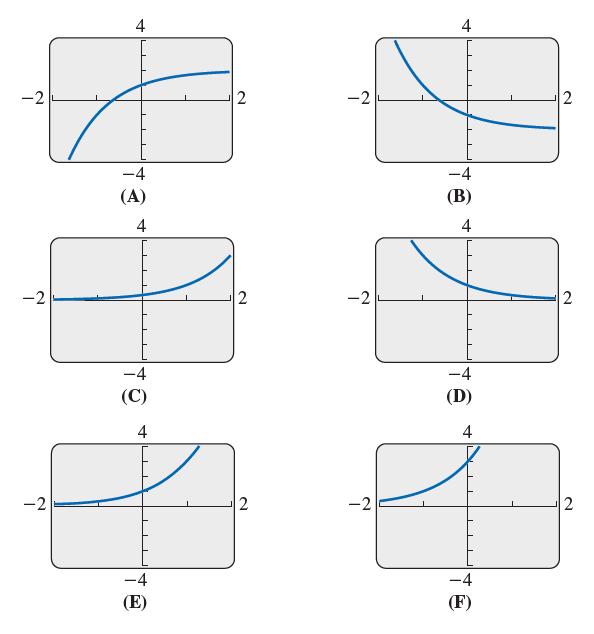
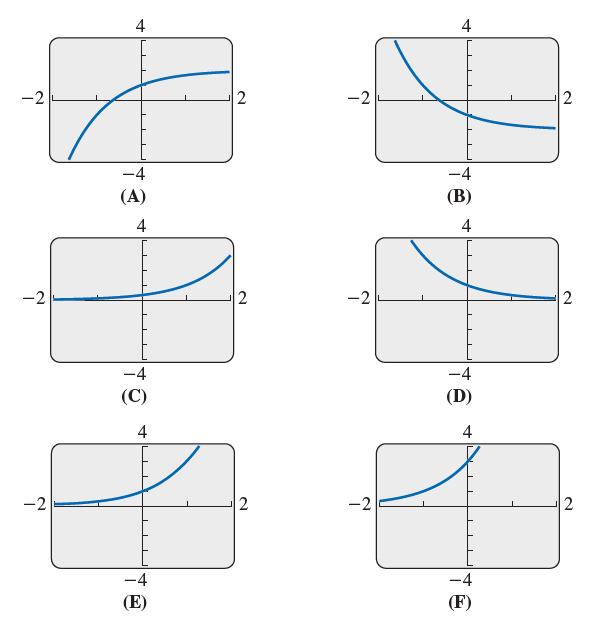
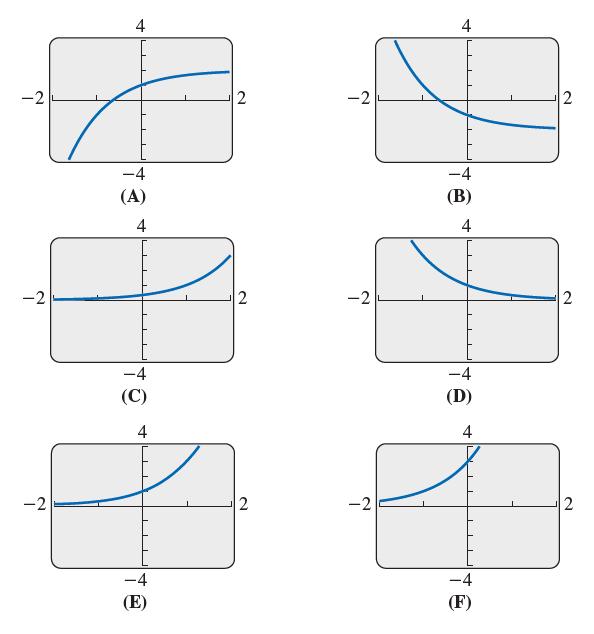
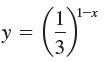
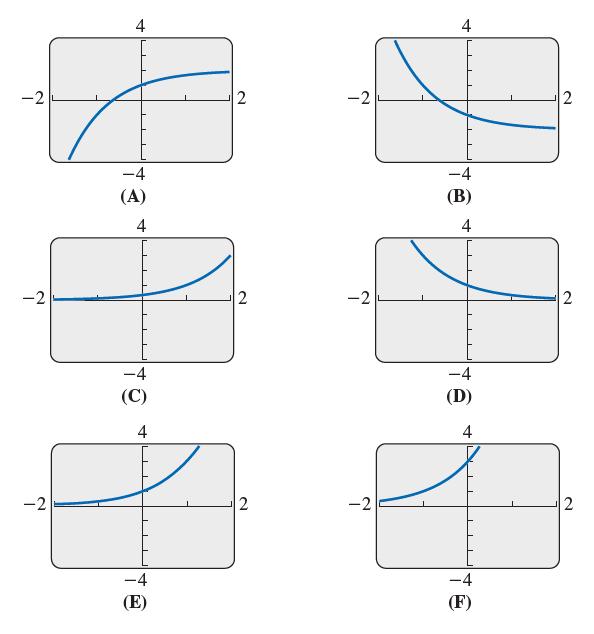
For Exercises, match the correct graph A–F to the function without using your calculator. Notice that there are more functions than graphs; some of the functions are equivalent. After you have answered all of them, use a graphing calculator to check your answers. Each graph in this group is
In Exercises match the correct graph A–I to the function without using your calculator. Then, after you have answered all of them if you have a graphing calculator, use your calculator to check your answers. Each graph is plotted on [-6, 6] by [-50, 50].y = -x3 + 4x2 + 3x - 8
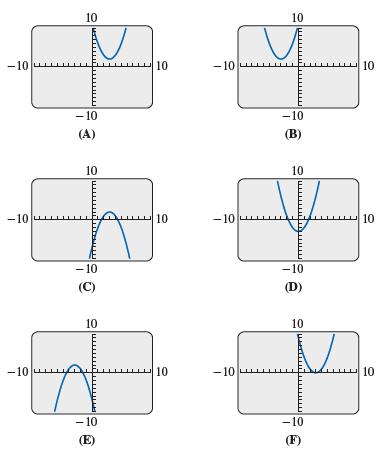
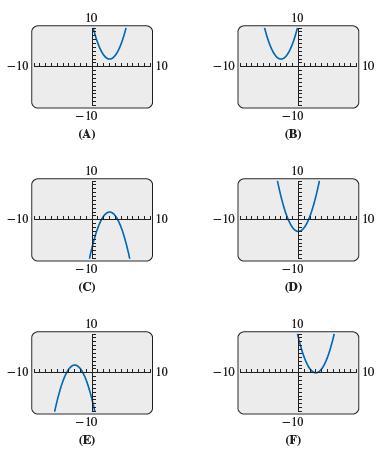
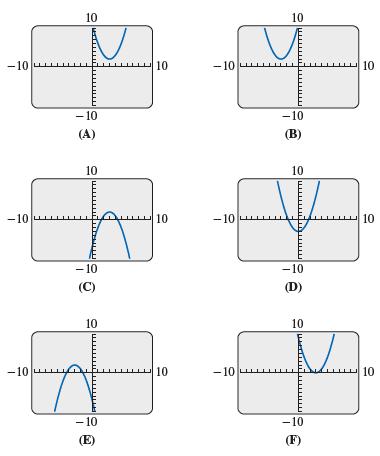
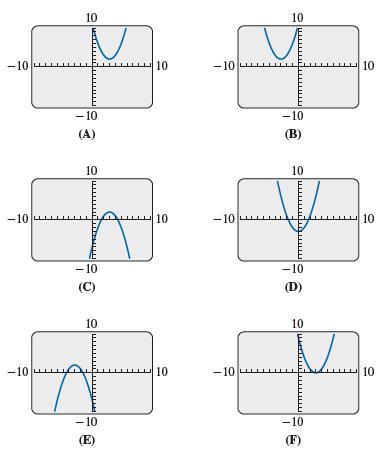
In Exercises, match the correct graph A–F to the function without using your calculator. Then, if you have a graphing calculator, use it to check your answers. Each graph in this group shows x and y in [-10, 10].y = -(x + 3)2 + 2 -10 -10 -10 10 N -10 (A) 10 -10 (C) 10 -
Complete the square and determine the vertex for each of the following.y = 3x2 + 9x + 5
In Exercises match the correct graph A–I to the function without using your calculator. Then, after you have answered all of them if you have a graphing calculator, use your calculator to check your answers. Each graph is plotted on [-6, 6] by [-50, 50].y = x3 - 7x - 9
In Exercises, match the correct graph A–F to the function without using your calculator. Then, if you have a graphing calculator, use it to check your answers. Each graph in this group shows x and y in [-10, 10].y = -(3 - x)2 + 2 -10 -10 -10 10 N - 10 (A) 10 - 10 (C) 10 -
Write each logarithmic equation in exponential form.log3 81 = 4
For Exercises, match the correct graph A–F to the function without using your calculator. Notice that there are more functions than graphs; some of the functions are equivalent. After you have answered all of them, use a graphing calculator to check your answers. Each graph in this group is
In Exercises, match the correct graph A–F to the function without using your calculator. Then, if you have a graphing calculator, use it to check your answers. Each graph in this group shows x and y in [-10, 10].y = (x + 3)2 + 2 -10 -10 -10 10 N -10 (A) 10 -10 (C) 10 -
For Exercises, match the correct graph A–F to the function without using your calculator. Notice that there are more functions than graphs; some of the functions are equivalent. After you have answered all of them, use a graphing calculator to check your answers. Each graph in this group is
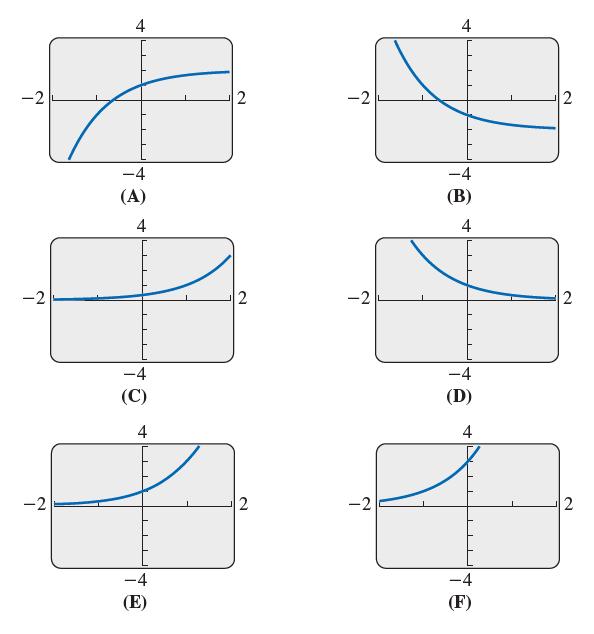
For Exercises, match the correct graph A–F to the function without using your calculator. Notice that there are more functions than graphs; some of the functions are equivalent. After you have answered all of them, use a graphing calculator to check your answers. Each graph in this group is
In Exercises, match the correct graph A–F to the function without using your calculator. Then, if you have a graphing calculator, use it to check your answers. Each graph in this group shows x and y in [-10, 10]. y = (x - 3)2 + 2 -10 -10 -10 10 N -10 (A) 10 -10 (C) 10 -
Use the principles of the previous section with the graphs of this section to sketch a graph of the given function. Determine any roots of the polynomial.ƒ(x) = -(x - 1)4 + 2
In Exercises, match the correct graph A–F to the function without using your calculator. Then, if you have a graphing calculator, use it to check your answers. Each graph in this group shows x and y in [-10, 10].y = (x - 3)2 -10 -10 -10 10 N -10 (A) 10 -10 (C) 10 -
For Exercises, match the correct graph A–F to the function without using your calculator. Notice that there are more functions than graphs; some of the functions are equivalent. After you have answered all of them, use a graphing calculator to check your answers. Each graph in this group is
Use the principles of the previous section with the graphs of this section to sketch a graph of the given function. Determine any roots of the polynomial.ƒ(x) = -(x + 3)4 + 1
Use the principles of the previous section with the graphs of this section to sketch a graph of the given function. Determine any roots of the polynomial.ƒ(x) = (x + 1)3 - 2
Use the principles of the previous section with the graphs of this section to sketch a graph of the given function. Determine any roots of the polynomial.ƒ(x) = (x - 2)3 + 3
For Exercises, match the correct graph A–F to the function without using your calculator. Notice that there are more functions than graphs; some of the functions are equivalent. After you have answered all of them, use a graphing calculator to check your answers. Each graph in this group is
In Exercises, match the correct graph A–F to the function without using your calculator. Then, if you have a graphing calculator, use it to check your answers. Each graph in this group shows x and y in [-10, 10].y = x2 - 3 -10 -10 -10 10 N - 10 (A) 10 - 10 (C) 10 -
For Exercises, match the correct graph A–F to the function without using your calculator. Notice that there are more functions than graphs; some of the functions are equivalent. After you have answered all of them, use a graphing calculator to check your answers. Each graph in this group is
Describe an asymptote, and explain when a rational function will have (a) A vertical asymptote and (b) A horizontal asymptote.
For Exercises, match the correct graph A–F to the function without using your calculator. Notice that there are more functions than graphs; some of the functions are equivalent. After you have answered all of them, use a graphing calculator to check your answers. Each graph in this group is
How does the value of a affect the graph of y = ax2 if a ≤ 0?
Explain how translations and reflections can be used to graph y = -(x - 1)4 + 2.
How does the value of a affect the graph of y = ax2? Discuss the case for a ≥ 1 and for 0 ≤ a ≤ 1.
The function ƒ(x)= (√x - 1)/(√x + 1) is an example of a rational function.Determine whether each statement is true or false, and explain why.
Money invested with compound interest over several compounding periods will grow faster than money invested with simple interest at the same interest rate.Determine whether each statement is true or false, and explain why.
The function ƒ(x) = x4 + x5 + x6 is an example of a quartic polynomial.Determine whether each statement is true or false, and explain why.
An exponential function can have a negative base.Determine whether each statement is true or false, and explain why.
Determine whether each statement is true or false, and explain why.A quadratic function is a cubic polynomial with a3 = 0
An exponential function always has a horizontal asymptote.Determine whether each statement is true or false, and explain why.
A rectangular field is to have an area of 500 m2.(a) Write the perimeter, P, of the field as a function of the width, w.(b) Find the domain of the function in part (a).(c) Use a graphing calculator to sketch the graph of the function in part (a).(d) Describe what the graph found in part (c) tells
A rectangular field is to have a perimeter of 6000 ft.(a) Write the area, A, of the field as a function of the width, w.(b) Find the domain of the function in part (a).(c) Use a graphing calculator to sketch the graph of the function in part (a).
The energy expenditure (in kcal/km) for animals swimming at the surface of the water is given by y = ƒ(x) = 0.01x0.88, where x is the animal’s weight in grams.(a) Find the energy for the following animals swimming at the surface of the water.(i) A muskrat weighing 800 g(ii) A sea otter weighing
The basal metabolic rate (in kcal/day) for large anteaters is given byy = ƒ(x) = 19.7x0.753,where x is the anteater’s weight in kilograms.*(a) Find the basal metabolic rate for anteaters with the following weights.(i) 5 kg (ii) 25 kg(b) Suppose the anteater’s weight is given in pounds
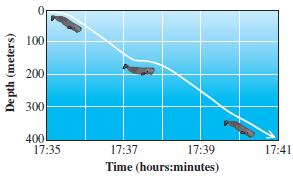
The figure shows the depth of a diving sperm whale as a function of time, as recorded by researchers at the Woods Hole Oceanographic Institution in Massachusetts.Find the depth of the whale at the following times.(a) 17 hours and 37 minutes(b) 17 hours and 39 minutes Depth
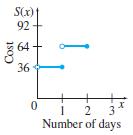
A chain-saw rental firm charges $28 per day or fraction of a day to rent a saw, plus a fixed fee of $8 for resharpening the blade. Let S(x) represent the cost of renting a saw for x days. Find the following.(a) S(1/2)(b) S(1)(c) S(1 1/4)(d) S(3 1/ 2)(e) S(4)(f) S(4 1/10)(g) What does it cost to
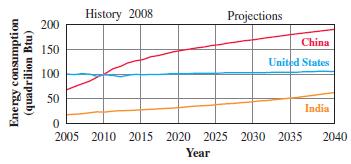
The U.S. Energy Information Administration has used recent consumption data to project the energy consumption (in quadrillion, or 1015, Btu) for the United States, China, and India until 2040. The following graph illustrates these data.(a) Let U(t) represent the energy consumption of the
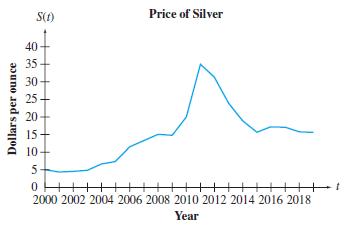
The figure below shows the average price of silver for recent years. Let S(t) represent the average price (in dollars per ounce) of silver for year t Source: macrotrends.com.(a) Is S(t) a linear function?(b) What is the independent variable?(c) What is the dependent variable?(d) What is the domain
In New York state in 2019, the income tax rates for a single person were as follows:4% of the first $8500 earned,4.5% of the next $3200 earned,5.25% of the next $2200 earned,5.9% of the next $7500 earned,6.33% of the next $59,250 earned,6.57% of the next $134,750 earned,6.85% of the next $862,150
According to Massachusetts state law, the maximum amount of a jury award that attorneys can receive is:40% of the first $150,000,33.3% of the next $150,000,30% of the next $200,000, and24% of anything over $500,000.Let ƒ(x) represent the maximum amount of money that an attorney in Massachusetts
The cost to rent a mid-size car is $54 per day or fraction of a day. If the car is picked up in Pittsburgh and dropped off in Cleveland, there is a fixed $44 drop-off charge. Let C(x) represent the cost of renting the car for x days, taking it from Pittsburgh to Cleveland. Find the following.(a)
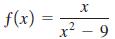
Classify each of the functions in Exercises as even, odd, or neither. f(x) = x x² - 9
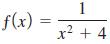
Classify each of the functions in Exercises as even, odd, or neither. f(x) 1 x² + 4
Classify each of the functions in Exercises as even, odd, or neither.ƒ(x) = |x - 2|
Classify each of the functions in Exercises as even, odd, or neither.ƒ(x) = x3 + x
Classify each of the functions in Exercises as even, odd, or neither.ƒ(x) = x2 - 3
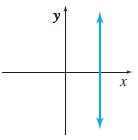
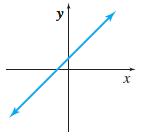
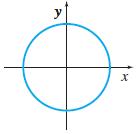
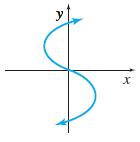
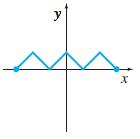
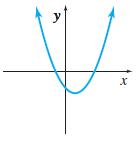
Decide whether each graph represents a function. y X
Classify each of the functions in Exercises as even, odd, or neither.ƒ(x) = 2x2
Classify each of the functions in Exercises as even, odd, or neither.ƒ(x) = 5x
Decide whether each graph represents a function. У X
Classify each of the functions in Exercises as even, odd, or neither.ƒ(x) = 3x
Decide whether each graph represents a function. У X
Decide whether each graph represents a function. X
Decide whether each graph represents a function. T y X
Decide whether each graph represents a function. y X
For each function defined as follows, find (a) f(x + h), (b) f(x + h) - f(x), (c) [f(x + h) - f(x)] /h. f(x) =
For each function defined as follows, find (a) f(x + h), (b) f(x + h) - f(x), (c) [f(x + h) - f(x)] /h.f(x) = 1/x
For each function defined as follows, find (a) f(x + h), (b) f(x + h) - f(x), (c) [f(x + h) - f(x)] /h.ƒ(x) = -4x2 + 3x + 2
For each function defined as follows, find (a) f(x + h), (b) f(x + h) - f(x), (c) [f(x + h) - f(x)] /h.ƒ(x) = 2x2 - 4x - 5
For each function defined as follows, find (a) f(x + h), (b) f(x + h) - f(x), (c) [f(x + h) - f(x)] /h.ƒ(x) = x2 - 3
For each function defined as follows, find (a) f(x + h), (b) f(x + h) - f(x), (c) [f(x + h) - f(x)] /h.ƒ(x) = 2x + 1
Let f(x) = 6x2 - 2 and g(x) = x2 - 2x + to find the following values.g(-5/z)
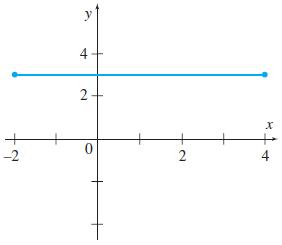
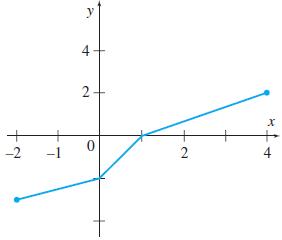
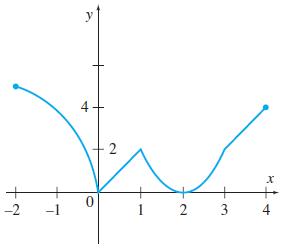
In Exercises, give the domain and range. Then, use each graph to find (a) f (-2), (b) f (0), (c) f (1/2), (d) Any values of x such that f (x) = 1. -2 y 4 2+ 0 + 2 X 4
Let f(x) = 6x2 - 2 and g(x) = x2 - 2x + to find the following values.g(3/q)
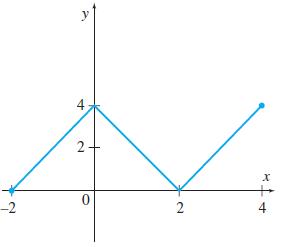
In Exercises, give the domain and range. Then, use each graph to find (a) f (-2), (b) f (0), (c) f (1/2), (d) Any values of x such that f (x) = 1. -2 ㅜ y 4 2+ 0 2 X 4
Let f(x) = 6x2 - 2 and g(x) = x2 - 2x + to find the following values.g(z - p)
Let f(x) = 6x2 - 2 and g(x) = x2 - 2x + to find the following values.g(r + h)
Let f(x) = 6x2 - 2 and g(x) = x2 - 2x + to find the following values.ƒ(2 - r)
Let f(x) = 6x2 - 2 and g(x) = x2 - 2x + to find the following values.ƒ(t + 1)
In Exercises, give the domain and range. Then, use each graph to find (a) f (-2), (b) f (0), (c) f (1/2), (d) Any values of x such that f (x) = 1. -2 y 4 0 2 1 2 3 4
For each function, find (a) f (4), (b) f (1/2), (c) ƒ(a),(d) f (2/m), (e) Any values of x such that f (x) = 1.ƒ(x) = (x + 3) (x - 4)
In Exercises, give the domain and range. Then, use each graph to find (a) f ( -2), (b) f (0), (c) f (1/2), (d) Any values of x such that f (x) = 1. -2 y 4 2. 0 2 X 4
For each function, find (a) f (4), (b) f (1/2), (c) ƒ(a),(d) f (2/m), (e) Any values of x such that f (x) = 1.ƒ(x) = 3x2 - 4x + 1
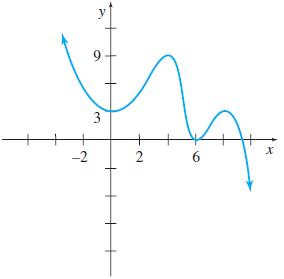
Give the domain and the range of each function. Where arrows are drawn, assume the function continues in the indicated direction. 9 im 3 -2 2 6 لنا X
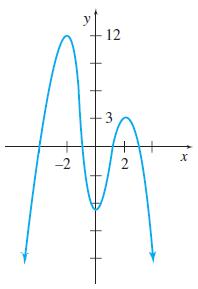
Give the domain and the range of each function. Where arrows are drawn, assume the function continues in the indicated direction. -2 12 2 X
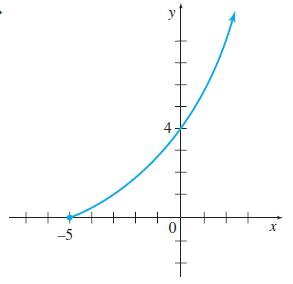
Give the domain and the range of each function. Where arrows are drawn, assume the function continues in the indicated direction. -5 4 0 X
Give the domain of each function defined as follows. f(x) = 2 x² 3 x
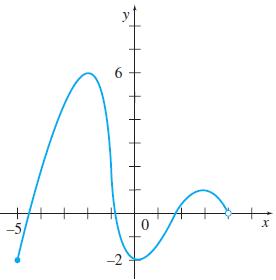
Give the domain and the range of each function. Where arrows are drawn, assume the function continues in the indicated direction. -5 6 -2 0 X
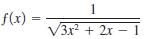
Give the domain of each function defined as follows. f(x) 1 √3x² + 2x 1
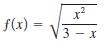
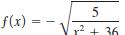
Give the domain of each function defined as follows. 5 f(x) = V +36
Give the domain of each function defined as follows. f(x)=√15x² + x -2
Give the domain of each function defined as follows. f(x)=√x² - 4x - 5
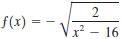
Give the domain of each function defined as follows. f(x) = 2 x² - 16
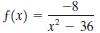
Give the domain of each function defined as follows. f(x) = -8 x² - 36
Showing 8300 - 8400
of 8662
First
73
74
75
76
77
78
79
80
81
82
83
84
85
86
87
Step by Step Answers

 Get 50% OFF
Claim Now
Get 50% OFF
Claim Now