New Semester
Started
Get
50% OFF
Study Help!
--h --m --s
Claim Now
Question Answers
Textbooks
Find textbooks, questions and answers
Oops, something went wrong!
Change your search query and then try again
S
Books
FREE
Study Help
Expert Questions
Accounting
General Management
Mathematics
Finance
Organizational Behaviour
Law
Physics
Operating System
Management Leadership
Sociology
Programming
Marketing
Database
Computer Network
Economics
Textbooks Solutions
Accounting
Managerial Accounting
Management Leadership
Cost Accounting
Statistics
Business Law
Corporate Finance
Finance
Economics
Auditing
Tutors
Online Tutors
Find a Tutor
Hire a Tutor
Become a Tutor
AI Tutor
AI Study Planner
NEW
Sell Books
Search
Search
Sign In
Register
study help
mathematics
probability with applications
Probability With Applications and R 1st edition Robert P. Dobrow - Solutions
An isosceles right triangle has side length uniformly distributed on (0,1). Find the expectation and variance of the length of the hypotenuse.
Let X ∼ Unif(a, b). Find a general expression for the kth moment E[Xk].
Show thatf(x) = exe−ex, for all x,is a probability density function. If X has such a density function find the cdf of X.
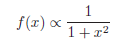
The random variable X has density f that satisfies on the real numbers.(a) Find P(X >1).(b) Show that the expectation of X does not exist. f(r) x 1+x?
The Laplace distribution, also known as the double exponential distribution, has density function proportional to e−|x| for all real x. Find the mean and variance of the distribution.
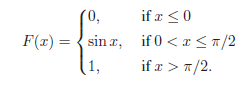
The cumulative distribution function for a random variable X is(a) Find P(0.1 < X < 0.2).(b) Find E[X]. if r
A random variable X has density function proportional to x−5 for x > 1.(a) Find the constant of proportionality.(b) Find and graph the cdf of X.(c) Use the cdf to find P(2 < X < 3).(d) Find the mean and variance of X.
A random variable X has density functionf(x) = cex, for − 2 < x < 2.(a) Find c.(b) Find P(X <−1).(c) Find E[X].
In Exercise 4.40, the random variables X and Y have Poisson distributions with respective parameters 1 and 2. Simulate the results in that exercise.Data from Exercise 4.40.Let E[X] = 1, E[X2] = 2, E[X3] = 5, and E[X4] = 15. Also E[Y] = 2, E[Y2] = 6, E[Y3] = 22, and E[Y4] = 94.
See Exercise 4.34. Simulate the mean and variance of the total number of blue and yellow balls in the sample.Data from Exercise 4.34.A bag contains one red, two blue, three green, and four yellow balls. A sample of three balls is taken without replacement. Let B be the number of blue balls and Y
Simulate the dice game in Example 4.3. Estimate the expectation and variance of your winnings.Data from Example 4.3.Let X ˆ¼ Unif{1, . . . , n}. The expectation of X is η (п+1)п) n +1 Π Σα -P(X - ) Σ ΕΙX]- 2 T=1
Simulate the probability of obtaining at least one match in the problem of coincidences (see Exercise 4.54).Data from Exercise 4.54.In the original matching problem, Montmort asked for the probability of at least one match. Find this probability and show that for large n, the probability of a match
In the original matching problem, Montmort asked for the probability of at least one match. Find this probability and show that for large n, the probability of a match is about 1 − e−1 = 0.632. Use inclusion–exclusion.
Suppose X and Y are independent random variables both uniformly distributed on {1, . . . , n}. Find the probability mass function of X + Y.
Let X1, . . . , Xn be an i.i.d. Bernoulli sequence with parameter p.(a) Find the conditional distribution of X1 given X1 + · · · + Xn = k.(b) Find E[X1|X1 + · · · + Xn = k] and V[X1|X1 + · · · + Xn = k].
Let X and Y be independent and identically distributed random variables. For each of the following questions, either show that it is true or exhibit a counter-example.(a) Does X + Y have the same distribution as 2X?(b) Does X + Y have the same expectation as 2X?(c) Does X + Y have the same variance
Suppose X and Y are independent with the following binomial distributions: X ∼ Binom(n, p) and Y ∼ Binom(m, p). Show that X + Y has a binomial distribution and give the parameters. (Use Equation 3.13.)Equation 3.13.Cov(X, Y) = E[(X − μX)(Y − μY)].
Given events A and B, let IA and IB be the corresponding indicator variables. Find a simple expression for the conditional expectation of IA given IB = 1.
Show the linearity properties for covariance as given in Equations 4.15 and 4.16.Equations 4.15:Cov(aX + bY + c,Z) = aCov(X,Z) + bCov(Y,Z)Equations 4.16:Cov(X, aY + bZ + c) = aCov(X, Y) + bCov(X,Z).
It is apparent from the definition of variance that if X is a constant, then V[X] = 0. Here we show the converse.(a) Suppose X is a nonnegative discrete random variable with E[X] = 0. Show that P(X = 0) = 1.(b) Let X be a discrete random variable with E[X] = μ and V[X] = 0. Show that P(X = μ) = 1.
Let D1 and D2 be the outcomes of two dice rolls. Let X = D1 + D2 be the sum of the two numbers rolled. Let Y = D1 − D2 be their difference. Show that X and Y are uncorrelated, but not independent.
Suppose X and Y are independent random variables with V[X] = σ2X, and V[Y] = σ2Y .Let Z = wX +(1−w)Y, for 0 < w < 1. Thus, Z is a weighted average of X and Y. Find the variance of Z. What value of w minimizes this variance?
Suppose X and Y have the same distribution and Corr(X, Y) = −0.5. Find V[X + Y].
Random variables X and Y have joint distribution P(X = i, Y = j) = c(i + j), for i = 0, 1; j = 1, 2, 3 for some constant c.(a) Find c.(b) Find the marginal distributions of X and Y .(c) Find Cov(X, Y).
A bag contains one red, two blue, three green, and four yellow balls. A sample of three balls is taken without replacement. Let B be the number of blue balls and Y the number of yellow balls in the sample.(a) Find the joint probability table.(b) Find Cov(B, Y).
In the random walk model, suppose the distribution of the Xk’s is given by P(Xk = +1) = p and P(Xk = −1) = 1 − p. If p > 1/2, this describes a random walk with positive drift. Find E[S] and V[S].
Define a sequence X1, . . . , Xn of independent random variables such that for each k = 1, . . . , n, Xk = ±1, with probability 1/2 each. Let S = X1 +· · · + Xn. This model describes a simple symmetric random walk that starts at the origin and moves left or right at each unit of time. Find E[S]
Suppose A and B are events with P(A) = a, P(B) = b and P(AB) = c. Define indicator random variables IA and IB. Find V[IA + IB].
Let X be a Poisson random variable with parameter λ. Find the variance of X. X2 = (X2 − X) + X = X(X − 1) + X.
Suppose X and Y are independent random variables. Does E[X/Y] = E[X]/E[Y]? Either prove it true or exhibit a counter example.
See Example 4.21 on the St. Petersburg paradox. Modify the game so that you only receive $210 = $1024 if any number greater than or equal to 10 tosses are required to obtain the first tail. Find the expected value of this game.Data from Example 4.21:I offer you the following game. Flip a coin until
See Example 3.16 for a description of the Powerball lottery. A $100 prize is gotten by either (i) Matching exactly three of the five balls and the powerball or (ii) Matching exactly four of the five balls and not the powerball. Find the probability of winning $100.Data from Example
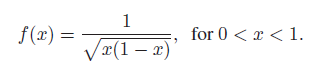
A random variable X has density function proportional toUse R to find P(1/8 < X < 1/4). f(x) = for 0 < x < 1. æ(1 – 2)
Suppose (Nt)t ≥ 0 is a Poisson process with parameter λ = 1.(a) Find P(N3 = 4).(b) Find P(N3 = 4,N5 = 8).(c) Find P(N3 = 4|N5 = 8).(d) Find P(N3 = 4,N5 = 8,N6 = 10).
Suppose (Nt)t ≥ 0 is a Poisson process with parameter λ. Find P(Ns = k|Nt = n) when s > t.
The number of accidents on a highway is modeled as a Poisson process with parameter λ. Suppose exactly one accident has occurred by time t. If 0 < s < t, find the probability that accident occurred by time s.
Suppose (Nt)t ≥ 0 is a Poisson process with parameter λ. For s < t, find Cov(Ns, Nt).
If X has a gamma distribution and c is a positive constant, show that cX has a gamma distribution. Find the parameters.
A density function is proportional to f(x) = x3(1 − x)7, for 0 < x < 1.(a) Find the constant of proportionality.(b) Find the mean and variance of the distribution.(c) Use R to find P(X > 0.5).
In Newman (2005), the population of U.S. cities larger than 40,000 is modeled with a Pareto distribution with a = 2.30. Find the probability that a random city’s population is greater than k = 3, 4, 5, and 6 standard deviations above the mean.
Suppose X1, . . . , X100 are independent and uniformly distributed on (0, 1).(a) Find the probability the 25th smallest variable is less than 0.20.(b) Find E[X(95)] and V[X(95)].(c) The range of a set of numbers is the difference between the maximum and the minimum. Find the expected range.
If n is odd, the median of a list of n numbers is the middle value. Suppose a sample of size n = 13 is taken from a uniform distribution on (0, 1). Let M be the median. Find P(M >0.55).
In a population, suppose personal income above $15,000 has a Pareto distribution with a = 1.8 (units are $10,000). Find the probability that a randomly chosen individual has income greater than $60,000.
Find the variance of a beta distribution with parameters a and b.
Let X ∼ Beta(a, b). For s < t, let Y = (t − s)X + s. Then Y has an extended beta distribution on (s, t). Find the density function of Y.
Let X ∼ Beta(a, b). Find the distribution of Y = 1− X.
Let X ∼ Beta(a, b), for a > 1. Find E[1/X].
Let X ∼ Pareto(m, a).(a) For what values of a does the mean exist? For such a, find E[X].(b) For what values of a does the variance exist? For such a, find V[X].
Let X ∼ Beta(a, 1). Show that Y = 1/X has a Pareto distribution.
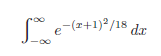
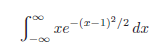
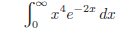
Solve the following integrals without calculus by recognizing the integrand as related to a known probability distribution and making the necessary substitution(s).(a)(b)(c)(d)for positive integer s and positive real t. * e-(2+1)°/18 dar L ze-(a-18/2 dz 2 d.r dx
May is tornado season in Oklahoma. According to the National Weather Service, the rate of tornados in Oklahoma in May is 21.7 per month, based on data from 1950 to the present. Assume tornados follow a Poisson process.(a) What is the probability that next May there will be more than 25 tornados?(b)
Suppose E[X] = 2 and V[X] = 3. Find(a) E[(3 + 2X)2].(b) V[4 − 5X].
In a random experiment, let A and B be two independent events with P(A) = P(B) = p. In an outcome of the experiment, let X be the number of these events that occur (0, 1, or 2). Find E[X] and V[X].
Find the variance of the sum of n independent tetrahedron dice rolls.
Suppose E[X] = a, E[Y] = b, V[X] = c, and V[Y] = d. If X and Y are independent, find V[2X − 3Y + 4].
Suppose X takes values −1, 0, and 3, with respective probabilities 0.1, 0.3, and 0.6. Find V[X].
Find the variance for the outcome of a fair die roll two ways: (i) Using the definition of variance and (ii) Using Equation 4.10. V [X] = E[X2] − E[X]2.
In a class of 25 students, what is the expected number of months in which at least two students are born? Assume birth months are equally likely. Use indicators.
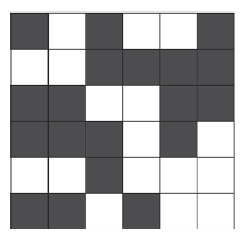
Take an n-by-n board divided into one-by-one squares and color each square white or black uniformly at random. That is, for each square flip a coin and color it white, if heads, and black, if tails. Let X be the number of two-by two square €œsubboards€ of the chessboard that
A bag contains r red and g green candies. We draw n candies from the bag without replacement. Find the expected number of red candies drawn by using indicator variables.
Let X and Y be the first and second numbers obtained in two draws from the set {1, 2, 3, 4} sampling with replacement.(a) Give the joint distribution table for X and Y.(b) Find P(X ≤ Y).(c) Repeat the previous two exercises if the sampling is done without replacement.
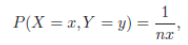
The joint pmf of (X, Y) isfor x = 1, ...., n, y = 1, ... , x.(a) Find the marginal distribution of X. Describe the distribution qualitatively.(b) Find E[Y/(X + 1)].(c) For the case n = 3, write out explicitly the joint probability table and confirm your result in (b). P(X = x,Y = y):
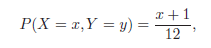
The joint pmf of X and Y is for x = 0, 1 and y = 0, 1, 2, 3. Find the marginal distributions of X and Y . Describe their distributions qualitatively. That is, identify their distributions as one of the known distributions you have worked with (e.g., Bernoulli, binomial, Poisson, or uniform).
The number of tornadoes T and earthquakes E over a month’s time in a particular region is independent and has a Poisson distribution with parameters four and two, respectively.(a) Find the joint pmf of T and E.(b) What is the probability of no tornadoes and no earthquakes in that region next
Let X ∼ Pois(λ). Find E[X!]. For what values of λ does the expectation not exist?
You are dealt five cards from a standard deck. Let X be the number of aces in your hand. Find E[X].Household size by vehicles available: Available vehicles Proportion of households 0.092 0.341 0.376 0.135 0.056 1 2 3 2
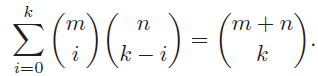
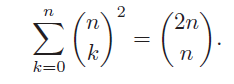
Give a combinatorial proof that,Data from Equation 3.13.How many ways can you choose k people from a group of m men and n women? From Equation 3.13 show that ¿)(:)-(":") Σ)(-)- т+n т k - i) k i=0 (2n Σθ- п k=0
Simulate the variance of the matching problem for a large value of n.
Let X be the first of two fair die rolls. Let M be the maximum of the two rolls.(a) Find the conditional probability mass function of M given X = x.(b) Find E[M|X = x].(c) Find the joint probability mass function of X and M.
Leiter and Hamdan (1973) model traffic accidents and fatalities at a specific location in a given time interval. They suppose that the number of accidents X has a Poisson distribution with parameter λ. If X = x, then the number of fatalities Y has a binomial distribution with parameter p.(a) Find
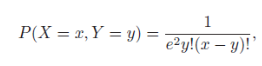
The joint probability mass function of X and Y isx = 0, 1, ... , y = 0, 1, ... ,x.(a) Find the conditional distribution of Y given X = x.(b) Describe the distribution in terms of distributions that you know.(c) Without doing any calculations, find E[Y|X = x] and V[Y|X = x]. P(X = x,Y = y) = e²y!(x
Suppose Y = aX + b for constants a and b. Find Cov(X, Y).
Suppose E[X] = 1, V[X] = 2, E[Y] = 3, V[Y] = 4, and Cov(X, Y) = −1. Find Cov(3X + 1, 2Y − 8).
Show that Cov(X, Y) = E[XY]−E[X]E[Y], as a consequence of Equation 4.13.Equation 4.13.Cov(X, Y) = E[(X − μX)(Y − μY)].
Let E[X] = 1, E[X2] = 2, E[X3] = 5, and E[X4] = 15. Also E[Y] = 2, E[Y2] = 6, E[Y3] = 22, and E[Y4] = 94. Suppose X and Y are independent.(a) Find V[3X2 − Y].(b) Find E[X4Y4].(c) Find Cov(X, X2).(d) Find V[X2Y2].
Suppose X, Y, and Z are independent Bernoulli random variables with respective parameters 1/2, 1/3, and 1/4.(a) Find E[XY Z].(b) Find E[eX+Y +Z].
Suppose X, Y, and Z are independent random variables that take values 1 and 2 with probability 1/2 each. Find the pmf of (X, Y,Z).
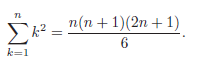
Suppose X, Y, and Z have joint pmf P(X = x, Y = y, Z = z) = c, for x = 1, . . . , n, y = 1, . . . , x, z = 1, . . . y.(a) Find the constant c. Of use will be the formula for the sum of the first n squares(b) For n = 4, find P(X ‰¤ 3, Y ‰¤ 2, Z = 1). Π n(n + 1)(2n + 1) Σ
Let X ∼ Unif{−2, −1, 0, 1, 2}.(a) Find E[X].(b) Find E[eX].(c) Find E[1/(X + 3)].
Suppose P(X = 1) = p and P(X = 2) = 1 − p. Show that there is no value of 0 < p < 1 such that E[1/X] = 1/E[X].
Suppose E[X2] = 1, E[Y2] = 2, and E[XY] = 3. Find E[(X + Y)2].
The following dice game costs $10 to play. If you roll 1, 2, or 3, you lose your money. If you roll 4 or 5, you get your money back. If you roll a 6, you win $24.(a) Find the distribution of your winnings W.(b) Find the expected value of the game.
Find the expectation of a random variable uniformly distributed on {a, . . . , b}.
What is the average number of vehicles per household in the United States? Table 4.5 gives data from the 2010 U.S. Census on the distribution of available vehicles per household. “Available vehicles” refers to the number of cars, vans, and pickup trucks kept at home and available for use by
Tom is playing poker with his friends. What is the expected number of hands it will take before he gets a full house?
Read about the World Series in Example 5.1. Suppose the World Series is played between two teams A and B such that for any match up between A and B, the probability that A wins is 0 < p < 1. For p = 0.25 and p = 0.60 simulate the expected length and standard deviation of the series.
Write a function coupon(n) for simulating the coupon collector’s problem. That is, let X be the number of draws required to obtain all n items when sampling with replacement. Use your function to simulate the mean and standard deviation of X for n = 10 and n = 52.
Conduct a study to determine how well the binomial distribution approximates the hypergeometric distribution. Consider a bag with n balls, 25% of which are red. A sample of size (0.10)n is taken. Let X be the number of red balls in the sample. Find P(X ≤ (0.02)n) for increasing values of n when
A teacher writes an exam with 20 problems. There is a 5% chance that any problem has a mistake. The teacher tells the class that if the exam has three or more problems with mistakes he will give everyone an A. The teacher repeats this in 10 different classes. Find the probability that the teacher
Among 30 raffle tickets six are winners. Felicia buys 10 tickets. Find the probability that she got three winners.Identify a random variable and describe its distribution before doing any computations.
Suppose eight cards are drawn from a standard deck with replacement. What is the probability of obtaining two cards from each suit?Identify a random variable and describe its distribution before doing any computations.
Banach’s matchbox problem was posed by mathematician Hugo Steinhaus as an affectionate honor to fellow mathematician Stefan Banach, who was a heavy pipe smoker. A smoker has two matchboxes, one in each pocket. Each box has n matches in it. Whenever the smoker needs a match he reaches into a
Danny is applying to college and sending out many applications. He estimates there is a 25% chance that an application will be successful. How many applications should he send out so that the probability of at least one acceptance is at least 95%?
In the coupon collector’s problem, let X be the number of draws of n coupons required to obtain a complete set. Find the variance of X.
A manufacturing process produces components which have a 1% chance of being defective. Successive components are independent.(a) Find the probability that it takes exactly 110 components to be produced before a defective one occurs.(b) Find the probability that it takes at least 110 components to
Find the variance of a geometric distribution. To find E[X2], write k2 = k2 − k + k = k(k − 1) + k. You will need to take two derivatives.
What is the probability that it takes an even number of die rolls to get a four?
There are 15 professors in the math department. Every time Tina takes a math class each professor is equally likely to be the instructor. What is the expected number of math classes which Tina needs to take in order to be taught by very math professor?
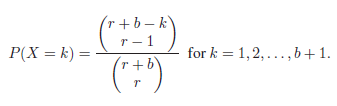
A bag has r red and b blue balls. Balls are picked at random without replacement. Let X be the number of selections required for the first red ball to be picked.(a) Explain why X does not have a geometric distribution.(b) Show that the probability mass function of X is (r+b – k` r – 1 for k =
Let X ∼ Geom(p). Find E[2X] for those values of p for which the expectation exists.
Showing 200 - 300
of 434
1
2
3
4
5
Step by Step Answers

 Get 50% OFF
Claim Now
Get 50% OFF
Claim Now


![η (п+1)п) n +1 Π Σα -P(X - ) Σ ΕΙX]- 2 T=1](https://dsd5zvtm8ll6.cloudfront.net/si.question.images/images/question_images/1539/2/5/5/6735bbf2d793799c1539238103473.jpg)
![EX]Σ2, style=](https://dsd5zvtm8ll6.cloudfront.net/si.question.images/images/question_images/1539/1/8/0/1415bbe066d8629d1539162567389.jpg)