New Semester
Started
Get
50% OFF
Study Help!
--h --m --s
Claim Now
Question Answers
Textbooks
Find textbooks, questions and answers
Oops, something went wrong!
Change your search query and then try again
S
Books
FREE
Study Help
Expert Questions
Accounting
General Management
Mathematics
Finance
Organizational Behaviour
Law
Physics
Operating System
Management Leadership
Sociology
Programming
Marketing
Database
Computer Network
Economics
Textbooks Solutions
Accounting
Managerial Accounting
Management Leadership
Cost Accounting
Statistics
Business Law
Corporate Finance
Finance
Economics
Auditing
Tutors
Online Tutors
Find a Tutor
Hire a Tutor
Become a Tutor
AI Tutor
AI Study Planner
NEW
Sell Books
Search
Search
Sign In
Register
study help
physics
principles of heat transfer
Principles Of Heat Transfer 8th Edition Frank Kreith, Raj M. Manglik, Mark S. Bohn - Solutions
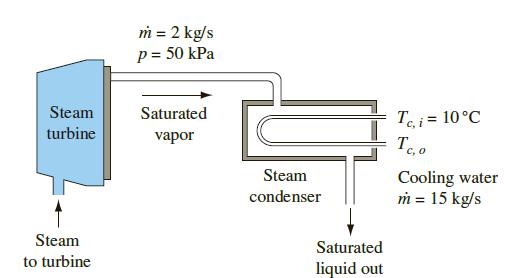
Consider the Design Problem 10.2 (stated in Chapter 10), and the cooling water and steam inlet conditions specified. Design this steam condenser by calculating both the condensing heat transfer coefficient and the cooling water heat transfer coefficient.Data from in Design Problem 10.2Saturated
A long, heated, cylindrical steel rod is removed from a heat treatment furnace and has to be cooled to complete the process. If the surface temperature of the rod is at 150°C and the cooling fluid temperature is maintained at 25°C, what is the minimum diameter of the rod to produce turbulent
An 20-cm-diameter horizontal steam pipe carries 1.66 kg/min of dry, pressurized, saturated steam at 120°C. If the ambient air temperature is 20°C, determine the rate of condensate flow at the end of 3 m of pipe. Use an emissivity of 0.85 for the pipe surface. If heat losses are to be kept below
The electronic controls of a medical imaging device are housed in a compartment such that it heat dissipates heat to the ambient from a flat vertical plate surface, 15 cm wide and 20 cm high, to which fins are attached so as to enhance the heat transfer and improve the cooling of the electric
Liquid nitrogen is typically delivered in large dewars by suppliers to a jobsite. In many applications nitrogen vapor is required, so it is necessary to provide a means for evaporating the liquid nitrogen. Design such an evaporator, capable of delivering nitrogen vapor at a rate of 125 g/min. Your
In Chapters 2, 4, and 6 you determined the required heat transfer coefficients for water flowing over the outside surface of a heating element. Those solutions required an assumption that by limiting the heating element surface temperature to 100ºC, surface boiling could be eliminated. Given the
You are to design an electrically powered steam generator for use in a laboratory experiment. The boiler is to provide 1 g/s of dry saturated steam at 150 kPa. The primary design considerations are cost, ease of use, and safety. For simplicity, you may consider a pool boiler arrangement, with an
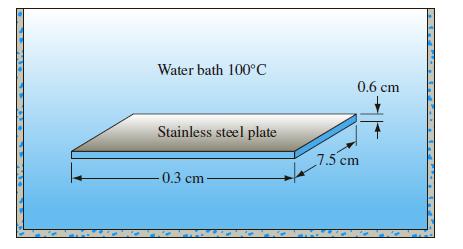
In a metal alloy manufacturing and heat treatment plant and in its immersion quenching process, steel plates are first heated in a furnace and then quenched (or cooled) in a coolant bath to obtain the desired steel properties and surface hardness. In one such process, a flat, stainless steel plate
For establishing an experimental station that carries out mineral prospecting on the Moon and also houses periodic human visits for space-based explorations, a cooling (or thermal management) system is to be designed for the high-powered electronic systems that are needed to operate the controls.
Calculate the peak heat flux for nucleate pool boiling of water at 300 kPa pressure and 110ºC on clean copper.
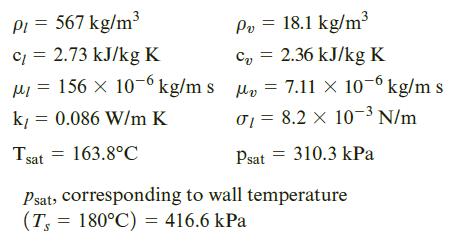
In space-based systems, such as the International Space Station, for example, highly efficient cooling systems are deployed that involve force convection boiling. In a laboratory experiment to develop one such system, a test liquid, which has the physical properties given, flows inside a vertical
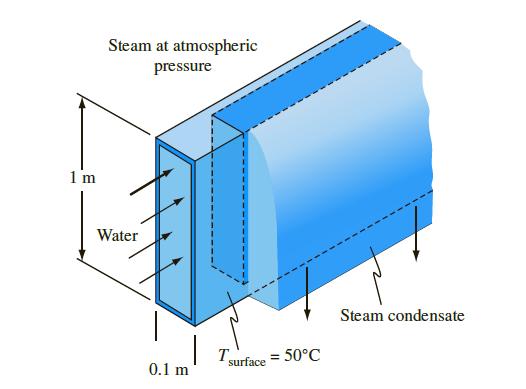
A vertical, rectangular water duct 1 m high and 0.10 m deep shown in the sketch is placed in an environment of saturated steam at atmospheric pressure. If the outer surface of the duct is about 50ºC, estimate the rate of steam condensation per unit length. 1 m Steam at
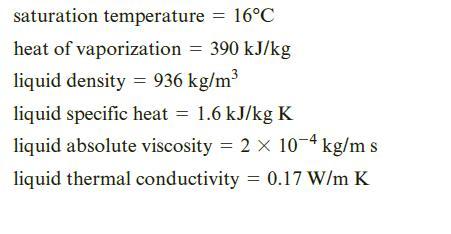
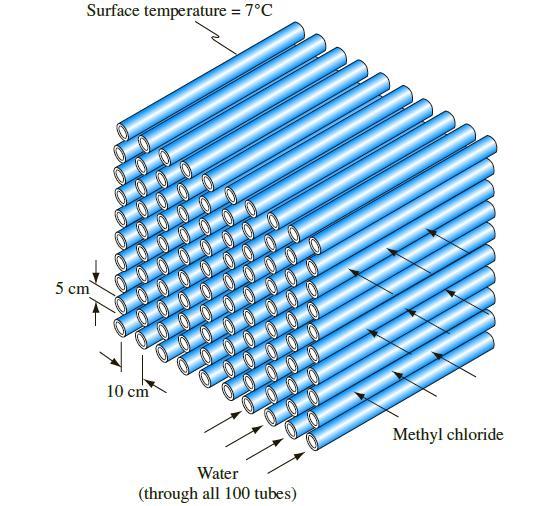
Saturated methyl chloride at 430 kPa (abs) condenses on a horizontal 10 × 10 bank of tubes. The 5-cm- OD tubes are equally spaced and are 10 cm apart center-to- center on rows and columns. If the surface temperature of the tubes is maintained at 78C by pumping water through them, calculate the
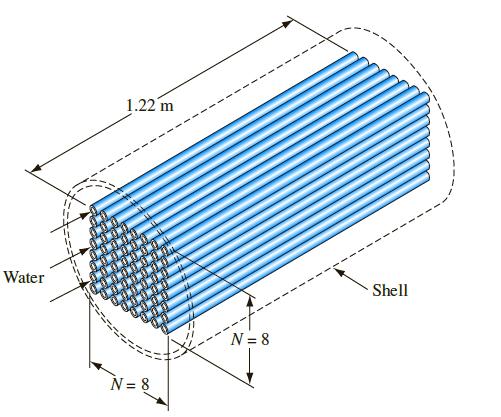
The one-pass condenser, heat exchanger shown in the sketch has 64 tubes arranged in a square array with 8 tubes per line. The tubes are 1.22 m long and are made of copper with an outside diameter of 1.27 cm. They are contained in a shell at atmospheric pressure. Water flows inside the tubes, whose
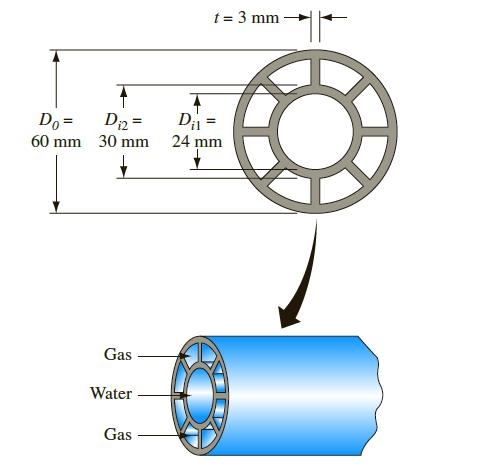
Analyze the effectiveness of a heat exchanger intended to heat water with the flue gas from a combustion chamber as shown in the schematic diagram. The water is flowing through a finned tube, having dimensions shown in the schematic diagram, at a rate of 0.17 kg/s, while the flue gases are flowing
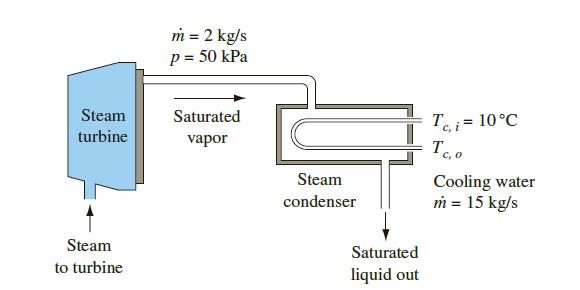
Saturated steam vapor leaves a steam turbine at a massflow rate of 2 kg/s and a pressure of 0.5 atm, as shown in the following diagram. Design a heat exchanger to condense the vapor to the saturated liquid state using water at 10°C as the coolant. Use a condensing heattransfer coefficient in the
Estimate the cross-sectional area required for a 30-cm-long methanol-nickel heat pipe to transport 30 W at atmospheric pressure.
In the manufacture of can ice, cans having inside dimensions of 27.5 × 55 × 125 cm with 2.5 cm inside taper are filled with water and immersed in brine at a temperature of –12ºC. For the purpose of a preliminary analysis, the actual ice can be considered as an equivalent cylinder having the
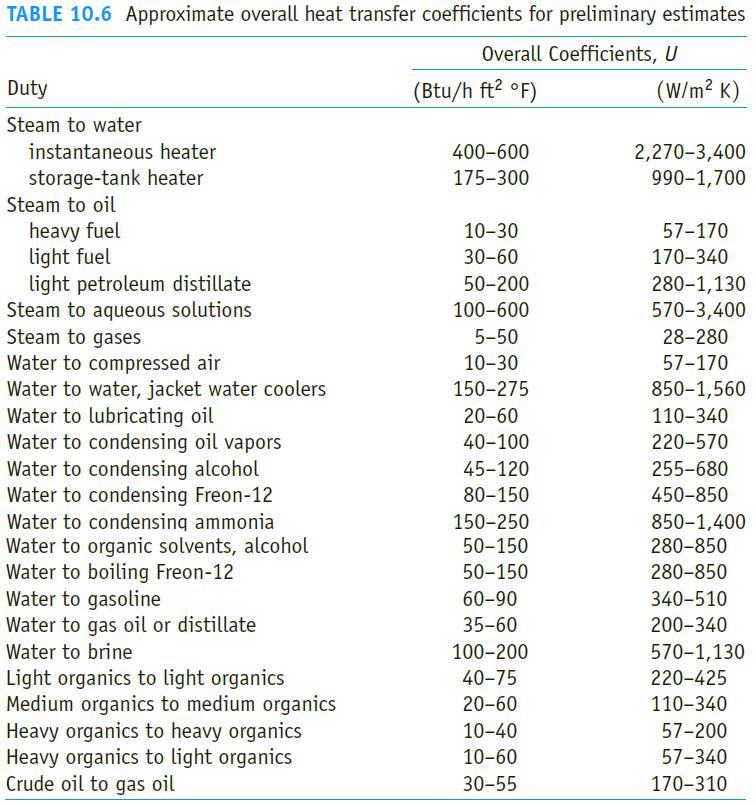
Benzene flowing at 12.5 kg/s is to be cooled continuously from 82°C to 54°C by 10 kg/s of water available at 15.5°C. Using Table 10.6, estimate the surface area required for (a) Cross-flow with six tube passes and one shell pass, with neither of the fluids mixed, and(b) A counter flow
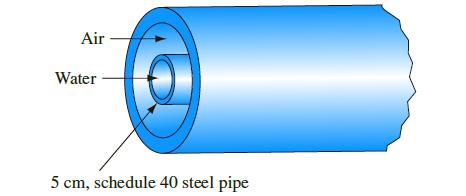
Hot water is used to heat air in a double-pipe heat exchanger as shown in the following sketch. If theheat transfer coefficients on the water side and on the air side are 550 W/m2 K and 55 W/m2 K respectively, calculate the overall heat transfer coefficientbased on the outer diameter. The heat
The temperature of a 100-m-diameter cooling pond is 7ºC on a winter day. If the air temperature suddenly drops to – 7°C, calculate the thickness of ice formed after three hours.
It is common practice in industry to recover thermal energy from the flue gas of a furnace. One method of using this thermal energy is to preheat the furnace combustion air with a heat exchanger that transfers heat from the flue gas to the combustion air stream. Design such a heat exchanger
In the shell of a shell-and-tube heat exchanger with two shell passes and eight tube passes, 12.6 kg/s of water is heated from 80°C to 150°C. Hot exhaust gases having roughly the same physical properties as air enter the tubes at 340°C and leave at 180°C. The total surface area, based on the
A steam-heated, single-pass tubular preheater is designed to raise 5.6 kg/s of air from 20°C to 75°C, using saturated steam at 2.6 MPa (abs). It is proposed to double the flow rate of air, and in order to be able to use the same heat exchanger and achieve the desired temperature rise, it is
In a single-pass counter flow heat exchanger, 1.25 kg/s of water enters at 15°C and cools 2.5 kg/s of an oil having a specific heat of 2093 J/kg K from 95°C to 65°C. If the overall heat transfer coefficient is 280 W/m2 K, determine the surface area required.
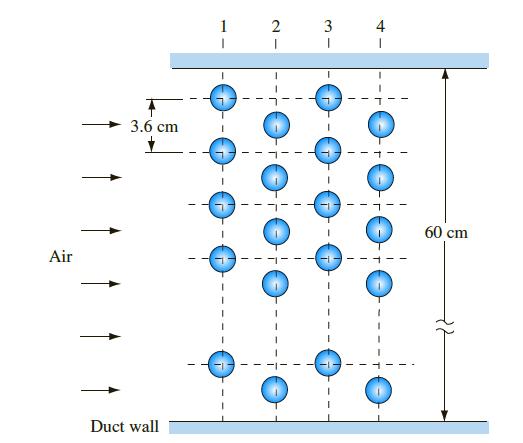
A small space heater is constructed of 1.25 cm, 18-gauge brass tubes that are 60 cm. The tubes are arranged in equilateral, staggered triangles on 3.6 cm centers with four rows of 15 tubes each. A fan blows 0.95 m3/s of atmospheric pressure air at21°C uniformly over the tubes (see sketch).
Water at a rate of 0.32 L/s and a temperature of 27°C enters a No. 18 BWG 1.6 cm condenser tube made of nickel chromium steel (k = 26 W/m K). The tube is 3 m long, and its outside is heated by steam condensing at 50°C. Under these conditions the average heat transfer coefficient on the water side
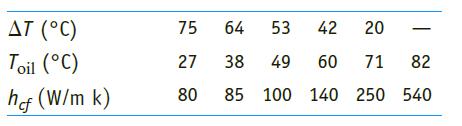
A shell-and-tube counter flow heat exchanger is to be designed for heating an oil from 27°C to 82°C. The heat exchanger has two tube passes and one shell pass. The oil is to pass through 3.8 cm schedule40 pipes at a velocity of 1 m/s and steam is to condense at 102°C on the outside of the pipes.
Determine the appropriate size of a shell-and-tube heat exchanger with two tube passes and one shell pass to heat 8.82 kg/s of pure ethanol from 15.6°C to 60°C. The heating medium is saturated steam at 152 kPa condensing on the outside of the tubes with a condensing coefficient of 15,000 W/m2 K.
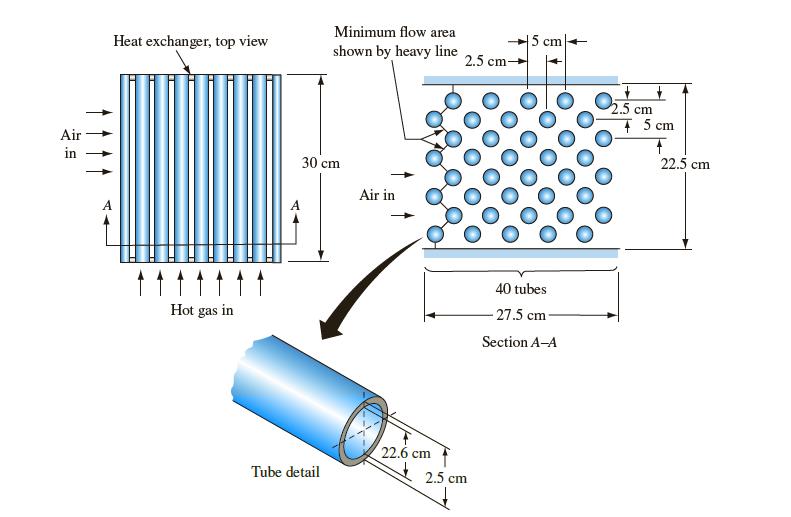
Calculate the overall heat transfer coefficient and the rate of heat flow from the hot gases to the cold air in the cross-flow tube bank of the heat exchanger shown in the accompanying illustration on the next page. The following operating conditions are given: air flow = 0.4 kg/shot gas flow
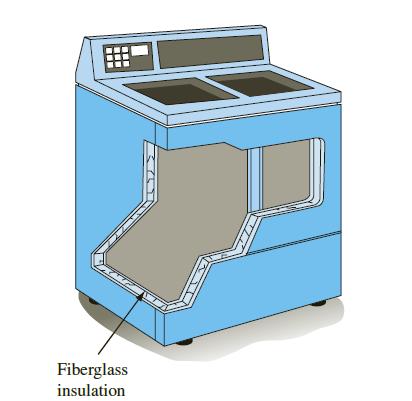
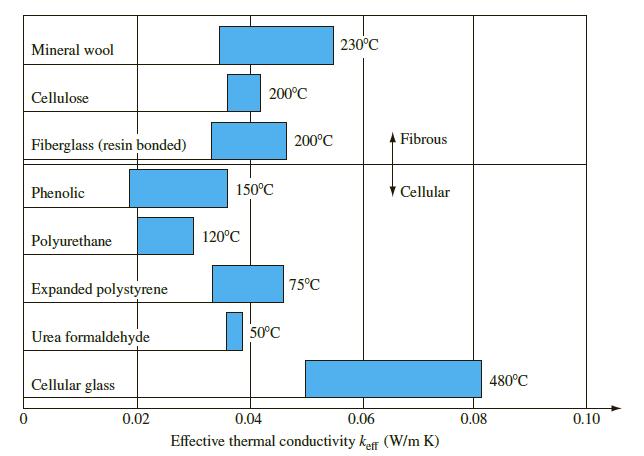
As a designer working for a major electric appliance manufacturer, you are required to estimate the amount of fiberglass insulation packing (k = 0.035 W/m K) that is needed for a kitchen oven shown in the figure below. The fiberglass layer is to be sandwichedbetween a 2-mm-thick aluminum cladding
A small gray sphere having an emissivity of 0.5 and a surface temperature of 537°C is located in a blackbody enclosure having a temperature of 37°C. Calculate for this system (a) The net rate of heat transfer by radiation per unit of surface area of the sphere (b) The radiative thermal
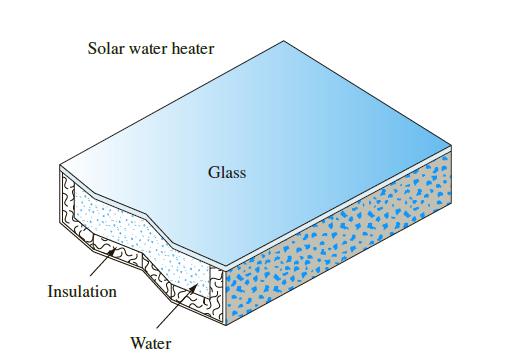
A simple solar heater consists of a flat plate of glass below which is located a shallow pan filled with water, so that the water is in contact with the glass plate above it. Solar radiation passes through the glass at the rate of 490 W/m2. The water is at 92°C and the surrounding air is at 27°C.
A long wire 0.7 mm in diameter with an emissivity of 0.9 is placed in a large quiescent air space at 270 K. If the wire is at 800 K, calculate the net rate of heat loss. Discuss your assumptions.
Wearing layers of clothing in cold weather is often recommended because dead-air spaces between the layers keep the body warm. The explanation for this is that the heat loss from the body is less. Compare the rate of heat loss for a single 2-cm-thick layer of wool (k = 0.04 W/ (m K) ] with three
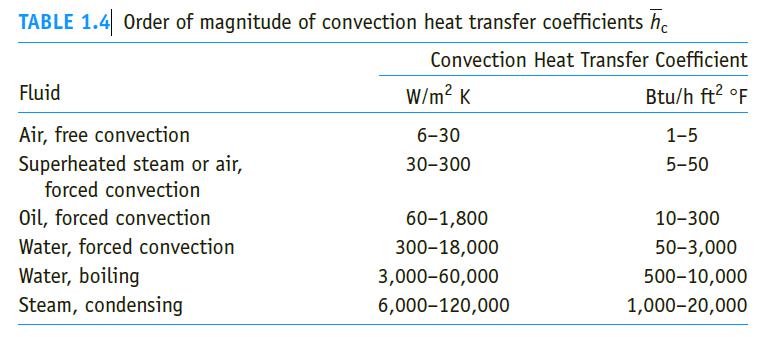
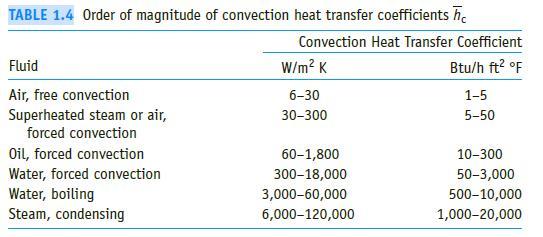
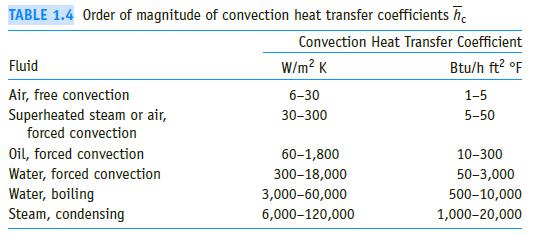
On a cold winter day, the outside wall of a home is exposed to an air temperature of – 2°C when the inside temperature of the room is at 22°C. As a result of this temperature gradient, there is heat loss through the wall to the outside. Consider the convective heat transfer coefficients for the
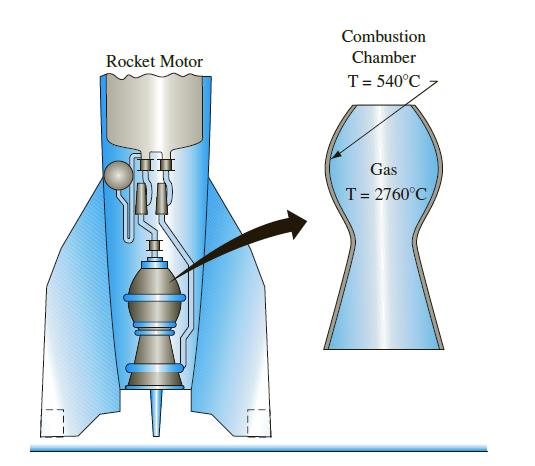
The inner wall of a rocket motor combustion chamber receives 160 kW/m2 by radiation from a gas at 2760°C. The convection heat transfer coefficient between the gas and the wall is 110 W/ (m2 K). If the inner wall of the combustion chamber is ata temperature of 540°C, determine (a) The total
A heat exchanger wall consists of a copper plate 2 cm thick. The heat transfer coefficients on the two sides of the plate are 2700 and 7000 W/ (m2 K), corresponding to fluid temperatures of 92 and 32°C, respectively. Assuming that the thermal conductivity of the wall is 375 W/(m K), (a)
A composite refrigerator wall is composed of 5 cm of corkboard sandwiched between a 1.2-cm-thick layer of oak and a 0.8-mm-thick layer of aluminum lining on the inner surface. The average convection heat transfer coefficients at the interior and exterior wall are 11 and 8.5 W/ (m2 K)
A small oven with a surface area of 0.28 m2 is located in a room in which the walls and the air are at a temperature of 27°C. The exterior surface of the oven is at 150°C, and the next heat transfer by radiation between the oven’s surface and the surroundings is 586 W. If the average convection
The walls of a typical industrial furnace used for the heat treating of metals are usually a composite structure made up of layers of firebrick, high- temperature insulation, steel plates, and outer surface cladding. Radiant tubes/beams and/or combustion burners inside the furnace provide the
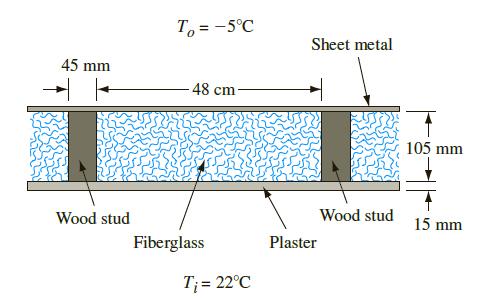
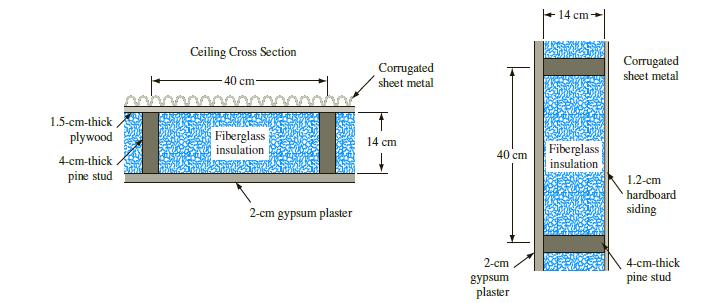
The ceiling of a tract house is constructed of wooden studs with fiberglass insulation between them. On the interior of the ceiling is plaster and on the exterior is a thin layer of sheet metal. A cross section of the ceiling with dimensions is shown below.(a) The R-factor describes the thermal
Two electric resistance heaters with a 20 cm length and a 2 cm diameter are inserted into a well-insulated 40-L tank of water that is initially at 300 K. If each heater dissipates 500 W, what is the time required for bringing the water temperature in the tank to 340 K? State your assumption for
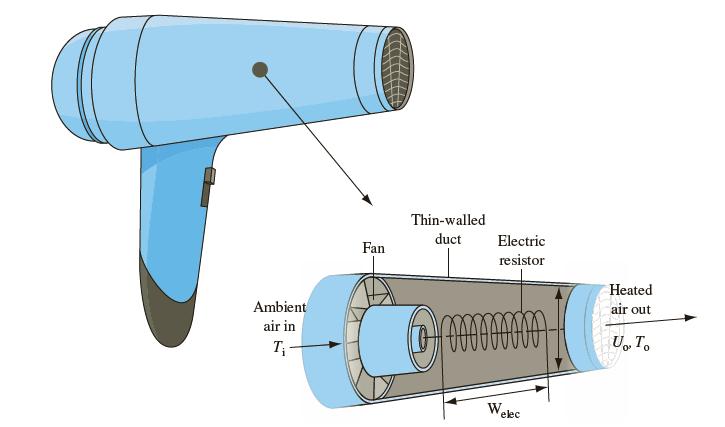
In beauty salons and in homes, a ubiquitous device is the hairdryer. The front end of a typical hairdryer is idealized as a thin-walled cylindrical duct with a 6-cm diameter with a fan at the inlet that blows air over an electric heating coil as schematically shown in the figure. The design of this
The interior wall of a large, commercial walk-in type meat freezer is covered under normal operating conditions with a 2-cm thick layer of ice. One day, a power outage cuts electricity to the refrigeration system of the freezer. Estimate the time required to melt this layer of ice if it has a mass
Many specialized applications (ranging from advanced gas-turbine blades to medical devices and implants) require metal components that are coated with a protective material layer. In a manufacturing plant for such coatings, an infrared lamp is used for curing the coating on metal plates. The lamp
Estimate the R-values for a 5-cm-thick fiberglass board and a 2.5-cm-thick polyurethane foam layer. Then, compare their respective conductivity times- density products if the density for fiberglass is 50 kg/m3 and the density of polyurethane is 30 kg/m3. Use the units given in Figure 1.31.Data from
Design a pressure vessel that can hold 45 kg of saturated steam at 2.75 MPa (abs) for a chemical process. The shape of the vessel is to be a cylinder with hemispherical ends. The vessel is to have sufficient insulation to maintain equilibrium with a maximum internal heat input of 3000 MW. For the
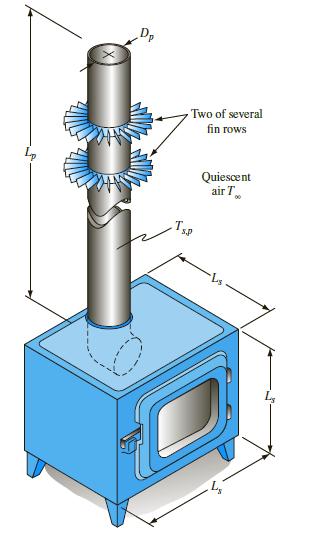
An inventor wants to increase the efficiency of wood-burning stoves by reducing the energy lost through the exhaust stack. He proposes to accomplish this by attaching fins to the outer surface of the chimney, as shown schematically on the shown below. The fins are attached circumferentially to the
The heat transfer coefficient between a surface and a liquid is 57 W/ (m2 K). How many watts per square meter will be transferred in this system if the temperature difference is 10°C?
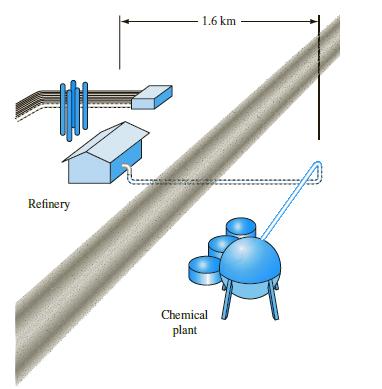
Suppose that waste heat from a refinery is available for a chemical plant located 1.6 km away. The waste stream from the refinery consists of 1 standard cubic meter per second of corrosive gas at 150ºC and 3.5 MPa (abs). The refinery is located on one side of a highway with the chemical plant on
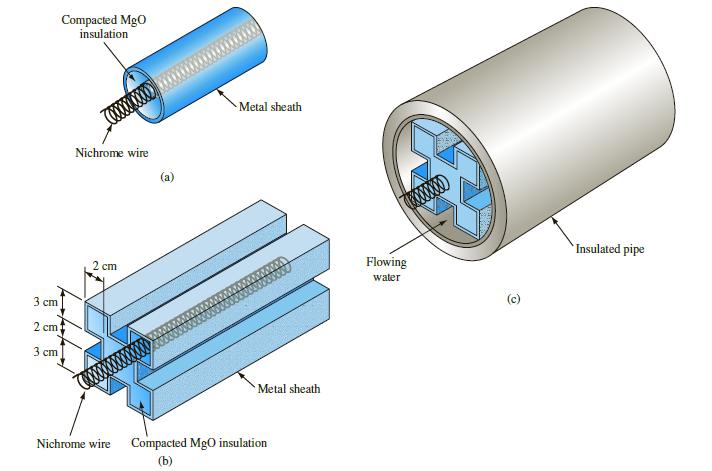
Electrical resistance heaters are usually made from coils of nichrome wire. The coiled wire can be supported between insulators and backed with a reflector, for example, as in a supplemental room heater. In other applications, however, it is often necessary to protect the nichrome wire from its
The shield of a nuclear reactor is idealized by a large 25-cm-thick flat plate having a thermal conductivity of 3.5 W/(m K). Radiation from the interior of the reactor penetrates the shield and there produces heat generation that decreases exponentially from a value of 187.6 kW/m3 at the inner
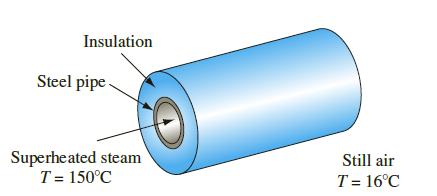
Calculate the rate of heat loss per foot and the thermal resistance for a 15-cm schedule 40 steel pipe covered with a 7.5-cm-thick layer of 85% magnesia. Superheated steam at 150ºC flows inside the pipe (h̅c = 170 W/ (m2 K)), and still air at 16ºC is on the outside (h̅c = 30 W/(m2 K)).
A very thin silicon chip is bonded to a 6-mm thick aluminum substrate by a 0.02-mm thick epoxy glue. Both surfaces of this chip-aluminum system are cooled by air at 25ºC, where the convective heat transfer coefficient of air flow is 100 W/m2 . K. If the heat dissipation per unit area
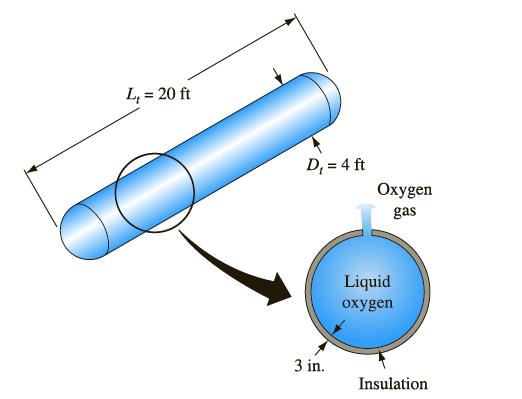
A cylindrical liquid oxygen (LOX) tank has a diameter of 1.22 m, a length of 6.1 m, and hemispherical ends. The boiling point of LOX is –179.4ºC. An insulation is sought that will reduce the boil-off rate in the steady state to no more than 11.3 kg/h. The heat of vaporization of LOX is 214
For the design of a novel type of nuclear power plant, it is necessary to determine the temperature distribution in a large slab-type nuclear fuel element. Volumetric heat is generated uniformly in the fuel element at the rate of 2 × 10⁷ W/m3. This slab fuel is insulated on one side, while on the
Nomads in the desert make ice by exposing a thin water layer to cold air during the night. This icing or freezing of thin layers of water is often also referred to as ice making by nocturnal (or night time) cooling, where the surface temperature of water is lowered considerably by radiative and
A solution with a boiling point of 82ºC boils on the outside of a 2.5-cm tube with a No. 14 BWG gauge wall. On the inside of the tube flows saturated steam at 420 kPa (abs). The convection heat transfer coefficients are 8.5 kW/(m2 K) on the steam side and 6.2 kW/(m2 K) on the exterior surface.
Estimate the rate of heat loss per unit length from a 5-cm ID, 6-cm OD steel pipe covered with high temperature insulation having a thermal conductivity of 0.11 W/(m K) and a thickness of 1.2 cm. Steam flows in the pipe. It has a quality of 99% and is at 150ºC. The unit thermal resistance at the
A long, hollow cylinder is constructed from a material whose thermal conductivity is a function of temperature according to k = 0.15 + 0.0018T, where T is in ºC and k is in W/(m K). The inner and outer radii of the cylinder are 12.5 cm and 25 cm, respectively.Under steady-state conditions, the
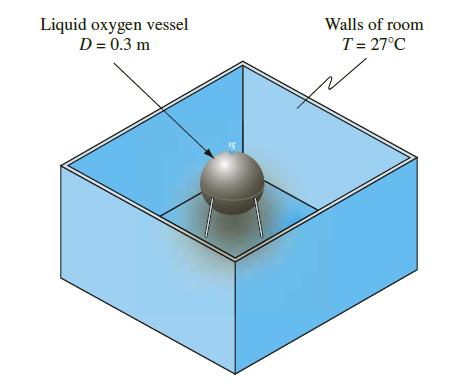
A spherical vessel, 0.3 m in diameter, is located in a large room whose walls are at 27°C (see sketch). If the vessel is used to store liquid oxygen at –183°C and both the surface of the storage vessel and the walls of the room are black, calculate the rate of heat transfer by radiation to the
A spherical interplanetary probe with a 30-cm diameter contains electronic equipment that dissipates 100 W. If the probe surface has an emissivity of 0.8, what is its surface temperature in outer space? State your assumptions in the calculations.
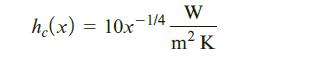
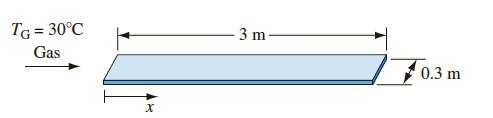
The heat transfer coefficient for a gas flowing over a thin flat plate 3-m long and 0.3-m wide varies with distance from the leading edge according toIf the plate temperature is 170°C and the gas temperature is 30°C, calculate (a) The average heat transfer coefficient(b) The rate of heat
A wall with a thickness L is made of a material with a thermal conductivity that varies with its thickness x according to the equation, k = (ax + b) W/mK, where a and b are constants. If the heat flux applied at the surface of one end (x = 0) of the wall is 20 W/m2, derive an expression for the
In an experimental set up in a laboratory, a long cylinder with a 5-cm diameter, and an electrical resistance heater inside its entire length is cooled with water flowing crosswise over the cylinder at 25°C and a velocity of 0.8 m/s. For these flow conditions, 20 kW/m of power is required to
Two large parallel plates with surface conditions approximating those of a blackbody are maintained at 816°C and 260°C, respectively. Determine the rate of heat transfer by radiation between the plates in W/m2 and the radiative heat transfer coefficient in W/m2 K.
A cooling system is to be designed for a food storage warehouse for keeping perishable foods cool prior to transportation to grocery stores. The warehouse has an effective surface area of 1860 m2 exposed to an ambient air temperature of 32°C. The warehouse wall insulation (k = 0.17 W/ (m K) ) is
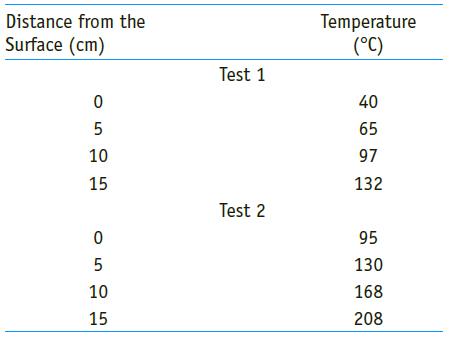
To determine the thermal conductivity of a structural material, a large 15-cm-thick slab of the material is subjected to a uniform heat flux of 2500 W/m2 while thermocouples embedded in the wall at 2.5 cm. intervals are read over a period of time. After the system had reached equilibrium, an
A furnace wall is to be constructed of brick having standard dimensions of 22.5 cm × 11 cm × 7.5 cm Two kinds of material are available. One has a maximum usable temperature of 1040°C and a thermal conductivity of 1.7 W/(m K), and the other has a maximum temperature limit of 870°C and a thermal
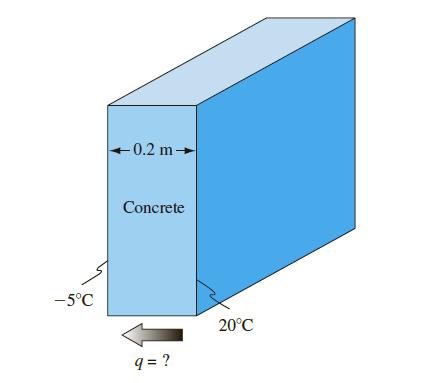
On a cold winter day, the outer surface of a 0.2-m-thick concrete wall of a warehouse is exposed to a temperature of – 5°C, while the inner surface is kept at 20°C. The thermal conductivity of the concrete is 1.2 W/m K. Determine the heat loss through the wall, which is 10-m long and 3-m high.
To insulate high-temperature surfaces it is economical to use two layers of insulation. The first layer is placed next to the hot surface and is suitable for high temperature. It is costly and is usually a relatively poor insulator. The second layer is placed outside the first layer and is cheaper
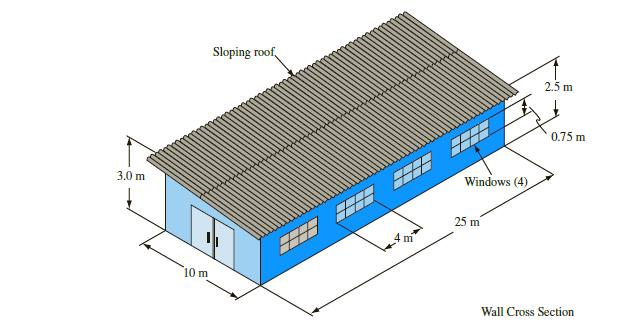
Design a heating system for a small factory in Denver, Colorado. This is a multistep problem that is continued in subsequent chapters. In the first step, you are to determine the heating load on the building, i.e., the rate at which the building loses heat in the winter, if the inside temperature
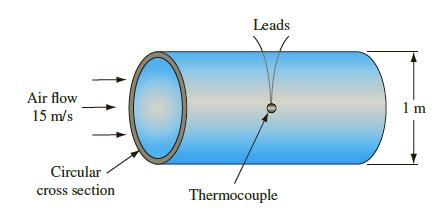
Design a thermocouple installation to measure the temperature of air flowing at a velocity of 15 m/s in a 1-m-diameter duct. The air is at approximately 1000°C and the duct walls are at 200°C. Select a type of thermocouple to use, and then determine how accurately the thermocouple measures the
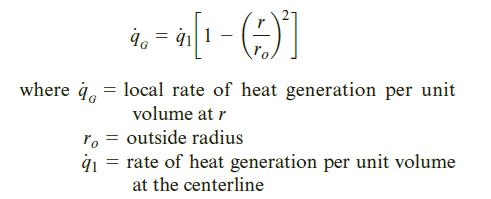
In a cylindrical fuel rod of a nuclear reactor, heat is generated internally according to the equationCalculate the temperature drop from the centerline to the surface for a 2.5-cm-diameter rod having a thermal conductivity of 26 W/(m K) if the rate of heat removal from its surface is 1.6 MW/m2.
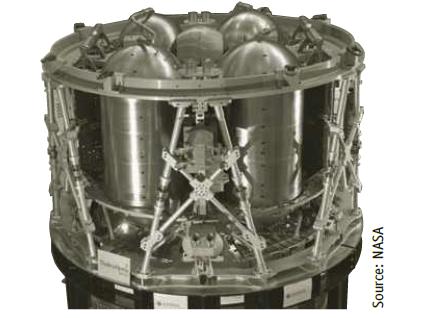
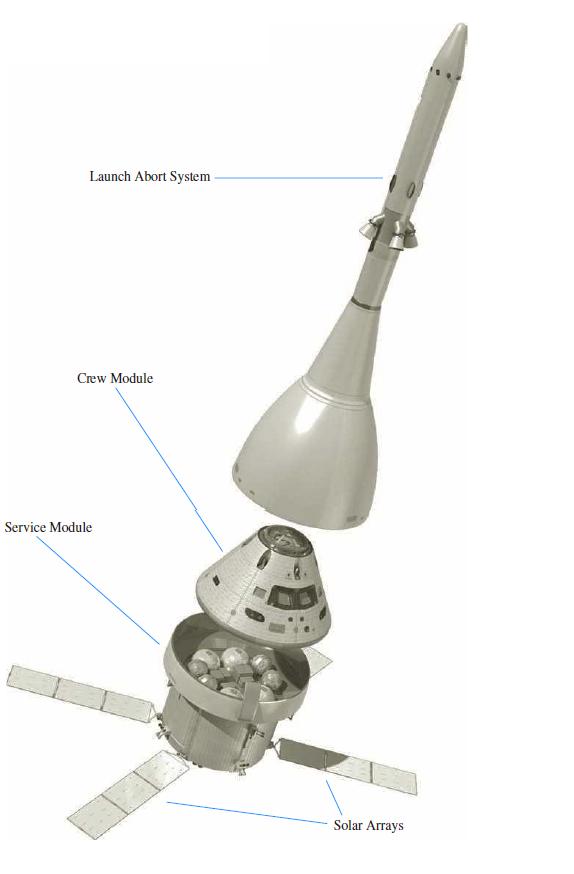
Liquid oxygen is to be stored on the service module of NASA’s new Orion Spacecraft (NASA, “Orion Quick Facts,” FS-2014-08-004-JSC, Lyndon B. Johnson Space Center, Houston, TX)* in a spherical stainless steel container. The service module is depicted in the figure below (note the various
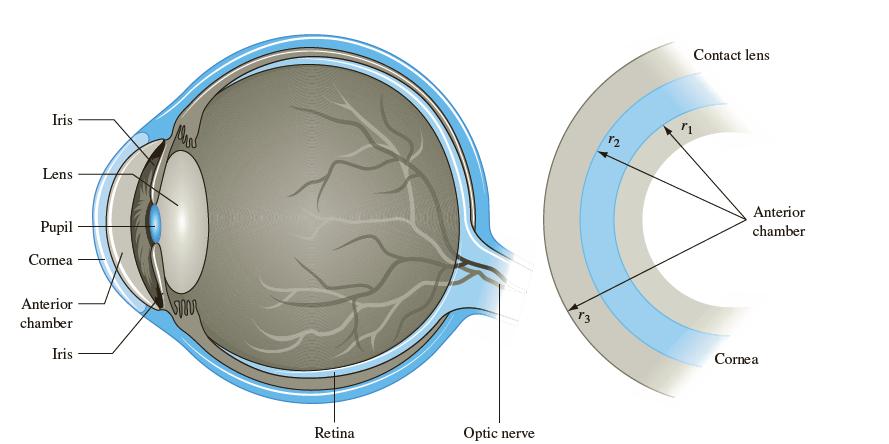
The development of contact lenses has transformed the solutions that are available today for vision impairments. However, wearing them also poses several problems that includes the condition of dry eyes due to lack of cooling, oxygenation, and moisturizing or lubrication of the cornea, among
In cryogenic surgery, a small spherical probe is bought into contact with the diseased tissue which is frozen and thereby destroyed. One such probe can be modeled as a 3-mm diameter sphere whose surface is maintained at 240 K when the surrounding tissue is at 314 K. During the surgical procedure, a
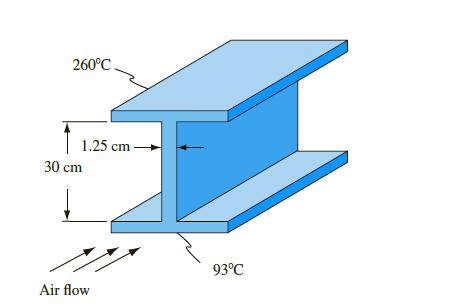
The top of a 30-cm I-beam is maintained at a temperature of 260ºC, while the bottom is at 93ºC. The thickness of the web is 1.25 cm. Air at 260ºC is blowing along the side of the beam so that h̅ = 40 W/ (m2 K). The thermal conductivity of the steel may be assumed constant and equal to 43 W/(m
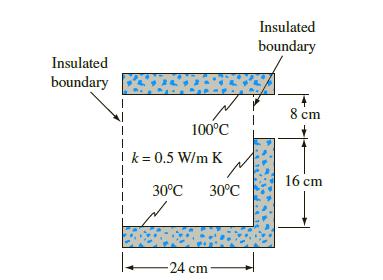
Determine by means of a flux plot the temperatures and heat flow per unit depth in the ribbed insulation shown in the accompanying sketch. Insulated boundary 100°C k = 0.5 W/m K 30°C 30°C -24 cm Insulated boundary 4 8 cm 16 cm
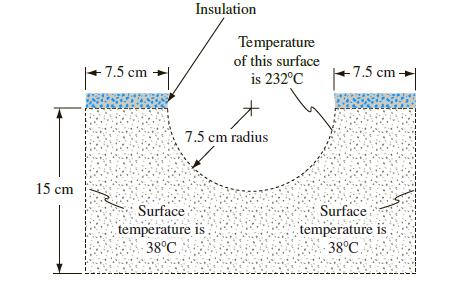
Determine the rate of heat flow per meter length from the inner to the outer surface of the molded insulation in the sketch. Use k = 0.17 W (m K). 15 cm 7.5 cm Insulation Temperature of this surface is 232°C 7.5 cm radius Surface temperature is 38°C. -7.5 cm- Surface temperature is 38°C.
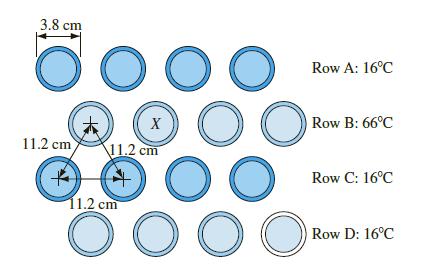
A large number of 3.8-cm-OD pipes carrying hot and cold liquids are embedded in concrete in an equilateral staggered arrangement with centerlines 11.2 cm apart as shown in the sketch. If the pipes in rows A and C are at 16ºC while the pipes in rows B and D are at 66ºC, determine the rate of heat
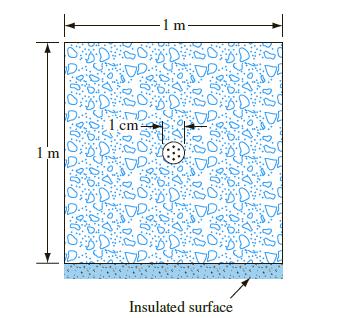
A long, 1-cm-diameter electric cable is embedded in a concrete wall (k = 0.13 W/m K) that is 1 m × 1 m, as shown in the sketch. If the lower surface is insulated, the surface of the cable is 100ºC, and the exposed surface of the concrete is 25ºC, estimate the rate of energy dissipation per meter
A 15-cm-OD pipe is buried with its centerline 1.25 m below the surface of the ground (k of soil is 0.35 W/(m K)). An oil having a density of 800 kg/m3 and a specific heat of 2.1 kJ/(kg K) flows in the pipe at 5.6 L/s. Assuming a ground surface temperature of 5ºC and a pipe wall temperature of
Showing 100 - 200
of 184
1
2
Step by Step Answers

 Get 50% OFF
Claim Now
Get 50% OFF
Claim Now