







Question: A single-tank process has been operating for a long period of time with the inlet flow rate q i equal to 30.1 ft 3 /min.
constant using three methods:
(a) From the time required for the output to reach 63.2% of the total change.
(b) From the initial slope of the response curve.
(c) From the slope of the fraction incomplete response curve.
(d) Compare the data and the three models by simulating their step responses.
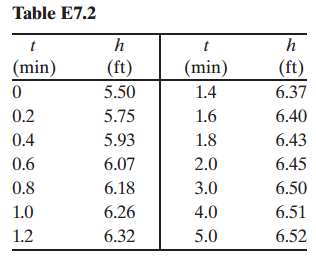
Table E7.2 (min) (ft) (min) (ft) 5.50 1.4 6.37 0.2 5.75 1.6 6.40 1.8 0.4 5.93 6.43 0.6 6.07 2.0 6.45 0.8 6.18 3.0 6.50 1.0 6.26 4.0 6.51 1.2 6.32 5.0 6.52
Step by Step Solution
3.48 Rating (168 Votes )
There are 3 Steps involved in it
Process gain a Output at 632 of the total change 550 0632652550 6145 ft Interpolating between h 60... View full answer

Get step-by-step solutions from verified subject matter experts
Document Format (2 attachments)

1602_606321ef15fb6_680095.pdf
180 KBs PDF File

1602_606321ef15fb6_680095.docx
120 KBs Word File
 Study Help