



Question: 1. involves mainly T cells and leads to the destruction of cells that are infected with viruses 2. involves mainly B cells and takes
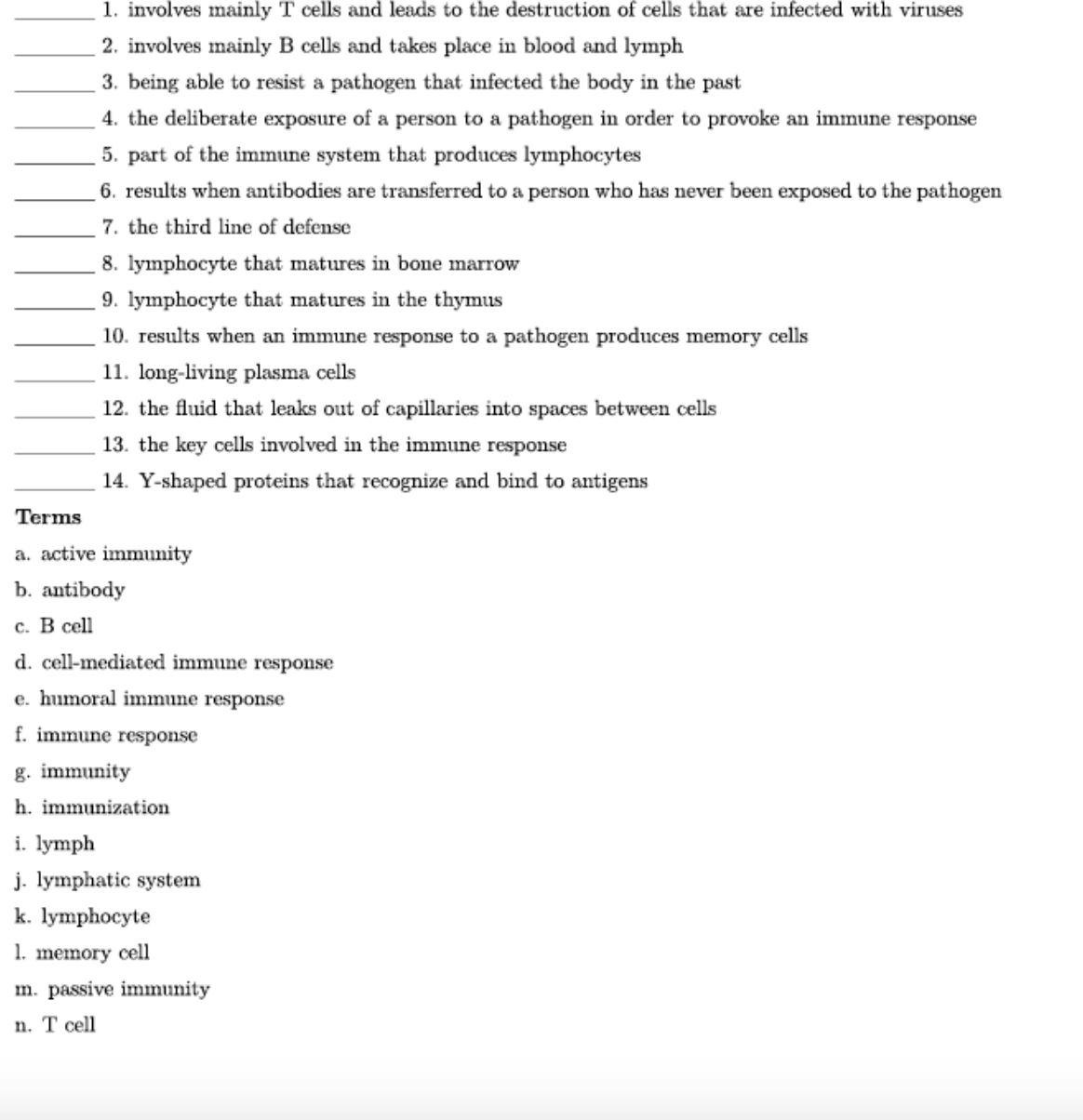
1. involves mainly T cells and leads to the destruction of cells that are infected with viruses 2. involves mainly B cells and takes place in blood and lymph 3. being able to resist a pathogen that infected the body in the past 4. the deliberate exposure of a person to a pathogen in order to provoke an immune response 5. part of the immune system that produces lymphocytes 6. results when antibodies are transferred to a person who has never been exposed to the pathogen 7. the third line of defense 8. lymphocyte that matures in bone marrow 9. lymphocyte that matures in the thymus 10. results when an immune response to a pathogen produces memory cells 11. long-living plasma cells 12. the fluid that leaks out of capillaries into spaces between cells 13. the key cells involved in the immune response 14. Y-shaped proteins that recognize and bind to antigens Terms a. active immunity b. antibody c. B cell d. cell-mediated immune response e. humoral immune response f. immune response g. immunity h. immunization i. lymph j. lymphatic system k. lymphocyte 1. memory cell m. passive immunity n. T cell
Step by Step Solution
There are 3 Steps involved in it
14 Anitbody 13 Lymphocyte 12 Lymph 11 Memory ... View full answer

Get step-by-step solutions from verified subject matter experts