







Question: 16. Use direct subtraction on the following binary numbers: (b) 101 - 100 (c) 110 101 (d) 1110 11 (e) 1100 1001 (1) 11010 10111
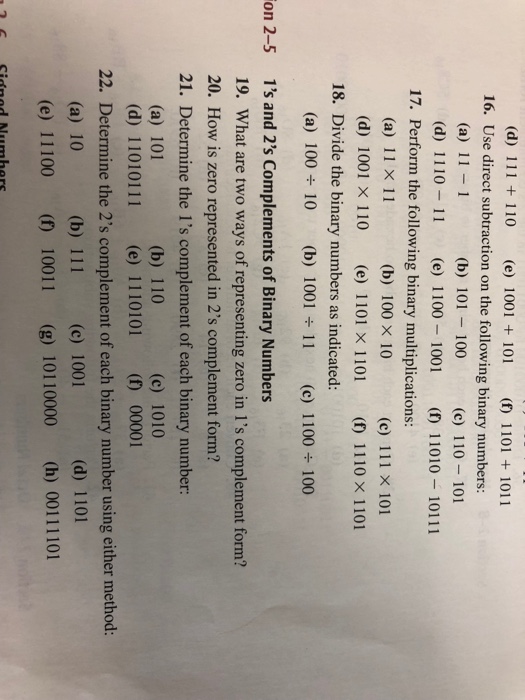
16. Use direct subtraction on the following binary numbers: (b) 101 - 100 (c) 110 101 (d) 1110 11 (e) 1100 1001 (1) 11010 10111 17. Perform the following binary multiplications: (a) 11 11 (b) 10010 (e) 11011101 (c) 111101 (f) 11101101 (d) 1001110 18. Divide the binary numbers as indicated: (a) 10010 (b) 100111 (c) 1100100 1's and 2's Complements of Binary Numbers 19. What are two ways of representing zero in 1's complement form? 20. How is zero represented in 2's complement form? 21. Determine the 1's complement of each binary number: on 2-5 (b) 110 (c) 1010 (a) 101 (d) 11010111 (e) 1110101 (f) 00001 22. Determine the 2's complement of each binary number using either method: (c) 1001 (b) 111 (d) 1101 (a) 10 (e) 11100 ( 10011 (g) 10110000 (h) 00111101
Step by Step Solution
There are 3 Steps involved in it

Get step-by-step solutions from verified subject matter experts
 Study Help