







Question: 2. If we implement a runtime stack using an array, we don't need a dynamic link pointer to the activation record, so all we need
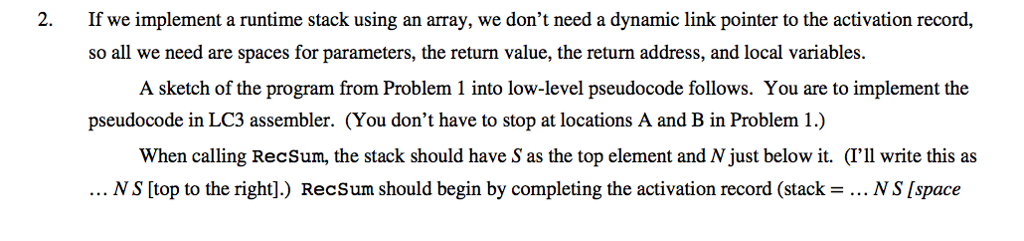
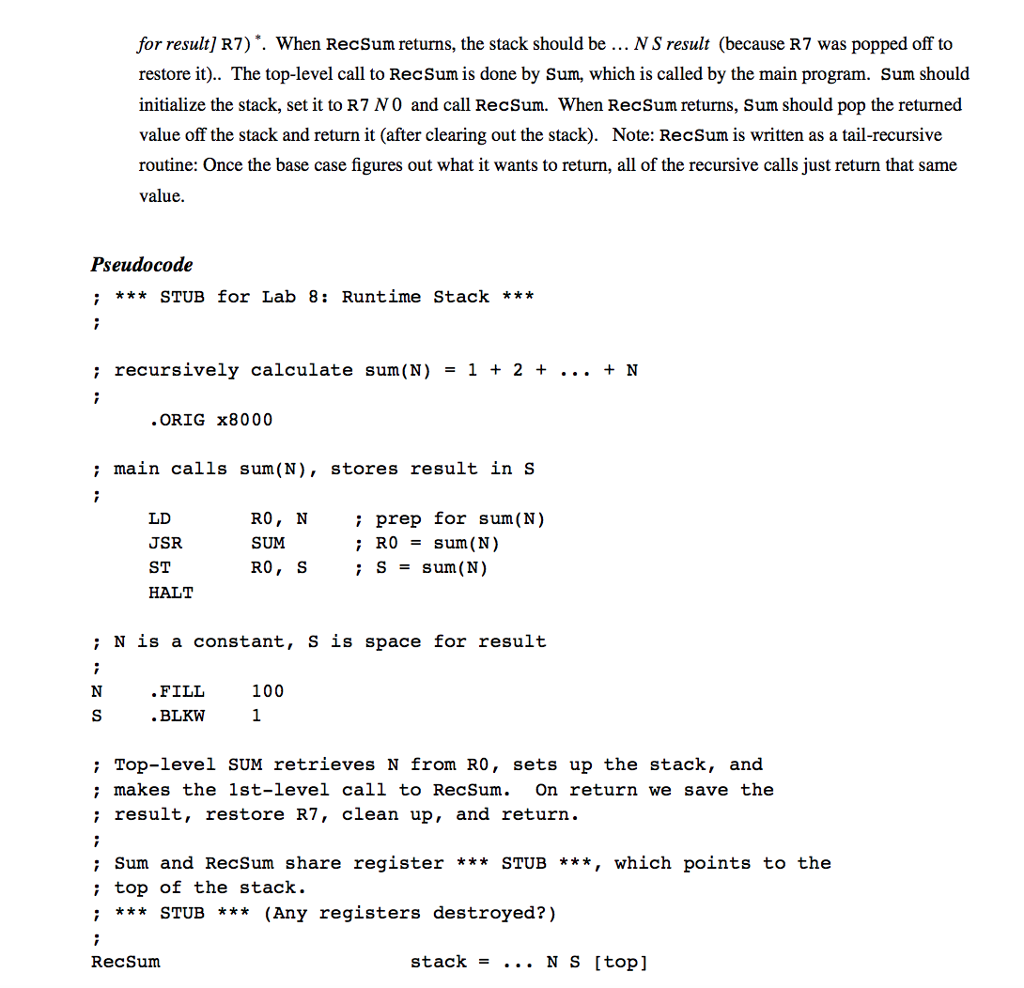
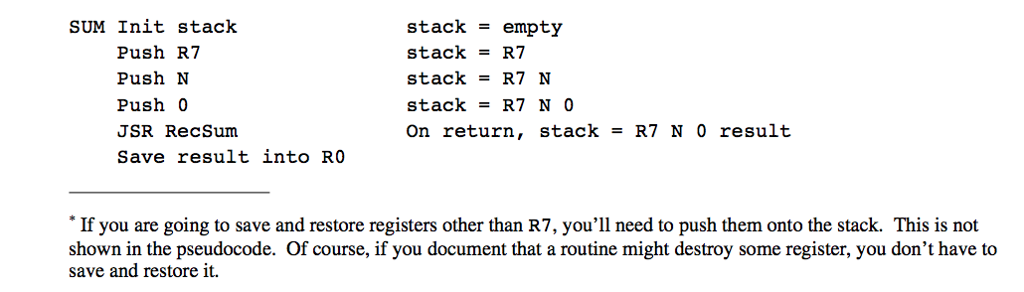
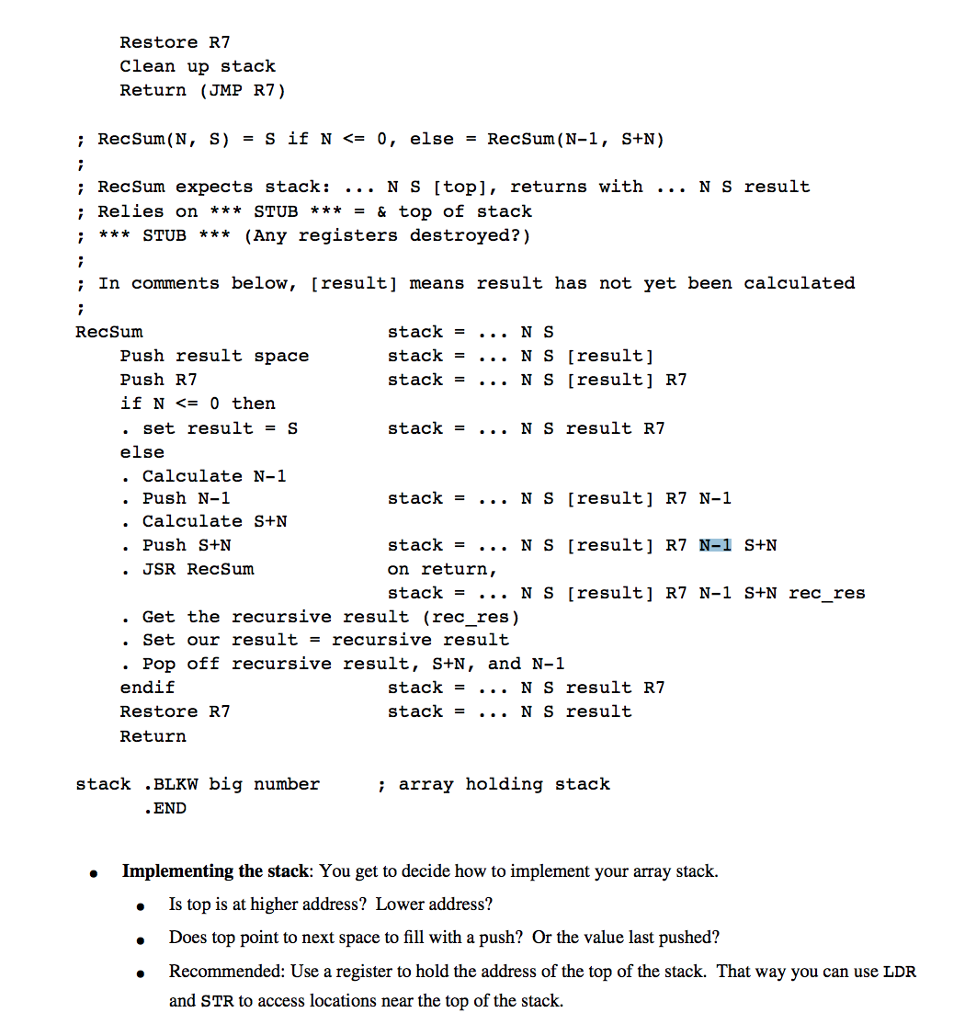
2. If we implement a runtime stack using an array, we don't need a dynamic link pointer to the activation record, so all we need are spaces for parameters, the return value, the return address, and local variables A sketch of the program from Problem 1 into low-level pseudocode follows. You are to implement the pseudocode in LC3 assembler. (You don't have to stop at locations A and B in Problem 1.) When calling Rec sum, the stack should have S as the top element and Njust below it. 11 write this as N S [top to the right].) RecSum should begin by completing the activation record (stack- NS [space 2. If we implement a runtime stack using an array, we don't need a dynamic link pointer to the activation record, so all we need are spaces for parameters, the return value, the return address, and local variables A sketch of the program from Problem 1 into low-level pseudocode follows. You are to implement the pseudocode in LC3 assembler. (You don't have to stop at locations A and B in Problem 1.) When calling Rec sum, the stack should have S as the top element and Njust below it. 11 write this as N S [top to the right].) RecSum should begin by completing the activation record (stack- NS [space
Step by Step Solution
There are 3 Steps involved in it

Get step-by-step solutions from verified subject matter experts
 Study Help