







Question: 4 Understanding Flowcharts Figure 1-26 shows a flowchart disease. using the logic in the flowchart. For additional information about flowcharting that represents part of a
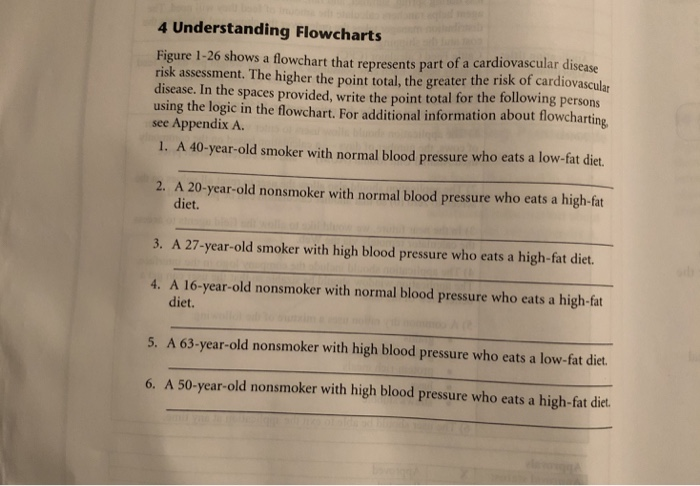
4 Understanding Flowcharts Figure 1-26 shows a flowchart disease. using the logic in the flowchart. For additional information about flowcharting that represents part of a cardiovascular disease In the spaces provided, write the point total for the following persons risk assessment. The higher the point total, the greater the risk of cardiovascula see Appendix A. 1. A 40-year-old smoker with normal blood pressure who eats a low-fat diet. 2. A 20-year-old nonsmoker with normal blood pressure who eats a high-fat diet. 3. A 27-year-old smoker with high blood pressure who eats a high-fat diet. 4. A 16-year-old nonsmoker with normal blood pressure who eats a high-fat 5. A 63-year-old nonsmoker with high blood pressure who eats a low-fat diet. 6. A 50-year-old nonsmoker with high blood pressure who eats a high-fat diet. diet. 4 Understanding Flowcharts Figure 1-26 shows a flowchart disease. using the logic in the flowchart. For additional information about flowcharting that represents part of a cardiovascular disease In the spaces provided, write the point total for the following persons risk assessment. The higher the point total, the greater the risk of cardiovascula see Appendix A. 1. A 40-year-old smoker with normal blood pressure who eats a low-fat diet. 2. A 20-year-old nonsmoker with normal blood pressure who eats a high-fat diet. 3. A 27-year-old smoker with high blood pressure who eats a high-fat diet. 4. A 16-year-old nonsmoker with normal blood pressure who eats a high-fat 5. A 63-year-old nonsmoker with high blood pressure who eats a low-fat diet. 6. A 50-year-old nonsmoker with high blood pressure who eats a high-fat diet. diet
Step by Step Solution
There are 3 Steps involved in it

Get step-by-step solutions from verified subject matter experts
 Study Help