Question: 9:50 - LM . IT all 92% e.centennialcollege.ca > The Myth of External Blame- Understanding V Personal Responsibility in Poverty : Q 1 of 6
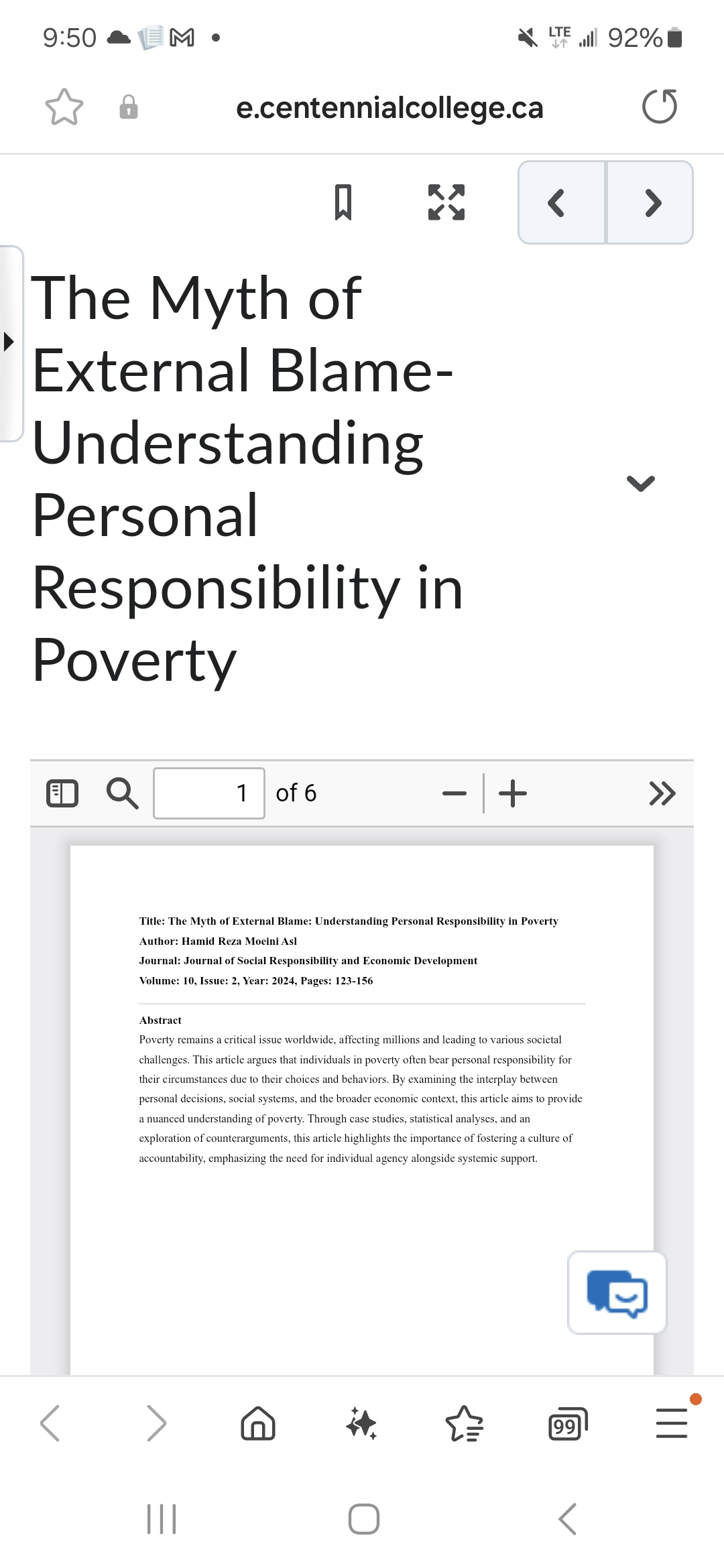
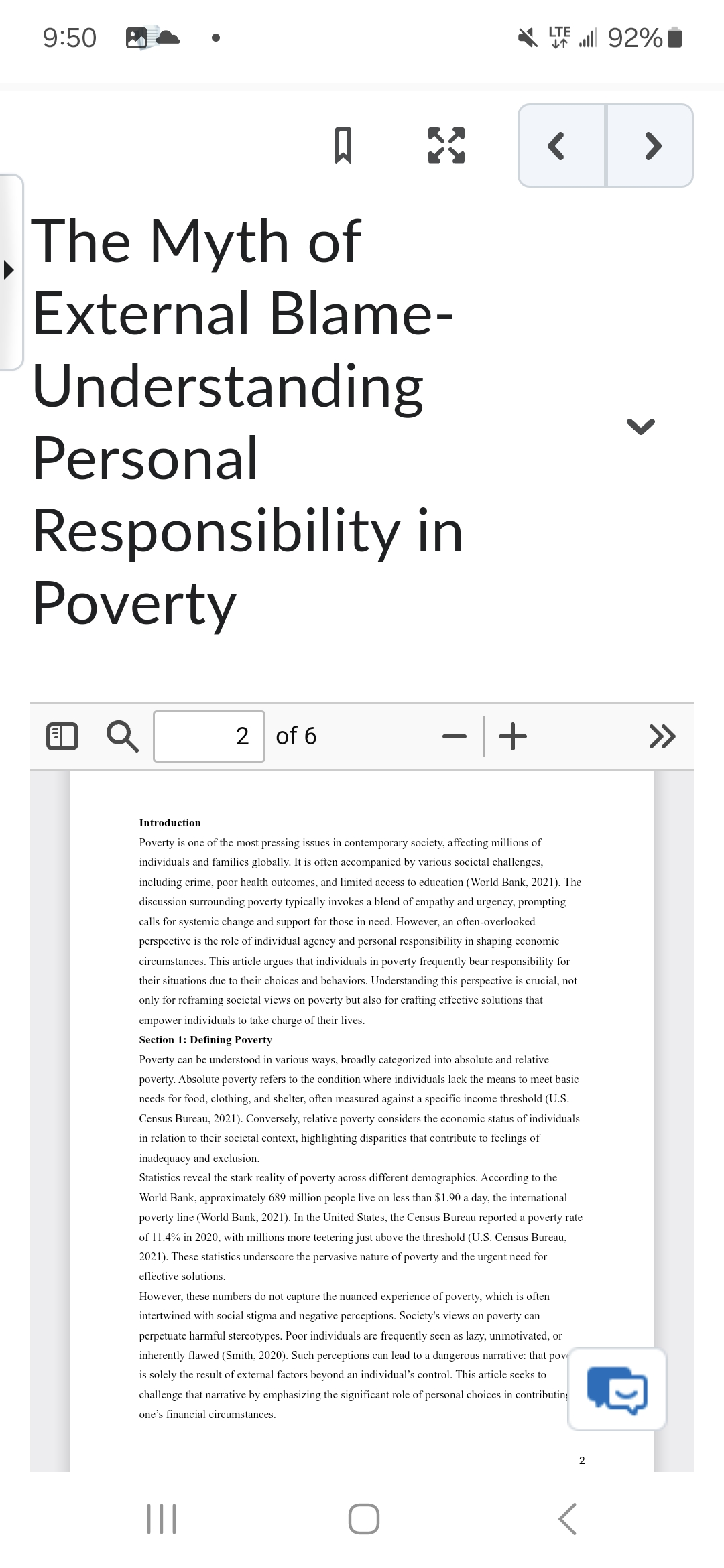
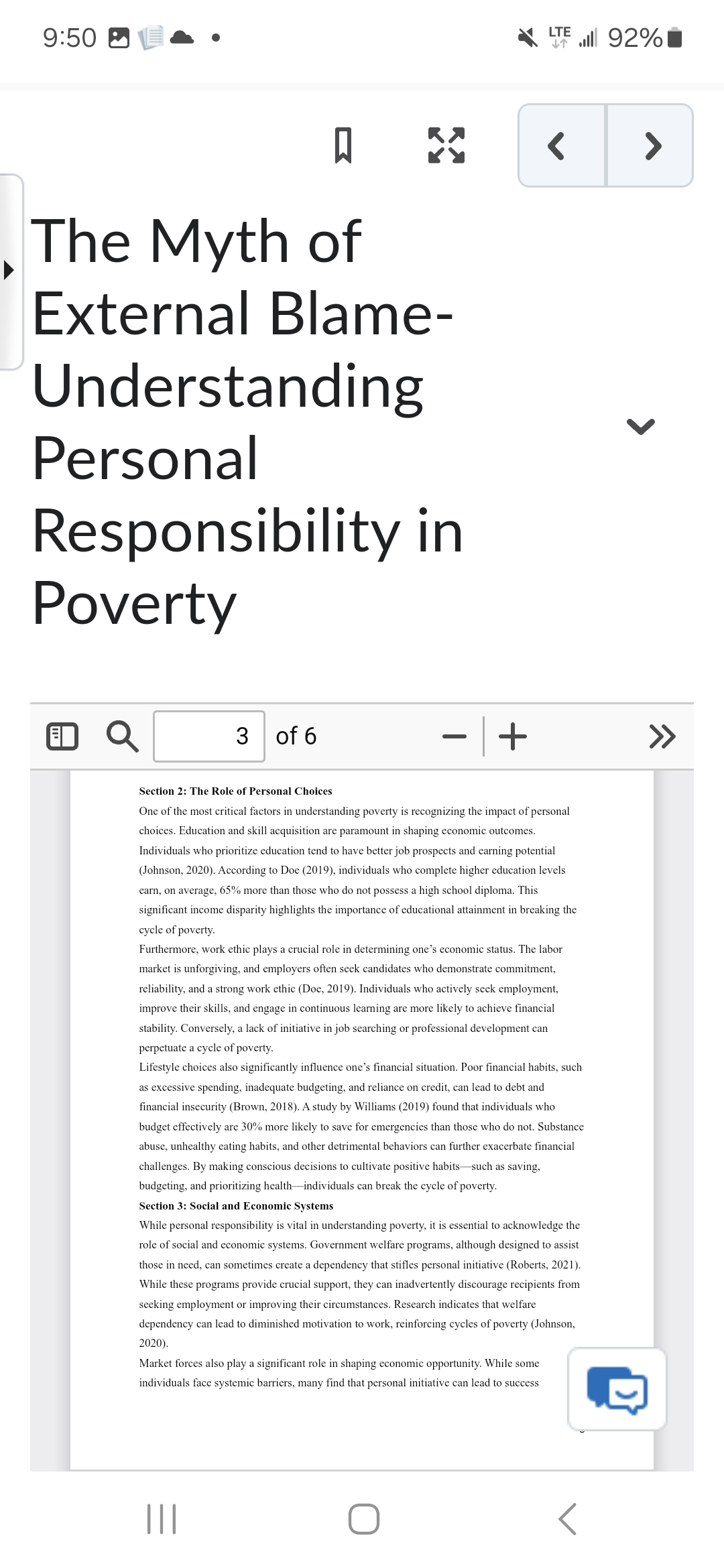
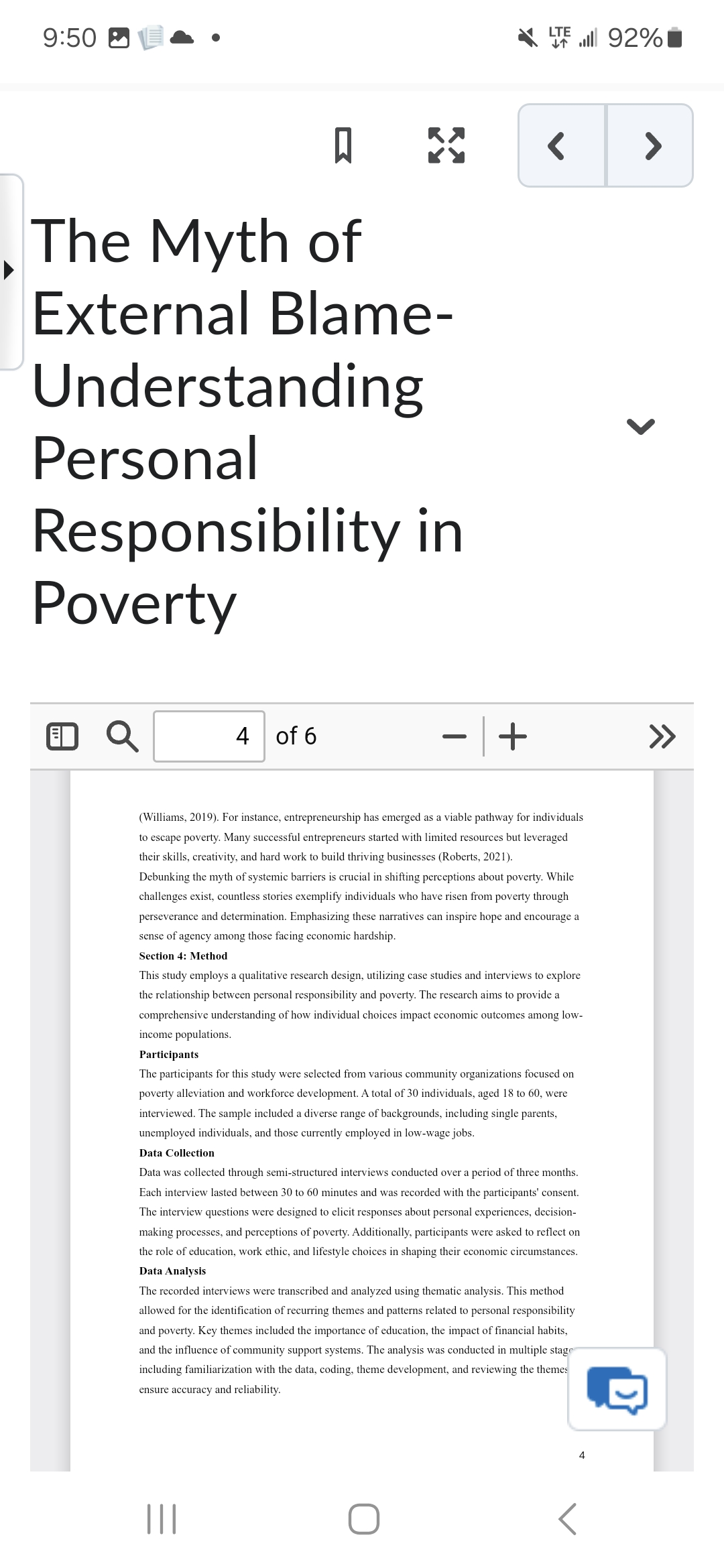
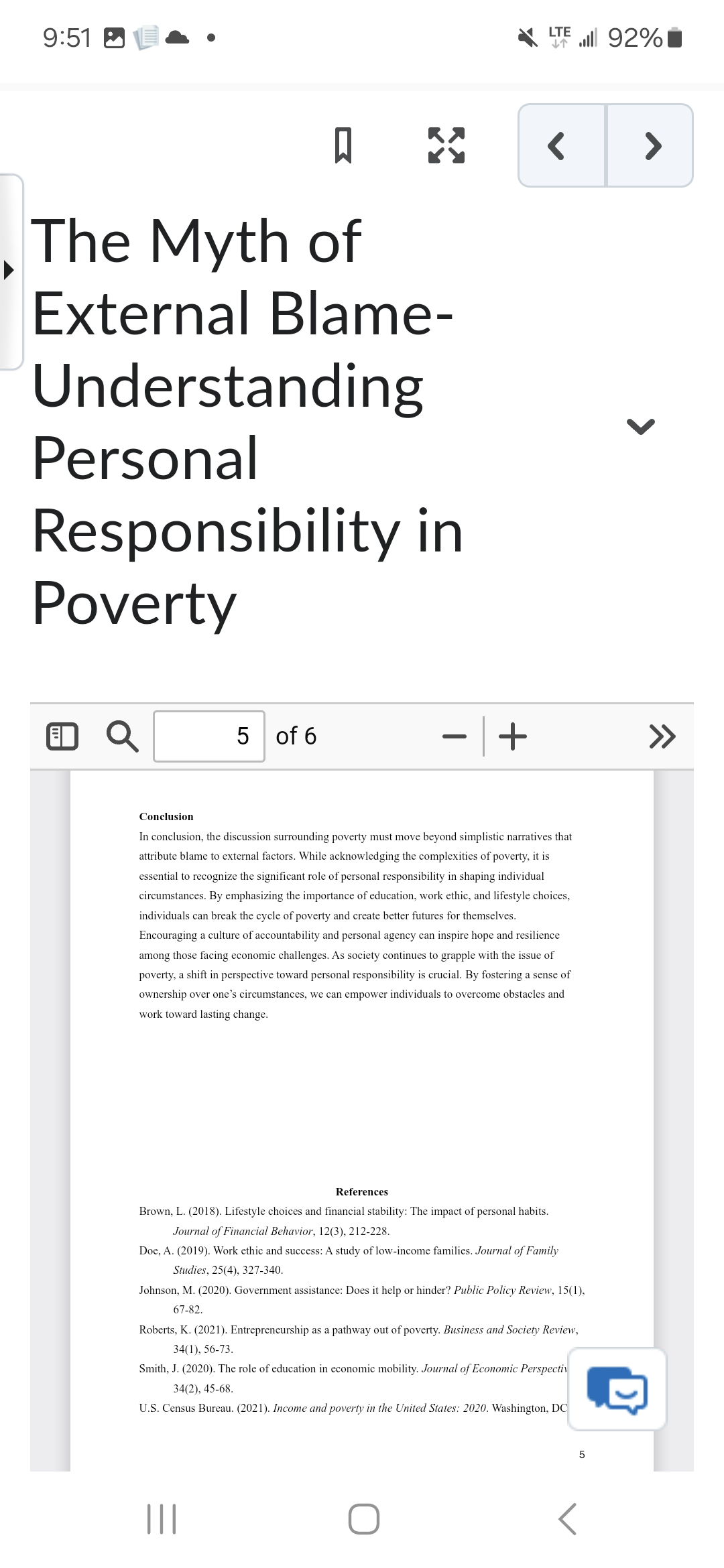
9:50 - LM . IT all 92% e.centennialcollege.ca > The Myth of External Blame- Understanding V Personal Responsibility in Poverty : Q 1 of 6 + > > Title: The Myth of External Blame: Understanding Personal Responsibility in Poverty Author: Hamid Reza Moeini Asl Journal: Journal of Social Responsibility and Economic Development Volume: 10, Issue: 2, Year: 2024, Pages: 123-156 Abstract Poverty remains a critical issue worldwide, affecting millions and leading to various societal challenges. This article argues that individuals in poverty often bear personal responsibility for their circumstances due to their choices and behaviors. By examining the interplay between personal decisions, social systems, and the broader economic context, this article aims to provide a nuanced understanding of poverty. Through case studies, statistical analyses, and an exploration of counterarguments, this article highlights the importance of fostering a culture of accountability, emphasizing the need for individual agency alongside systemic support. > 99 O9:50 WE 1 92% A V The Myth of External Blame- Understanding V Personal Responsibility in Poverty : Q 2 of 6 + > > Introduction Poverty is one of the most pressing issues in contemporary society, affecting millions of individuals and families globally. It is often accompanied by various societal challenges, including crime, poor health outcomes, and limited access to education (World Bank, 2021). The discussion surrounding poverty typically invokes a blend of empathy and urgency, prompting calls for systemic change and support for those in need. However, an often-overlooked perspective is the role of individual agency and personal responsibility in shaping economic circumstances. This article argues that individuals in poverty frequently bear responsibility for their situations due to their choices and behaviors. Understanding this perspective is crucial, not only for reframing societal views on poverty but also for crafting effective solutions that empower individuals to take charge of their lives. Section 1: Defining Poverty Poverty can be understood in various ways, broadly categorized into absolute and relative poverty. Absolute poverty refers to the condition where individuals lack the means to meet basic needs for food, clothing, and shelter, often measured against a specific income threshold (U.S. Census Bureau, 2021). Conversely, relative poverty considers the economic status of individuals in relation to their societal context, highlighting disparities that contribute to feelings of inadequacy and exclusion. Statistics reveal the stark reality of poverty across different demographics. According to the World Bank, approximately 689 million people live on less than $1.90 a day, the international poverty line (World Bank, 2021). In the United States, the Census Bureau reported a poverty rate of 11.4% in 2020, with millions more teetering just above the threshold (U.S. Census Bureau, 2021). These statistics underscore the pervasive nature of poverty and the urgent need for effective solutions. However, these numbers do not capture the nuanced experience of poverty, which is often intertwined with social stigma and negative perceptions. Society's views on poverty can perpetuate harmful stereotypes. Poor individuals are frequently seen as lazy, unmotivated, or inherently flawed (Smith, 2020). Such perceptions can lead to a dangerous narrative: that pov is solely the result of external factors beyond an individual's control. This article seeks to challenge that narrative by emphasizing the significant role of personal choices in contributing one's financial circumstances. 2 O9:50 PS . LTE .Ill 92% A V The Myth of External Blame- Understanding V Personal Responsibility in Poverty : Q 3 of 6 - + > > Section 2: The Role of Personal Choices One of the most critical factors in understanding poverty is recognizing the impact of personal choices. Education and skill acquisition are paramount in shaping economic outcomes Individuals who prioritize education tend to have better job prospects and earning potential Johnson, 2020). According to Doe (2019), individuals who complete higher education levels earn, on average, 65% more than those who do not possess a high school diploma. This significant income disparity highlights the importance of educational attainment in breaking the cycle of poverty. Furthermore, work ethic plays a crucial role in determining one's economic status. The labor market is unforgiving, and employers often seek candidates who demonstrate commitment, reliability, and a strong work ethic (Doe, 2019). Individuals who actively seek employment, improve their skills, and engage in continuous learning are more likely to achieve financial stability. Conversely, a lack of initiative in job searching or professional development can perpetuate a cycle of poverty. Lifestyle choices also significantly influence one's financial situation. Poor financial habits, such as excessive spending, inadequate budgeting, and reliance on credit, can lead to debt and financial insecurity (Brown, 2018). A study by Williams (2019) found that individuals who budget effectively are 30% more likely to save for emergencies than those who do not. Substance abuse, unhealthy eating habits, and other detrimental behaviors can further exacerbate financial challenges. By making conscious decisions to cultivate positive habits-such as saving, budgeting, and prioritizing health-individuals can break the cycle of poverty. Section 3: Social and Economic Systems While personal responsibility is vital in understanding poverty, it is essential to acknowledge the role of social and economic systems. Government welfare programs, although designed to assist those in need, can sometimes create a dependency that stifles personal initiative (Roberts, 2021). While these programs provide crucial support, they can inadvertently discourage recipients from seeking employment or improving their circumstances. Research indicates that welfare dependency can lead to diminished motivation to work, reinforcing cycles of poverty (Johnson, 2020). Market forces also play a significant role in shaping economic opportunity. While some individuals face systemic barriers, many find that personal initiative can lead to success O9:50 PS . WE 1 92% A V The Myth of External Blame- Understanding V Personal Responsibility in Poverty : Q 4 of 6 - + > > (Williams, 2019). For instance, entrepreneurship has emerged as a viable pathway for individuals to escape poverty. Many successful entrepreneurs started with limited resources but leveraged their skills, creativity, and hard work to build thriving businesses (Roberts, 2021). Debunking the myth of systemic barriers is crucial in shifting perceptions about poverty. While challenges exist, countless stories exemplify individuals who have risen from poverty through perseverance and determination. Emphasizing these narratives can inspire hope and encourage a sense of agency among those facing economic hardship. Section 4: Method This study employs a qualitative research design, utilizing case studies and interviews to explore the relationship between personal responsibility and poverty. The research aims to provide a comprehensive understanding of how individual choices impact economic outcomes among low- income populations. Participants The participants for this study were selected from various community organizations focused on poverty alleviation and workforce development. A total of 30 individuals, aged 18 to 60, were interviewed. The sample included a diverse range of backgrounds, including single parents, unemployed individuals, and those currently employed in low-wage jobs. Data Collection Data was collected through semi-structured interviews conducted over a period of three months. Each interview lasted between 30 to 60 minutes and was recorded with the participants' consent. The interview questions were designed to elicit responses about personal experiences, decision- making processes, and perceptions of poverty. Additionally, participants were asked to reflect on the role of education, work ethic, and lifestyle choices in shaping their economic circumstances. Data Analysis The recorded interviews were transcribed and analyzed using thematic analysis. This method allowed for the identification of recurring themes and patterns related to personal responsibility and poverty. Key themes included the importance of education, the impact of financial habits, and the influence of community support systems. The analysis was conducted in multiple stage including familiarization with the data, coding, theme development, and reviewing the themes ensure accuracy and reliability. O A9:51 2 - . LTE .Ill 92% A V The Myth of External Blame- Understanding V Personal Responsibility in Poverty 5 of 6 - + > > Conclusion In conclusion, the discussion surrounding poverty must move beyond simplistic narratives that attribute blame to external factors. While acknowledging the complexities of poverty, it is essential to recognize the significant role of personal responsibility in shaping individual circumstances. By emphasizing the importance of education, work ethic, and lifestyle choices, individuals can break the cycle of poverty and create better futures for themselves. Encouraging a culture of accountability and personal agency can inspire hope and resilience among those facing economic challenges. As society continues to grapple with the issue of poverty, a shift in perspective toward personal responsibility is crucial. By fostering a sense of ownership over one's circumstances, we can empower individuals to overcome obstacles and work toward lasting change. References Brown, L. (2018). Lifestyle choices and financial stability: The impact of personal habits. Journal of Financial Behavior, 12(3), 212-228. Doe, A. (2019). Work ethic and success: A study of low-income families. Journal of Family Studies, 25(4), 327-340. Johnson, M. (2020). Government assistance: Does it help or hinder? Public Policy Review, 15(1), 67-82 Roberts, K. (2021). Entrepreneurship as a pathway out of poverty. Business and Society Review, 34(1), 56-73. Smith, J. (2020). The role of education in economic mobility. Journal of Economic Perspectiv 34(2), 45-68. U.S. Census Bureau. (2021). Income and poverty in the United States: 2020. Washington, DC 5 O A68/ViewContent/14737645/View Here are the key components of a research-based critique essay: Introduction: . Introduce the research work being critiqued. . Provide a brief overview of the main topic, research question, or hypothesis. . State the purpose of the critique and your thesis or main argument. Summary of the Research: O . Summarize the key components of the research, including the methodology, results, and conclusions. . Offer a concise overview of the main findings and their significance. Evaluation of Research Methods: . Critically assess the research methods employed in the study. . Consider the appropriateness of the study design, data collection, and analysis methods. . Evaluate the reliability and validity of the research. Analysis of Results: Examine the presentation and interpretation of results. Assess the clarity and effectiveness of data visualization. . Consider the statistical significance and practical importance of the findings. Discussion of Conclusions: Type here to search 24 .C Sun ASUS F10 FI F5 F6 F8 F9 La In F2 F4 Esc O. Echapp 5 Y U O Q W m R H L K A S D Gation and interpretation of results. . Assess the clarity and effectiveness of data visualization. . Consider the statistical significance and practical importance of the findings. Discussion of Conclusions: . Evaluate the validity of the conclusions drawn by the researchers. . Discuss whether the conclusions align with the study's objectives and results. . Consider alternative interpretations or potential limitations.. Identification of Strengths and Weaknesses: . Highlight the strengths and contributions of the research. . Identify any weaknesses, limitations, or areas for improvement. Integration of External Sources: . Support your critique with evidence from other scholarly sources. . Compare the research being critiqued with similar studies in the field. Conclusion: . Summarize your main points. . Restate your overall assessment of the research. . Offer suggestions for future research or improvements. Type here to search CO ASUS F8 FO F10 FI F4 F 5 FO LA F2 F3 Esc Echapp. # 9 3 A 3 + @ Y U Q W m R A D G H K ock
Step by Step Solution
There are 3 Steps involved in it
1 Expert Approved Answer
Step: 1 Unlock
Question Has Been Solved by an Expert!
Get step-by-step solutions from verified subject matter experts
Step: 2 Unlock
Step: 3 Unlock
Students Have Also Explored These Related Business Writing Questions!