Question: According to the concepts discussed in class, explain why automotive companies foresee the difficulty of cultural diversity to manage and coordinate? (Apply at least two
According to the concepts discussed in class, explain why automotive companies foresee the
difficulty of cultural diversity to manage and coordinate? (Apply at least two concepts from
Week 3) 1 page
2. Based on the case, what conclusions can we draw from the SEM analysis? 1 page
3. What are the key factors of the Asean/Thai Automotive companies' challenges? 1 page
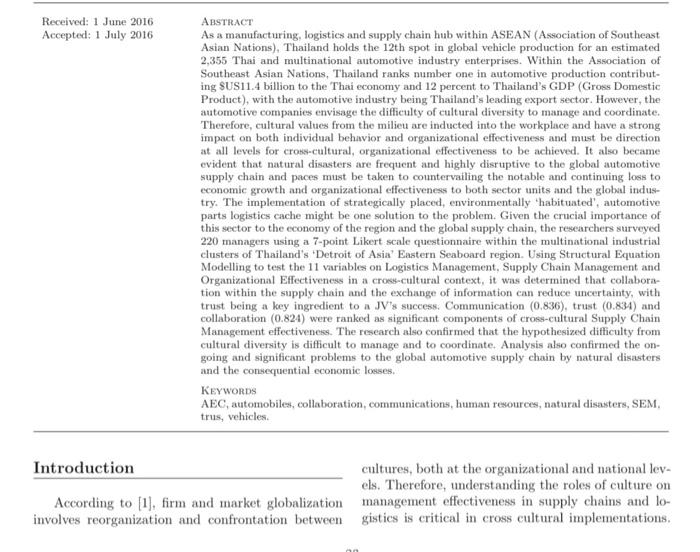
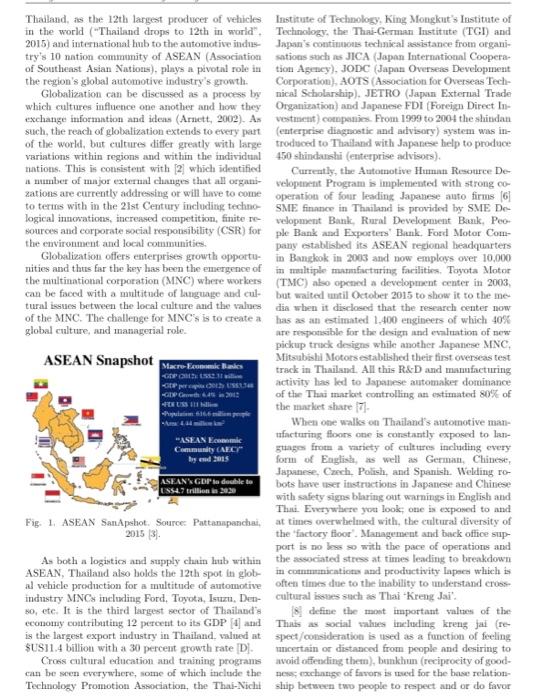
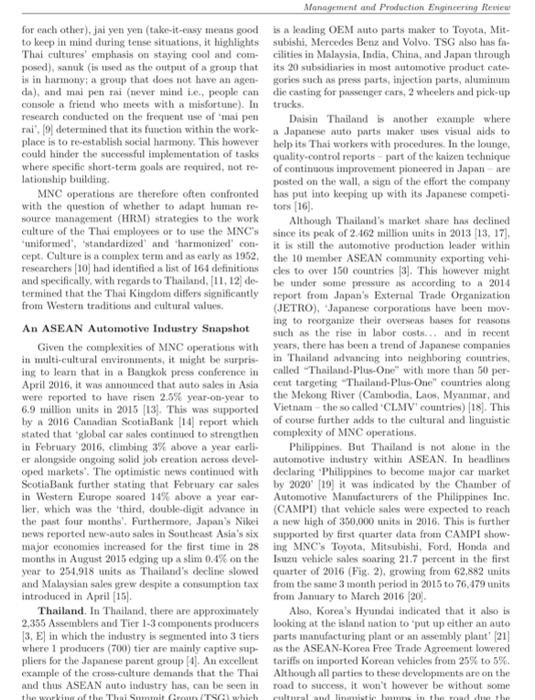
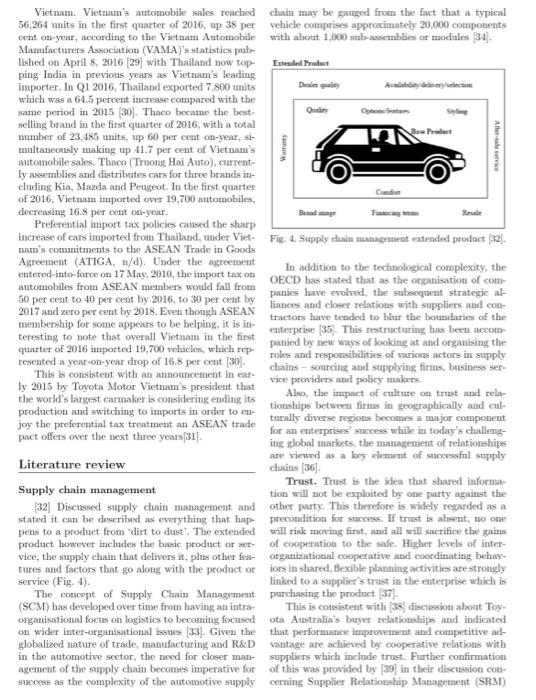
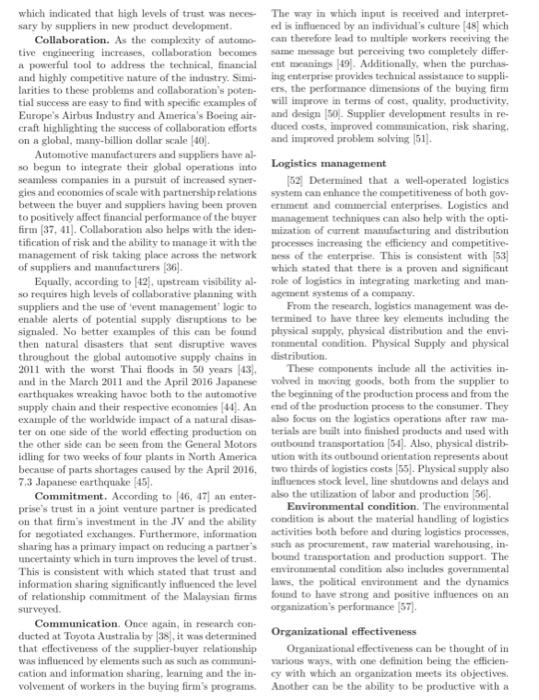
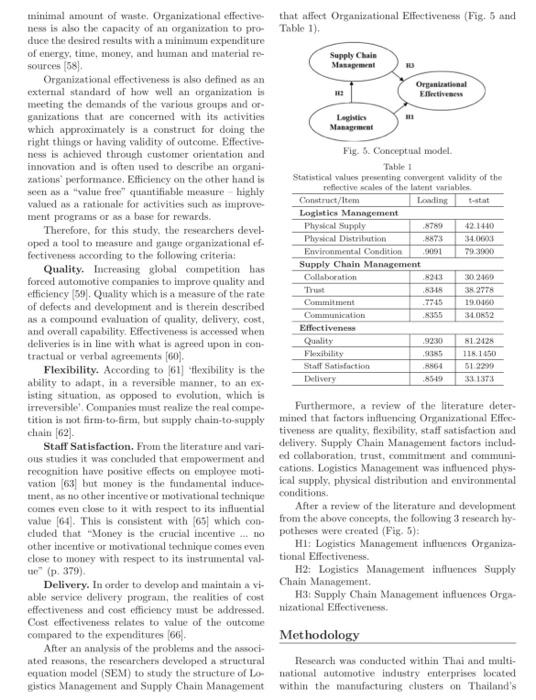
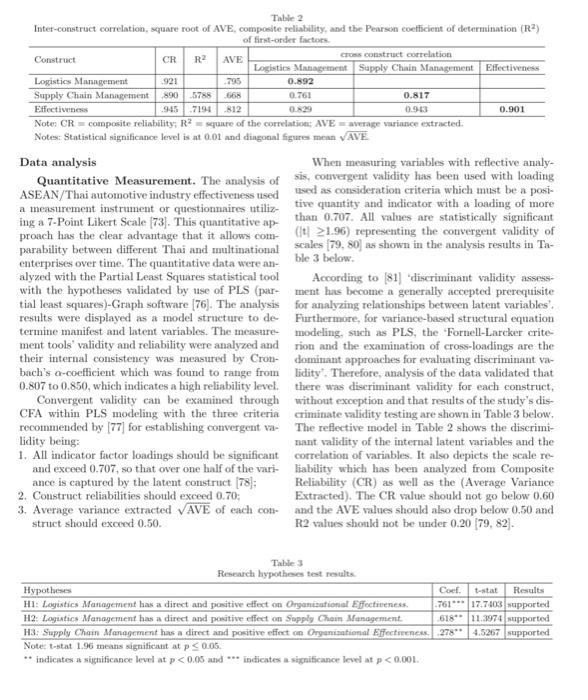
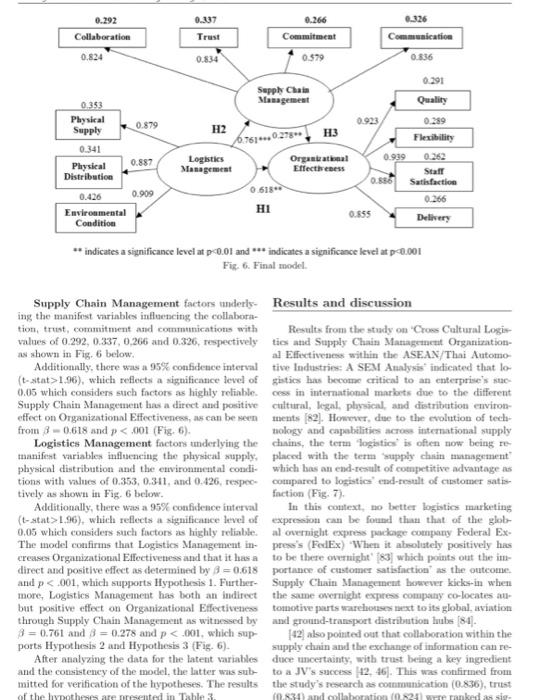
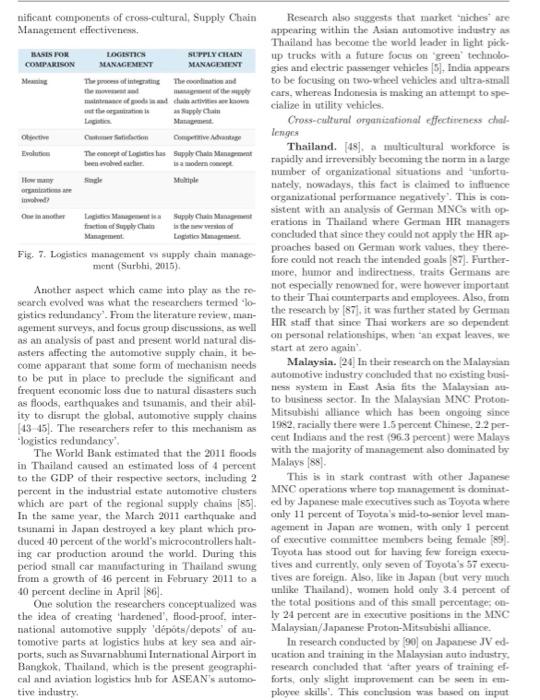
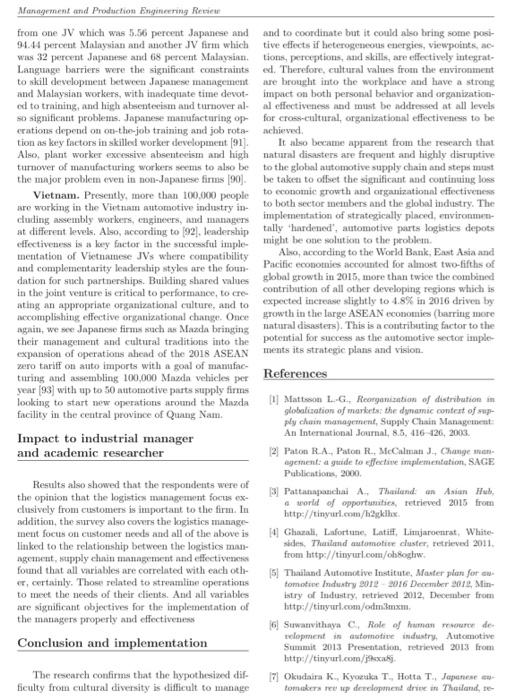
Received: 1 June 2016 Accepted: 1 July 2016 ABSTRACT As a manufacturing, logistics and supply chain hub within ASEAN (Association of Southeast Asian Nations), Thailand holds the 12th spot in global vehicle production for an estimated 2,355 Thai and multinational automotive industry enterprises. Within the Association of Southeast Asian Nations, Thailand ranks number one in automotive production contribut- ing SUS11.4 billion to the Thai economy and 12 percent to Thailand's GDP (Gross Domestic Product), with the automotive industry being Thailand's leading export sector. However, the automotive companies envisage the difficulty of cultural diversity to manage and coordinate. Therefore, cultural values from the milieu are inducted into the workplace and have a strong impact on both individual behavior and organizational effectiveness and must be direction at all levels for cross-cultural, organizational effectiveness to be achieved. It also became evident that natural disasters are frequent and highly disruptive to the global automotive supply chain and paces must be taken to countervailing the notable and continuing loss to economic growth and organizational effectiveness to both sector units and the global indus- try. The implementation of strategically placed environmentally 'habituated', automotive parts logistics cache might be one solution to the problem. Given the crucial importance of this sector to the economy of the region and the global supply chain, the researchers surveyed 220 managers using a 7-point Likert scale questionnaire within the multinational industrial clusters of Thailand's Detroit of Asia Eastern Seaboard region. Using Structural Equation Modelling to test the 11 variables on Logistics Management, Supply Chain Management and Organizational Effectiveness in a cross-cultural context, it was determined that collabora- tion within the supply chain and the exchange of information can reduce uncertainty, with trust being a key ingredient to a JV's success. Communication (0.836), trust (0.834) and collaboration (0.824) were ranked as significant components of cross-cultural Supply Chain Management effectiveness. The research also confirmed that the hypothesized difficulty from cultural diversity is difficult to manage and to coordinate. Analysis also confirmed the on- going and significant problems to the global automotive supply chain by natural disasters and the consequential economic losses KEYWORDS AEC, automobiles, collaboration, communications, human resources, natural disasters, SEM, trus, vehicles Introduction cultures, both at the organizational and national lev- els. Therefore, understanding the roles of culture on According to (1), firm and market globalization management effectiveness in supply chains and lo- involves reorganization and confrontation between gistics is critical in cross cultural implementations, an Thailand, as the 12th largest producer of vehicles. Institute of Technology, King Mongkut's Institute of in the world ("Thailand drops to 12th in world". Technology, the Thai-German Institute (TGI) and 2015) and international hub to the automotive indus Japan's continous technical assistance from organi- try's 10 nation community of ASEAN (Associationsations such as JICA Japan International Coopera- of Southeast Asian Nations), plays a pivotal role in tion Agency), JODC (Japan Overseas Development the region's global automotive industry's growth. Corporation), AOTS (Association for Overseas Tech Globalization can be discussed as a process by nical Scholarship). JETRO Japan External Trade which cultures influence one another and how they Organization) and Japanese FDI (Foreign Direct In- exchange information and ideas (Arnett, 2002). As vestment companies From 1999 to 2004 the shindan such, the reach of globalization extends to every part (enterprise diagnostic and divisory) system was in of the world, but cultures differ greatly with large troduced to Thailand with Japanese help to produce variations within regions and within the individual 450 shindanshi (enterprise advisors). nations. This is consistent with 2 which identified Currently, the Automotive Human Resource De umumber of major external changes that all organi- velopment Program is implemented with strong co- zations are currently addressing or will have to come operation of four leading Japanese auto firms (61 to terms with in the 21st Century including techno SME finance in Thailand is provided by SME De logical innovations, increased competition, finite re velopment Bank, Rural Development Bank, Peo sources and corporate social responsibility (CSR) for ple Bank and Exporters' Bank. Ford Motor Com the environment and local communities. pany established its ASEAN regional beadquarters Globalization offers enterprises growth opportu- in Bangkok in 2003 and now employs over 10.000 nities and thus far the key has been the emergence of in multiple taufacturing facilities. Toyota Motor the multinational corporation (MNC) where workers (TMC) abo opened a development center in 2003, can be faced with a multitude of language and cul- but waited until October 2015 to show it to the me tural issues between the local culture and the values dia when it disclosed that the research center now of the MNC. The challenge for MNC's is to create a has as an estimated 1.400 engineers of which 40% global culture, and managerial role are responsible for the design and evaluation of new pickup truck designs while another Japanese MNC, ASEAN Snapshot Mitsubishi Motors established their first overseas test Macro-Eck Basics track in Thailand. All this R&D and mamfacturing -GO 3. activity has led to Japanese automaker dominance of the Thai mariot controlling an estimated 80% of EUSS the market share 171 44 When one walks on Thailand's automotive man- ufacturing floors one is constantly exposed to len ASEAN Ecole Community AEC gtages from a variety of cattures including every bus sed 2015 form of English, well as German, Chinese, Japanese, Czech, Polish, and Spanish. Welding ro- ASEANN GOP delete bots have user instructions in Japanese and Chinese USS4.7 trilis 20.30 with safety signs blaring out warnings in English and This Everywhere you look one is exposed to and Fig. 1. ASEAN San.Apsbot. Source Pattanapanchai, at times overwhelmed with the cultural diversity of 2015 (3) the factory floor Management and back office sup- port is no less so with the pace of operations and As both a logistics and supply chain hub within the associated stress at times leading to breakdown ASEAN, Thailand also holds the 12th spot in glob- in comunication and productivity lapos which is al vehicle production for a multitude of automotive often times due to the inability to understand cross industry MNCs including Ford, Toyota, Isuzu, Den cultural issues such as Thai Kreng Jai'. 50, etc. It is the third largest sector of Thailand's 8 define the most important values of the economy contributing 12 percent to its GDP 4 and Thais as sociales including kreng Jai (re is the largest export industry in Thailand, valued at spect/consideration is used as a function of feeling SUS11.4 billion with a 30 percent crowth rate D uncertain or distance from people and desiring to Cross cultural education and training programs avoid offending them), bunkhun (reciprocity of good- can be seen everywhere, some of which include the change of Envois rued for the base relation Technology Promotion Association, the Thai-Nichiship between two people to respect and or do favor Afanagement and Production Engineering Review for each other), jai yeh yen (take-it-easy means good is a leading OEM auto parts maker to Toyota, Mit- to keep in mind during tense situations, it highlights subishi, Mercedes Benz and Volvo. TSG also has fo- Thai cultures' emphasis on staying cool and com- cilities in Malaysia, India, China, and Japan through posed), sanuk (inted as the output of a group that its 20 subsidiaries in most automotive product cate is in harmony: a group that does not have an agetgories such as preses parts, injection parts, alumimm da), and mai pen rai (never mind ie, people candie casting for passenger cars, 2 wheelers and pick-up console a friend who meets with a misfortune). In trucks. research conducted on the frequent me of mai pen Daisin Thailand is another example where rai, 19 determined that its function within the work # Japanese auto parts naker sex visual aids to place is to re-establish social harmony. This however help its Thai workers with procedures. In the lounge could hinder the successful implementation of tasio quality control reports - part of the knizen technique where specific short-term goals are required, notre of contimon improvement pioneered in Japan are Iationship building posted on the wall, a sign of the effort the company MNC operations are therefore often confronted has put into keeping up with its Japanese competi- with the question of whether to adapt human re tors (16) source management (HRM) strategies to the work Although Thailand's market share how declined culture of the Thirt employees or to use the MINC'S since its peak of 2.462 million units in 2013 13. 17), uniformed', 'standardized' and 'harmonized' con it is still the automotive production leader within cept Culture is a complex term and as early as 1962, the 10 member ASEAN community exporting vehi researchers (10) had identified a list of 164 definitions cles to over 150 countries (3). This however might and specifically, with regards to Thailand, [11, 12 de be under some pressure according to 2014 termined that the Thai Kingdom differs significantly report from Japan's External Trade Organization from Western traditions and cultural values. (JETRO). Japanese corporations have been mov. ing to reorganize their over be for ons An ASEAN Automotive Industry Snapshot such as the rise in labor costs... and in recent Given the complexities of MNC operations with years, there has been a trend of Japanese companies in multi-cultural environments, it might be surpris in Thailand advancing into neighboring countries, ing to learn that in a Bangkok press conference in called "Thailand-Plus-One" with more than 50 per April 2016, it was announced that auto sales in Asia cent targeting Thailand-Plus-One" countries along were reported to have risen 2.5% year-on-year to the Mekong River (Cambodia, Laos, Myanmar, and 6.9 million units in 2015 (13). This was supported Vietnam - the so called 'CLMV countries) (18). This by 2016 Catindian ScotinBank (14) report which of course further adds to the cultural and linguistic stated that global car sales continued to strengthen complexity of MNC operations in February 2016, climbing 3% above a year carti- Philippines. But Thailand is not alone in the er alongside ongoing solid job creation across devel- automotive industry within ASEAN. In beadlines oped markets. The optimistic news contined with declaring Philippines to become major car market ScotiaBank further stating that February car sales by 2020 [29) it was indicated by the Chamber of in Western Europe soared 14% above a year car Automotive Manufacturers of the Philippines Inc. lier, which was the third, double-digit advance in (CAMPI) that vehicle sales were expected to reach the past four months. Furthermore, Japan's Nikei a tw high of 350,000 units in 2016. This is further news reportedl new-auto sales in Southeast Asia's six supported by first quarter data from CAMPI slow- major economies increased for the first time in 28 ing MNC'S Toyota, Mitsubishi. Ford, Honda and months in August 2015 edging up a slim 0.4% on the Isuzu vehicle sales sonring 21.7 percent in the first year to 254,918 units as Thailand's decline slowed quarter of 2016 (Fig. 2), growing from 62,882 units and Malaysian sales grew despite a consumption tax from the same 3 month period in 2015 to 76,479 units introduced in April (15) from Jamary to March 2016 (20) Thailand. In Thailand, there are approximately Also, Korea's Hyundai indicated that it also is 2,355 Assemblers and Tier 1-3 components producers looking at the island nation to put up either an auto 13, E) in which the industry is segmented into 3 tiers parts manufacturing plant or an assembly plant' 21) where 1 producers (700) tier are mainly captive sup as the ASEAN-Korea Free Trade Agreement lowered pliers for the Japanese parent group (4). An excellent tariffs on imported Korean vehicles from 25% to 5%. example of the cross-culture demands that the Thai Although all parties to these developments are on the and thus ASEAN auto industry hus, can be seen in road to success, it won't however be without some the warmth The Summit CTS which ral limiti del varied mixes of old colonial Spanish, some Japanese, like market conditions to oligopoly-like conditions American English, local dialects and the wide differ-within the Bumi' trattational manufactures in ences between the worker's and manager's religious cluding Proton and Perodua 24). These firms either and cultures such as Buddhist, Protestantist (Bap produce a differentiated product or an identical prod- tist), Roman Catholicism or no religion at all as 46 met, with the entry of any new sellers being difficult percent of Korcans have stated that they have no or impossible. religious affiliation (22). Deciding which holidays to Proton was Malaysia's dominant auto manufae celebrate and which days are paid days off could better until the establishment of Perodua in 1993 an interesting exercise! Now the Malaysian auto market is dominated by the two Malaysian national automotive companies, Pro- Q1 2016 Auto Sales Report 121.796 ton and Perodua which account for approximately 53 percent of the total vehicles sold annually (Fig. 3). D46683 Other MNCs such as Honda (15 percent), Toyota (8 TOYOTA percent), Nissan (percent), and Mazda (2 percent) making their best efforts however 26] L3082 Originally the automotive enterprises were divid- 29793 ed in terms of foreign nationally, which evolved over ISUZU time from Western nationalities to Japanese, while AN 13595 internally there was a shift from Chinese to Malay 1.441 ethnicity. Finally, the larger and stronger etterpris es became established with ethnic homogeneity in Bumi-owned Proton and Perodua and inter-firm cul Fig. 2. Philippines 2016 Qtr. Auto Sales Report Source turul pluralism between these companies and their AUTO, Industry News 2016. transnational Corporate partners with Chinese man agers and Malay workforces 21). Malaysia. The Malaysian automotive industry Indonesia. In the Jamnary-February period of has had a multitude of difficulties in 2015, partial 2016. Indonesia's car experts plunged 33.7 percent ly due to a weaker national currency (tinggit) and to 22,246 cars from 33,549 in the same period of government GST taxex. The industry lowever did 2015 (271. The Association of Indonesian Antomo manage to sustain itself at the same pace as in 2014 tive Manufacturers (Gaikindo) has stated that poor as in each year approximately 666,600 units were sold infrastructure facilities at Indonesian sports and 23] long wait times were the main factors that discour According to (24) no existing business system aged investors frotn pottring their money in the coun in East Asia fits the Malaysian autobusiness stry's automobile industry. According to the World tor with Malaysian automotive enterprises spending Bank's Logistic Performance Index 2014, Indonesia's more attention and resources on internal affairs such logistics costs accounted for 24 percent of its gross operations and matugement as compared to external domestic product (GDP) in 2014 and ranked 53rd relationships with suppliers and customers (25). compared to Singapore's number 3 global ranking, In essay about the Malaysian auto industry this significantly reducing Indonesia's growth poten scholars discuss the movement from monopolytial and effectiveness [28] SHARE SHARE JAN-FEB 2016 SEN 20563 RS 2015 10 254 16 12.05 BRAND 1 PERODUA PROTON HONDA 1 TOYOTA 5 NISSAN 6 MAZDA 7 ISUZU & MITSUBISHI 9 MERCEDES-BENZ 10 BMW FEB 2016 14.014 S.147 5.616 2.917 2,773 782 705 12 6 900 3515 SHARE JAN 2016 37.0% 0 35.53 15.6 7.70 14.0% 5.73 7.2% 2930 7.3% 3.650 2.IN 1.9% 311 1.8% 1.000 1.7% 1027 1.5% 514 Fig. 3 ololololololololo ARRE 70N 20% TIN 194 10N ON 23 2.3 653 SS8 1 670 A. Way Ru Vietnam. Vietnam's automobile sales reached chain may be garaged from the fact that a typical 56,264 mits in the first quarter of 2016, up 38 per vehicle comprises approacimately 20,000 components cent ou year, according to the Vietnam Automobile with about 1,000 subassemblies or modules 31 Manufacturers Association (VAMA)'s statistics pub lished on April 8, 2016 (29) with Thailand now top Estes ping India in previous years as Vietnam's leading importer. In Q1 2016, Thailand exported 7.800 mits Deal which was a 61.5 percent increase compared with the same period in 2015 (30). Thaco became the best selling brand in the first quarter of 2016, with a total number of 23,185 units, up 60 per cent on-year, st Bewe multaneously making up 41.7 per cent of Vietnam's automobile sales Thaco (Truong Hai Auto), current- ly assemblies and distributes cars for three brands in cluding Kia. Maxda and Peugeot. In the first quarter of 2016, Vietnam imported over 19,700 automobiles, decreasing 16.8 per cent o-year. Bar Preferential import tax policies caused the sharp increase of cars imported from Thailand, under Vict- Fig. 4. Supply chain management extended product (32) nam's commitments to the ASEAN Trade in Goods Agreement (ATIGA, n/d). Under the agreement In addition to the technological complexity, the entered-into-force on 17 May, 2010, the import tax on OECD has stated that as the organisation of com- automobiles from ASEAN members would fall from panies have evolved, the subsequent strategie al- 50 per cent to 40 per cent by 2016, to 30 per cent by liances and closer relations with suppliers and con- 2017 and zero per cent by 2018. Even though ASEAN tractors have tended to blur the boundaries of the membership for some appears to be helping, it is in teresting to note that overall Vietnam in the first enterprise (35. This restructuring has been accom quarter of 2016 imported 19.700 vehicles, which rep panied by new ways of looking at and organising the resented a year-on-year drop of 16.8 per cent (30). roles and responsibilities of various actors in supply This is consistent with an announcement in ear- chains - sourcing and supplying firms, business ser ly 2015 by Toyota Motor Vietnam's president that vice providers and policy makers Also, the impact of culture on trust and rela- the world's largest carmaker is considering ending its production and switching to imports in order to e tionships between firms in geographically and cul joy the preferential tax treatment an ASEAN trade turally diverse regions becomes a major component pact offers over the next three years[31]. for an enterprises success while in today's challeng- ing global markets, the management of relationships Literature review are vied as a boy emmt of staccesful supply chains (361 Trust. Trust is the idea that shared informa- Supply chain management tion will not be exploited by one party against the 32 Discussed supply chain management and other party. This therefore is widely regarded as a stated it can be described as everything that has precondition for sticcess. If trust is absent, no te pens to a product from dirt to dust. The extended will risk moving first, and all will sacrifice the gains product however inchades the basic product or of cooperation to the safe. Higher levels of inter- vice, the supply chain that delivers it, plus other fea- organizational cooperative and coordinating behar tures and factors that go along with the product or hors in shared, flexible planning activities are strongly service (Fig. 4). linked to a supplier's trust in the enterprise which is The concept of Supply Chain Management purchasing the product (37). (SCM) has developed over time from having an intra This is consistent with [38; discussion about Toy. organisational focus on logistics to becoming focused ota Australia's buyer relationships and indicated on wider inter-organisational issues [33]. Given the that performance improvement and competitive ad- globalized nature of trade, manufacturing and R&D vantage are achieved by cooperative relations with in the automotive sector, the need for closer man- suppliers which include trust. Further confirmation agement of the supply chain becomes imperative for of this was provided by [39] in their discussion con success as the complexity of the automotive supply ccrning Supplier Relationship Management (SRM) which indicated that high levels of trust was neces The way in which input is received and interpret- sary by suppliers in new product development ed is influenced by an individual's culture (48) which Collaboration. As the complexity of automo- can therefore lead to multiple workers receiving the tive engineering increases, collaboration becomes same message but perceiving two completely differ #powerful tool to address the technical, financial entais 19. Additionally, when the purchas and highly competitive nature of the industry. Simi- ing enterprise provides technical assistance to suppli- farities to these problems and collaboration's poten-ers, the performance dimensions of the buying firm tial success are easy to find with specific examples of will improve in terms of cost quality, productivity, Europe's Airbus Industry and America's Boeing air and design 50. Supplier development results in re- craft highlighting the success of collaboration efforts duced costs, improved communication, risk sharing, on a global, many-billion dollar sale (40). and improved problem solving (51]. Automotive manufacturers and suppliers have al Ho begun to integrate their global operations into Logistics management seamless companies in a pursuit of increased syner- 52 Determined that a well-operated logistics gies and conomies of scale with partnership relations system can enhance the competitiveness of both gov- between the buyer and suppliers having been provenement and commercial enterprises. Logistics and to positively affect financial performance of the buyer management techniques can also help with the opti- firm (37. 41). Collaboration also helps with the ides mization of current manufacturing and distribution tification of risk and the ability to manage it with the processes increasing the efficiency and competitive- management of risk taking place across the network mess of the enterprise. This is consistent with 153] of suppliers and manufacturers (36) which stated that there is a proven and significant Equally, according to (42), apstream visibility al- role of logistics in integrating marketing and man so requires high levels of collaborative planning with agement systems of a company. suppliers and the use of event management logic to From the research, logistics management was de- enable alerts of potential supply disruptions to be termined to have three key elements including the signaled. No better examples of this can be found pluysical supply, physical distribution and the envi- then natural disasters that sent disruptive waves tomental condition. Physical Supply and physical throughout the global automotive supply chains in distribution 2011 with the worst Thai floods in 50 years (43) These components include all the activities in and in the March 2011 and the April 2016 Japanese wolved in mowing goods, both from the supplier to earthquakes wreaking havoc both to the automotive the beginning of the production process and from the supply chain and their respective econotnies (44). An end of the production process to the consumer. Thuy example of the worldwide impact of a natural disas also focus on the logistics operations after raw ma- ter on one side of the world effecting production on terials are built into finished products and used with the other side can be seen from the General Motors outbound transportation (54]. Also, physical distrib- idling for two weeks of four plants in North America tution with its outbound orientation represents about because of parts shortages caused by the April 2016, two thirds of logistics costs [55]. Plysical supply also 7.3 Japanese earthquake 45). influences stock level, line shutdowns and delays and Commitment. According to (46, 47an enter also the utilization of labor and production (56) prise's trust in a joint venture partner is predicated Environmental condition. The environmental on that firm's investment in the JV and the ability condition is about the material handling of logistics for ugotiated exchanges. Furthermore, information activities both before and during logistics processen, sharing has a primary impact on reducing a partner's such as procurement, raw material warehousing, in uncertainty which in turn improves the level of trust bound transportation and production support. The This is consistent with which stated that trust and environmental condition also includes governmental information sharing significantly influenced the level law, the political environment and the dynamics of relationship commitment of the Malaysian firms found to have strong and positive influences on an surveyed. organization's performance (57] Communication. Once again, in research.com ducted at Toyota Australia by (38), it was determined Organizational effectiveness that effectiveness of the supplier-buyer relationship Organizational effectiveness can be thought of in was influenced by elements such as such as communi- various ways, with one definition being the efficien cation and information sharing, learning and the icy with which an organization meets its objectives volvement of workers in the buying firm's programs. Another can be the ability to be productive with a 8780 .8873 3091 34.000 79.3000 Environmental Condition 30.2160 8213 83-18 7715 8055 19.0160 31 ONS2 9230 minimal amount of waste, Organizational effective that affect Organizational Effectiveness (Fig. 5 and ness is also the capacity of an organization to pro Table 1). duce the desired results with a minimum expenditure of energy, time, money, and human and material re- Supply Chain sources (58) Masament Organizational effectiveness is also defined as an Organisaal external standard of how well an organization is Electives meeting the demands of the various groups and or ganizations that are concerned with its activities Lehti which approximately is a construct for doing the Manga right things or having validity of outcome. Effective ness is achieved through customer orientation and Fig. 5. Conceptual model innovation and is often used to describe an organi- Table 1 mations performance. Efficiency on the other hand is Statistical values presenting convergent validity of the seen as a value free" quantifiable measure highly reflective sales of the latent variables valued as a rationale for activities such as improve Construct/Item Loading ment programs or as a base for rewards. Logistics Management Therefore, for this study, the researchers devel- Physical Supply 42.1440 oped a tool to measure and gange organizational ef- Physical Distribution fectiveness according to the following criteria: Supply Chain Management Quality. Increasing global competition has Collaboration forced automotive companies to improve quality and Trust 38 2778 efficiency (59). Quality which is a measure of the rate of defects and development and is therein described Commitment is a compound evaluation of quality, delivery, cost, Communication and overall capability. Effectiveness is accessed when Effectiveness deliveries is in line with what is agreed upon in con Quality tractual or verbal agreements (60) Flexibility Flexibility. According to 61) flexibility is the Staff Satisfaction 51 2290 ability to adapt in a reversible manner, to an ex- Delivery isting situation, as opposed to evolution, which is irreversible Companies must realize the real compe Furthermore, a review of the literature deter- tition is not firm.to-firm, but supply chain-to-supply mined that factors influencing Organizational Effee chain (62) tiveness are quality, flexibility, staff satisfaction and Staff Satisfaction. From the literature and vari- delivery. Supply Chain Management factors includ- ous studies it was concluded that empowerment and ed collaboration, trust, commitment and communi recognition have positive effects on employee muoti- cations. Logistics Management was influenced phys- vation (63) but money is the fundamental induces ical supply, physical distribution and environmental ment, as no other incentive or motivational technique conditions, comes even close to it with respect to its influential After a review of the literature and development value [64]. This is consistent with (65) which con- from the above concepts, the following 3 research hy cluded that "Money is the crucial incentive...no potheses were created (Fig. 5): other incentive or motivational technique comes even Hl: Logistics Management influences Organiza- close to money with respect to its instrumental val tional Effectiveness 18" (p. 379) H2: Logistics Management influences Supply Delivery. In order to develop and maintain a vi- Chain Management, able service delivery program, the realities of cost H3: Supply Chain Management influences Orga- effectiveness and cost efficiency must be addressed. nizational Effectiveness Cost effectiveness relates to value of the outcome compared to the expenditures (66) Methodology After an analysis of the problems and the associ- ated reasons, the researchers developed a structural Research was conducted within Thai and multi- equation model (SEM) to study the structure of Lo national automotive industry enterprises located gistics Management and Supply Chain Management within the manufacturing clusters on Thailand's 81.2428 118.1.450 8564 31373 'Eastern Seaboard' which is the area extending from be 0.83, the results were deemed to be sufficiently Bangkok's metropolitan Area southeast along the reliable. Gulf of Thailand's eastern shore to the coastal Dependent variable provinces of Chonburi and Rayong where multi- Effectiveness analysis used a measurement in tional firms such as Ford. Toyota, Isuzu, Mazda, strument or questionnaires utilizing a 7-Point Lik- Suzuki, and Denso have their facilities ert Scale 73] which was conceptualized and built from scales enabling the measurement of the man Data collection ifest variables Quality, Flexibility, Staff Satisfaction, and Delivery Data for the sample were collected in 2015 using Independent Variables venteen-page consisting of 27 questions for Or Logistics Management analysis and a mea ganizational Effectiveness. 28 questions concerning surement instrument or questionnaires utilizing a 7- Supply Chain Management, and 56 questions com Point Likert Scale (73) which was conceptualized and cerning Logistics Management. Cross cultural office built from scales enabling the measurement of the tiveness questions were included in the 28 question manifest variables Physical Supply, Physical Distri- Supply Chain Management component of the ques. bution, and the Environmental Condition. tionnaire, which dealt with trust (8 questions), col- Supply Chain Management analysis used a laboration (10 questions, communications (6 ques measurement instrument or questionnaires utilizing tions), and commitment (4 questions). a 7-Point Likert Scale (73) which was conceptualized (67) discussed the analysis of structural equation and built from scales enabling the measurement of modeling and indicated the ratio between the same the manifest variables Collaboration, Trust Com ple numbers and the number of parameters, estimat mitment, and Communication ed or observed variables should be 20:1. This is al When measuring variables with reflective analy. so consistent with (68) which discussed an alterna- sis, convergent validity has been used with loading tive estimation strategy as well as (69) and (70). As used as consideration criteria which must be a pod the rescarch consisted of 11 variables, 220 samples tive quantity and indicator with a loading of more were obtained which was deemed as highly reliable than 0.707. All values are statistically significant 171, 72) (It! 21.96) representing the convergent validity of This paper was based on an extensive literature scales (79, 80) as shown in the analysis results in Ta review and a qualitative study comprising in-depth ble 1 below. interviews and a focus group meeting with senior According to (81), discriminant validity assess supply chain executives. Using a 7-point 173], sur mest has become a generally accepted prerequisite vey questionnaires were created to measure concept for analyzing relationships between latent variables definition and practice. The five experts in their re- Furthermore, for variance-based structural equation lated disciplines were asked to assure the content, modeling, such as PLS, the (77) criterion and the quality and reliability of the developed surveys. This examination of cross-loadings are the dominant ap- was furtially accomplished by use of (74) index of proaches for evaluating discriminant validity'. There Item.Objective Congruence (IOC) which was used fore, analysis of the data validated that there was dis- to carry out the screening of questions using a factor criminant validity for each construct, without excep of 0.50 or higher to determine the sample validity tion and that results of the study's discriminate v For the study Cronbach's alpha was used (75) to lidity testing are shown in Table 2 below. The reflec evaluate the 5-point (73) scale rating matrix. The val. tive model in Talle 2 shows the discriminant validity te of alphn (a) that are considered acceptable ranges of the internal intent variables and the correlation of in value from 0 to 1 and may be used to describe variables. It also depicts the scale reliability which the reliability of factors extracted from multi-point luas been analyzed from Composite Reliability (CR) formatted questionnaires or scales, with a reliabili- as well as the Average Variance Extracted). The CR ty score of 0.70 or higher being considered a reliable value should not go below 0.60 and the AVE values score by many researchers [75]. As the study's aver should also drop below 0.50 and R2 values should nge value of the correlation cocfficient was found to not be under 0.20 (79) Table 2 Inter-construct correlation, square root of AVE, composite reliability, and the Pearson coefficiont of determination (R2) of first-order factors Construct CR R? AVE Cross Construct correlation Logistics Management Supply Chain Management Effectiveness Logistics Management .921 795 0.892 Supply Chain Management 890 5788 .668 0.761 0.817 Effectiveness 9:45 7194 -812 0.913 0.901 Note: CR = composite reliability: R2 = square of the correlation: AVE average variance extracted. Notes: Statistical significance level is at 0.01 and diagonal figures mesnAVE Data analysis When measuring variables with reflective analy- Quantitative Measurement. The analysis of sis, convergent validity has been used with loading ASEAN/Thai automotive industry effectiveness used used as consideration criteria which must be a posi- a measurement instrument or questionnaires utiliz tive quantity and indicator with a loading of more ing a 7-Point Likert Scale (73]. This quantitative ap- than 0.707. All values are statistically significant proach has the clear advantage that it allows com- (1.96) representing the convergent validity of parability between different Thai and multinational scales (79, 80) as shown in the analysis results in Ta- enterprises over time. The quantitative data were an- ble 3 below alyzed with the Partial Least Squares statistical tool According to (81) "discriminant validity assess- with the hypotheses validated by use of PLS (par-ment has become a generally accepted prerequisite tial least squares)-Graph software [76]. The analysis for analyzing relationships between latent variables'. results were displayed as a model structure to de Furthermore, for variance-based structural equation termine manifest and latent variables. The measure modeling, such as PLS, the Fornell-Larcker crite ment tools' validity and reliability were analyzed and rion and the examination of cross-loadings are the their internal consistency was measured by Cron- dominant approaches for evaluating discriminant va- bach's a-coefficient which was found to range from lidity. Therefore, analysis of the data validated that 0.807 to 0.850, which indicates a high reliability level. there was discriminant validity for each construct, Convergent validity can be examined through without exception and that results of the study's dis- CFA within PLS modeling with the three criteria criminate validity testing are shown in 'Table 3 below. recommended by [77] for establishing convergent va The reflective model in Table 2 shows the discrimi- lidity being: sant validity of the internal latent variables and the 1. All indicator factor loadings should be significant correlation of variables. It also depicts the scale re- and exceed 0.707, so that over one half of the vari- liability which has been analyzed from Composite ance is captured by the latent construct (78): Reliability (CR) as well as the (Average Variance 2. Construct reliabilities should exceed 0.70; Extracted). The CR value should not go below 0.60 3. Average variance extracted AVE of each cott- and the AVE values should also drop below 0.50 and struct should exceed 0.50. R2 values should not be under 0.20 179, 82). Table Research hypotheses test results Hypotheses Coef. t-stat Results HI: Logistics Management has a direct and positive effect on Organisational Effectiveness 761 17.7403 supported H2 Logistics Management has a direct and positive effect on Supply Chain Management 618* 11.3974 supported H3: Supply Chain Management has a direct and positive effect on Organisational Effectiveness. 2784.5267 supported Note: t-stat 1.96 means significant at p1.96), which reflects a significance level of gistics has become critical to an enterprise's sue 0.05 which considers such factors as highly reliable.cess in international markets doe to the different Supply Chain Management has a direct and positive cultural, legal, pluysical and distribution environ effect on Organizational Effectiveness, as can be seen ments [82]. However, due to the evolution of tech- from 3 -0.618 and p 1.96), which reflects a significance level of expression can be found than that of the glob 0.05 which considers such factors as highly reliable al overnight express package company Federal Ex- The model confirms that Logistics Management in preses's (FedEx) When it absolitely positively has creases Organizational Effectiveness and that it has a to be there overnight (83) which points out the im direct and positive effect as determined by 3 =0.618 portance of customer satisfaction as the outcome and p<.001 which supports hypothesis further supply chain management however kicks-in when more logistics has both an indirect the same overnight express company co-locates au- but positive effect on organizational effectiveness tomotive parts warehouses next to its global aviation through as witnessed by and ground-transport distribution libe p sup also pointed out that collaboration within ports cunin excluange of information can re- after analyzing data for latent variables duce uncertainty with trust being a key ingredient consistency model latter was sub- jv success this confirmed from mitted verification hypotheses. results study research commornication trist hypotheses are presented in table on24 were ranked assis one nificant components cross-cultural suggests market niches appearing asian automotive industry thailand become world leader light pick- basisyon lentin up trucks future focus green technolo comparison gies electric passenger vehicles india appears process integrating condition be focusing two-wheel ultra-small them cars whereas indonesia is making attempt spe mindent duisarts w organi cialize utility chal die montage lenges e thailand. multicultural workforce completop tiesas managem teen biedt moderne rapidly irreversibly becoming torm large mumber situations forte sale multiple nately nowadays fact claimed influence org imod performance negatively. com legitte manager sistent analysis german mncs op freef spycams thesis erations where hr managers stage concluded since they could not apply ap fig. va dinin manage proaches based work valacs there mont fore reach intended goals further- humor indirectness traits germans another aspect came into play especially renowned important search evolved what researchers termed lo their thai counterparts employees. gistics redundancy literature review it stated agement surveys group discussions well staff workers so dependent past present natural dis personal relationships expat leaves we asters affecting start at zero again come apparant some form mechanism needs malaysia. malaysian put place preclude significant no existing busi- frequent economic loss due disasters such ne system east asia fits floods earthquakes tsunamis abil. business sector. mnc proton ity disrupt chains mitsubishi alliance been ongoing refer racially percent chinese per- cent indians rest malays bank estimated foods majority dominated caused gdp respective sectors including stark contrast other japanese industrial estate chusters operations top dominat- part regional .ed male executives toyota year march carthquake only mid-to-wnior level man tsunami japan destroyed plant pro- wonen duced microcontrollers balt- executive committee members female ing car production around world. during stood having few foreign exert period small manufacturing swung tives currently seven growth february foreign. like very much decline april unlike women hold solution conceptualized total positions percentage on- idea creating food-proof. inter- ly national proton-mitsubishi alliance. hubs sea air- conducted ed- suvarnabhumi international airport ucation training auto industry. bangkok geographi- years ef- cal hub asean automo forts slight improvement seen me tive ployee skills. conclusion inptat engineering coordinate bring poi firm effects if heterogeneous energies viewpoints ac malaysian. tions perceptions skills effectively integrat- language barriers constraints ed. therefore cultural values environment skill development between brought workplace have strong inadequate time devot- impact beluvior organization- od high absenteism turnover al must addressed all levels significatit problems. crations depend on-the-job job rota- achieved. tion factors skilled worker became apparent excessive absenteeism highly disruptive seems stepsmatest major problem even non-japanese firms taken offset continuing vietnam. presently than people working vietnam sector duding assembly engineers implementation strategically placed different levels. according leadership tally hardened depots cffectiveness factor successful imple might mentation vietnamese jvs compatibility complementarity styles foun pacific economies accounted almost two-fifths dation partnerships. building shared vahes twice combined joint venture critical cre contribution developing regions ating appropriate culture expected increase slightly driven accomplishing effective change. once see firmach mazda bringing contributing traditions potential expansion ahead ments strategic plans vision. tariff imports goal manufac turing assembling per references looking now matton l-g reorganization facility central province quang nam. slobalisation marketer dynamic content ply management: journal academic researcher paton r.a. r. mcclan j. change agement: guide sage publications showed respondents pattanapanchal a. hul opinion ex opportunities retrieved clusively customers firm. http: addition survey covers meut customer above ghazali lafortune. latil limjaroenrat white- linked relationship mau side. cluster found correlated each othe institute. master plan s certainly. those related streamline tomato december min meet clients. istry objectives littp: properly suwativithaya c role human resum de telopment summit presentation confirms hypothesized dif- okudaira k kyozua t. hotta ficulty diversity difficult tomakers een deelopment drie te>









 Study Help