







Question: Based on LINQ extension methods (C#) Create an Invoice class which includes four properties - a PartNumber ( type int), a PartDescription ( type string),
Based on LINQ extension methods (C#)
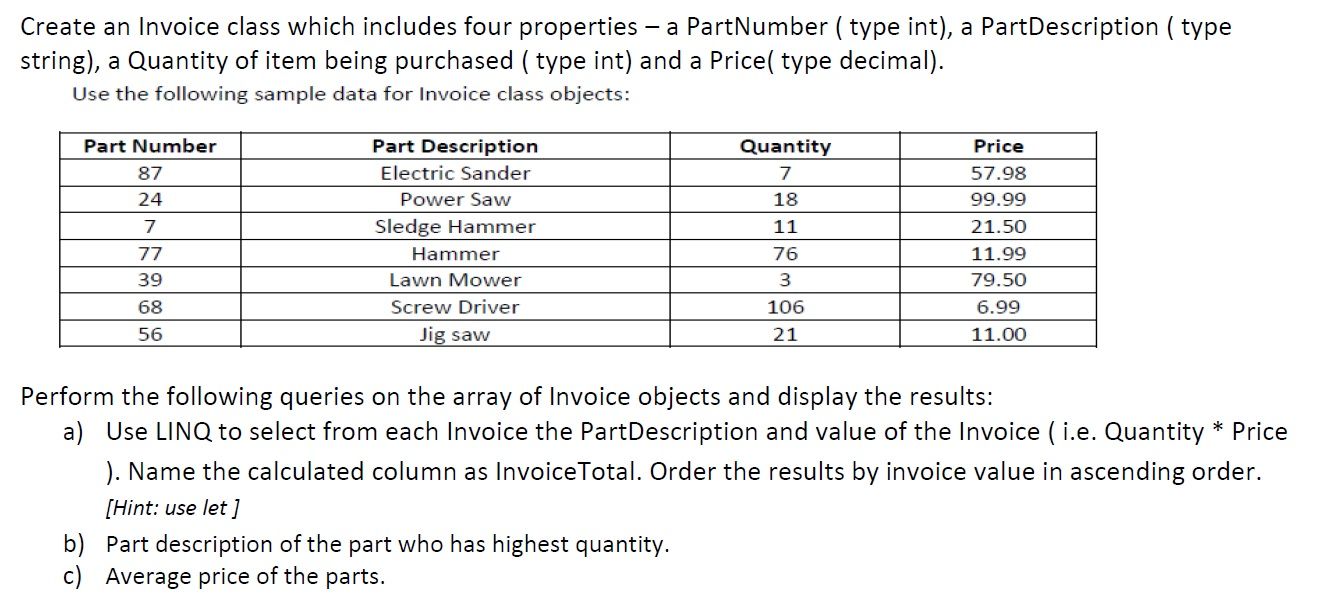
Create an Invoice class which includes four properties - a PartNumber ( type int), a PartDescription ( type string), a Quantity of item being purchased (type int) and a Pricel type decimal). Use the following sample data for Invoice class objects: Quantity Part Number 87 24 7 77 Part Description Electric Sander Power Saw Sledge Hammer Hammer Lawn Mower Screw Driver Jig saw 18 11 76 Price 57.98 99.99 21.50 1.99 79.50 6.99 11.00 1 39 3 68 56 106 21 Perform the following queries on the array of Invoice objects and display the results: a) Use LINQ to select from each Invoice the PartDescription and value of the Invoice (i.e. Quantity * Price ). Name the calculated column as Invoice Total. Order the results by invoice value in ascending order. [Hint: use let ] b) Part description of the part who has highest quantity. c) Average price of the parts. Create an Invoice class which includes four properties - a PartNumber ( type int), a PartDescription ( type string), a Quantity of item being purchased (type int) and a Pricel type decimal). Use the following sample data for Invoice class objects: Quantity Part Number 87 24 7 77 Part Description Electric Sander Power Saw Sledge Hammer Hammer Lawn Mower Screw Driver Jig saw 18 11 76 Price 57.98 99.99 21.50 1.99 79.50 6.99 11.00 1 39 3 68 56 106 21 Perform the following queries on the array of Invoice objects and display the results: a) Use LINQ to select from each Invoice the PartDescription and value of the Invoice (i.e. Quantity * Price ). Name the calculated column as Invoice Total. Order the results by invoice value in ascending order. [Hint: use let ] b) Part description of the part who has highest quantity. c) Average price of the parts
Step by Step Solution
There are 3 Steps involved in it

Get step-by-step solutions from verified subject matter experts
 Study Help