







Question: Below I have posted pictures containing all relevant problem information. However, I am really just looking for help implementing the contructors, set, and get methods.
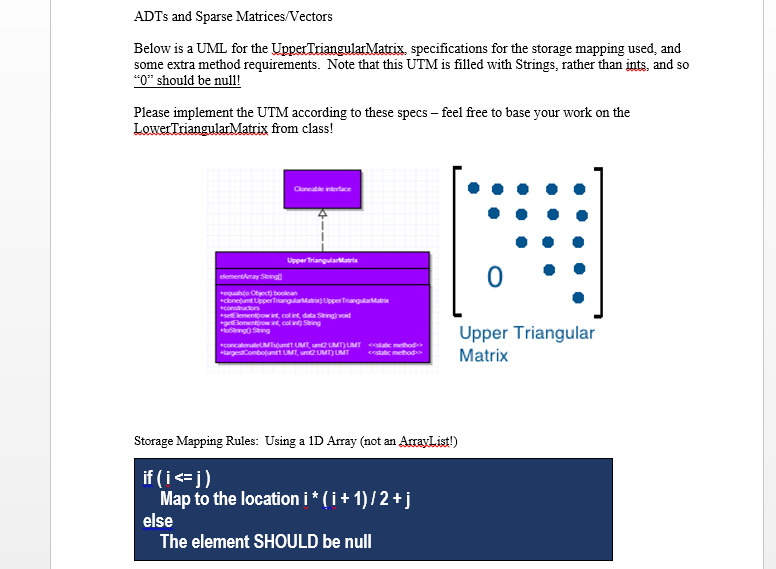
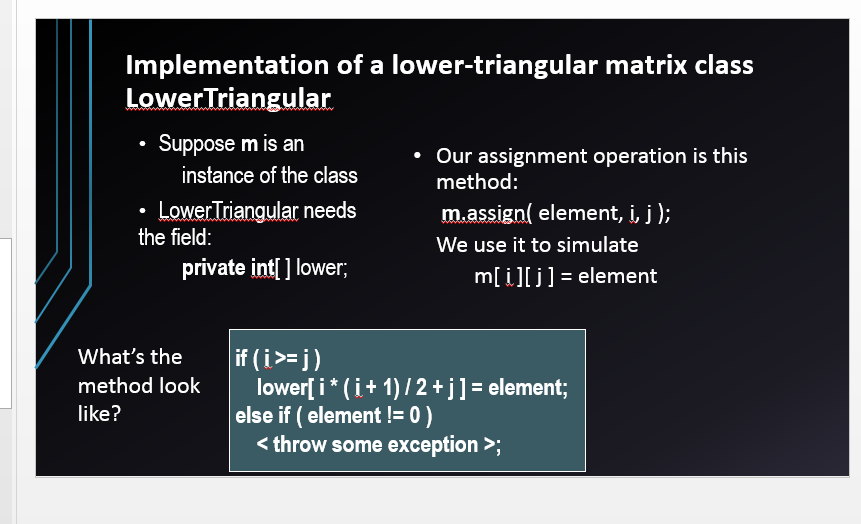
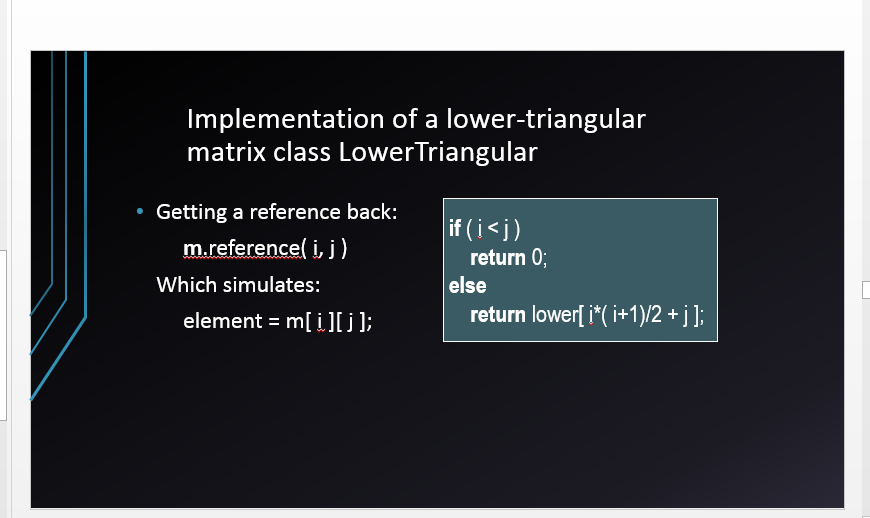
Below I have posted pictures containing all relevant problem information. However, I am really just looking for help implementing the contructors, set, and get methods. The UML is posted below with the parameters and return types specfied. Below the pictures of the problem, I have posted content from a ppt. which should help direct you toward the proper response to my question.
Note: If you cannot clearly see the pictures, just use the zoom function in the broweser, they will be clear enough.
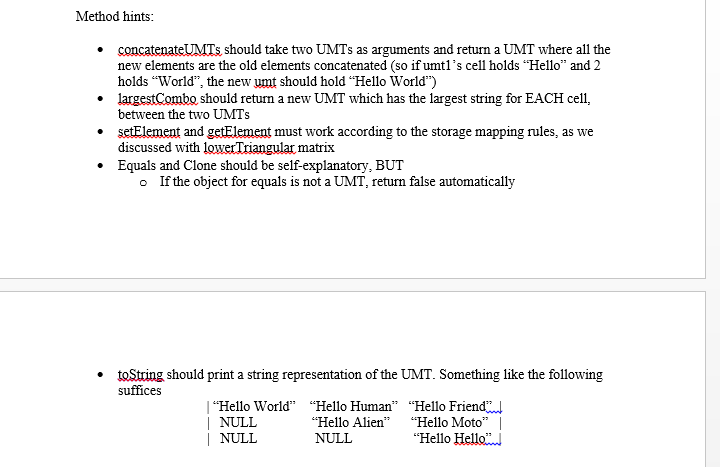
TEXT VERSION OF UML DIAGRAM /eed help most with the bold text methods and constructors....see method hints above.
-----------------------------------------------------------------------------------------------------------------------------------------------------
Cloneable Interface
^
|
|
|
UpperTriangularMatrix
elementArray: String[]
------------------------------------------------------------------------------------------------------------------------------------------
+equals(o:Object): Boolean
+clone(umt:UpperTriangularMatrix): UpperTriangularMatrix
+constructors ////didnt forget anything, this is all that is given
+setElement(row:int, col:int): void
+getElement(row:int, col:int): String
+toString(): String
+concatenateUMTs(umt1:UMT, umt2:UMT): UMT
largestCombo(umt1:UMT, umt2:UMT): UMT
ADTs and Sparse Matrices/Vectors Below is a UML for the UpperTriangularMatrix specifications for the storage mapping used, and some extra method requirements. Note that this UTM is filled with Strings, rather than ints, and so "O" should be null! Please implement the UTM according to these specs - feel free to base your work on the LowerTriangularMatrix from class! Cloneable iniertace 0 Upper Triangular Matrix Storage Mapping Rules: Using a 1D Array (not an ArrayList!) Map to the location i (i+1)/2+j else The element SHOULD be null
Step by Step Solution
There are 3 Steps involved in it

Get step-by-step solutions from verified subject matter experts
 Study Help