Question: can u answer a b c in 5-10 paragraphs STEP 3: Recommend solutions. Make your recommendations for solving the problem. Consider whether you want to
can u answer a b c in 5-10 paragraphs 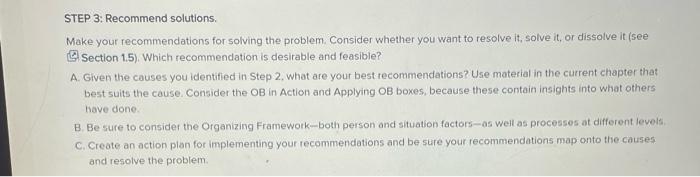
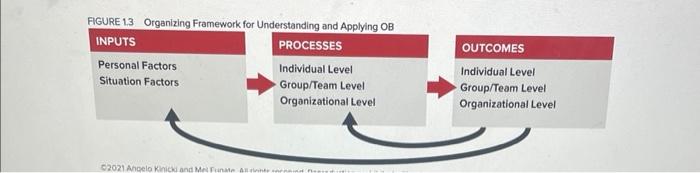
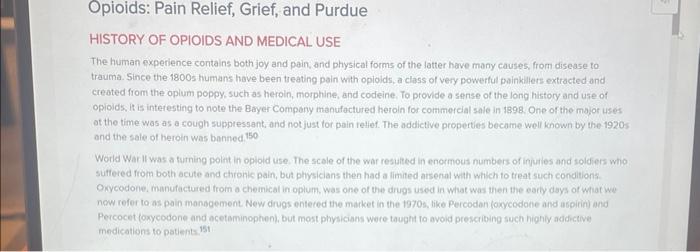
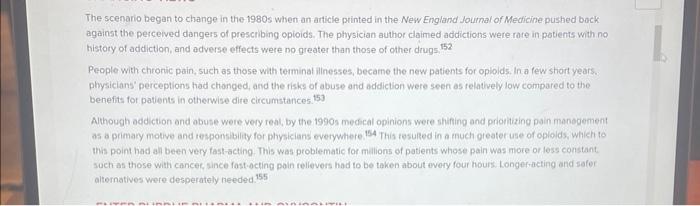
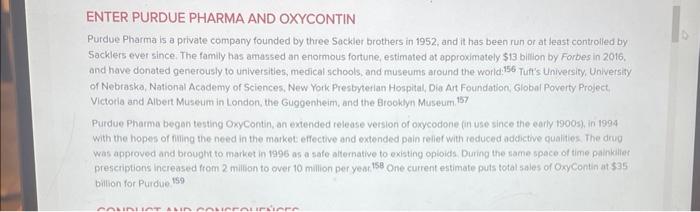
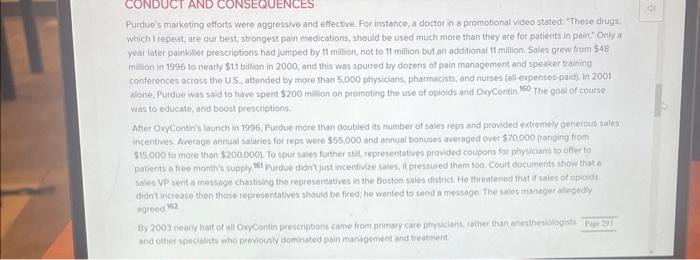
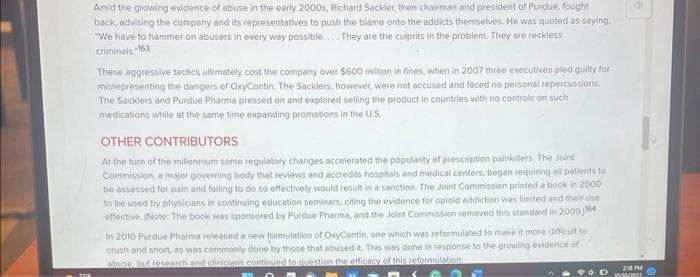
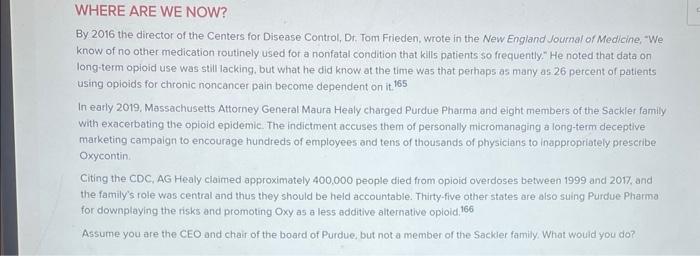
STEP 3: Recommend solutions. Make your recommendations for solving the problem. Consider whether you want to resolve it, solve it, or dissolve it (see (4) Section 1.5). Which recommendation is desirable and feasible? A. Given the causes you identified in Step 2. what are your best recommendations? Use material in the current chapter that best suits the cause. Consider the OB in Action and Applying OB boxes, because these contain insights into what others have done. B. Be sure to consider the Organizing Framework-both person and situation factors-as well as processes at different levels. C. Create an action plan for implementing your recommendations and be sure your recommendations map onto the causes and resolve the problem. FGURE 1.3 Organizing Framework for Understanding and Applying OB \begin{tabular}{|l|l|l|} \hline INPUTS & PROCESSES & OUTCOMES \\ \hline Personal Factors & Individual Level & Individual Level \\ Situation Factors & Group/Team Level & Group/Team Level \\ & & Organizational Level \\ \hline \end{tabular} Upiolds: Pain Relief, Grief, and Purdue HISTORY OF OPIOIDS AND MEDICAL USE The human experience contains both joy and pain, and physical forms of the latter have many causes, from disease to trauma. Since the 1800s humans have been treating pain with oploids, a class of very powerful painkillers extracted and creoted from the oplum poppy, such as heroin, morphine, and codeine. To provide a sense of the long history and use of opioids, it is interesting to note the Bayer Compeny manufoctured heroin for commercial sale in tis98. One of the major uses ot the time was as a cough supptessant, and not just for pain rellef. The addictive properties became well known by the 1920 and the sale of heroin was banned. 150 World War Il was a fuming point in opiold use. The scale of the war resulted in enormous numbers of injuites and soldiers who suffered from both acute and chronk pain, but physicians then had a limited arsenal with which to treat such conditions Oxycodone, manufactured from a chemical in oplum, was one of the drugs used in what was then the early days of what we. now refor to as pain mansgement New drugs enteced the market in the 1970s, like Percodan (oxycodoche and aspirin) and Percocet (oxycodone and acetaminophenf, but most physicians were taught to avoid prescibing such highily adidictive medications to patients 151 The scenario began to change in the 1980 s when-an article printed in the New England Journal of Mecticine pushed bock against the perceived dangers of prescribing opioids. The physician author claimed addictions were rare in patients with no history of addiction, and adverse effects were no greater than those of other drugs, 152 People with chroric pain, such as those with teminat ilinesses, became the new patients for opiolds, In a few short years. physicians' perceptions had chonged, and the risks of abuse and addiction were seen as relatively low compared to the benefits for patients in otherwise dire circumstances 15] Although addiction and abuse were very real, by the 1990 medical opinions were shining and prontizing pain manegement as a primary motive and responsibility for physicians everywhere 154 This resulted in a much greater use of oplolds, which to this point had all been very fast-acting. This was problematic for mailions of patients whose pain was more or less constant, soch as those with cancec, since fast-octing poin relievers had to be taken about every four hours. Longerracting and safer atternatives were desperately needed 155 ENTER PURDUE PHARMA AND OXYCONTIN Purdue Pharma is a private company founded by three Sackler brothers in 1952, and it has been run or at least controlied by Sacklers ever since. The family has amassed an enormous fortune, estimated at approximately $13 billion by Forbes in 2016. and have donated generously to universities, medical schools, and museums around the worldi: 156 . Tuft's University, University of Nebraska, National Academy of Sciences, New York Prestytetian Hospital, Dia Art Foundation, Global Poverty Project. Victotia and Albert Museum in London, the Guggentheim, and the Brooklyn Museum, 157 Purdue Pharma began testing OxyContin, an extended relesse verslon of oxycodone (in use since the early 19005 ), in 1994 With the hopes of filing the need in the market effective and extended pain rellef with reduced addictive qualities the drup Was approved and brought to market in 1996 as a safe alternative to existing opioids. During the tame spece. of time painkilier prescriptions increased from 2 million to over 10 million per yeat. 158 One current estimate puts total sales of Oxycontin at $35 bilition for Purdue 159 Purdue's matketing efforts were aggressive and effective. For instance, a doctor in a promotional video stated. 'These drugs. Which I repeat, afe our best, strongest pain madications, should be used much more than they aro for patients ia pain- Onily a year laterpainkiller prescriptions had jumped by 11 milition, not to 11 million but an additional th million. Sales grew from 548 multion in 1996 to nearly $11 billion in 2000, and this was spurred by dozens of pain managertent and speaker training conferences across the US., attended by more than 5,000 physicians, pharmacists, and nurses fall-expenses.paicf. In 2001 Alone, Purdue was said to have spent $200 atition on peomoting the use of oploids and OxyContin 160 The goil of course Was to educate, and boost prescriptions. Atter OxyContin's launch in 1996, Pusdue more than doubled its numiber of sales reps and provided extromesy generous sales incentives. Averoge annual salaries for reps were 555,000 and annual bonuses averaged over $70,000 (ranging from $15,000 to more than $200.000. To spur sales further stat, representatives provided coupons for plysiciart to offer to patients a free month's supply. Mit purdue didnt just incentivize sales, it pressured them too. Court documents show that a Sales VP sent a messagen chastbing the representatives in the Boston sales datict. He threotened that if saies of opioidit? didn' increase then those representatives should be firec, he wanted to tend a mossage. The sales mianacker ailegedy aglog2102 and other specialits who previously dominated pain management and treatment. Amid the growing evidence of abuse in the early 2000 s, Richard Sacker, then chaitman and president of Purdue. fought back, advising the company and its representatives to push the blame onto the addicts themiselves. He was quoted as saying. "We have to hammer on abusers in every way possible.... They ate the culprits in the problent. They are reckless criminals 163 These aggressive tactics ultimately cost the company over $600 milision in fines. When in 2007 three executives pled guilty for mistepresenting the dangers of OxyContin. The Sacklers, however, were not accused and faced no personal repercussions. The Saclders and Purdue Phatma pressed on and explored selling the product in countries with no controls on such medications while at the same time expanding promotions in the U.S, OTHER CONTRIBUTORS At the turn of the millennium some regulatory changes accelerated the populaify of prescilistion poinkillers. The Joint Commission, a major goveming bocty that reviews and accredits hospitals and medical centers, began requiring all potients to be assessed for pain and falling to do so effectively would result in a sanction. The Joint Commission printed a book in 2000 to be used by plysicians in continuing education seminars, citing the evidence for opiold addiction was limited and theif use effective. (Noter The book was sponsered by Purcue Pharma, and the Joint Commission temoved thes standard in 2009) 204. in 2010 Purdue Pharma released a new formulation of OxyContin, one which was reformulated to make it more difticiat io crush and snort, as was commonly done by those that abused it. This was done in response to the growing evidence of abusesbut cosedrch and dinicians continued to questen the officacy of this toformulation. By 2016 the director of the Centers for Disease Control, Di. Tom Frieden, wrote in the New England Journal of Medicine, "We know of no other medication routinely used for a nonifatal condition that kills patients so frequently." He noted that data on long-term opioid use was still lacking. but what he did know at the time was that perhaps as many as 26 percent of patients using opioids for chronic noncancer pain become dependent on it. 165 In early 2019. Massachusetts Attorney General Maura Healy charged Purdue Pharma and eight members of the Sackler family with exacerbating the opioid epidemic. The indictment accuses them of personally micromanaging a long-term deceptive marketing campaign to encourage hundreds of employees and tens of thousands of physicians to inappropriately prescribe Oxycontin. Citing the CDC, AG Healy claimed approximately 400,000 people died from opioid overdoses between 1999 and 2017 , and the family's role was central and thus they should be held accountable. Thirty-five other states are also suing Purdue Pharma for downplaying the risks and promoting Oxy as a less additive alternative opioid. 166 Assume you are the CEO and chair of the board of Purdue, but not member of the Sackier family. What would you do? STEP 3: Recommend solutions. Make your recommendations for solving the problem. Consider whether you want to resolve it, solve it, or dissolve it (see (4) Section 1.5). Which recommendation is desirable and feasible? A. Given the causes you identified in Step 2. what are your best recommendations? Use material in the current chapter that best suits the cause. Consider the OB in Action and Applying OB boxes, because these contain insights into what others have done. B. Be sure to consider the Organizing Framework-both person and situation factors-as well as processes at different levels. C. Create an action plan for implementing your recommendations and be sure your recommendations map onto the causes and resolve the problem. FGURE 1.3 Organizing Framework for Understanding and Applying OB \begin{tabular}{|l|l|l|} \hline INPUTS & PROCESSES & OUTCOMES \\ \hline Personal Factors & Individual Level & Individual Level \\ Situation Factors & Group/Team Level & Group/Team Level \\ & & Organizational Level \\ \hline \end{tabular} Upiolds: Pain Relief, Grief, and Purdue HISTORY OF OPIOIDS AND MEDICAL USE The human experience contains both joy and pain, and physical forms of the latter have many causes, from disease to trauma. Since the 1800s humans have been treating pain with oploids, a class of very powerful painkillers extracted and creoted from the oplum poppy, such as heroin, morphine, and codeine. To provide a sense of the long history and use of opioids, it is interesting to note the Bayer Compeny manufoctured heroin for commercial sale in tis98. One of the major uses ot the time was as a cough supptessant, and not just for pain rellef. The addictive properties became well known by the 1920 and the sale of heroin was banned. 150 World War Il was a fuming point in opiold use. The scale of the war resulted in enormous numbers of injuites and soldiers who suffered from both acute and chronk pain, but physicians then had a limited arsenal with which to treat such conditions Oxycodone, manufactured from a chemical in oplum, was one of the drugs used in what was then the early days of what we. now refor to as pain mansgement New drugs enteced the market in the 1970s, like Percodan (oxycodoche and aspirin) and Percocet (oxycodone and acetaminophenf, but most physicians were taught to avoid prescibing such highily adidictive medications to patients 151 The scenario began to change in the 1980 s when-an article printed in the New England Journal of Mecticine pushed bock against the perceived dangers of prescribing opioids. The physician author claimed addictions were rare in patients with no history of addiction, and adverse effects were no greater than those of other drugs, 152 People with chroric pain, such as those with teminat ilinesses, became the new patients for opiolds, In a few short years. physicians' perceptions had chonged, and the risks of abuse and addiction were seen as relatively low compared to the benefits for patients in otherwise dire circumstances 15] Although addiction and abuse were very real, by the 1990 medical opinions were shining and prontizing pain manegement as a primary motive and responsibility for physicians everywhere 154 This resulted in a much greater use of oplolds, which to this point had all been very fast-acting. This was problematic for mailions of patients whose pain was more or less constant, soch as those with cancec, since fast-octing poin relievers had to be taken about every four hours. Longerracting and safer atternatives were desperately needed 155 ENTER PURDUE PHARMA AND OXYCONTIN Purdue Pharma is a private company founded by three Sackler brothers in 1952, and it has been run or at least controlied by Sacklers ever since. The family has amassed an enormous fortune, estimated at approximately $13 billion by Forbes in 2016. and have donated generously to universities, medical schools, and museums around the worldi: 156 . Tuft's University, University of Nebraska, National Academy of Sciences, New York Prestytetian Hospital, Dia Art Foundation, Global Poverty Project. Victotia and Albert Museum in London, the Guggentheim, and the Brooklyn Museum, 157 Purdue Pharma began testing OxyContin, an extended relesse verslon of oxycodone (in use since the early 19005 ), in 1994 With the hopes of filing the need in the market effective and extended pain rellef with reduced addictive qualities the drup Was approved and brought to market in 1996 as a safe alternative to existing opioids. During the tame spece. of time painkilier prescriptions increased from 2 million to over 10 million per yeat. 158 One current estimate puts total sales of Oxycontin at $35 bilition for Purdue 159 Purdue's matketing efforts were aggressive and effective. For instance, a doctor in a promotional video stated. 'These drugs. Which I repeat, afe our best, strongest pain madications, should be used much more than they aro for patients ia pain- Onily a year laterpainkiller prescriptions had jumped by 11 milition, not to 11 million but an additional th million. Sales grew from 548 multion in 1996 to nearly $11 billion in 2000, and this was spurred by dozens of pain managertent and speaker training conferences across the US., attended by more than 5,000 physicians, pharmacists, and nurses fall-expenses.paicf. In 2001 Alone, Purdue was said to have spent $200 atition on peomoting the use of oploids and OxyContin 160 The goil of course Was to educate, and boost prescriptions. Atter OxyContin's launch in 1996, Pusdue more than doubled its numiber of sales reps and provided extromesy generous sales incentives. Averoge annual salaries for reps were 555,000 and annual bonuses averaged over $70,000 (ranging from $15,000 to more than $200.000. To spur sales further stat, representatives provided coupons for plysiciart to offer to patients a free month's supply. Mit purdue didnt just incentivize sales, it pressured them too. Court documents show that a Sales VP sent a messagen chastbing the representatives in the Boston sales datict. He threotened that if saies of opioidit? didn' increase then those representatives should be firec, he wanted to tend a mossage. The sales mianacker ailegedy aglog2102 and other specialits who previously dominated pain management and treatment. Amid the growing evidence of abuse in the early 2000 s, Richard Sacker, then chaitman and president of Purdue. fought back, advising the company and its representatives to push the blame onto the addicts themiselves. He was quoted as saying. "We have to hammer on abusers in every way possible.... They ate the culprits in the problent. They are reckless criminals 163 These aggressive tactics ultimately cost the company over $600 milision in fines. When in 2007 three executives pled guilty for mistepresenting the dangers of OxyContin. The Sacklers, however, were not accused and faced no personal repercussions. The Saclders and Purdue Phatma pressed on and explored selling the product in countries with no controls on such medications while at the same time expanding promotions in the U.S, OTHER CONTRIBUTORS At the turn of the millennium some regulatory changes accelerated the populaify of prescilistion poinkillers. The Joint Commission, a major goveming bocty that reviews and accredits hospitals and medical centers, began requiring all potients to be assessed for pain and falling to do so effectively would result in a sanction. The Joint Commission printed a book in 2000 to be used by plysicians in continuing education seminars, citing the evidence for opiold addiction was limited and theif use effective. (Noter The book was sponsered by Purcue Pharma, and the Joint Commission temoved thes standard in 2009) 204. in 2010 Purdue Pharma released a new formulation of OxyContin, one which was reformulated to make it more difticiat io crush and snort, as was commonly done by those that abused it. This was done in response to the growing evidence of abusesbut cosedrch and dinicians continued to questen the officacy of this toformulation. By 2016 the director of the Centers for Disease Control, Di. Tom Frieden, wrote in the New England Journal of Medicine, "We know of no other medication routinely used for a nonifatal condition that kills patients so frequently." He noted that data on long-term opioid use was still lacking. but what he did know at the time was that perhaps as many as 26 percent of patients using opioids for chronic noncancer pain become dependent on it. 165 In early 2019. Massachusetts Attorney General Maura Healy charged Purdue Pharma and eight members of the Sackler family with exacerbating the opioid epidemic. The indictment accuses them of personally micromanaging a long-term deceptive marketing campaign to encourage hundreds of employees and tens of thousands of physicians to inappropriately prescribe Oxycontin. Citing the CDC, AG Healy claimed approximately 400,000 people died from opioid overdoses between 1999 and 2017 , and the family's role was central and thus they should be held accountable. Thirty-five other states are also suing Purdue Pharma for downplaying the risks and promoting Oxy as a less additive alternative opioid. 166 Assume you are the CEO and chair of the board of Purdue, but not member of the Sackier family. What would you do









 Study Help