



Question: CAN U PLEASE HELP WITH ALL THESE THEY ALL REFER TO THE FIRST QUESTION Question 35 1 pts Suppose you have a three task sequence.
CAN U PLEASE HELP WITH ALL THESE THEY ALL REFER TO THE FIRST QUESTION
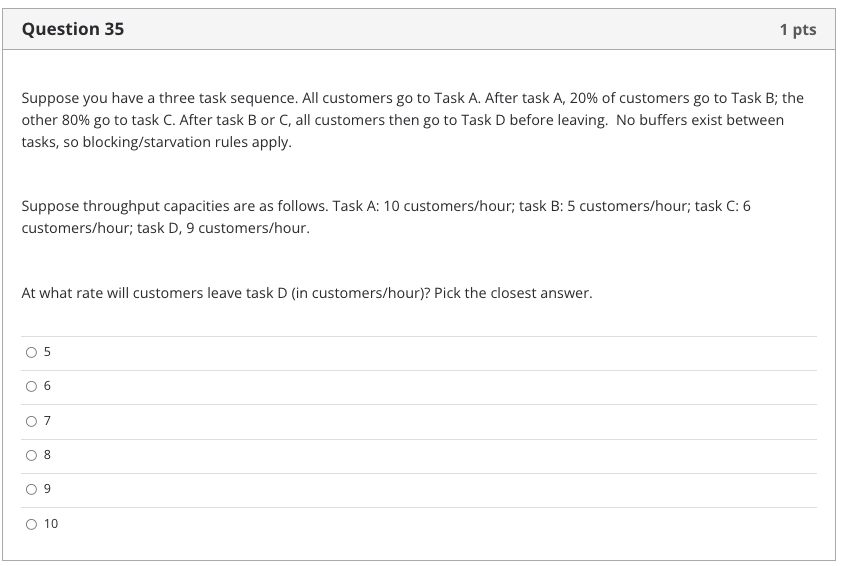
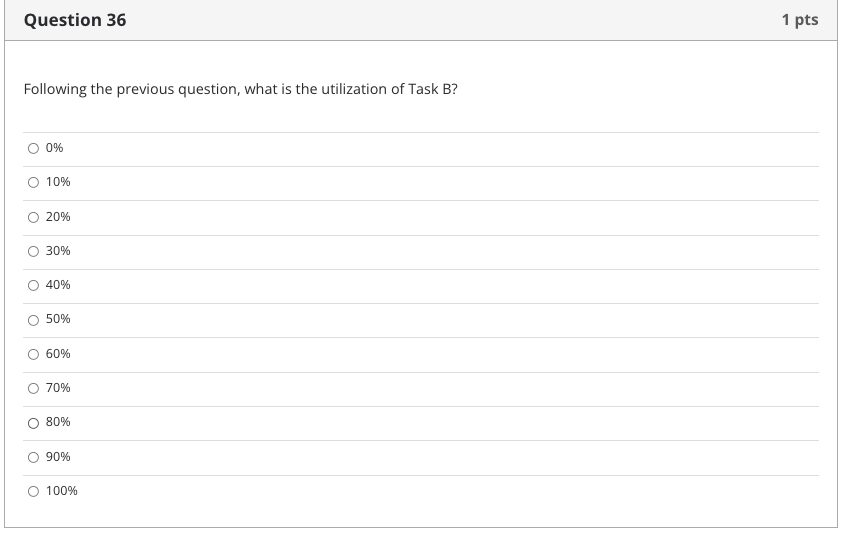
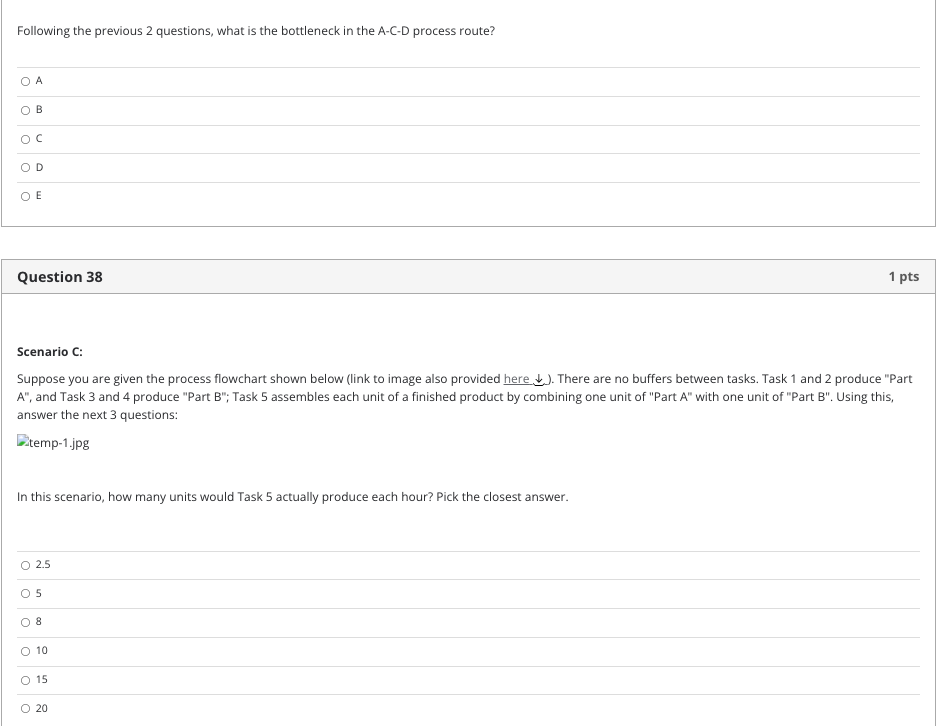
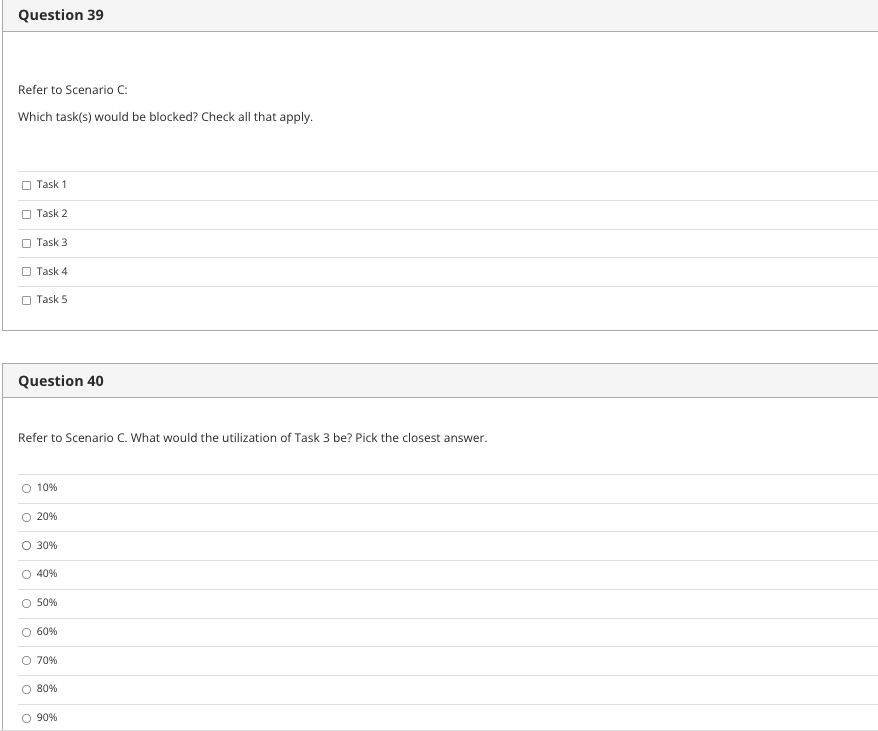
Question 35 1 pts Suppose you have a three task sequence. All customers go to Task A. After task A, 20% of customers go to Task B; the other 80% go to task C. After task B or C, all customers then go to Task D before leaving. No buffers exist between tasks, so blocking/starvation rules apply. Suppose throughput capacities are as follows. Task A: 10 customers/hour; task B: 5 customers/hour; task C:6 customers/hour; task D, 9 customers/hour. At what rate will customers leave task D (in customers/hour)? Pick the closest answer. 5 O 6 o 7 O 00 o 9 10 Question 36 1 pts Following the previous question, what is the utilization of Task B? 0% 10% 20% 30% 40% 50% 60% 70% 80% 90% 100% Following the previous 2 questions, what is the bottleneck in the A-C-D process route? A OB OD Question 38 1 pts Scenario c: Suppose you are given the process flowchart shown below (link to image also provided here ). There are no buffers between tasks. Task 1 and 2 produce "Part A", and Task 3 and 4 produce "Part B"; Task 5 assembles each unit of a finished product by combining one unit of "Part A" with one unit of "Part B". Using this, answer the next 3 questions: Dtemp-1.jpg In this scenario, how many units would Task 5 actually produce each hour? Pick the closest answer. O 2.5 O 5 08 O 10 O 15 O 20 Question 39 Refer to Scenario : Which task(s) would be blocked? Check all that apply. Task 1 Task 2 Task 3 Task 4 Task 5 Question 40 Refer to Scenario C. What would the utili tion be? Pick the closest answer. O 10% O 20% O 30% O 40% O 50% O 60% O 70% O 80% o 90%Step by Step Solution
There are 3 Steps involved in it
1 Expert Approved Answer
Step: 1 Unlock

Question Has Been Solved by an Expert!
Get step-by-step solutions from verified subject matter experts
Step: 2 Unlock
Step: 3 Unlock