







Question: Case Study 2: Conducting a Sequence Analysis A radio station developed a Web site to broaden its audience appeal and its offerings. In addition to
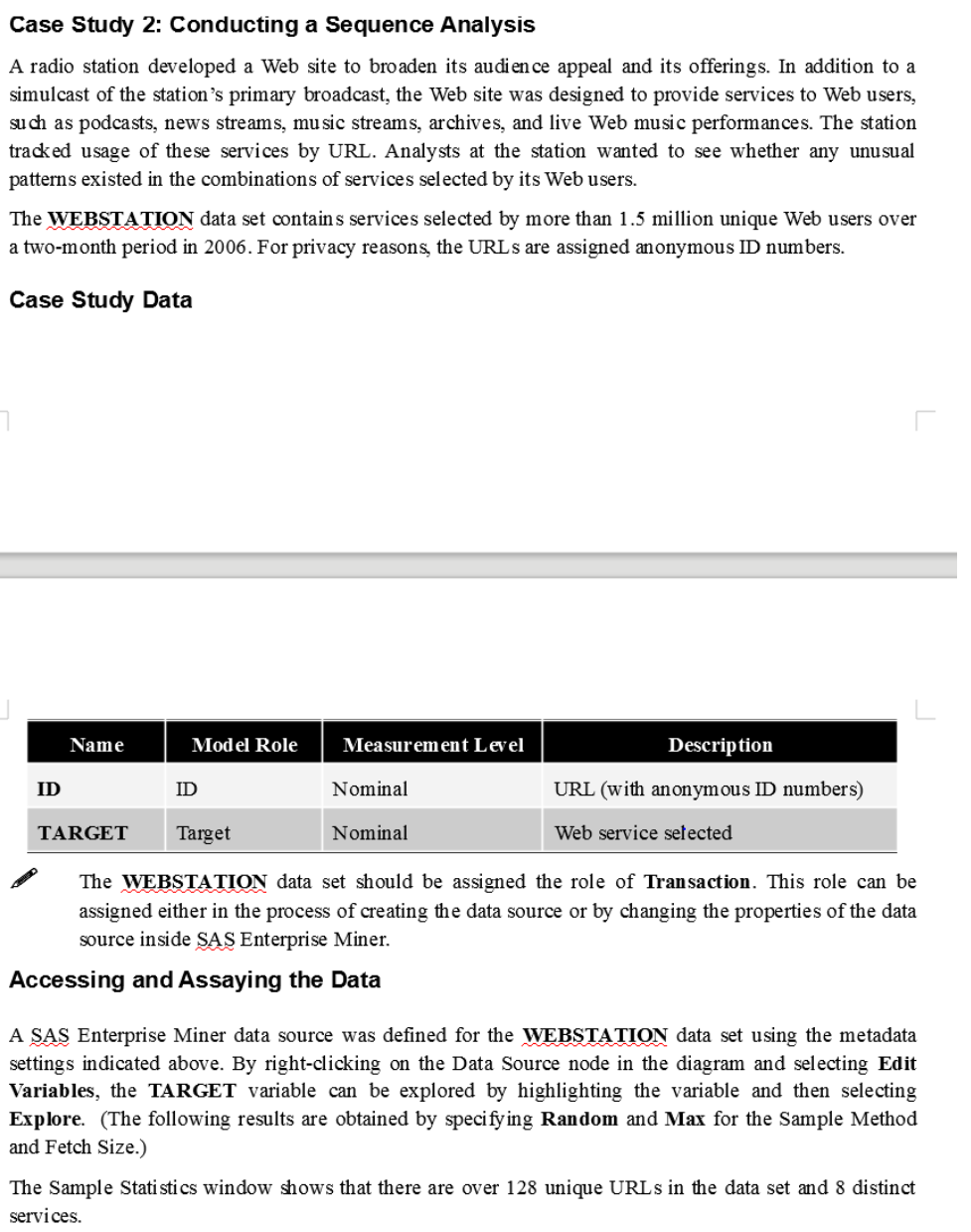
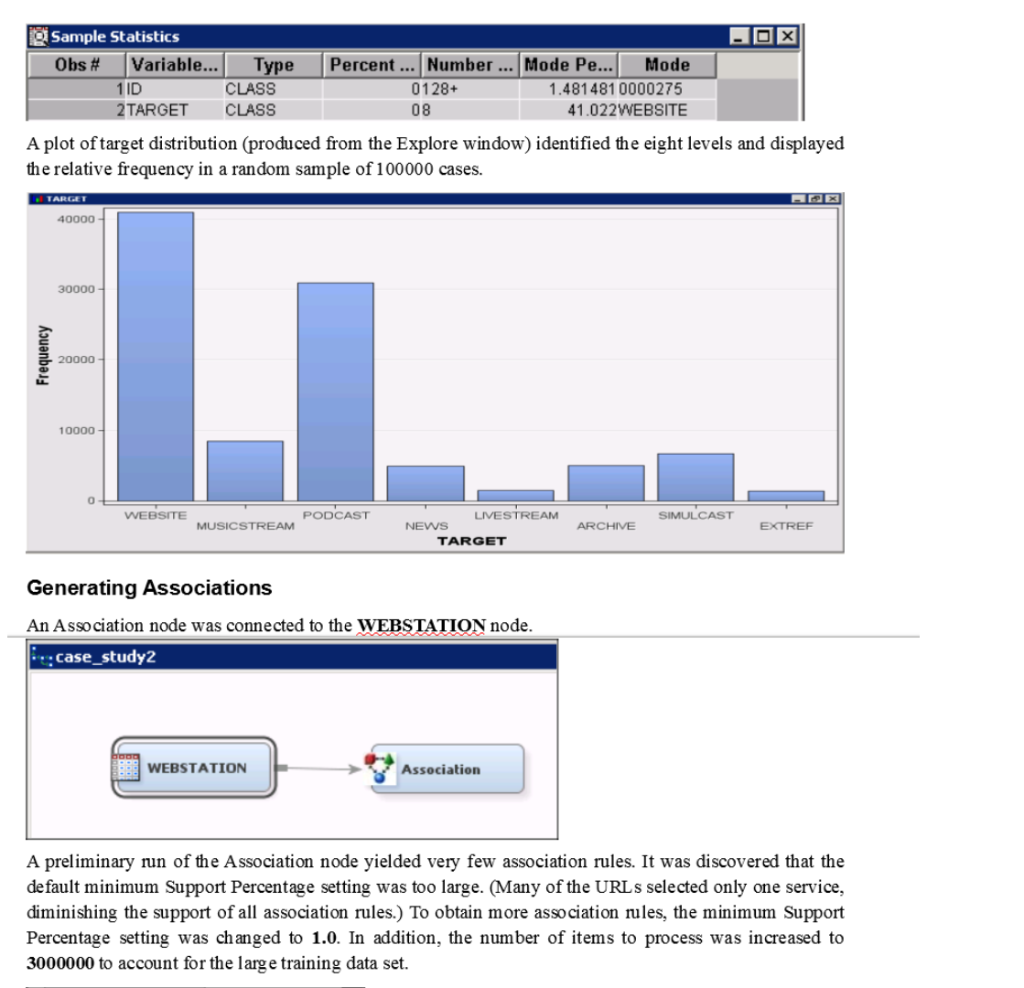
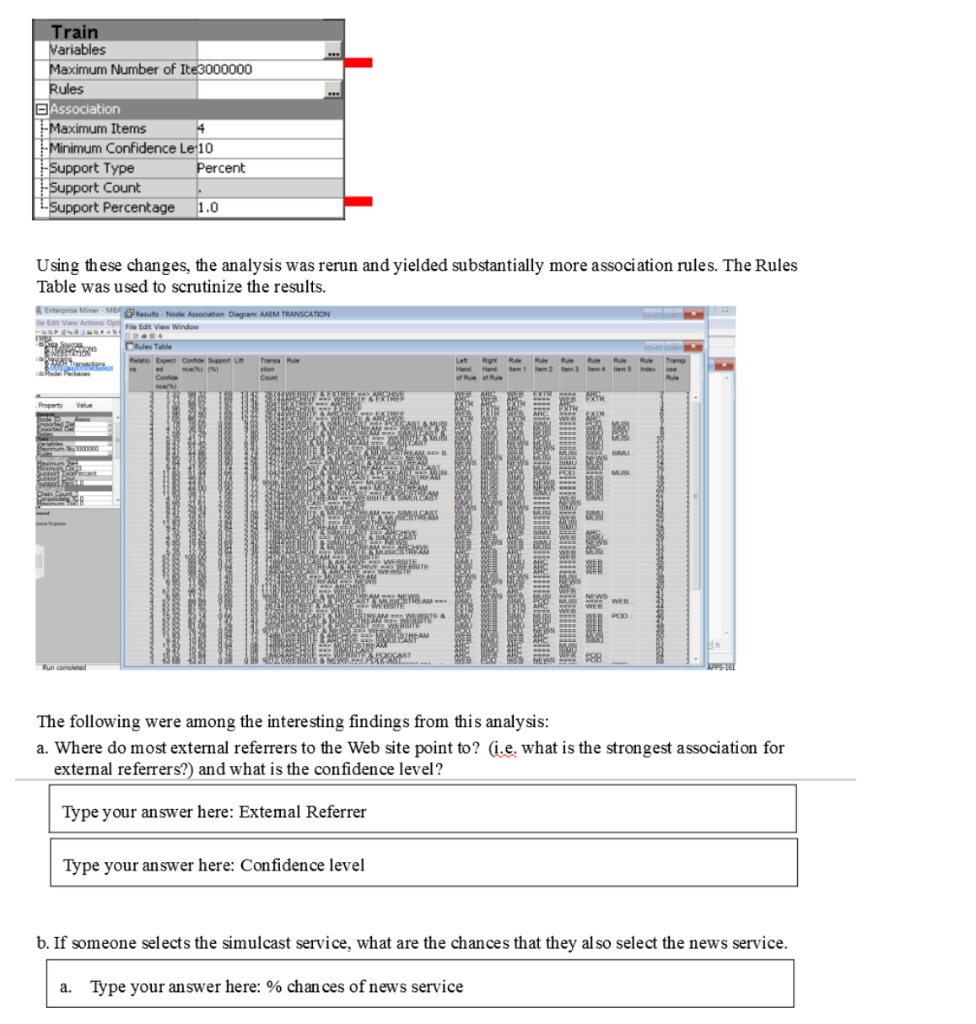
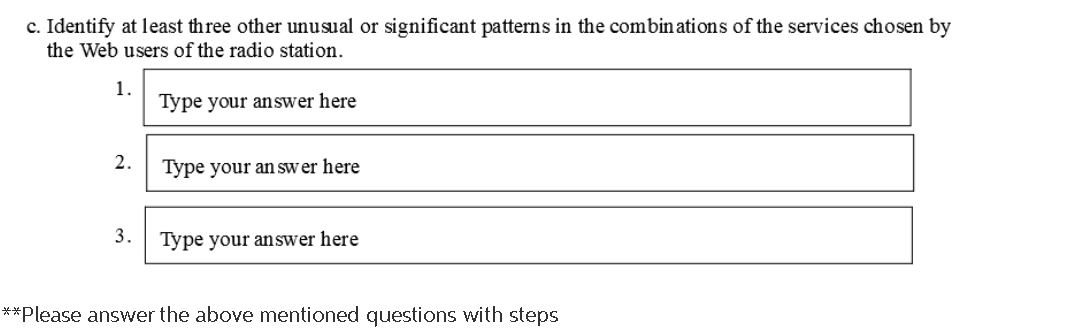
Case Study 2: Conducting a Sequence Analysis A radio station developed a Web site to broaden its audience appeal and its offerings. In addition to a simulcast of the station's primary broadcast, the Web site was designed to provide services to Web users, such as podcasts, news streams, music streams, archives, and live Web music performances. The station track ed usage of these services by URL. Analysts at the station wanted to see whether any unusual patterns existed in the combinations of services selected by its Web users. The WEBSTATION data set contains services selected by more than 1.5 million unique Web users over a two- month period in 2006. For privacy reasons, the URLs are assigned anonymous ID numbers. Case Study Data Name Model Role Measurement Level Description ID ID Nominal URL (with anonymous ID numbers) TARGET Target Nominal Web service setected The WEBSTATION data set should be assigned the role of Transaction. This role can be assigned either in the process of creating the data source or by changing the properties of the data source inside SAS Enterprise Miner. Accessing and Assaying the Data A SAS Enterprise Miner data source was defined for the WEBSTATION data set using the metadata settings indicated above. By right-clicking on the Data Source node in the diagram and selecting Edit Variables, the TARGET variable can be explored by highlighting the variable and then selecting Explore. (The following results are obtained by specifying Random and Max for the Sample Method and Fetch Size.) The Sample Statistics window shows that there are over 128 unique URLs in the data set and 8 distinct services. Sample Statistics Obs # Variable... Type Percent ... Number ... Mode Pe... Mode 11D CLASS 0128+ 1.481 481 0000275 2 TARGET CLASS 08 41.022WEBSITE A plot of target distribution (produced from the Explore window) identified the eight levels and displayed the relative frequency in a random sample of 100000 cases. TARGET 40000 30000 Frequency 20000 LL 10000 WEBSITE PODCAST MUSICSTREAM SIMULCAST LIVESTREAM NEWS TARGET ARCHIVE EXTREF Generating Associations An Association node was connected to the WEBSTATION node. case_study2 WEBSTATION Association A preliminary run of the Association node yielded very few association rules. It was discovered that the default minimum Support Percentage setting was too large. (Many of the URLs selected only one service, diminishing the support of all association rules.) To obtain more association rules, the minimum Support Percentage setting was changed to 1.0. In addition, the number of items to process was increased to 3000000 to account for the larg e training data set. ca Train Variables Maximum Number of Ite3000000 Rules D Association - Maximum Items - Minimum Confidence Le 10 - Support Type Percent - Support Count L. Support Percentage 1.0 Using these changes, the analysis was rerun and yielded substantially more association rules. The Rules Table was used to scrutinize the results. e Miner MS Results. Nodes Association Diagram AMIM TRANSCATION to Action Fit View Window WATERS Rules Table SIM 10 Relatio Expect Contide Support un Contie SE VE TAHVE Property Value Rot Rue ton 5 EXTR EXT arte MU MUSI THEAM A WSCAS es OLA AMO WERS FBSITE ALAM WEB WEB AM WEBSITE BLOMSTER WASITE ARASI Run completed The following were among the interesting findings from this analysis: a. Where do most external referrers to the Web site point to? (i.e. what is the strongest association for external referrers?) and what is the confidence level? Type your answer here: Extemal Referrer Type your answer here: Confidence level b. If someone selects the simulcast service, what are the chances that they also select the news service. a. Type your answer here: % chances of news service c. Identify at least three other unusual or significant patterns in the combinations of the services chosen by the Web users of the radio station. 1. Type your answer here 2. Type your answer here 3. Type your answer here **Please answer the above mentioned questions with steps Case Study 2: Conducting a Sequence Analysis A radio station developed a Web site to broaden its audience appeal and its offerings. In addition to a simulcast of the station's primary broadcast, the Web site was designed to provide services to Web users, such as podcasts, news streams, music streams, archives, and live Web music performances. The station track ed usage of these services by URL. Analysts at the station wanted to see whether any unusual patterns existed in the combinations of services selected by its Web users. The WEBSTATION data set contains services selected by more than 1.5 million unique Web users over a two- month period in 2006. For privacy reasons, the URLs are assigned anonymous ID numbers. Case Study Data Name Model Role Measurement Level Description ID ID Nominal URL (with anonymous ID numbers) TARGET Target Nominal Web service setected The WEBSTATION data set should be assigned the role of Transaction. This role can be assigned either in the process of creating the data source or by changing the properties of the data source inside SAS Enterprise Miner. Accessing and Assaying the Data A SAS Enterprise Miner data source was defined for the WEBSTATION data set using the metadata settings indicated above. By right-clicking on the Data Source node in the diagram and selecting Edit Variables, the TARGET variable can be explored by highlighting the variable and then selecting Explore. (The following results are obtained by specifying Random and Max for the Sample Method and Fetch Size.) The Sample Statistics window shows that there are over 128 unique URLs in the data set and 8 distinct services. Sample Statistics Obs # Variable... Type Percent ... Number ... Mode Pe... Mode 11D CLASS 0128+ 1.481 481 0000275 2 TARGET CLASS 08 41.022WEBSITE A plot of target distribution (produced from the Explore window) identified the eight levels and displayed the relative frequency in a random sample of 100000 cases. TARGET 40000 30000 Frequency 20000 LL 10000 WEBSITE PODCAST MUSICSTREAM SIMULCAST LIVESTREAM NEWS TARGET ARCHIVE EXTREF Generating Associations An Association node was connected to the WEBSTATION node. case_study2 WEBSTATION Association A preliminary run of the Association node yielded very few association rules. It was discovered that the default minimum Support Percentage setting was too large. (Many of the URLs selected only one service, diminishing the support of all association rules.) To obtain more association rules, the minimum Support Percentage setting was changed to 1.0. In addition, the number of items to process was increased to 3000000 to account for the larg e training data set. ca Train Variables Maximum Number of Ite3000000 Rules D Association - Maximum Items - Minimum Confidence Le 10 - Support Type Percent - Support Count L. Support Percentage 1.0 Using these changes, the analysis was rerun and yielded substantially more association rules. The Rules Table was used to scrutinize the results. e Miner MS Results. Nodes Association Diagram AMIM TRANSCATION to Action Fit View Window WATERS Rules Table SIM 10 Relatio Expect Contide Support un Contie SE VE TAHVE Property Value Rot Rue ton 5 EXTR EXT arte MU MUSI THEAM A WSCAS es OLA AMO WERS FBSITE ALAM WEB WEB AM WEBSITE BLOMSTER WASITE ARASI Run completed The following were among the interesting findings from this analysis: a. Where do most external referrers to the Web site point to? (i.e. what is the strongest association for external referrers?) and what is the confidence level? Type your answer here: Extemal Referrer Type your answer here: Confidence level b. If someone selects the simulcast service, what are the chances that they also select the news service. a. Type your answer here: % chances of news service c. Identify at least three other unusual or significant patterns in the combinations of the services chosen by the Web users of the radio station. 1. Type your answer here 2. Type your answer here 3. Type your answer here **Please answer the above mentioned questions with steps
Step by Step Solution
There are 3 Steps involved in it

Get step-by-step solutions from verified subject matter experts
 Study Help