







Question: Create a context, key-based, and fully attributed data model for the above information Vendor: Several vendors supply the items that BRAG sells through its web-based
Create a context, key-based, and fully attributed data model for the above information
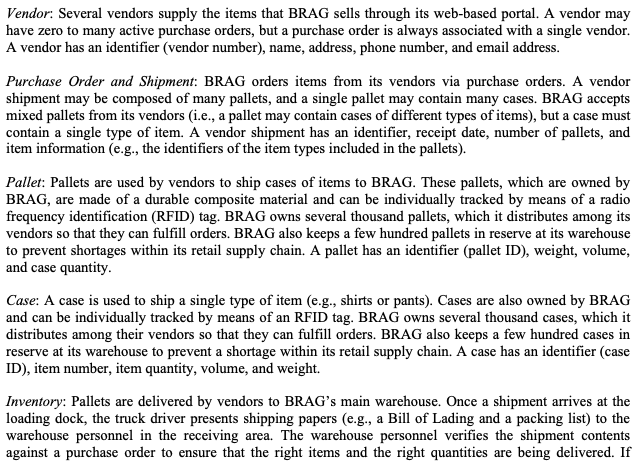
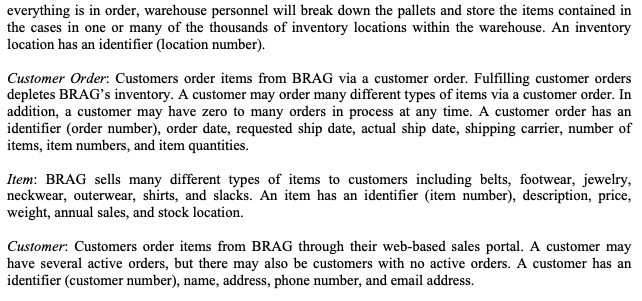
Vendor: Several vendors supply the items that BRAG sells through its web-based portal. A vendor may have zero to many active purchase orders, but a purchase order is always associated with a single vendor. A vendor has an identifier (vendor number), name, address, phone number, and email address. Purchase Order and Shipment: BRAG orders items from its vendors via purchase orders. A vendor shipment may be composed of many pallets, and a single pallet may contain many cases. BRAG accepts mixed pallets from its vendors (i.e., a pallet may contain cases of different types of items), but a case must contain a single type of item. A vendor shipment has an identifier, receipt date, number of pallets, and item information (e.g., the identifiers of the item types included in the pallets). Pallet: Pallets are used by vendors to ship cases of items to BRAG. These pallets, which are owned by BRAG, are made of a durable composite material and can be individually tracked by means of a radio frequency identification (RFID) tag. BRAG owns several thousand pallets, which it distributes among its vendors so that they can fulfill orders. BRAG also keeps a few hundred pallets in reserve at its warehouse to prevent shortages within its retail supply chain. A pallet has an identifier (pallet ID), weight, volume, and case quantity Case: A case is used to ship a single type of item (e.g., shirts or pants). Cases are also owned by BRAG and can be individually tracked by means of an RFID tag. BRAG owns several thousand cases, which it distributes among their vendors so that they can fulfill orders. BRAG also keeps a few hundred cases in reserve at its warehouse to prevent a shortage within its retail supply chain. A case has an identifier (case ID), item number, item quantity, volume, and weight. Inventory: Pallets are delivered by vendors to BRAG's main warehouse. Once a shipment arrives at the loading dock, the truck driver presents shipping papers (e.g., a Bill of Lading and a packing list) to the warehouse personnel in the receiving area. The warehouse personnel verifies the shipment contents against a purchase order to ensure that the right items and the right quantities are being delivered. If everything is in order, warehouse personnel will break down the pallets and store the items contained in the cases in one or many of the thousands of inventory locations within the warehouse. An inventory location has an identifier location number). Customer Order: Customers order items from BRAG via a customer order. Fulfilling customer orders depletes BRAG's inventory. A customer may order many different types of items via a customer order. In addition, a customer may have zero to many orders in process at any time. A customer order has an identifier (order number), order date, requested ship date, actual ship date, shipping carrier, number of items, item numbers, and item quantities. Item: BRAG sells many different types of items to customers including belts, footwear, jewelry, neckwear, outerwear, shirts, and slacks. An item has an identifier (item number), description, price, weight, annual sales, and stock location. Customer. Customers order items from BRAG through their web-based sales portal. A customer may have several active orders, but there may also be customers with no active orders. A customer has an identifier (customer number), name, address, phone number, and email address. Vendor: Several vendors supply the items that BRAG sells through its web-based portal. A vendor may have zero to many active purchase orders, but a purchase order is always associated with a single vendor. A vendor has an identifier (vendor number), name, address, phone number, and email address. Purchase Order and Shipment: BRAG orders items from its vendors via purchase orders. A vendor shipment may be composed of many pallets, and a single pallet may contain many cases. BRAG accepts mixed pallets from its vendors (i.e., a pallet may contain cases of different types of items), but a case must contain a single type of item. A vendor shipment has an identifier, receipt date, number of pallets, and item information (e.g., the identifiers of the item types included in the pallets). Pallet: Pallets are used by vendors to ship cases of items to BRAG. These pallets, which are owned by BRAG, are made of a durable composite material and can be individually tracked by means of a radio frequency identification (RFID) tag. BRAG owns several thousand pallets, which it distributes among its vendors so that they can fulfill orders. BRAG also keeps a few hundred pallets in reserve at its warehouse to prevent shortages within its retail supply chain. A pallet has an identifier (pallet ID), weight, volume, and case quantity Case: A case is used to ship a single type of item (e.g., shirts or pants). Cases are also owned by BRAG and can be individually tracked by means of an RFID tag. BRAG owns several thousand cases, which it distributes among their vendors so that they can fulfill orders. BRAG also keeps a few hundred cases in reserve at its warehouse to prevent a shortage within its retail supply chain. A case has an identifier (case ID), item number, item quantity, volume, and weight. Inventory: Pallets are delivered by vendors to BRAG's main warehouse. Once a shipment arrives at the loading dock, the truck driver presents shipping papers (e.g., a Bill of Lading and a packing list) to the warehouse personnel in the receiving area. The warehouse personnel verifies the shipment contents against a purchase order to ensure that the right items and the right quantities are being delivered. If everything is in order, warehouse personnel will break down the pallets and store the items contained in the cases in one or many of the thousands of inventory locations within the warehouse. An inventory location has an identifier location number). Customer Order: Customers order items from BRAG via a customer order. Fulfilling customer orders depletes BRAG's inventory. A customer may order many different types of items via a customer order. In addition, a customer may have zero to many orders in process at any time. A customer order has an identifier (order number), order date, requested ship date, actual ship date, shipping carrier, number of items, item numbers, and item quantities. Item: BRAG sells many different types of items to customers including belts, footwear, jewelry, neckwear, outerwear, shirts, and slacks. An item has an identifier (item number), description, price, weight, annual sales, and stock location. Customer. Customers order items from BRAG through their web-based sales portal. A customer may have several active orders, but there may also be customers with no active orders. A customer has an identifier (customer number), name, address, phone number, and email addressStep by Step Solution
There are 3 Steps involved in it
1 Expert Approved Answer
Step: 1 Unlock

Question Has Been Solved by an Expert!
Get step-by-step solutions from verified subject matter experts
Step: 2 Unlock
Step: 3 Unlock
 Study Help