







Question: create a sequence diagram UML yea any sequence diagram Use Case Description Use Case Name: Buy video game ID:2 Importance Level: High Primary Actor: Buyer
create a sequence diagram 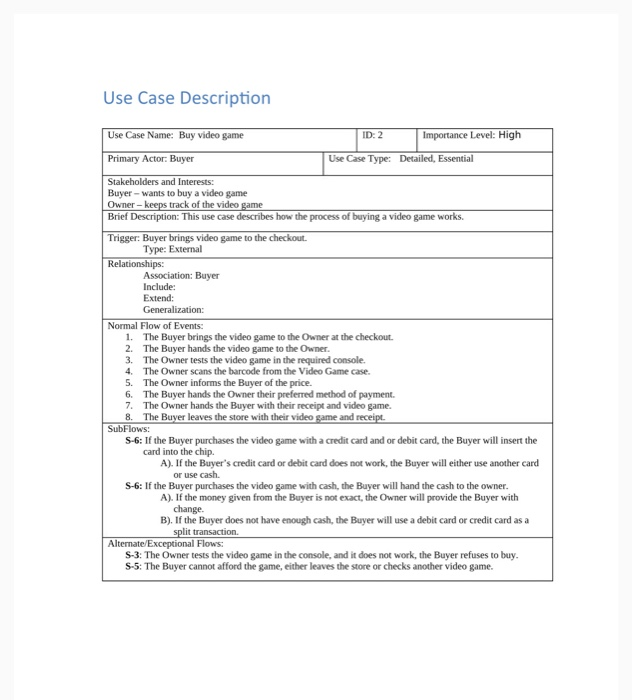
UML
yea any sequence diagram
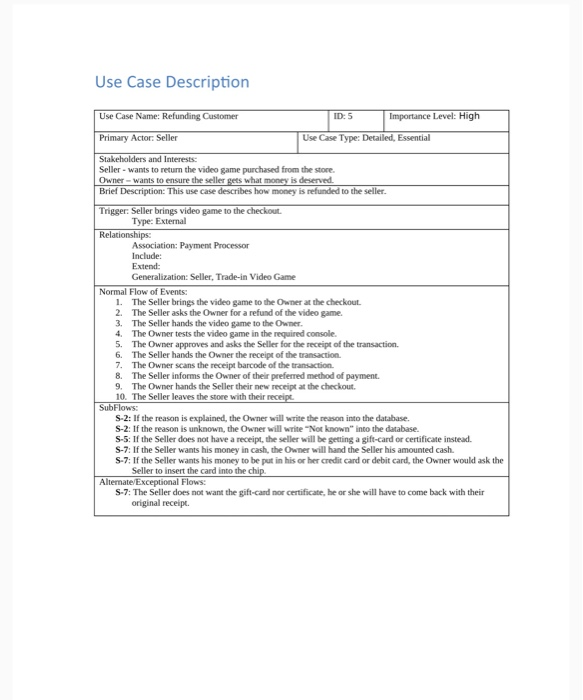
Use Case Description Use Case Name: Buy video game ID:2 Importance Level: High Primary Actor: Buyer Use Case Type: Detailed, Essential Stakeholders and Interests: Buyer -wants to buy a video game Owner - keeps track of the video game Brief Description: This use case describes how the process of buying a video game works. Trigger: Buyer brings video game to the checkout. Type: External Relationships: Association: Buyer Include: Extend: Generalization: Normal Flow of Events: 1. The Buyer brings the video game to the Owner at the checkout. 2. The Buyer hands the video game to the Owner. 3. The Owner tests the video game in the required console. 4. The Owner scans the barcode from the Video Game case. 5. The Owner informs the Buyer of the price. 6. The Buyer hands the Owner their preferred method of payment. 7. The Owner hands the Buyer with their receipt and video game. 8. The Buver leaves the store with their video game and receipt. SubFlows: S-6: If the Buyer purchases the video game with a credit card and or debit card, the Buyer will insert the card into the chip. A). If the Buyer's credit card or debit card does not work, the Buyer will either use another card or use cash S-6: If the Buyer purchases the video game with cash, the Buyer will hand the cash to the owner. A). If the money given from the Buyer is not exact, the Owner will provide the Buyer with change. B). If the Buyer does not have enough cash, the Buyer will use a debit card or credit card as a split transaction Alternate/Exceptional Flows: S-3: The Owner tests the video game in the console, and it does not work, the Buyer refuses to buy. S-5: The Buyer cannot afford the game, either leaves the store or checks another video game. Use Case Description Use Case Name: Refunding Customer ID:5 Importance Level: High Primary Actor Seller Use Case Type: Detailed, Essential Stakeholders and Interests Seller - wants to return the video game purchased from the store Owner wants to ensure the seller gets what money is deserved Brief Description: This use case describes how money is refunded to the seller. Trigger: Seller brings video game to the checkout Type: External Relationships: Association Payment Processor Include: Extend Generalization: Seller, Trade-in Video Game Normal Flow of Events 1. The Seller brings the video game to the Owner at the checkout 2. The Seller asks the Owner for a refund of the video game 3. The Seller hands the video game to the Owner 4. The Owner tests the video game in the required console 5. The Owner approves and asks the Seller for the receipt of the transaction 6. The Seller hands the Owner the receipt of the transaction 7. The Owner scans the receipt barcode of the transaction 8. The Seller informs the owner of their preferred method of payment. 9. The Owner hands the Seller their new receipt at the checkout 10. The Seller leaves the store with their receipt SubFlows: S-2: If the reason is explained, the Owner will write the reason into the database. S-2: If the reason is unknown, the Owner will write "Not known into the database. S-5: If the Seller does not have a receipt, the seller will be getting a gift card or certificate instead S-7: If the Seller wants his money in cash, the Owe will hand the Seller his amounted cash S-7: If the Seller wants his money to be put in his or her credit card or debit card, the Owner would ask the Seller to insert the card into the chip Alternate Exceptional Flows: S-7: The Seller does not want the gift card or certificate, he or she will have to come back with their original receipt. Use Case Description Use Case Name: Buy video game ID:2 Importance Level: High Primary Actor: Buyer Use Case Type: Detailed, Essential Stakeholders and Interests: Buyer -wants to buy a video game Owner - keeps track of the video game Brief Description: This use case describes how the process of buying a video game works. Trigger: Buyer brings video game to the checkout. Type: External Relationships: Association: Buyer Include: Extend: Generalization: Normal Flow of Events: 1. The Buyer brings the video game to the Owner at the checkout. 2. The Buyer hands the video game to the Owner. 3. The Owner tests the video game in the required console. 4. The Owner scans the barcode from the Video Game case. 5. The Owner informs the Buyer of the price. 6. The Buyer hands the Owner their preferred method of payment. 7. The Owner hands the Buyer with their receipt and video game. 8. The Buver leaves the store with their video game and receipt. SubFlows: S-6: If the Buyer purchases the video game with a credit card and or debit card, the Buyer will insert the card into the chip. A). If the Buyer's credit card or debit card does not work, the Buyer will either use another card or use cash S-6: If the Buyer purchases the video game with cash, the Buyer will hand the cash to the owner. A). If the money given from the Buyer is not exact, the Owner will provide the Buyer with change. B). If the Buyer does not have enough cash, the Buyer will use a debit card or credit card as a split transaction Alternate/Exceptional Flows: S-3: The Owner tests the video game in the console, and it does not work, the Buyer refuses to buy. S-5: The Buyer cannot afford the game, either leaves the store or checks another video game. Use Case Description Use Case Name: Refunding Customer ID:5 Importance Level: High Primary Actor Seller Use Case Type: Detailed, Essential Stakeholders and Interests Seller - wants to return the video game purchased from the store Owner wants to ensure the seller gets what money is deserved Brief Description: This use case describes how money is refunded to the seller. Trigger: Seller brings video game to the checkout Type: External Relationships: Association Payment Processor Include: Extend Generalization: Seller, Trade-in Video Game Normal Flow of Events 1. The Seller brings the video game to the Owner at the checkout 2. The Seller asks the Owner for a refund of the video game 3. The Seller hands the video game to the Owner 4. The Owner tests the video game in the required console 5. The Owner approves and asks the Seller for the receipt of the transaction 6. The Seller hands the Owner the receipt of the transaction 7. The Owner scans the receipt barcode of the transaction 8. The Seller informs the owner of their preferred method of payment. 9. The Owner hands the Seller their new receipt at the checkout 10. The Seller leaves the store with their receipt SubFlows: S-2: If the reason is explained, the Owner will write the reason into the database. S-2: If the reason is unknown, the Owner will write "Not known into the database. S-5: If the Seller does not have a receipt, the seller will be getting a gift card or certificate instead S-7: If the Seller wants his money in cash, the Owe will hand the Seller his amounted cash S-7: If the Seller wants his money to be put in his or her credit card or debit card, the Owner would ask the Seller to insert the card into the chip Alternate Exceptional Flows: S-7: The Seller does not want the gift card or certificate, he or she will have to come back with their original receipt
Step by Step Solution
There are 3 Steps involved in it
1 Expert Approved Answer
Step: 1 Unlock

Question Has Been Solved by an Expert!
Get step-by-step solutions from verified subject matter experts
Step: 2 Unlock
Step: 3 Unlock
 Study Help