







Question: CREATE TABLE absence ( student_id INT UNSIGNED NOT NULL, date DATE NOT NULL, PRIMARY KEY (student_id, date), FOREIGN KEY (student_id) REFSRENCES student (student id)
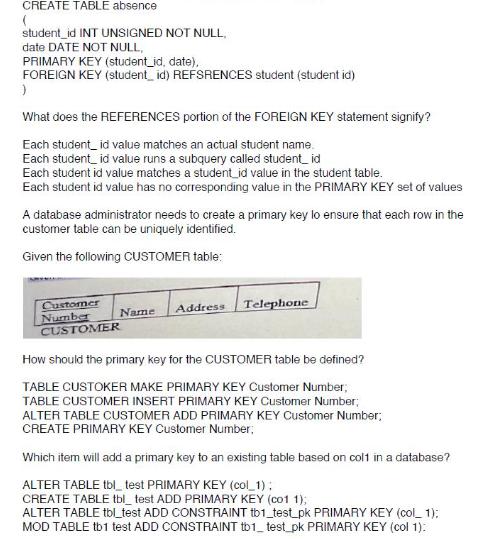
CREATE TABLE absence ( student_id INT UNSIGNED NOT NULL, date DATE NOT NULL, PRIMARY KEY (student_id, date), FOREIGN KEY (student_id) REFSRENCES student (student id) :) What does the REFERENCES portion of the FOREIGN KEY statement signify? Each student_id value matches an actual student name. Each student_id value runs a subquery called student_id Each student id value matches a student_id value in the student table. Each student id value has no corresponding value in the PRIMARY KEY set of values A database administrator needs to create a primary key lo ensure that each row in the customer table can be uniquely identified. Given the following CUSTOMER table: Customer Number CUSTOMER Name Address Telephone How should the primary key for the CUSTOMER table be defined? TABLE CUSTOKER MAKE PRIMARY KEY Customer Number; TABLE CUSTOMER INSERT PRIMARY KEY Customer Number; ALTER TABLE CUSTOMER ADD PRIMARY KEY Customer Number; CREATE PRIMARY KEY Customer Number, Which item will add a primary key to an existing table based on col1 in a database? ALTER TABLE tbl_test PRIMARY KEY (col_1); CREATE TABLE tbl_test ADD PRIMARY KEY (co1 1); ALTER TABLE tbl_test ADD CONSTRAINT tb1_test_pk PRIMARY KEY (col_1); MOD TABLE tb1 test ADD CONSTRAINT tb1_test_pk PRIMARY KEY (col 1):
Step by Step Solution
3.28 Rating (145 Votes )
There are 3 Steps involved in it
The image shows a question about database keys and the use of the FOREIGN KEY statement in SQL as well as questions about the definition of a primary ... View full answer

Get step-by-step solutions from verified subject matter experts
 Study Help