







Question: D Latch: A flip-flop captures data at its input at a clock's positive or negative edge. The important thing to note is that whatever happens
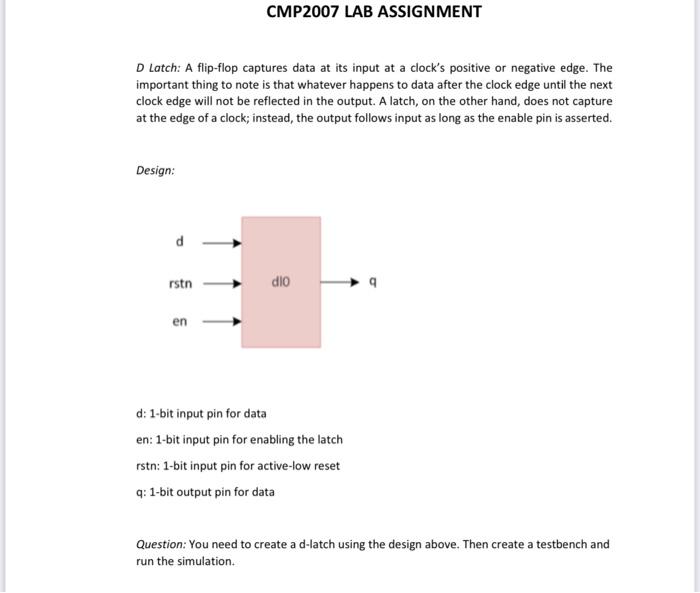
D Latch: A flip-flop captures data at its input at a clock's positive or negative edge. The important thing to note is that whatever happens to data after the clock edge until the next clock edge will not be reflected in the output. A latch, on the other hand, does not capture at the edge of a clock; instead, the output follows input as long as the enable pin is asserted. Design: d: 1-bit input pin for data en: 1-bit input pin for enabling the latch rstn: 1-bit input pin for active-low reset q: 1-bit output pin for data Question: You need to create a d-latch using the design above. Then create a testbench and run the simulation
Step by Step Solution
There are 3 Steps involved in it
1 Expert Approved Answer
Step: 1 Unlock

Question Has Been Solved by an Expert!
Get step-by-step solutions from verified subject matter experts
Step: 2 Unlock
Step: 3 Unlock
 Study Help