







Question: Develop a Doubly-Linked-List, with the given Python file A182. py. - Each node in Doubly-Linked-List has two links: one for the next node as in
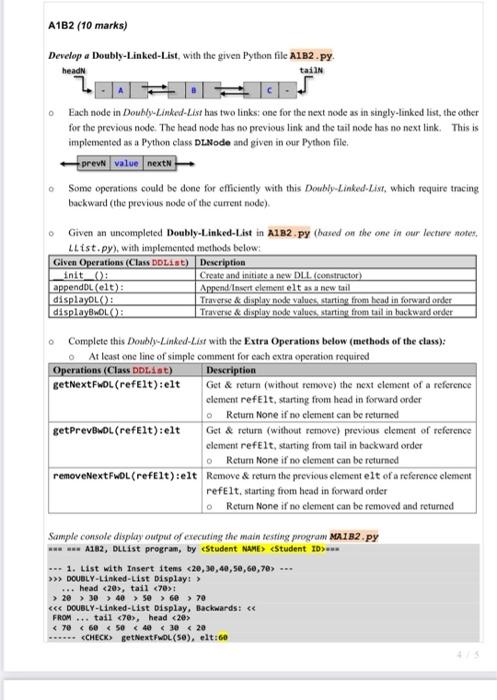
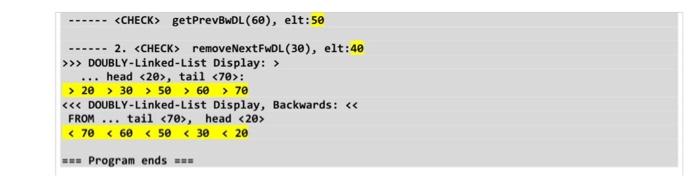
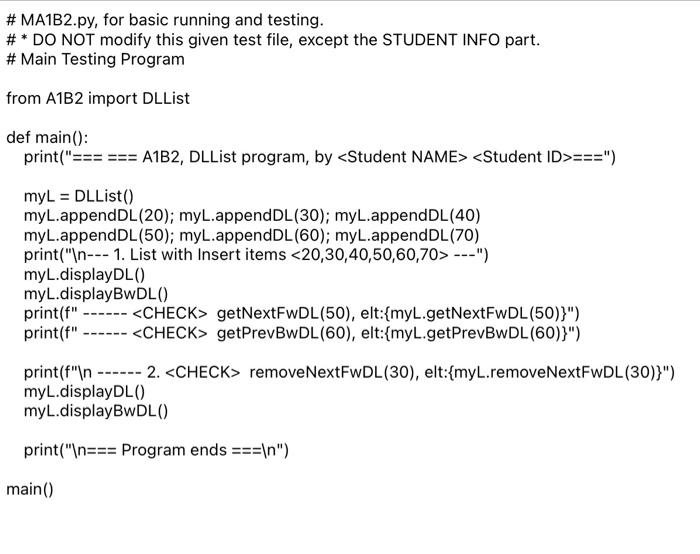
Develop a Doubly-Linked-List, with the given Python file A182. py. - Each node in Doubly-Linked-List has two links: one for the next node as in singly-linked list, the other for the previous node. The head node has no previous link and the tail node has no next link. This is implemented as a Python class DLNode and given in eur Python file, Some operations could be done for efficiently with this Doibly-Linked-List, which require tracing backward (the previous node of the current node). Given an uncompleted Doubly-Linked-List in M182. PY (based on the one in our lecture notes, LList. Dy), with implemented methods below: Complete this Doubly-Linkid-List with the Extra Operations below (methods of the class): At least one line of simple comment for each extra operation required Sample console display output of erecuting the main testing program Ma.182. Py A182, DLList program, by estudent NaME) eStudent 10sw: 1. List with Insert itens 20>30>40>50>60>70 DoublY-Linked-List Display, Backwards: FRoM ... tail 676 , head {20 2>3>50>6>70 DOUBLY-Linked-List Display, Backwards: Student ID >===" ) myL= DLList () myL.appendDL(20); myL.appendDL(30); myL.appendDL(40) myL.appendDL(50); myL.appendDL(60); myL.appendDL(70) print(" n1. List with Insert items ") myL.displayDL() myL.displayBwDL() print(f" ----- getNextFwDL(50), elt:\{myL.getNextFwDL(50) } ") print(f" ---- getPrevBwDL(60), elt:\{myL.getPrevBwDL(60) } ") print(f"'n ----- 2. removeNextFwDL(30), elt:\{myL.removeNextFwDL(30) }) myL.displayDL() myL.displayBwDL() print ( " === Program ends ===n" main()
Step by Step Solution
There are 3 Steps involved in it

Get step-by-step solutions from verified subject matter experts
 Study Help