



Question: Excel Online Structured Activity: Constant growth You are considering an investment in Justus Corporation's stock, which is expected to pay a dividend of $2.00 a
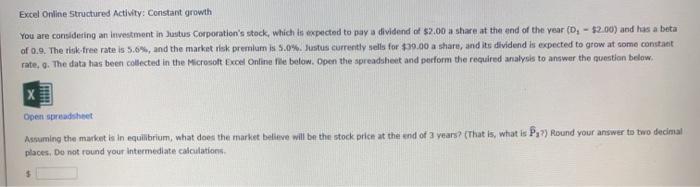
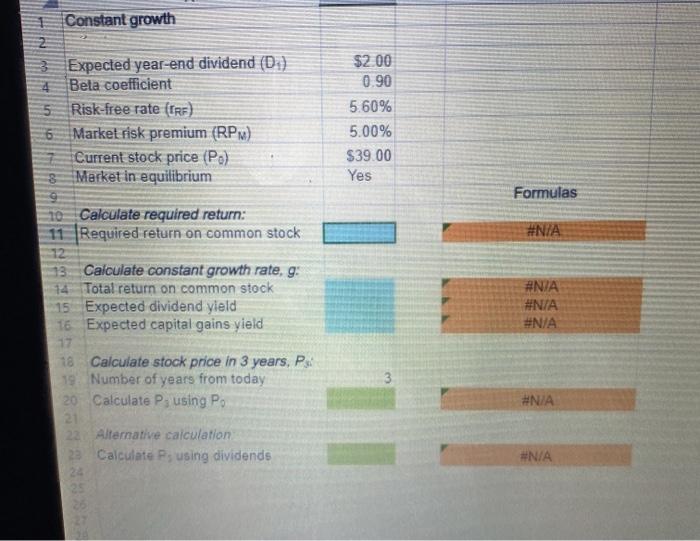
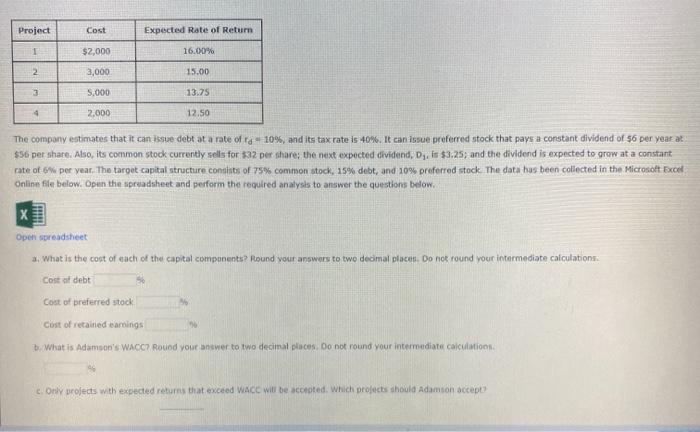
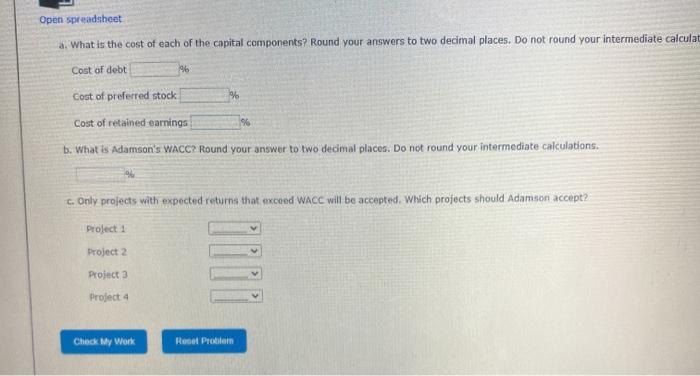
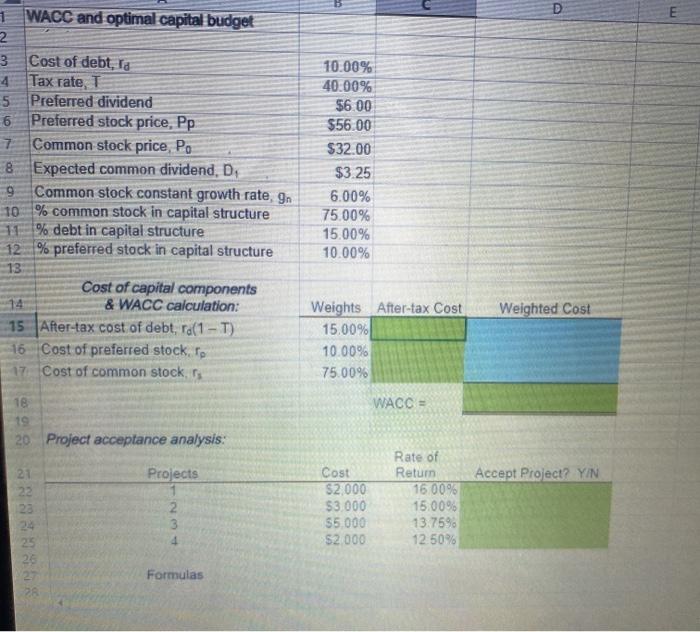
Excel Online Structured Activity: Constant growth You are considering an investment in Justus Corporation's stock, which is expected to pay a dividend of $2.00 a share at the end of the year (D, - $2.00) and has a bita of 0.9. The rinkfree rate is 5.6%, and the market risk premium is 5.0%. Justus currently sells for $39.00 a share, and its dividend is expected to grow at some constant rate, 0. The data has been collected in the Microsoft Excel Online e below. Open the spreadsheet and perform the required analysis to answer the question below. Open spreadsheet Assuming the market is in equilibrium, what does the market believe will be the stock price at the end of a years? (That is what is P,?) Round your answer to two decimal places. Do not round your intermediate calculations $ Constant growth 2 2 3 Expected year-end dividend (D) 4 Bela coefficient 5 Risk-free rate (IRF) 6 Market risk premium (RPM) 7 Current stock price (Po) 8 Market in equilibrium 9 10 Calculate required return: 11 Required return on common stock $2.00 0.90 5.60% 5.00% $39.00 Yes Formulas #N/A #N/A #N/A #N/A 13. Calculate constant growth rate, g: 14. Total return on common stock 15 Expected dividend yield 16 Expected capital gains yield 17 18 Calculate stock price in 3 years, P. 19. Number of years from today 20 Calculate P, using Po 21 22 Alternative calculation 23 Calculata Ps using dividends 3 #N/A #N/A Project Cost Expected Rate of Return 1 $2,000 16.00% 2 3,000 15.00 5,000 13.75 2.000 12.50 The company estimates that it can issue debt at a rate of ra - 10%, and its tax rate is 40%. It can issue preferred stock that pays a constant dividend of $6 per year at $56 per share. Also, its common stock currently sells for $32 per share: the next expected dividend, D,, is $3.25, and the dividend is expected to grow at a constant rate of 6% per year. The target capital structure consists of 75% common stock, 15% debt, and 10% preferred stock. The data has been collected in the Microsoft Excel Online file below. Open the spreadsheet and perform the required analysis to answer the questions below. X THI Open spreadsheet a. What is the cost of each of the capital components? Round your answers to two deomal places. Do not round your intermediate calculations Cost of debt Cost of preferred stock Cost of retained earnings b. What is Adamson's WACC Round your answer to two decimal places. Do not round your intermediate calculation c. Only projects with expected returns that exceed WACC will be accepted. Which projects should Adamson accept Open spreadsheet a. What is the cost of each of the capital components? Round your answers to two decimal places. Do not round your intermediate calculat Cost of debt 96 Cost of preferred stock % Cost of retained earnings b. What is Adamson's WACCP Round your answer to two decimal places. Do not round your intermediate calculations. c. Only projects with expected returns that exceed WACC will be accepted. Which projects should Adamson accept? Project 1 Project 2 Project 3 Project 4 Check My Work Ronel Problem D 1 WACC and optimal capital budget 2 3 Cost of debt, la 4 Tax rate, T 5 Preferred dividend 6 Preferred stock price, Pp 7 Common stock price. Po & Expected common dividend, D. 9 Common stock constant growth rate, 9n 10 % common stock in capital structure 11 % debt in capital structure 12 % preferred stock in capital structure 13 Cost of capital components & WACC calculation: 15 After-tax cost of debt, ra(1-T) 16 Cost of preferred stock. To 17 Cost of common stocks 10.00% 40.00% $6.00 $56.00 $32.00 $3.25 6.00% 75.00% 15.00% 10.00% Weighted Cost Weights After-tax Cost 15.00% 10.00% 75.00% WACC = 18 19 20. Project acceptance analysis: 21 Projects Accept Project? YIN Rate of Retum 16.00% 15.00% 13.7596 12.50% Cost $2.000 $3.000 $5.000 $2.000 2 3 4 26 Formulas
Step by Step Solution
There are 3 Steps involved in it

Get step-by-step solutions from verified subject matter experts