Question: Following the 3-Step Problem Solving Approach, analyze the issues prevalent in the Problem- Solving Application, Hospitals and Nursing Homes Collaborate to Combat Common Foes, in
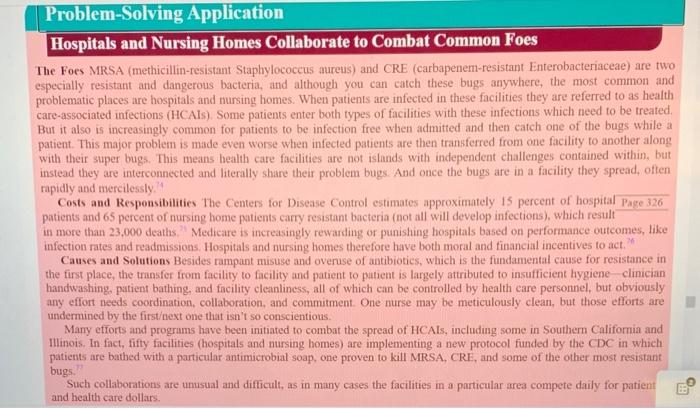
Following the 3-Step Problem Solving Approach, analyze the issues prevalent in the Problem- Solving Application, "Hospitals and Nursing Homes Collaborate to Combat Common Foes," in Chapter 8 Problem Solving Application Hospitals and Nursing Homes Collaborate to Combat Common Foes The Foes MRSA (methicillin-resistant Staphylococcus aureus) and CRE (carbapenem-resistant Enterobacteriaceae) are two especially resistant and dangerous bacteria, and although you can catch these bugs anywhere, the most common and problematic places are hospitals and nursing homes. When patients are infected in these facilities they are referred to as health care-associated infections (HCA). Some patients enter both types of facilities with these infections which need to be treated But it also is increasingly common for patients to be infection free when admitted and then catch one of the bugs while a patient. This major problem is made even worse when infected patients are then transferred from one facility to another along with their super bugs. This means health care facilities are not islands with independent challenges contained within, but instead they are interconnected and literally share their problem bugs. And once the bugs are in a facility they spread, often rapidly and mercilessly Costs and Responsibilities The Centers for Disease Control estimates approximately 15 percent of hospital Page 326 patients and 65 percent of nursing home patients carry resistant bacteria (not all will develop infections), which result in more than 23,000 deaths Medicare is increasingly rewarding or punishing hospitals bas on performance outcomes, like infection rates and readmissions. Hospitals and nursing homes therefore have both moral and financial incentives to act. Causes and Solutions Besides rampant misuse and overuse of antibiotics, which is the fundamental cause for resistance in the first place, the transfer from facility to facility and patient to patient is largely attributed to insufficient hygiene clinician handwashing patient bathing, and facility cleanliness, all of which can be controlled by health care personnel, but obviously any effort needs coordination, collaboration, and commitment. One nurse may be meticulously clean, but those efforts are undermined by the firstext one that isn't so conscientious. Many efforts and programs have been initiated to combat the spread of HCAls, including some in Southern Califomia and Illinois. In fact, fifty facilities (hospitals and nursing homes) are implementing a new protocol funded by the CDC in which patients are bathed with a particular antimicrobial soap, one proven to kill MRSA, CRE, and some of the other most resistant Such collaborations are unusual and difficult, as in many cases the facilities in a particular area compete daily for patient and health care dollars. bugs










 Study Help