Question: For work teams to be designed and implemented effectively in a global organization, it is important to understand that each group operates with its own
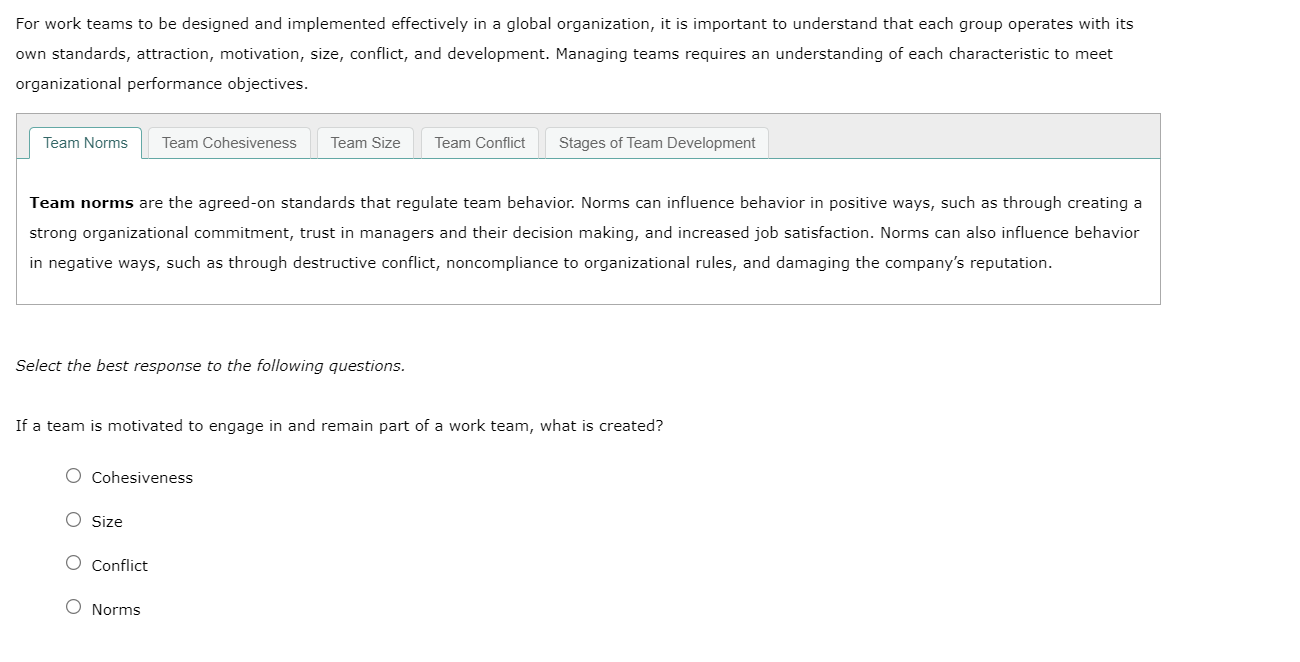
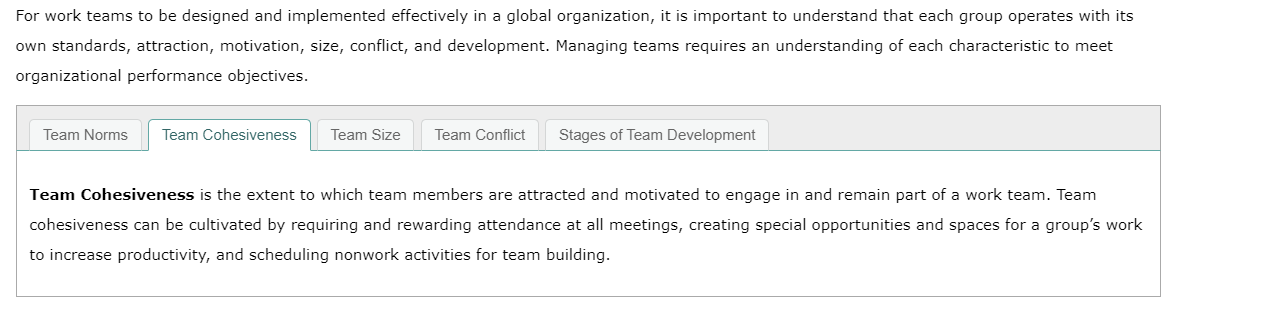
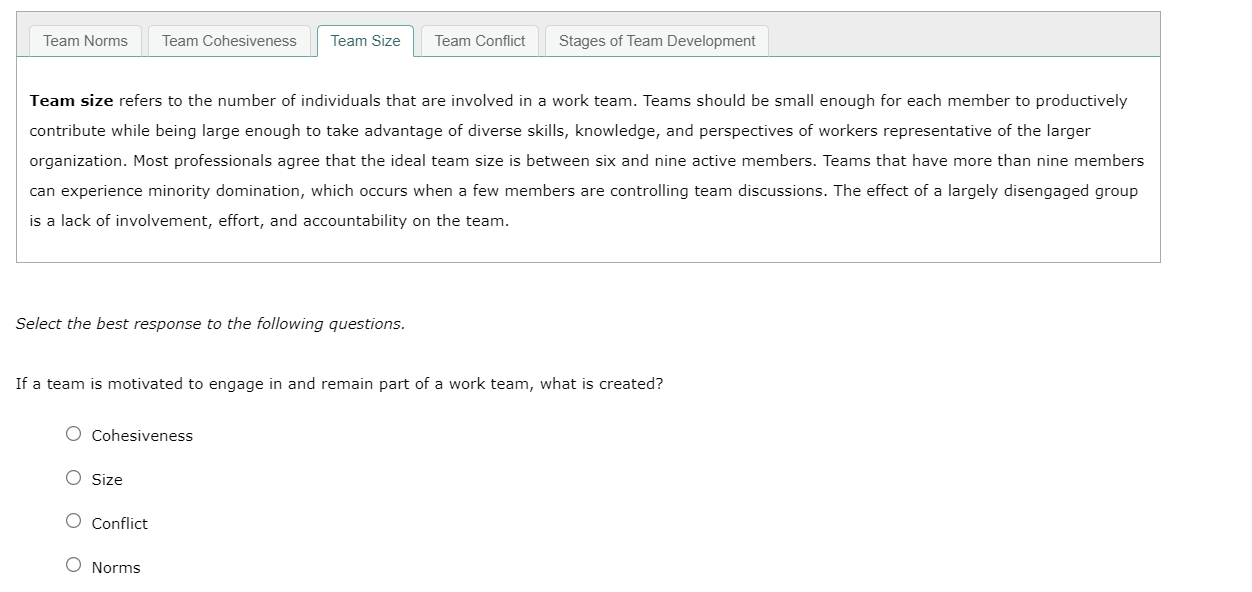
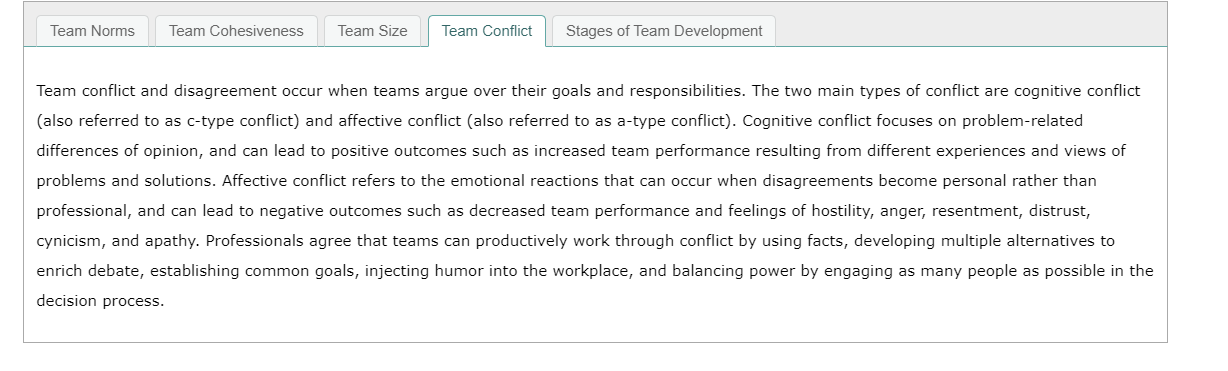
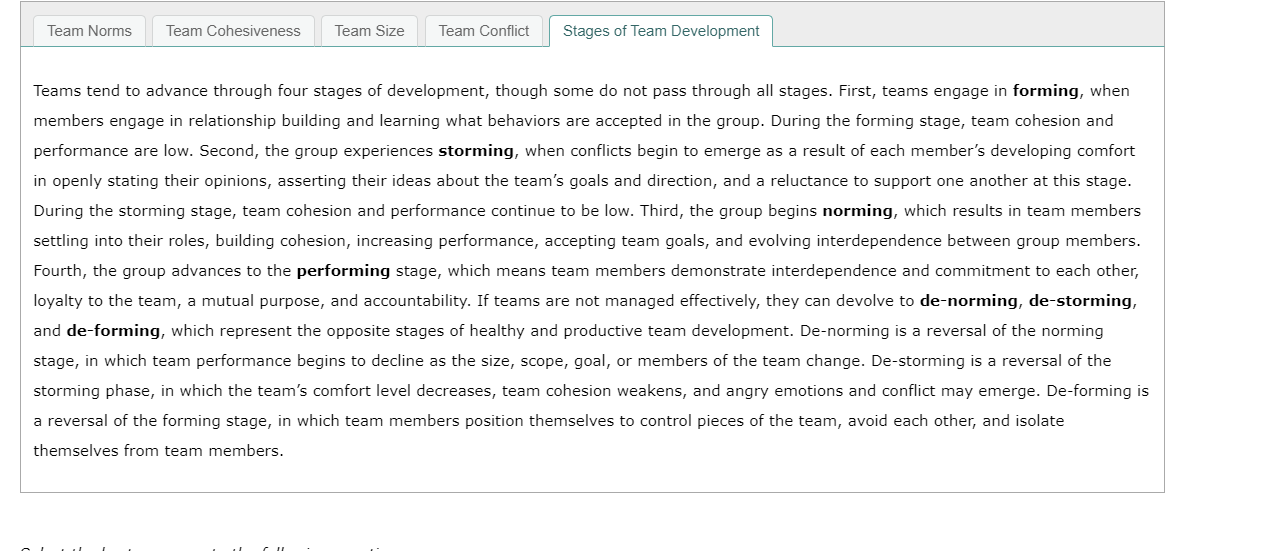
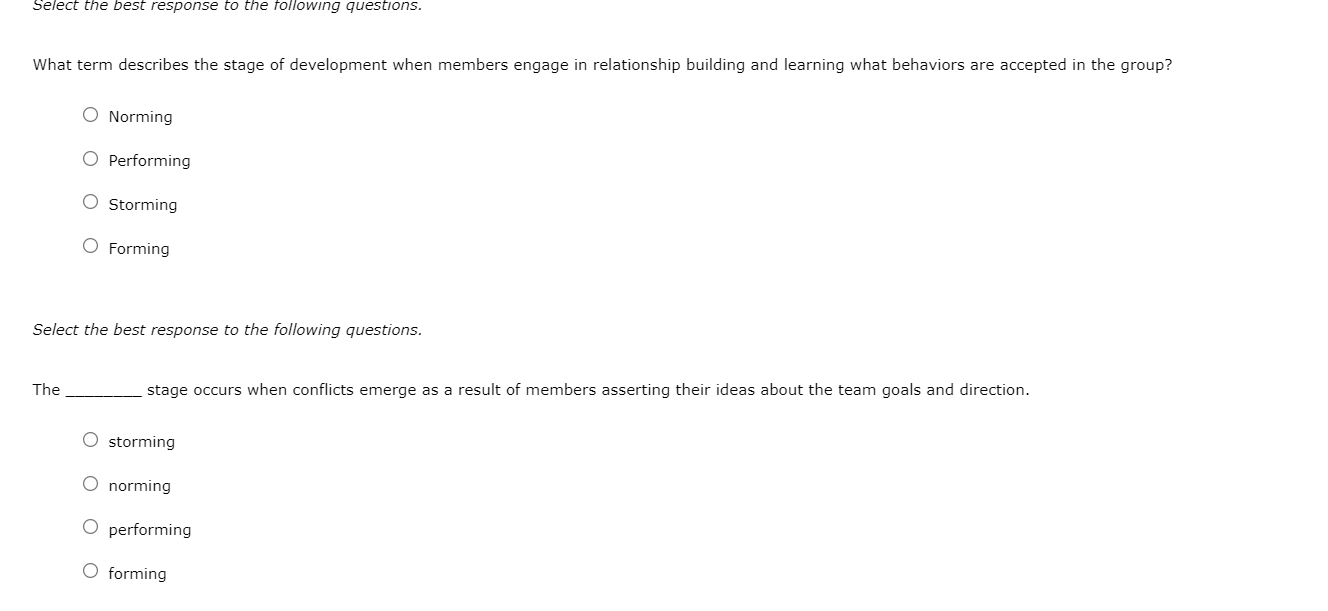
For work teams to be designed and implemented effectively in a global organization, it is important to understand that each group operates with its own standards, attraction, motivation, size, conflict, and development. Managing teams requires an understanding of each charactich organizational performance objectives. strong organizational commitment, trust in managers and their decision making, and increased job satisfaction. Norms influence behavion in negative ways, such as through destructive conflict, noncompliance to organizational rules, and damaging the company's reputation. Select the best response to the following questions. If a team is motivated to engage in and remain part of a work team, what is created? Cohesiveness Size Conflict Norms For work teams to be designed and implemented effectively in a global organization, it is important to understand that each group operates with its own standards, attraction, motivation, size, conflict, and development. Managing teams requires an understanding of each characteristic to meet prganizational performance objectives. cohesiveness can be cultivated by requiring and rewarding attendance at all meetings, creating special opportunities and spaces for a group's work to increase productivity, and scheduling nonwork activities for team building. Team size refers to the number of individuals that are involved in a work team. Teams should be small enough for each member to productively can experience minority domination, which occurs when a few members are controlling team discussions. The effect of a largely disengaged group is a lack of involvement, effort, and accountability on the team. Select the best response to the following questions. If a team is motivated to engage in and remain part of a work team, what is created? Cohesiveness Size Conflict Norms Team conflict and disagreement occur when teams argue over their goals and responsibilities. The two main types of conflict are cognitive conflict (also referred to as c-type conflict) and affective conflict (also referred to as a-type conflict). Cognitive conflict focuses on problem-related differences of opinion, and can lead to positive outcomes such as increased team performance resulting from different experiences and views of problems and solutions. Affective conflict refers to the emotional reactions that can occur when disagreements become personal rather than cynicism, and apathy. Professionals agree that teams can productively work through conflict by using facts, developing mile enrich debate, establishing common goals, injecting humor into the workplace, and balancing power by engaging as many people as in the decision process. Teams tend to advance through four stages of development, though some do not pass through all stages. First, teams engage in forming, when members engage in relationship building and learning what behaviors are accepted in the group. During the forming stage, team cohesion andering in openly stating their opinions, asserting their ideas about the team's goals and direction, and a reluctance to support one another at this stage. During the storming stage, team cohesion and performance continue to be low. Third, the group begins norming, which results in team mers settling into their roles, building cohesion, increasing performance, accepting team goals, and evolving interdependence between group members. Fourth, the group advances to the performing stage, which means team members demonstrate interdependence and commeritment loyalty to the team, a mutual purpose, and accountability. If teams are not managed effectively, they can devolve to derming, stage, in which team performance begins to decline as the size, scope, goal, or members of the theam change. De-storming is a reversal of the themselves from team members. What term describes the stage of development when members engage in relationship building and learning what behaviors are accepted in the group? Norming Performing Storming Forming Select the best response to the following questions. The stage occurs when conflicts emerge as a result of members asserting their ideas about the team goals and direction. storming norming performing forming









 Study Help