







Question: Group Case Study Project: Part 1 (15%) Assessing the Case Individually Purpose This project provides you with the opportunity to apply what you have learned
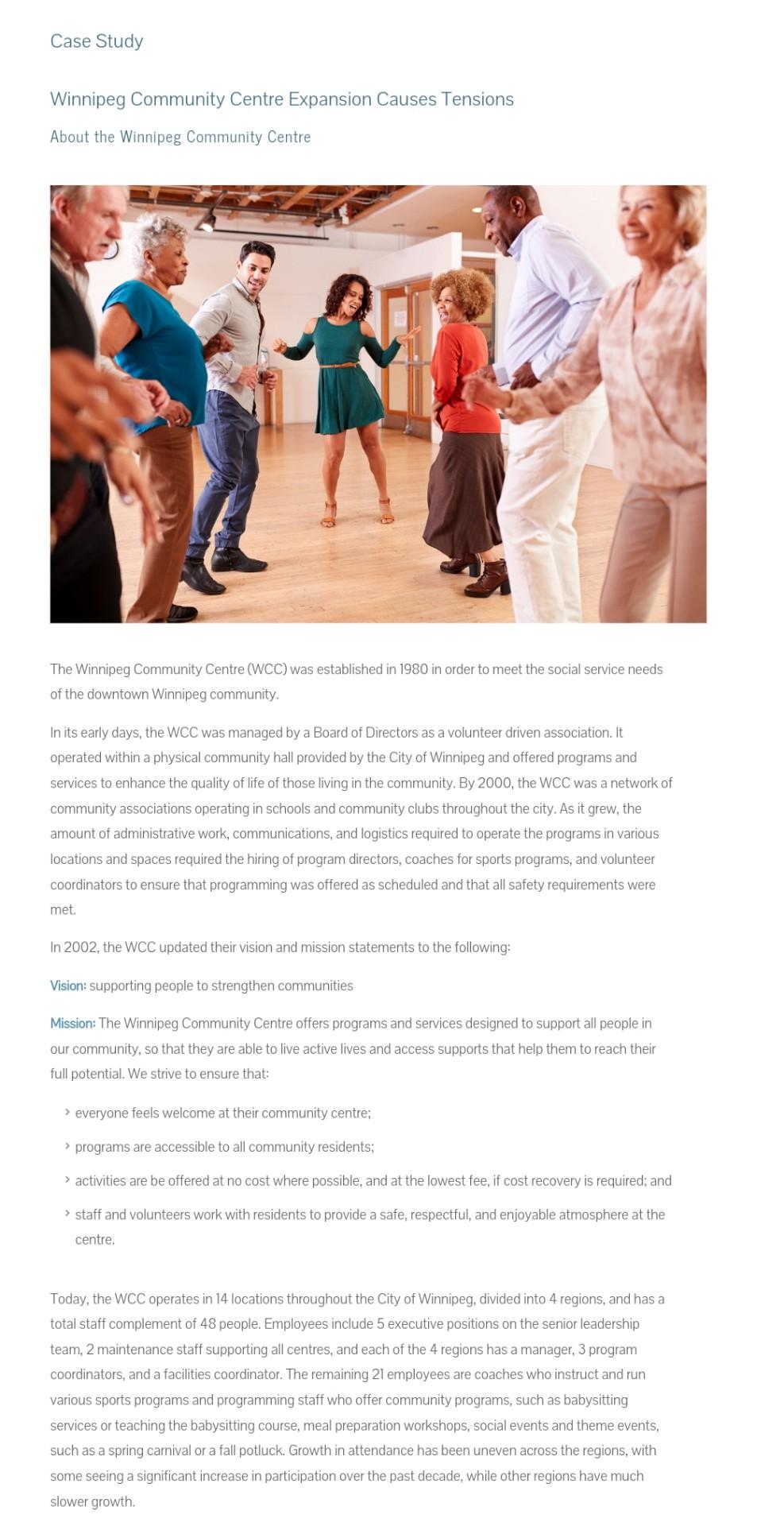
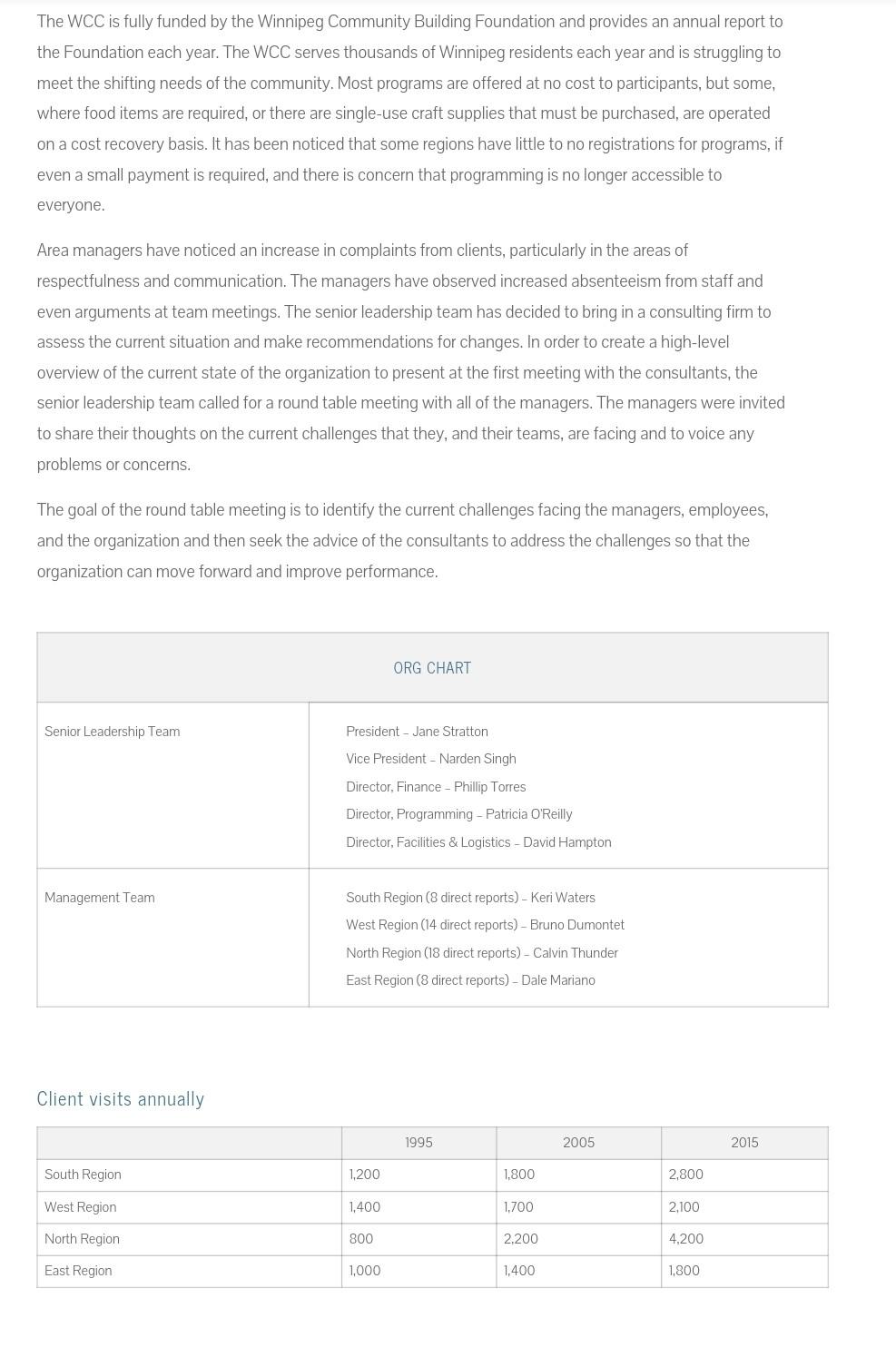
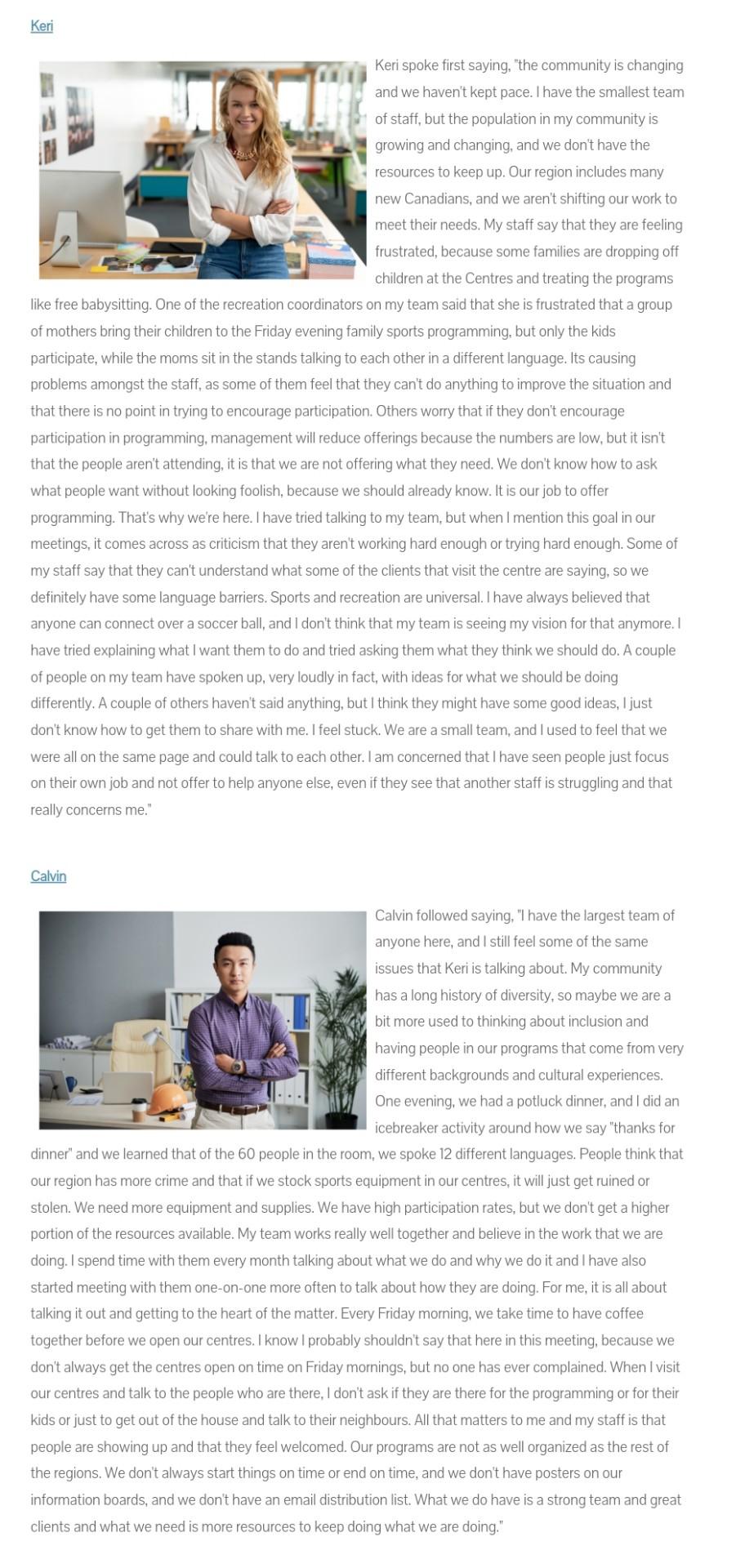
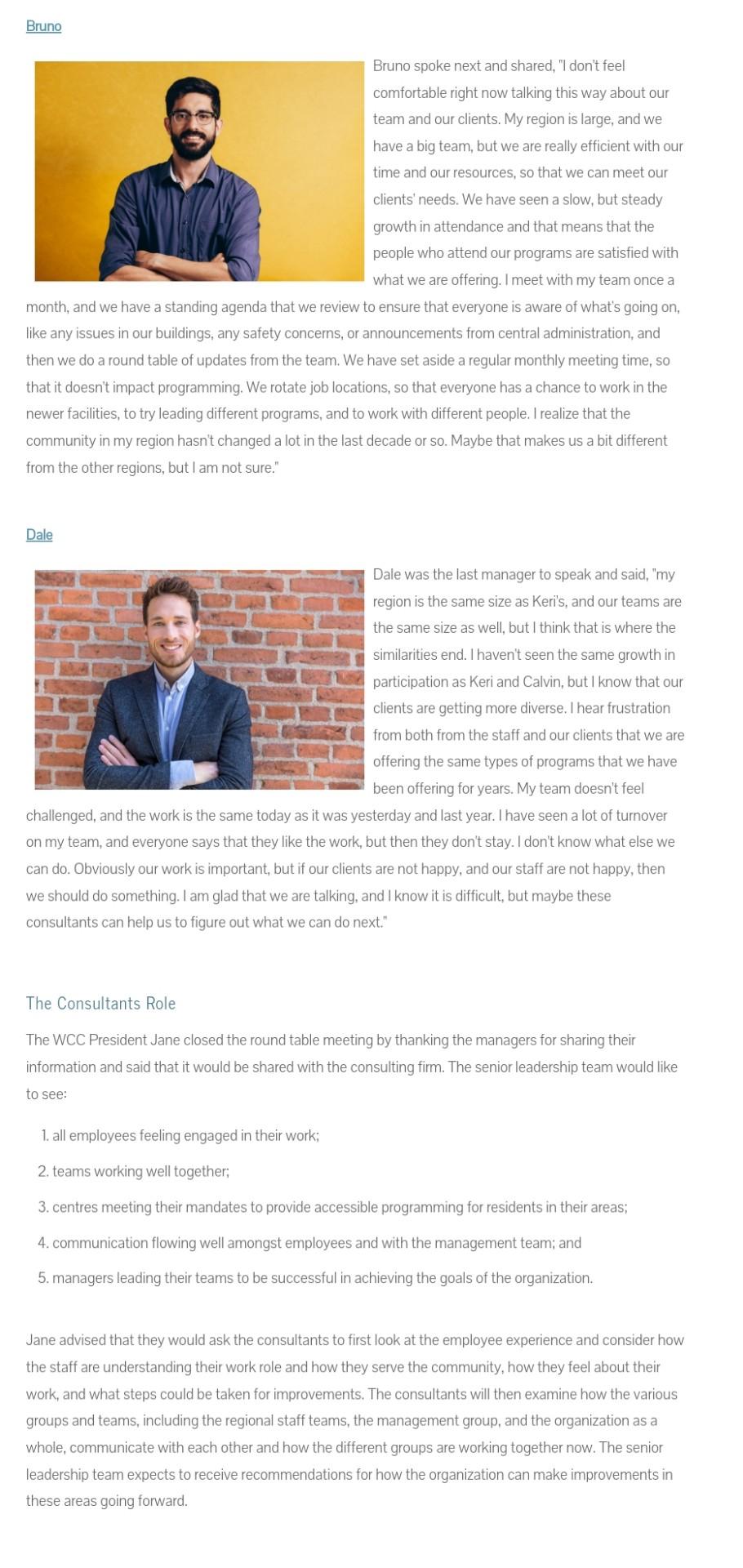
Group Case Study Project: Part 1 (15%) Assessing the Case Individually Purpose This project provides you with the opportunity to apply what you have learned about organizational behaviour to a practical case. In this case, you will consider an organization that is experiencing a significant challenge. In this part of the case study project, you will examine the case individually and consider the topics of Units 1-5: personality, perception, job satisfaction, organizational commitment, bias, motivation and leadership. Imagine that you are one of the external consultants hired to assist the organization and have been asked to help map out options for how the organization can improve going forward. How to Proceed Part 1 1. Read through the case. 2. Examine the case by listing key information. Include the facts that you feel are most relevant. Consider: 1. Who are the key players? 2. What are the most significant issues? 3. Where is there conflict? 4. How are people behaving? 5. What role is leadership playing? 3. Describe the key issues in the case and write the problem statement." It is often difficult to narrow down a situation to get to the core of the problem. In your opinion, what is the primary issue in this case? You will resolve this issue by developing solutions. Be specific. The more specific your problem statement is, the more relevant your solution will be. 4. Consider possible courses of action. Draw upon specific topics from the course and readings or other resources to consider possible solutions to the key issues in the case and make a short list of possible solutions. For each potential solution, consider the advantages and disadvantages, including their positive and negative consequences. 5. Prepare a paper of 500-600 words that includes your analysis of the case, including the key issues, your proposed course of action, and an explanation of why you selected this approach. Be sure to write in complete sentences and to avoid bullet lists. 6. Submit your report through the Group Case Study Project: Part 1 dropbox in UM Learn by the deadline specified in the course schedule, provided in the Course Outline, Case Study Winnipeg Community Centre Expansion Causes Tensions About the Winnipeg Community Centre The Winnipeg Community Centre (WCC) was established in 1980 in order to meet the social service needs of the downtown Winnipeg communi In its early days, the WCC was managed by a Board of Directors as a volunteer driven association. It operated within a physical community hall provided by the City of Winnipeg and offered programs and services to enhance the quality of life of those living in the community. By 2000, the WCC was a network of community associations operating in schools and community clubs throughout the city. As it grew, the amount of administrative work, communications, and logistics required to operate the programs in various locations and spaces required the hiring of program directors, coaches for sports programs, and volunteer coordinators to ensure that programming was offered as scheduled and that all safety requirements were met. In 2002, the WCC updated their vision and mission statements to the following: Vision: supporting people to strengthen communities Mission: The Winnipeg Community Centre offers programs and services designed to support all people in our community, so that they are able to live active lives and access supports that help them to reach their full potential. We strive to ensure that: > everyone feels welcome at their community centre; > programs are accessible to all community residents; > activities are be offered at no cost where possible, and at the lowest fee, if cost recovery is required; and > staff and volunteers work with residents to provide a safe, respectful, and enjoyable atmosphere at the centre Today, the WCC operates in 14 locations throughout the City of Winnipeg, divided into 4 regions, and has a total staff complement of 48 people. Employees include 5 executive positions on the senior leadership team, 2 maintenance staff supporting all centres, and each of the 4 regions has a manager, 3 program coordinators, and a facilities coordinator. The remaining 21 employees are coaches who instruct and run various sports programs and programming staff who offer community programs, such as babysitting services or teaching the babysitting course, meal preparation workshops, social events and theme events, such as a spring carnival or a fall potluck. Growth in attendance has been uneven across the regions, with some seeing a significant increase in participation over the past decade, while other regions have much slower growth. The WCC is fully funded by the Winnipeg Community Building Foundation and provides an annual report to the Foundation each year. The WCC serves thousands of Winnipeg residents each year and is struggling to meet the shifting needs of the community. Most programs are offered at no cost to participants, but some, where food items are required, or there are single-use craft supplies that must be purchased, are operated on a cost recovery basis. It has been noticed that some regions have little to no registrations for programs, if even a small payment is required, and there is concern that programming is no longer accessible to everyone. Area managers have noticed an increase in complaints from clients, particularly in the areas of respectfulness and communication. The managers have observed increased absenteeism from staff and even arguments at team meetings. The senior leadership team has decided to bring in a consulting firm to assess the current situation and make recommendations for changes. In order to create a high-level overview of the current state of the organization to present at the first meeting with the consultants, the senior leadership team called for a round table meeting with all of the managers. The managers were invited to share their thoughts on the current challenges that they, and their teams, are facing and to voice any problems or concerns. The goal of the round table meeting is to identify the current challenges facing the managers, employees, and the organization and then seek the advice of the consultants to address the challenges so that the organization can move forward and improve performance. ORG CHART Senior Leadership Team President - Jane Stratton Vice President - Narden Singh Director, Finance - Phillip Torres Director, Programming - Patricia O'Reilly Director, Facilities & Logistics - David Hampton Management Team South Region (8 direct reports) - Keri Waters West Region (14 direct reports) - Bruno Dumontet North Region (18 direct reports) - Calvin Thunder East Region (8 direct reports) - Dale Mariano Client visits annually 1995 2005 2015 South Region 1,200 1.800 2,800 West Region 1,400 1.700 2,100 North Region 800 2.200 4,200 East Region 1,000 1,400 1,800 Keri Keri spoke first saying, "the community is changing and we haven't kept pace. I have the smallest team of staff, but the population in my community is growing and changing, and we don't have the resources to keep up. Our region includes many new Canadians, and we aren't shifting our work to meet their needs. My staff say that they are feeling frustrated, because some families are dropping off children at the Centres and treating the programs like free babysitting. One of the recreation coordinators on my team said that she is frustrated that a group of mothers bring their children to the Friday evening family sports programming, but only the kids participate, while the moms sit in the stands talking to each other in a different language. Its causing problems amongst the staff, as some of them feel that they can't do anything to improve the situation and that there is no point in trying to encourage participation. Others worry that if they don't encourage participation in programming, management will reduce offerings because the numbers are low, but it isn't that the people aren't attending, it is that we are not offering what they need. We don't know how to ask what people want without looking foolish, because we should already know. It is our job to offer programming. That's why we're here. I have tried talking to my team, but when I mention this goal in our meetings, it comes across as criticism that they aren't working hard enough or trying hard enough. Some of my staff say that they can't understand what some of the clients that visit the centre are saying, so we definitely have some language barriers. Sports and recreation are universal. I have always believed that anyone can connect over a soccer ball, and I don't think that my team is seeing my vision for that anymore. I have tried explaining what I want them to do and tried asking them what they think we should do. A couple of people on my team have spoken up, very loudly in fact, with ideas for what we should be doing differently. A couple of others haven't said anything, but I think they might have some good ideas, I just don't know how to get them to share with me. I feel stuck. We are a small team, and I used to feel that we were all on the same page and could talk to each other. I am concerned that I have seen people just focus on their own job and not offer to help anyone else, even if they see that another staff is struggling and that really concerns me." Calvin Calvin followed saying, "I have the largest team of anyone here, and I still feel some of the same issues that Keri is talking about. My community has a long history of diversity, so maybe we are a bit more used to thinking about inclusion and having people in our programs that come from very different backgrounds and cultural experiences. One evening, we had a potluck dinner, and I did an icebreaker activity around how we say "thanks for dinner" and we learned that of the 60 people in the room, we spoke 12 different languages. People think that our region has more crime and that if we stock sports equipment in our centres, it will just get ruined or stolen. We need more equipment and supplies. We have high participation rates, but we don't get a higher portion of the resources available. My team works really well together and believe in the work that we are doing. I spend time with them every month talking about what we do and why we do it and I have also started meeting with them one-on-one more often to talk about how they are doing. For me, it is all about talking it out and getting to the heart of the matter. Every Friday morning, we take time to have coffee together before we open our centres. I know I probably shouldn't say that here in this meeting, because we don't always get the centres open on time on Friday mornings, but no one has ever complained. When I visit our centres and talk to the people who are there, I don't ask if they are there for the programming or for their kids or just to get out of the house and talk to their neighbours. All that matters to me and my staff is that people are showing up and that they feel welcomed. Our programs are not as well organized as the rest of the regions. We don't always start things on time or end on time, and we don't have posters on our information boards, and we don't have an email distribution list. What we do have is a strong team and great clients and what we need is more resources to keep doing what we are doing." Bruno Bruno spoke next and shared, "I don't feel comfortable right now talking this way about our team and our clients. My region is large, and we have a big team, but we are really efficient with our time and our resources, so that we can meet our clients' needs. We have seen a slow, but steady growth in attendance and that means that the people who attend our programs are satisfied with what we are offering. I meet with my team once a month, and we have a standing agenda that we review to ensure that everyone is aware of what's going on, like any issues in our buildings, any safety concerns, or announcements from central administration, and then we do a round table of updates from the team. We have set aside a regular monthly meeting time, so that it doesn't impact programming. We rotate job locations, so that everyone has a chance to work in the newer facilities, to try leading different programs, and to work with different people. I realize that the community in my region hasn't changed a lot in the last decade or so. Maybe that makes us a bit different from the other regions, but I am not sure." Dale Dale was the last manager to speak and said, "my region is the same size as Keri's, and our teams are the same size as well, but I think that is where the similarities end. I haven't seen the same growth in participation as Keri and Calvin, but I know that our clients are getting more diverse. I hear frustration from both from the staff and our clients that we are offering the same types of programs that we have been offering for years. My team doesn't feel challenged, and the work is the same today as it was yesterday and last year. I have seen a lot of turnover on my team, and everyone says that they like the work, but then they don't stay. I don't know what else we can do. Obviously our work is important, but if our clients are not happy, and our staff are not happy, then we should do something. I am glad that we are talking, and I know it is difficult, but maybe these consultants can help us to figure out what we can do next." The Consultants Role The WCC President Jane closed the round table meeting by thanking the managers for sharing their information and said that it would be shared with the consulting firm. The senior leadership team would like to see: 1. all employees feeling engaged in their work; 2. teams working well together, 3. centres meeting their mandates to provide accessible programming for residents in their areas; 4. communication flowing well amongst employees and with the management team; and 5. managers leading their teams to be successful in achieving the goals of the organization. Jane advised that they would ask the consultants to first look at the employee experience and consider how the staff are understanding their work role and how they serve the community, how they feel about their work, and what steps could be taken for improvements. The consultants will then examine how the various groups and teams, including the regional staff teams, the management group, and the organization as a whole, communicate with each other and how the different groups are working together now. The senior leadership team expects to receive recommendations for how the organization can make improvements in these areas going forward
Step by Step Solution
There are 3 Steps involved in it
1 Expert Approved Answer
Step: 1 Unlock

Question Has Been Solved by an Expert!
Get step-by-step solutions from verified subject matter experts
Step: 2 Unlock
Step: 3 Unlock
 Study Help