Question: Guidelines for Writing a Case Study Analysis A case study analysis requires you to investigate a business problem, examine the alternative solutions, and propose the
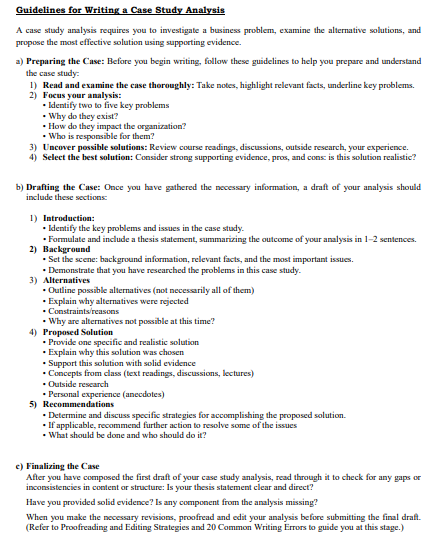
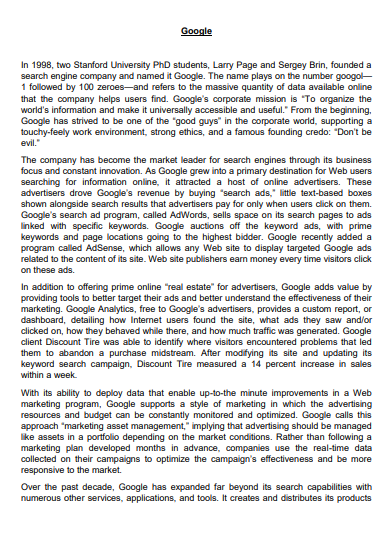
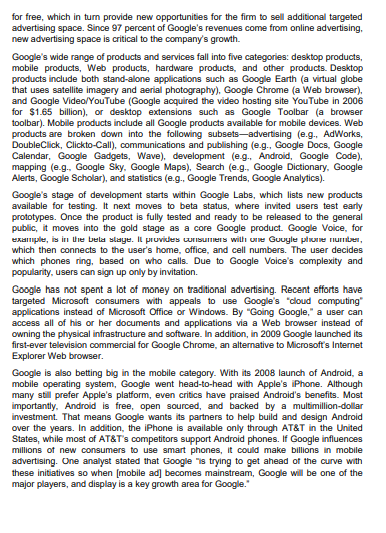
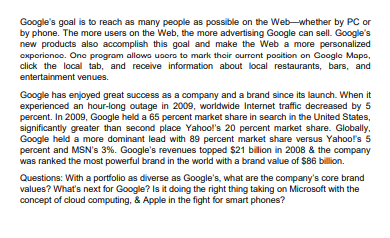
Guidelines for Writing a Case Study Analysis A case study analysis requires you to investigate a business problem, examine the alternative solutions, and propose the most effective solution using supporting evidence. a) Preparing the Case: Before you begin writing, follow these guidelines to help you prepare and understand the case study 1) Read and examine the ease thoroughly: Take notes, highlight relevant facts, underline key problems. 2) Focus your analysis: . Identify two to five key problems . Why do they exist? How do they impact the organization? Who is responsible for them? 3) Uncover possible solutions: Review course readings, discussions, outside research, your experience. 4) Select the best solution: Consider strong supporting evidence, pros, and cons is this solution realistic? b) Drafting the Case: Once you have gathered the necessary information, a draft of your analysis should include these sections 1) Introduction: Identify the key problems and issues in the case study. Formulate and include a thesis statement, summarizing the outcome of your analysis in 1-2 sentences. 2) Background - Set the scene; background information, relevant facts, and the most important issues. . Demonstrate that you have researched the problems in this case study 3) Alternatives Outline possible alternatives (not necessarily all of them) Explain why alternatives were rejected Constraints/reasons - Why are alternatives not possible at this time? 4) Proposed Solution Provide one specific and realistic solution Explain why this solution was chosen Support this solution with solid evidence . Concepts from class (text readings, discussions, lectures) . Outside research - Personal experience anecdotes) 5) Recommendations Determine and discuss specific strategies for accomplishing the proposed solution. If applicable, recommend further action to resolve some of the issues . What should be done and who should do it? c) Finalizing the Case After you have composed the first draft of your case study analysis, read through it to check for any gaps or inconsistencies in content or structure: Is your thesis statement clear and direct? Have you provided solid evidence? Is any component from the analysis missing? When you make the necessary revisions, proofread and edit your analysis before submitting the final draft (Refer to Proofreading and Editing Strategies and 20 Common Writing Errors to guide you at this stage.) Google In 1998, two Stanford University PhD students, Larry Page and Sergey Brin, founded a search engine company and named it Google. The name plays on the number googol 1 followed by 100 zeroesand refers to the massive quantity of data available online that the company helps users find. Google's corporate mission is 'To organize the world's information and make it universally accessible and useful." From the beginning, Google has strived to be one of the good guys" in the corporate world, supporting a touchy-feely work environment, strong ethics, and a famous founding credo: "Don't be evil." The company has become the market leader for search engines through its business focus and constant innovation. As Google grew into a primary destination for Web users searching for information online, it attracted a host of online advertisers. These advertisers drove Google's revenue by buying "search ads." little text-based boxes shown alongside search results that advertisers pay for only when users click on them. Google's search ad program, called AdWords, sells space on its search pages to ads linked with specific keywords. Google auctions off the keyword ads, with prime keywords and page locations going to the highest bidder. Google recently added a program called AdSense, which allows any Web site to display targeted Google ads related to the content of its site. Web site publishers earn money every time visitors click on these ads. In addition to offering prime online "real estate" for advertisers, Google adds value by providing tools to better target their ads and better understand the effectiveness of their marketing. Google Analytics, free to Google's advertisers, provides a custom report, or dashboard, detailing how Internet users found the site, what ads they saw and/or clicked on, how they behaved while there, and how much traffic was generated. Google client Discount Tire was able to identify where visitors encountered problems that led them to abandon a purchase midstream. After modifying its site and updating its keyword search campaign, Discount Tire measured a 14 percent increase in sales within a week. With its ability to deploy data that enable up-to-the minute improvements in a Web marketing program, Google supports a style of marketing in which the advertising resources and budget can be constantly monitored and optimized. Google calls this approach "marketing asset management," implying that advertising should be managed like assets in portfolio depending on the market conditions. Rather tha following marketing plan developed months in advance companies use the real-time data collected on their campaigns to optimize the campaign's effectiveness and be more responsive to the market. Over the past decade, Google has expanded far beyond its search capabilities with numerous other services, applications, and tools. It creates and distributes its products for free, which in turn provide new opportunities for the firm to sell additional targeted advertising space. Since 97 percent of Google's revenues come from online advertising, new advertising space is critical to the company's growth. Google's wide range of products and services fall into five categories: desktop products, mobile products, Web products, hardware products, and other products. Desktop products include both stand-alone applications such as Google Earth (a virtual globe that uses satellite imagery and aerial photography). Google Chrome (a Web browser). and Google Video/YouTube (Google acquired the video hosting site YouTube in 2006 for $1.65 billion), or desktop extensions such as Google Toolbar (a browser toolbar). Mobile products include all Google products available for mobile devices. Web products are broken down into the following subsetsadvertising (e.g. AdWorks, DoubleClick, Clickto-Call), communications and publishing (e.g., Google Docs, Google Calendar, Google Gadgets, Wave), development (e.g., Android, Google Code), mapping (e.g., Google Sky, Google Maps), Search (e.g., Google Dictionary, Google Alerts, Google Scholar), and statistics (e.g., Google Trends, Google Analytics). Google's stage of development starts within Google Labs, which lists new products available for testing. It next moves to beta status, where invited users test early prototypes. Once the product is fully tested and ready to be released to the general public, it moves into the gold stage as a core Google product. Google Voice, for example, is in the bela slage. It provides curisumers with me Guugle phone number, which then connects to the user's home, office, and cell numbers. The user decides which phones ring, based on who calls. Due to Google Voice's complexity and popularity, users can sign up only by invitation. Google has not spent a lot of money on traditional advertising. Recent efforts have targeted Microsoft consumers with appeals to use Google's cloud computing applications instead of Microsoft Office or Windows. By "Going Google," a user can access all of his or her documents and applications via a web browser instead of owning the physical infrastructure and software. In addition, in 2009 Google launched its first-ever television commercial for Google Chrome, an alternative to Microsoft's Internet Explorer Web browser. Google is also betting big in the mobile category. With its 2008 launch of Android, a mobile operating system, Google went head-to-head with Apple's iPhone. Although many still prefer Apple's platform, even critics have praised Android's benefits. Most importantly, Android is free, open sourced, and backed by a multimillion-dollar investment. That means Google wants its partners to help build and design Android over the years. In addition, the iPhone is available only through AT&T in the United States, while most of AT&T's competitors support Android phones. If Google influences millions of new consumers to use smart phones, it could make billions in mobile advertising. One analyst stated that Google is trying to get ahead of the curve with these initiatives so when (mobile ad] becomes mainstream, Google will be one of the major players, and display is a key growth area for Google." Google's goal is to reach as many people as possible on the Webwhether by PC or by phone. The more users on the Web, the more advertising Google can sell. Google's new products also accomplish this goal and make the web a more personalized cxperience. Ono program allows users to mark their current position on Google Mapo, click the local tab, and receive information about local restaurants, bars, and entertainment venues. Google has enjoyed great success as a company and a brand since its launch. When it experienced an hour-long outage in 2009, worldwide Internet traffic decreased by 5 percent. In 2009, Google held a 65 percent market share in search in the United States, significantly greater than second place Yahoo!'s 20 percent market share. Globally, Google held a more dominant lead with 89 percent market share versus Yahool's 5 percent and MSN's 3%. Google's revenues topped $21 billion in 2008 & the company was ranked the most powerful brand in the world with a brand value of $86 billion. Questions: With a portfolio as diverse as Google's, what are the company's core brand values? What's next for Google? Is it doing the right thing taking on Microsoft with the concept of cloud computing, & Apple in the fight for smart phones









 Study Help