







Question: Hello, please help me answer these questions. It would be helpful if you could show your work as well (maybe on paper). Thank you. Practice
Hello, please help me answer these questions. It would be helpful if you could show your work as well (maybe on paper). Thank you.
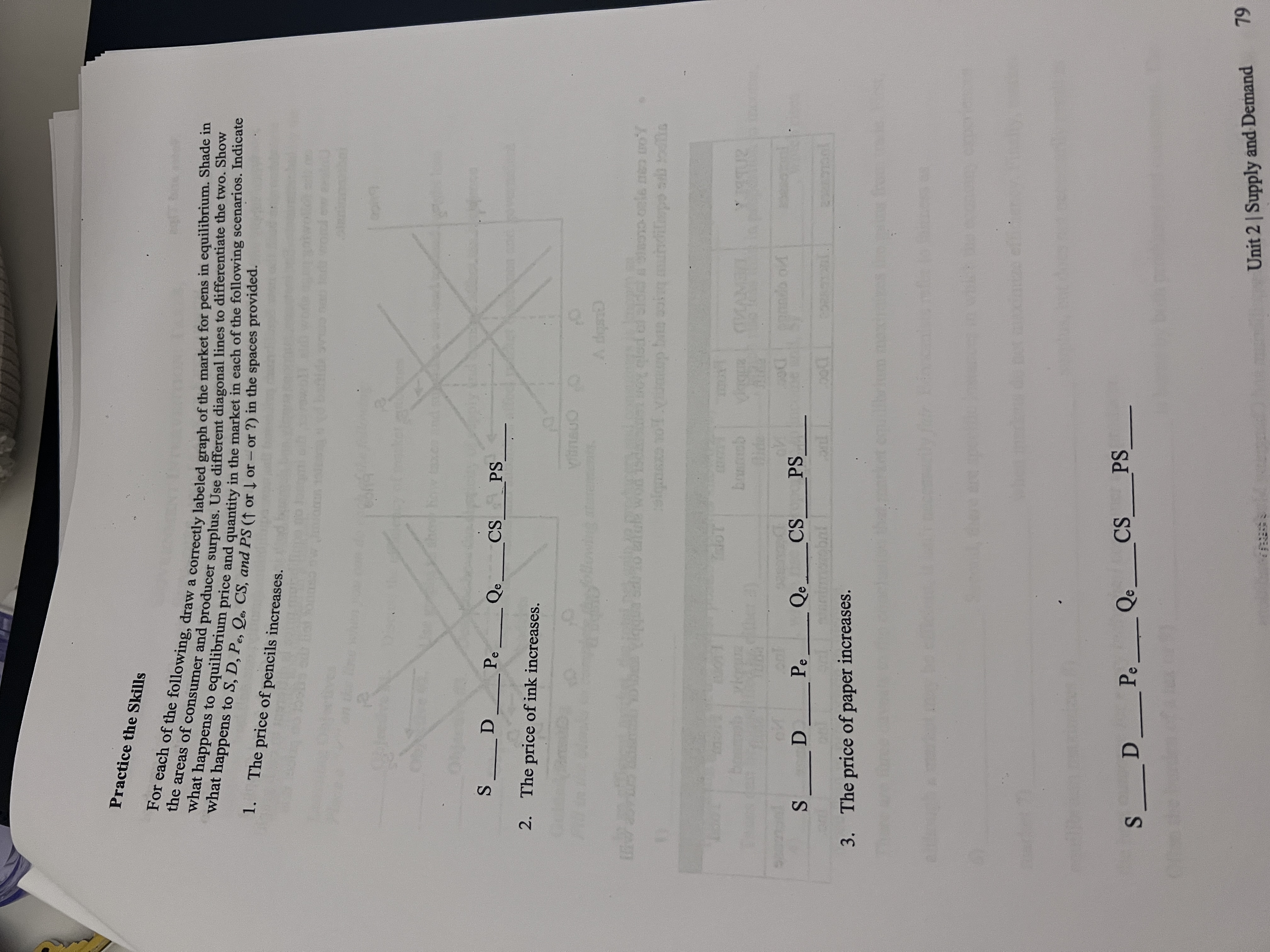
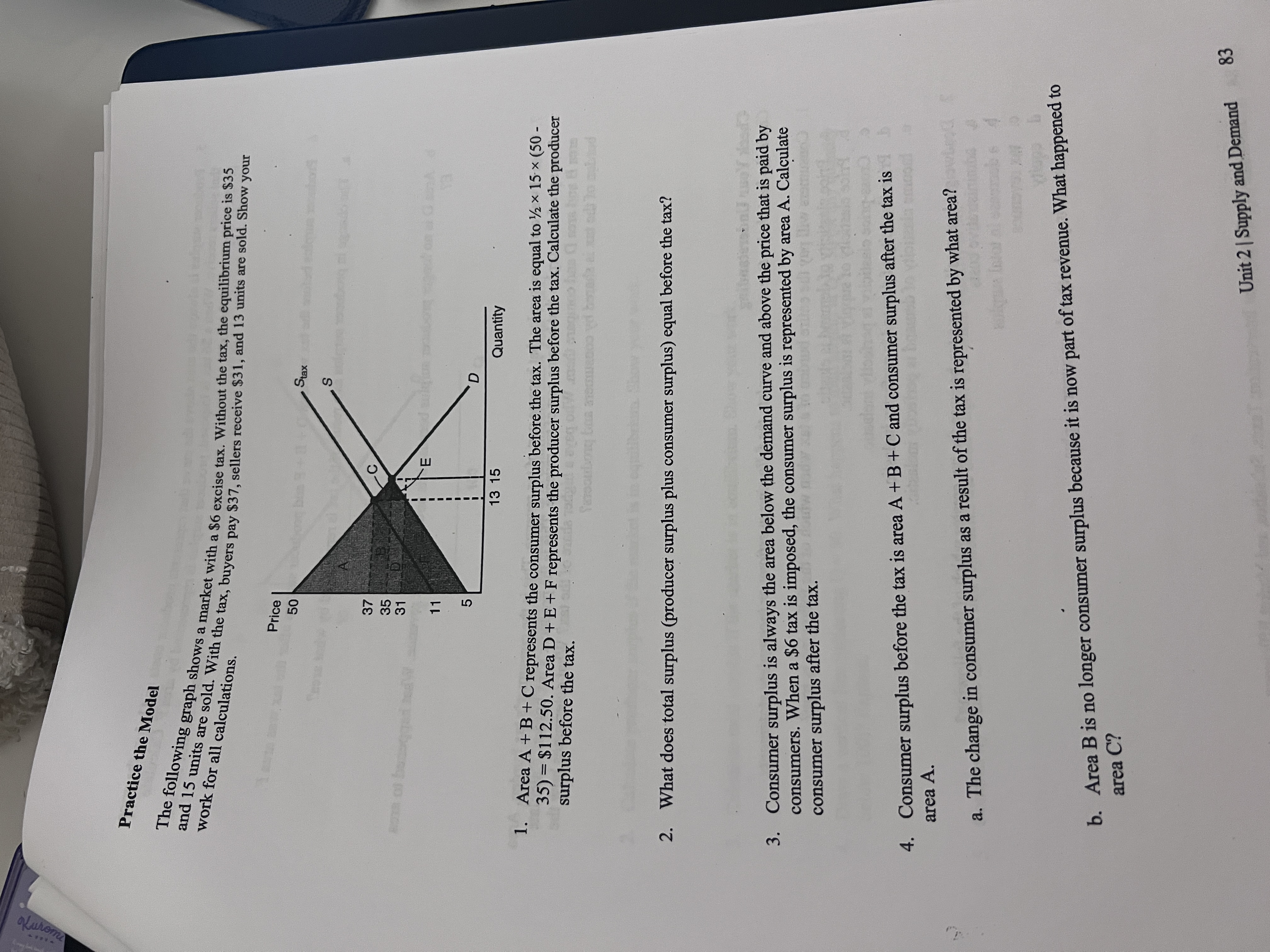
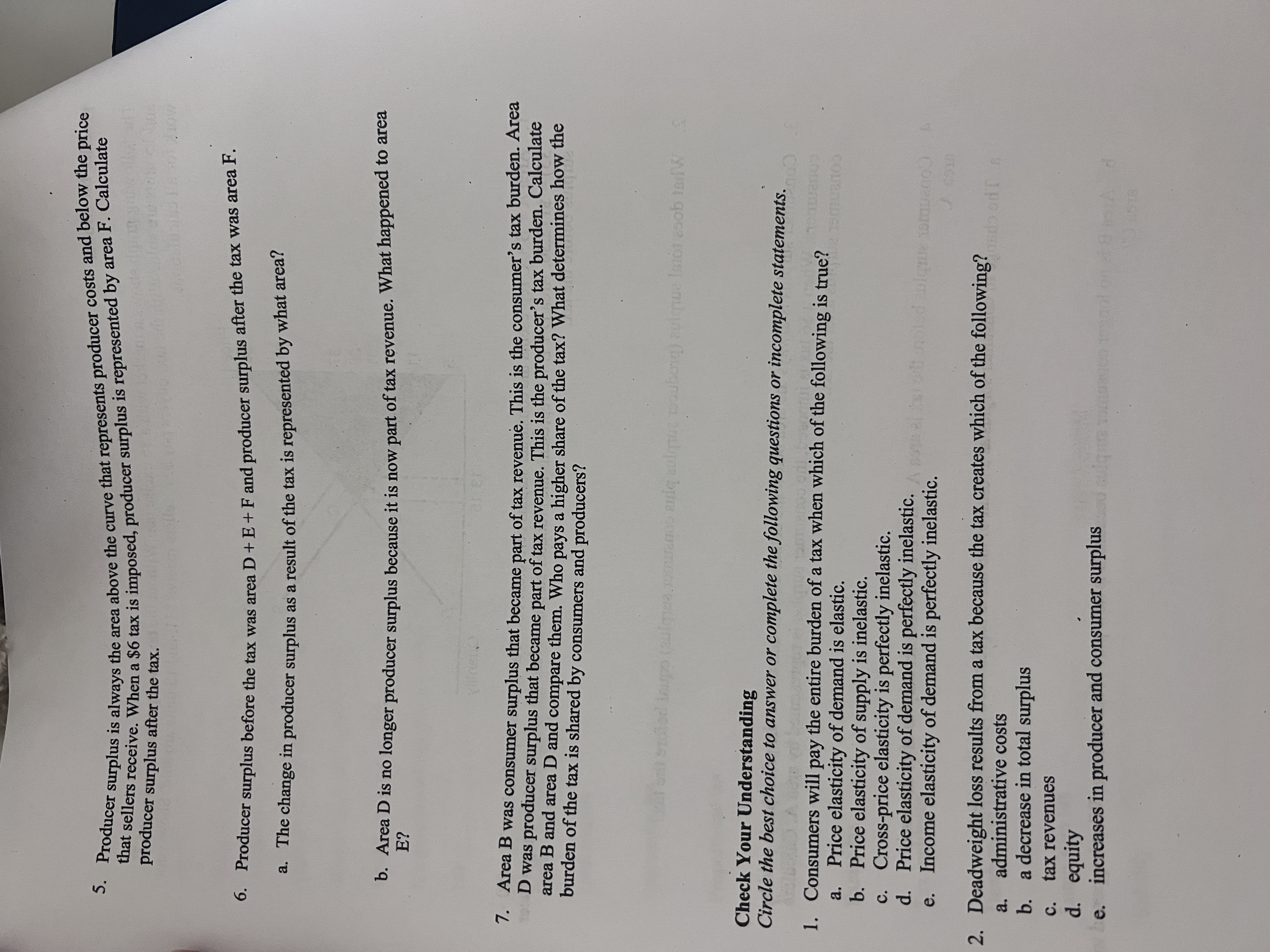
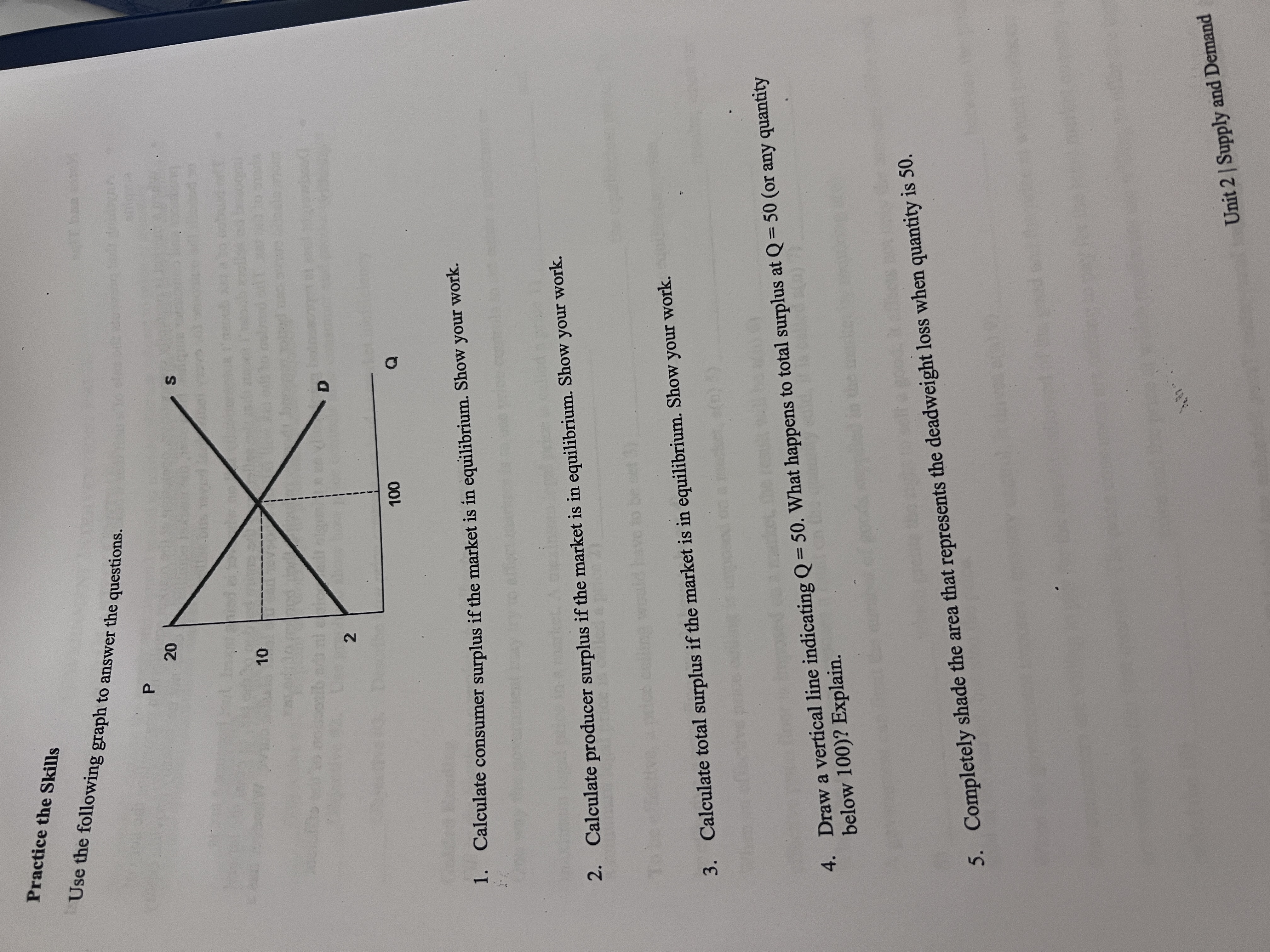
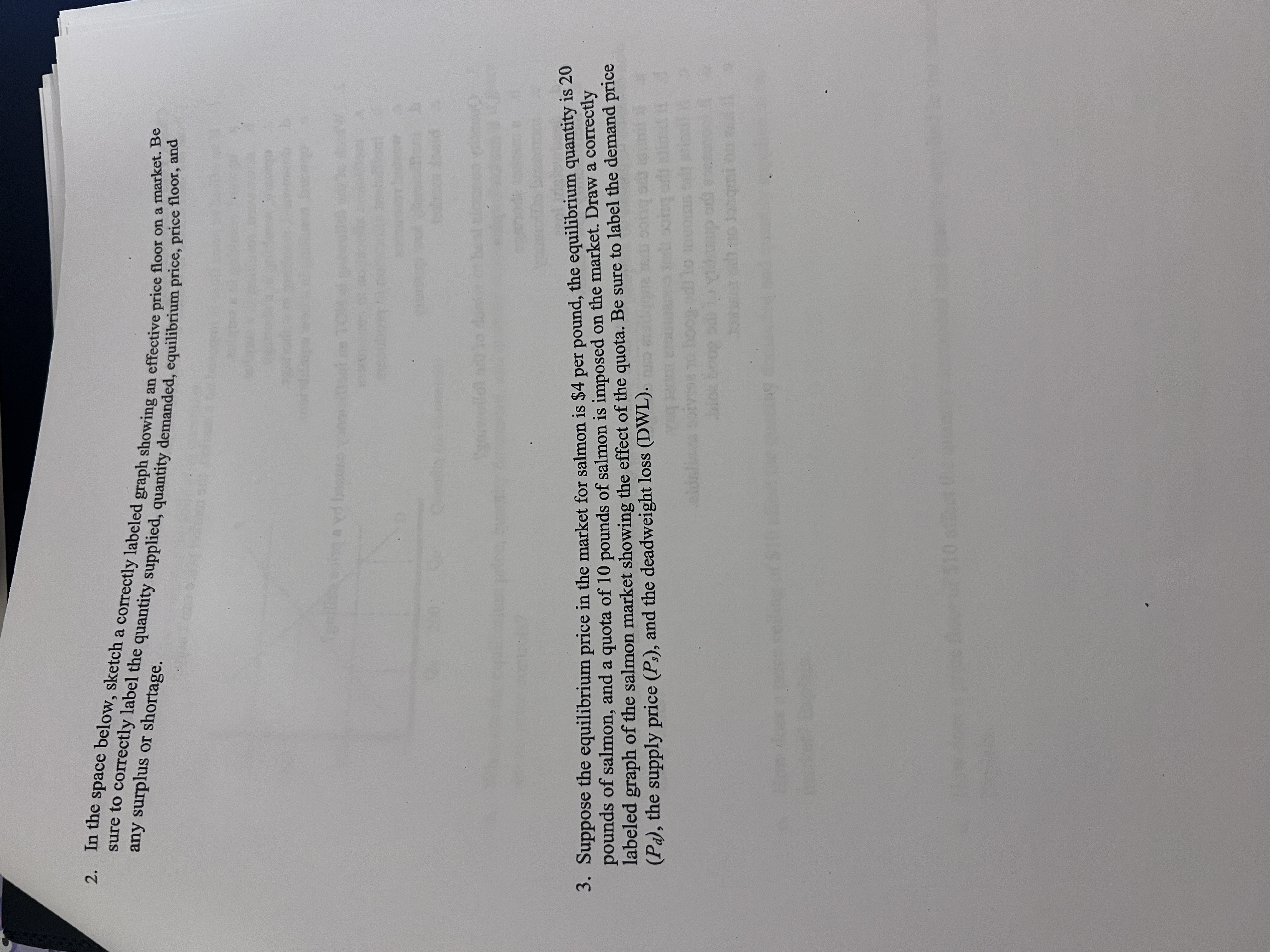
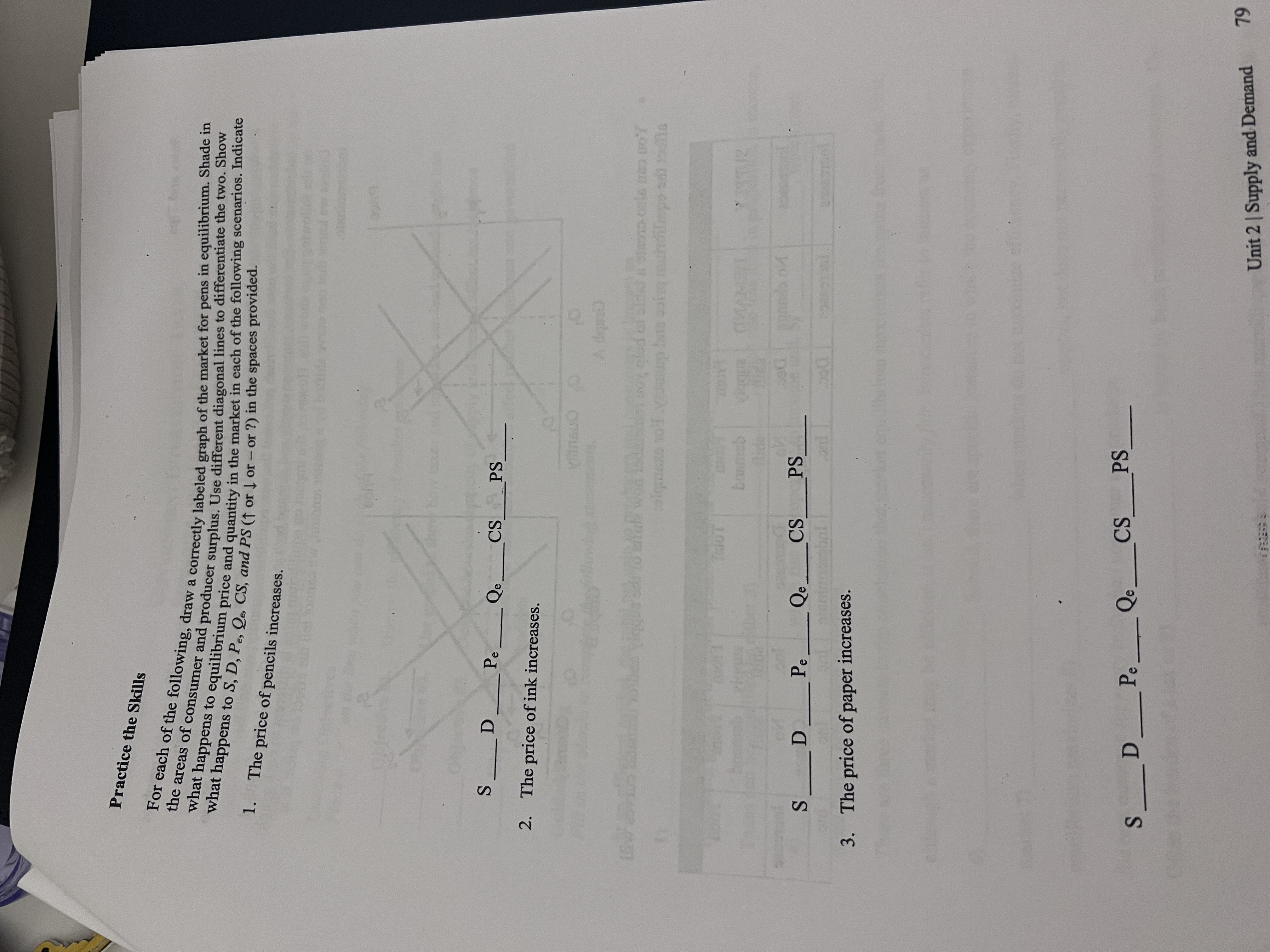
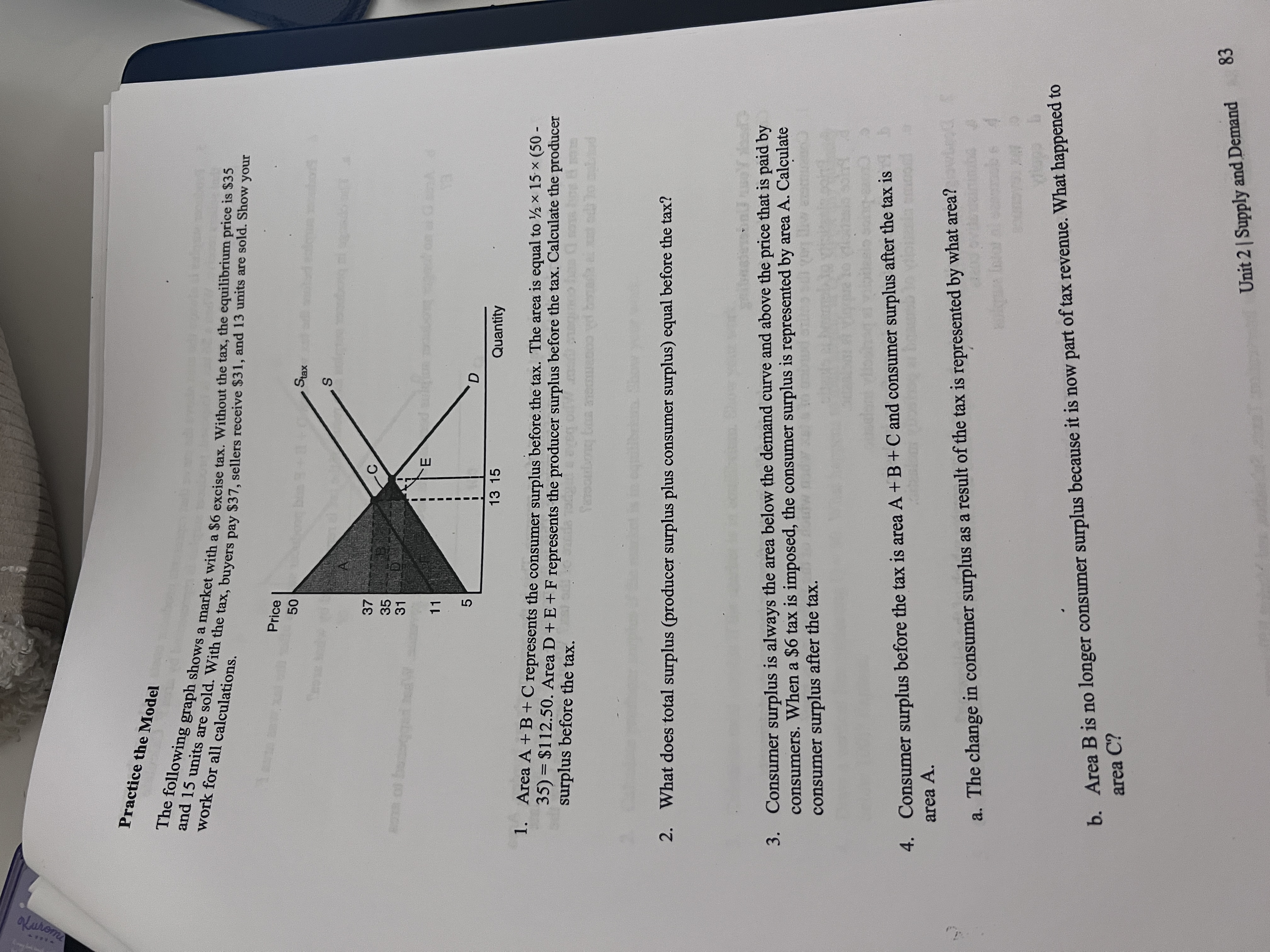
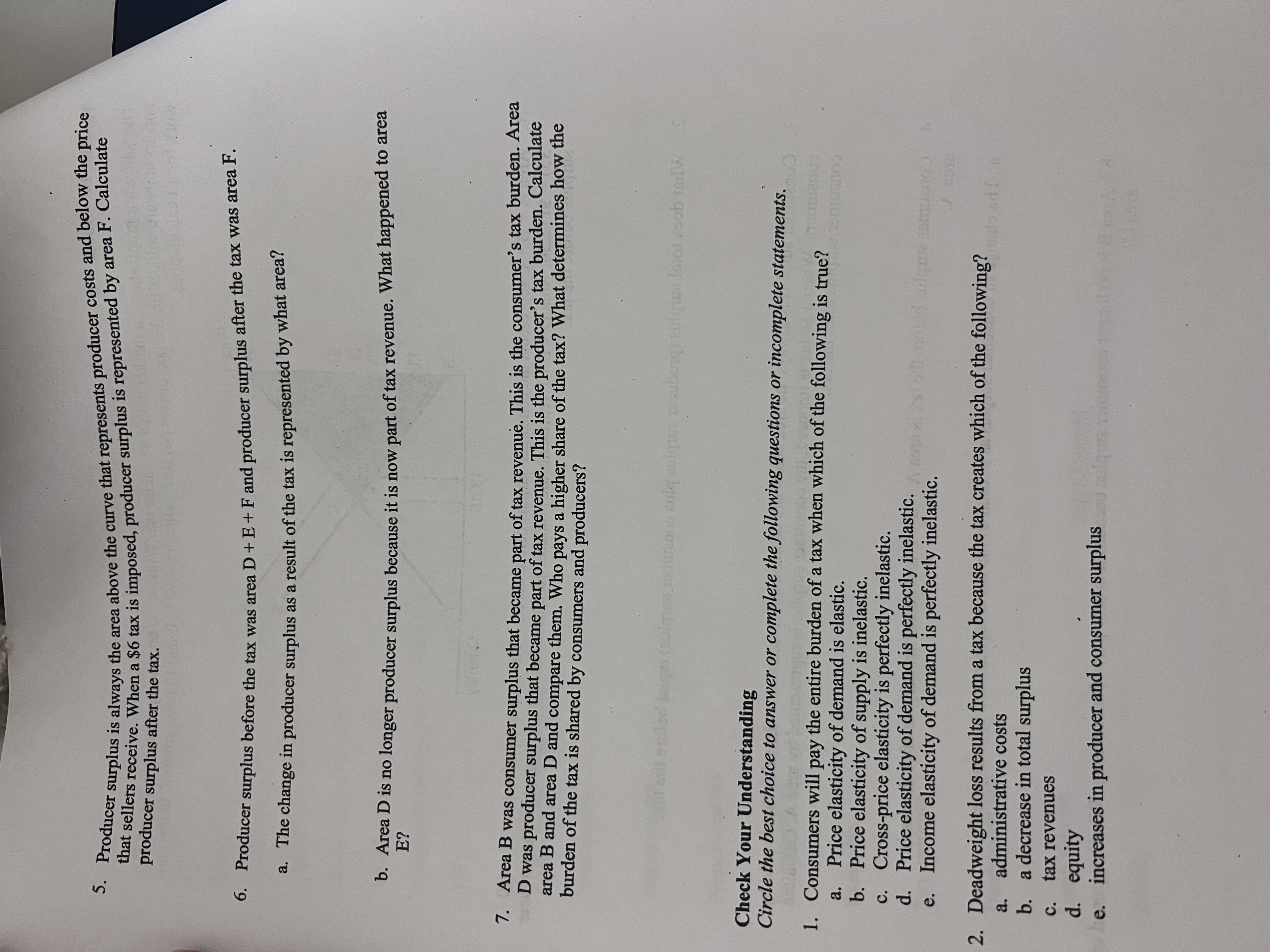
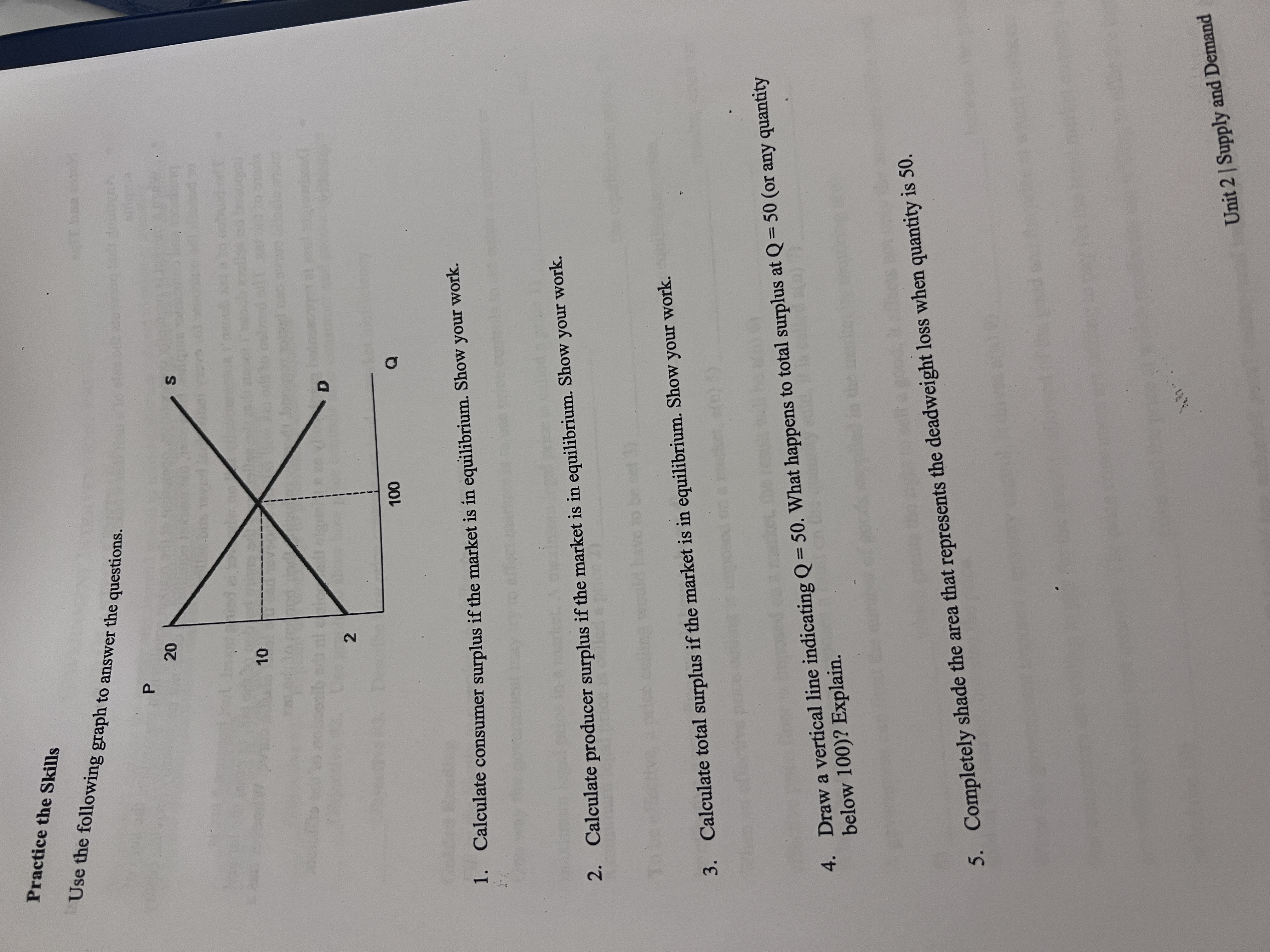
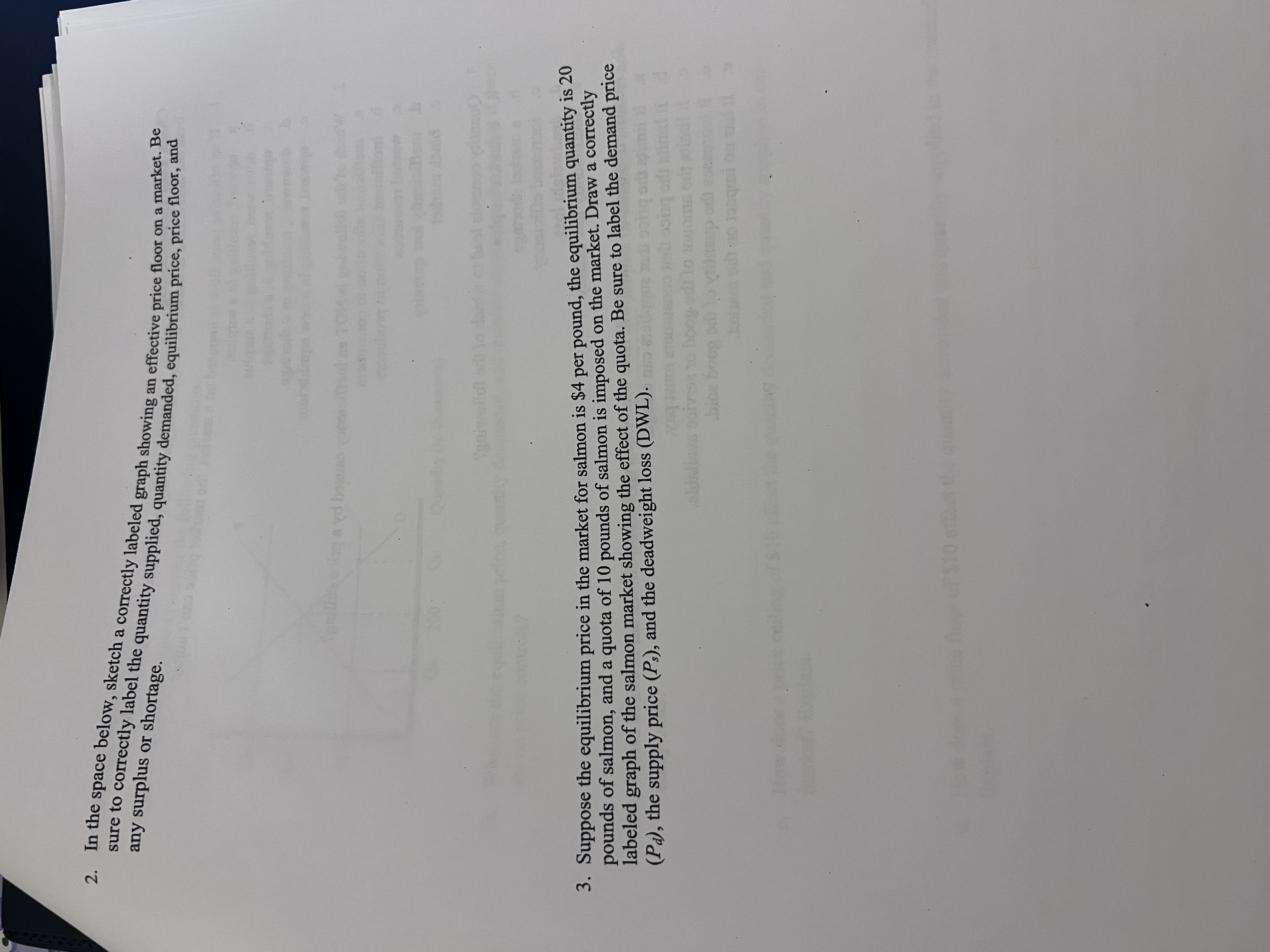
Practice the Skills For each of the following, draw a correctly labeled graph of the market for pens in equilibrium. Shade in the areas of consumer and producer surplus. Use different diagonal lines to differentiate the two. Show what happens to equilibrium price and quantity in the market in each of the following scenarios. Indicate what happens to S, D, Pe, le, CS, and PS (T or | or - or ?) in the spaces provided. 1. The price of pencils increases. S D Pe Qe CS PS 2. The price of ink increases. WiinauO NOT S D Pe Qe CS PS 3. The price of paper increases. S D Qe CS PS Unit 2 | Supply and Demand 79Practice the Model The following graph shows a market with a $6 excise tax. Without the tax, the equilibrium price is $35 work for all calculations. and 15 units are sold. With the tax, buyers pay $37, sellers receive $31, and 13 units are sold. Show your Price 50 Stax S 37 - C 35 31 11 5 13 15 Quantity 1. Area A + B + C represents the consumer surplus before the tax. The area is equal to 1/2 x 15 x (50 - 35) = $112.50. Area D + E + F represents the producer surplus before the tax. Calculate the producer surplus before the tax. 2. What does total surplus (producer surplus plus consumer surplus) equal before the tax? 3. Consumer surplus is always the area below the demand curve and above the price that is paid by consumers. When a $6 tax is imposed, the consumer surplus is represented by area A. Calculate consumer surplus after the tax. 4. Consumer surplus before the tax is area A + B + C and consumer surplus after the tax is area A. a. The change in consumer surplus as a result of the tax is represented by what area? b. Area B is no longer consumer surplus because it is now part of tax revenue. What happened to area C? 83 Unit 2 | Supply and Demand3. Producer surplus is always the area above the curve that represents producer costs and below the price that sellers receive. When a $6 en a $6 tax is imposed, producer surplus is represented by area F. Calculate producer surplus after the tax. 6. Producer surplus before the tax was area D + E + F and producer surplus after the tax was area F. a. The change in producer surplus as a result of the tax is represented by what area? b. Area D is no longer producer surplus because it is now part of tax revenue. What happened to area E? 7. Area B was consumer surplus that became part of tax revenue. This is the consumer's tax burden. Area D was producer surplus that became part of tax revenue. This is the producer's tax burden. Calculate area B and area D and compare them. Who pays a higher share of the tax? What determines how the burden of the tax is shared by consumers and producers? sourenos enla sulque tooub on) eulenue Infor asob tardis Check Your Understanding Circle the best choice to answer or complete the following questions or incomplete statements. 1. Consumers will pay the entire burden of a tax when which of the following is true? a. Price elasticity of demand is elastic. b. Price elasticity of supply is inelastic. C. Cross-price elasticity is perfectly inelastic. 1. Price elasticity of demand is perfectly inelastic. e. Income elasticity of demand is perfectly inelastic. 2. Deadweight loss results from a tax because the tax creates which of the following? a. administrative costs b. a decrease in total surplus C. tax revenues d. equity e. increases in producer and consumer surplusPractice the Skills Use the following graph to answer the questions. P 20 10 D 2 100 Q 1. Calculate consumer surplus if the market is in equilibrium. Show your work. 2. Calculate producer surplus if the market is in equilibrium. Show your work. sales colling would have to be petty 3. Calculate total surplus if the market is in equilibrium. Show your work. 4. Draw a vertical line indicating Q = 50. What happens to total surplus at Q = 50 (or any quantity below 100)? Explain. 5. Completely shade the area that represents the deadweight loss when quantity is 50. Unit 2 | Supply and Demand2. In the space below, sketch a correctly labeled graph showing an effective price floor on a market. Be any surplus or shortage. sure to correctly label the quantity supplied, quantity demanded, equilibrium price, price floor, and 3. Suppose the equilibrium price in the market for salmon is $4 per pound, the equilibrium quantity is 20 pounds of salmon, and a quota of 10 pounds of salmon is imposed on the market. Draw a correctly labeled graph of the salmon market showing the effect of the quota. Be sure to label the demand price (Pa), the supply price (Ps), and the deadweight loss (DWL). blok boog pull to padres
Step by Step Solution
There are 3 Steps involved in it

Get step-by-step solutions from verified subject matter experts
 Study Help