



Question: Hi.. the requirements that i need in this case study reports (1) case summary (2) Major problems and causes (3) Possible Solutions (4) Recomended Actions

Hi.. the requirements that i need in this case study reports (1) case summary (2) Major problems and causes (3) Possible Solutions (4) Recomended Actions (5) Implementation Plan .Please see to the last pages of this case study.thanks 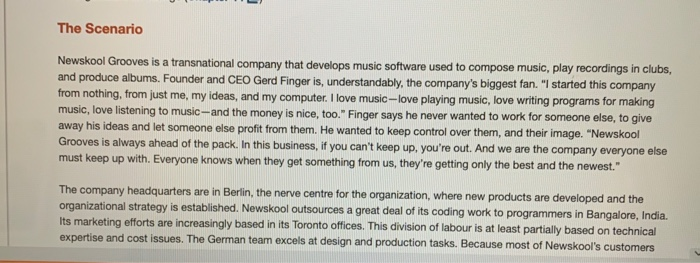
HI i need help in this scenario. 1) Case Summary (b) Major problems and causes (3) Possible solutions (4) Recommendation Action (5( Implementation Plan
All of this base on the Case analysis Model. Please see attached pictures.Thanks
what kind of information you need? i sent many times.I only need is the requirements of case study reports please see 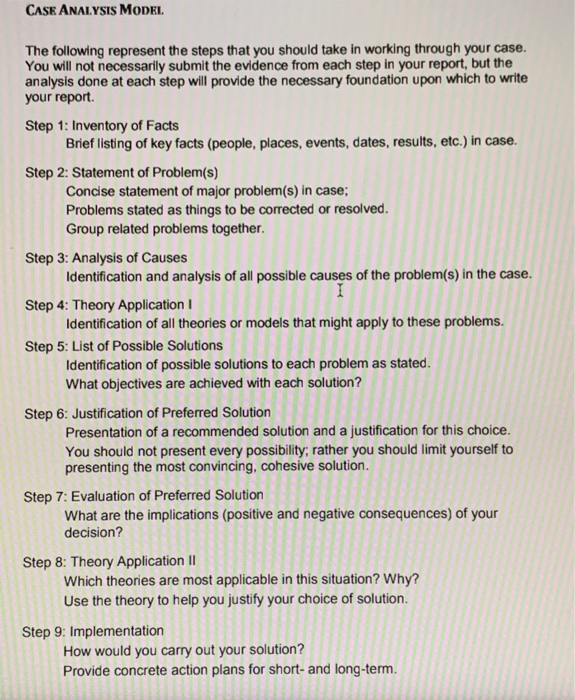

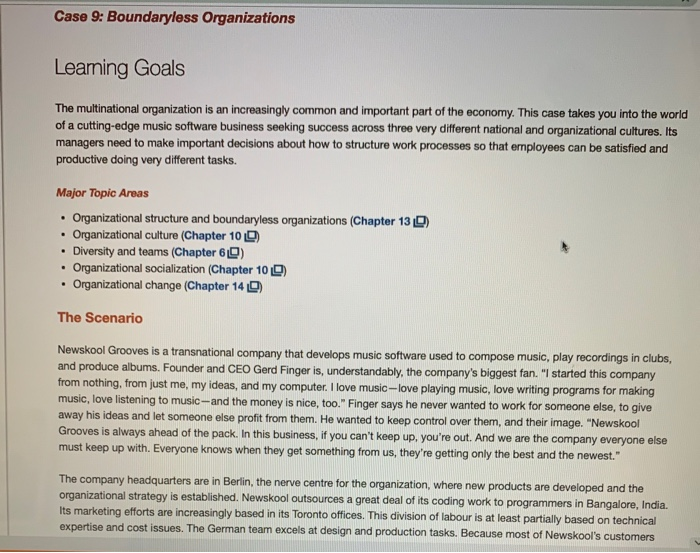
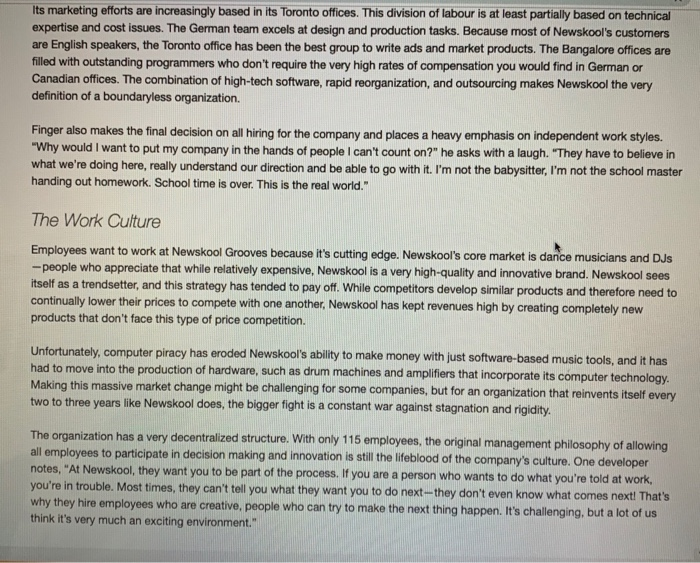
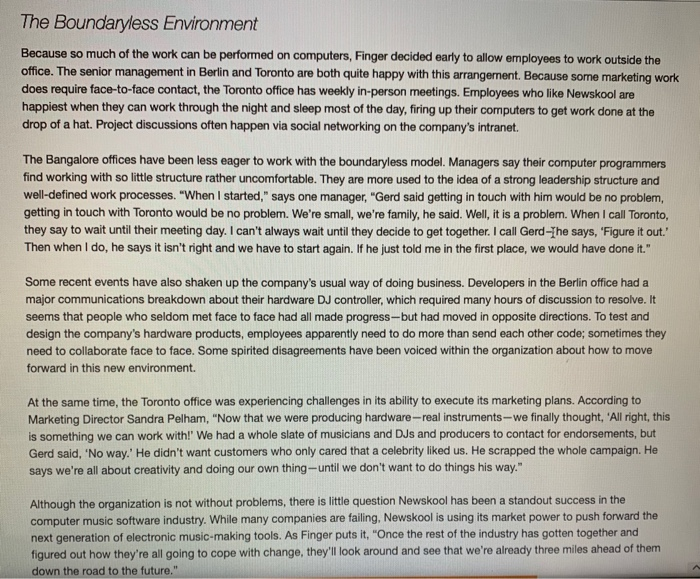
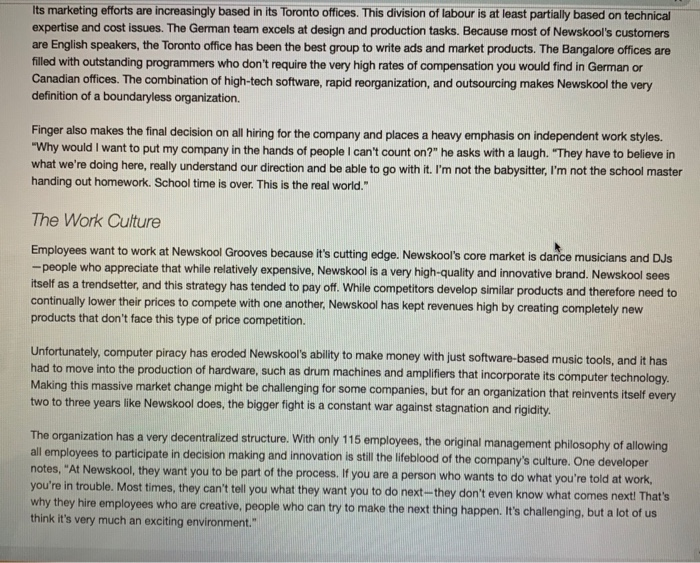
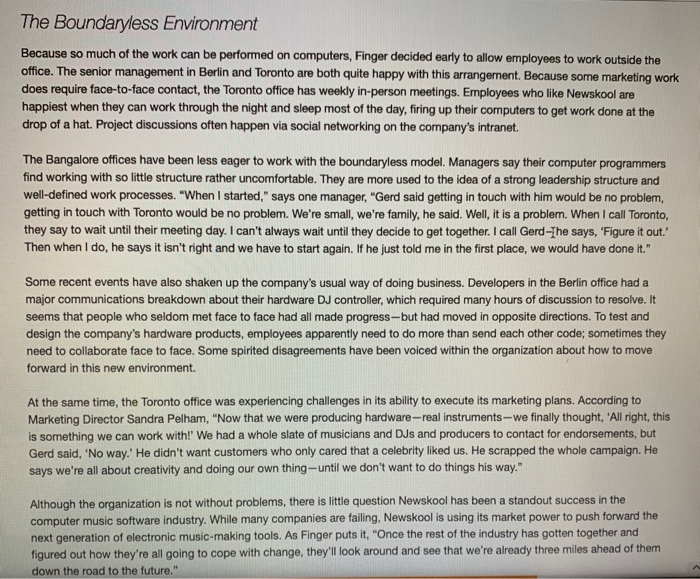
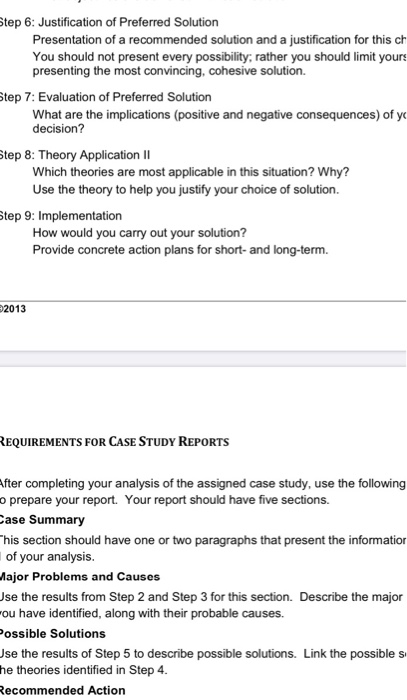
Case 9: Boundaryless Organizations Leaming Goals The multinational organization is an increasingly common and important part of the economy. This case takes you into the world of a cutting-edge music software business seeking success across three very different national and organizational cultures. Its managers need to make important decisions about how to structure work processes so that employees can be satisfied and productive doing very different tasks. Major Topic Areas Organizational structure and boundaryless organizations (Chapter 13 Organizational culture (Chapter 10 D Diversity and teams (Chapter 60) Organizational socialization (Chapter 100 Organizational change (Chapter 140 . The Scenario Newskool Grooves is a transnational company that develops music software used to compose music, play recordings in clubs, and produce albums. Founder and CEO Gerd Finger is, understandably, the company's biggest fan. "I started this company from nothing, from just me, my ideas, and my computer. I love music-love playing music, love writing programs for making music, love listening to music-and the money is nice, too." Finger says he never wanted to work for someone else, to give away his ideas and let someone else profit from them. He wanted to keep control over them, and their image. "Newskool Grooves is always ahead of the pack. In this business, if you can't keep up, you're out. And we are the company everyone else must keep up with. Everyone knows when they get something from us, they're getting only the best and the newest." The company headquarters are in Berlin, the nerve centre for the organization, where new products are developed and the organizational strategy is established. Newskool outsources a great deal of its coding work to programmers in Bangalore, India. Its marketing efforts are increasingly based in its Toronto offices. This division of labour is at least partially based on technical expertise and cost issues. The German team excels at design and production tasks. Because most of Newskool's customers Its marketing efforts are increasingly based in its Toronto offices. This division of labour is at least partially based on technical expertise and cost issues. The German team excels at design and production tasks. Because most of Newskool's customers are English speakers, the Toronto office has been the best group to write ads and market products. The Bangalore offices are filled with outstanding programmers who don't require the very high rates of compensation you would find in German or Canadian offices. The combination of high-tech software, rapid reorganization, and outsourcing makes Newskool the very definition of a boundaryless organization. Finger also makes the final decision on all hiring for the company and places a heavy emphasis on independent work styles. "Why would I want to put my company in the hands of people I can't count on?" he asks with a laugh. "They have to believe in what we're doing here, really understand our direction and be able to go with it. I'm not the babysitter, I'm not the school master handing out homework. School time is over. This is the real world." The Work Culture Employees want to work at Newskool Grooves because it's cutting edge. Newskool's core market is dance musicians and DJs -people who appreciate that while relatively expensive, Newskool is a very high-quality and innovative brand. Newskool sees itself as a trendsetter, and this strategy has tended to pay off. While competitors develop similar products and therefore need to continually lower their prices to compete with one another, Newskool has kept revenues high by creating completely new products that don't face this type of price competition. Unfortunately, computer piracy has eroded Newskool's ability to make money with just software-based music tools, and it has had to move into the production of hardware, such as drum machines and amplifiers that incorporate its computer technology. Making this massive market change might be challenging for some companies, but for an organization that reinvents itself every two to three years like Newskool does, the bigger fight is a constant war against stagnation and rigidity. The organization has a very decentralized structure. With only 115 employees, the original management philosophy of allowing all employees to participate in decision making and innovation is still the lifeblood of the company's culture. One developer notes, "At Newskool, they want you to be part of the process. If you are a person who wants to do what you're told at work, you're in trouble. Most times, they can't tell you what they want you to do next--they don't even know what comes next! That's why they hire employees who are creative, people who can try to make the next thing happen. It's challenging, but a lot of us think it's very much an exciting environment." The Boundaryless Environment Because so much of the work can be performed on computers, Finger decided early to allow employees to work outside the office. The senior management in Berlin and Toronto are both quite happy with this arrangement. Because some marketing work does require face-to-face contact, the Toronto office has weekly in-person meetings. Employees who like Newskool are happiest when they can work through the night and sleep most of the day, firing up their computers to get work done at the drop of a hat. Project discussions often happen via social networking on the company's intranet. The Bangalore offices have been less eager to work with the boundaryless model Managers say their computer programmers find working with so little structure rather uncomfortable. They are more used to the idea of a strong leadership structure and well-defined work processes. "When I started," says one manager, "Gerd said getting in touch with him would be no problem, getting in touch with Toronto would be no problem. We're small, we're family, he said. Well, it is a problem. When I call Toronto, they say to wait until their meeting day. I can't always wait until they decide to get together. I call Gerd-Ihe says, 'Figure it out.' Then when I do, he says it isn't right and we have to start again. If he just told me in the first place, we would have done it." Some recent events have also shaken up the company's usual way of doing business. Developers in the Berlin office had a major communications breakdown about their hardware DJ controller, which required many hours of discussion to resolve. It seems that people who seldom met face to face had all made progress-but had moved in opposite directions. To test and design the company's hardware products, employees apparently need to do more than send each other code; sometimes they need to collaborate face to face. Some spirited disagreements have been voiced within the organization about how to move forward in this new environment. At the same time, the Toronto office was experiencing challenges in its ability to execute its marketing plans. According to Marketing Director Sandra Pelham, "Now that we were producing hardware-real instruments, we finally thought, 'All right, this is something we can work with! We had a whole slate of musicians and DJs and producers to contact for endorsements, but Gerd said, 'No way.' He didn't want customers who only cared that a celebrity liked us. He scrapped the whole campaign. He says we're all about creativity and doing our own thing- until we don't want to do things his way." Although the organization is not without problems, there is little question Newskool has been a standout success in the computer music software industry. While many companies are failing, Newskool is using its market power to push forward the next generation of electronic music-making tools. As Finger puts it, "Once the rest of the industry has gotten together and figured out how they're all going to cope with change, they'll look around and see that we're already three miles ahead of them down the road to the future." The following represent the steps that you should take in working through your case. You will not necessarily submit the evidence from each step in your report, but the analysis done at each step will provide the necessary foundation upon which to write your report Step 1: Inventory of Facts Brief listing of key facts people, places, events, dates, results, etc.) in case. Step 2: Statement of Problem(s) Concise statement of major problem(s) in case Problems stated as things to be corrected or resolved. Group related problems together. Step 3: Analysis of Causes Identification and analysis of all possible causes of the problem(s) in the case. Step 4: Theory Application Identification of all theories or models that might apply to these problems. Step 5: List of Possible Solutions Identification of possible solutions to each problem as stated. What objectives are achieved with each solution? Step 6: Justification of Preferred Solution Presentation of a recommended solution and a justification for this choice You should not present every possibility, rather you should limit yourself to presenting the most convincing, cohesive solution Step 7: Evaluation of Preferred Solution What are the implications (positive and negative consequences) of your decision? Step 8: Theory Application II Which theories are most applicable in this situation? Why? Use the theory to help you justify your choice of solution Step 9: Implementation How would you carry out your solution? Provide concrete action plans for short and long-term. 02013 March 2013 REQUIREMENTS FOR CASE STUDY REPORTS After completing your analysis of the assigned case study, use the following guidelines to prepare your report. Your report should have five sections. Case Summary This section should have one or two paragraphs that present the information from Step 1 of your analysis Major Problems and Causes Use the results from Step 2 and Step 3 for this section. Describe the major problems you have identified, along with their probable causes. Possible Solutions Use the results of Stop 5 to describe possible solutions. Link the possible solutions with the theories identified in Step 4. Recommended Action This is the most important section of your report. In it, you will present the results of Steps 6, 7 and 8 of your analysis Implementation Plan For each action state who should be responsible and when the action should be taken The Scenario Newskool Grooves is a transnational company that develops music software used to compose music, play recordings in clubs, and produce albums. Founder and CEO Gerd Finger is, understandably, the company's biggest fan. "I started this company from nothing, from just me, my ideas, and my computer. I love music-love playing music, love writing programs for making music, love listening to music, and the money is nice, too." Finger says he never wanted to work for someone else, to give away his ideas and let someone else profit from them. He wanted to keep control over them, and their image. "Newskool Grooves is always ahead of the pack. In this business, if you can't keep up, you're out. And we are the company everyone else must keep up with. Everyone knows when they get something from us, they're getting only the best and the newest." The company headquarters are in Berlin, the nerve centre for the organization, where new products are developed and the organizational strategy is established. Newskool outsources a great deal of its coding work to programmers in Bangalore, India. Its marketing efforts are increasingly based in its Toronto offices. This division of labour is at least partially based on technical expertise and cost issues. The German team excels at design and production tasks. Because most of Newskool's customers Its marketing efforts are increasingly based in its Toronto offices. This division of labour is at least partially based on technical expertise and cost issues. The German team excels at design and production tasks. Because most of Newskool's customers are English speakers, the Toronto office has been the best group to write ads and market products. The Bangalore offices are filled with outstanding programmers who don't require the very high rates of compensation you would find in German or Canadian offices. The combination of high-tech software, rapid reorganization, and outsourcing makes Newskool the very definition of a boundaryless organization. Finger also makes the final decision on all hiring for the company and places a heavy emphasis on independent work styles. "Why would I want to put my company in the hands of people I can't count on?" he asks with a laugh. "They have to believe in what we're doing here, really understand our direction and be able to go with it. I'm not the babysitter, I'm not the school master handing out homework. School time is over. This is the real world." The Work Culture Employees want to work at Newskool Grooves because it's cutting edge. Newskool's core market is dance musicians and DJs -people who appreciate that while relatively expensive, Newskool is a very high-quality and innovative brand. Newskool sees itself as a trendsetter, and this strategy has tended to pay off. While competitors develop similar products and therefore need to continually lower their prices to compete with one another, Newskool has kept revenues high by creating completely new products that don't face this type of price competition. Unfortunately, computer piracy has eroded Newskool's ability to make money with just software-based music tools, and it has had to move into the production of hardware, such as drum machines and amplifiers that incorporate its computer technology. Making this massive market change might be challenging for some companies, but for an organization that reinvents itself every two to three years like Newskool does, the bigger fight is a constant war against stagnation and rigidity. The organization has a very decentralized structure. With only 115 employees, the original management philosophy of allowing all employees to participate in decision making and innovation is still the lifeblood of the company's culture. One developer notes, "At Newskool, they want you to be part of the process. If you are a person who wants to do what you're told at work, you're in trouble. Most times, they can't tell you what they want you to do next--they don't even know what comes next! That's why they hire employees who are creative, people who can try to make the next thing happen. It's challenging, but a lot of us think it's very much an exciting environment." The Boundaryless Environment Because so much of the work can be performed on computers, Finger decided early to allow employees to work outside the office. The senior management in Berlin and Toronto are both quite happy with this arrangement. Because some marketing work does require face-to-face contact, the Toronto office has weekly in-person meetings. Employees who like Newskool are happiest when they can work through the night and sleep most of the day, firing up their computers to get work done at the drop of a hat. Project discussions often happen via social networking on the company's intranet. The Bangalore offices have been less eager to work with the boundaryless model Managers say their computer programmers find working with so little structure rather uncomfortable. They are more used to the idea of a strong leadership structure and well-defined work processes. "When I started," says one manager, "Gerd said getting in touch with him would be no problem, getting in touch with Toronto would be no problem. We're small, we're family, he said. Well, it is a problem. When I call Toronto, they say to wait until their meeting day. I can't always wait until they decide to get together. I call Gerd-Ihe says, 'Figure it out.' Then when I do, he says it isn't right and we have to start again. If he just told me in the first place, we would have done it." Some recent events have also shaken up the company's usual way of doing business. Developers in the Berlin office had a major communications breakdown about their hardware DJ controller, which required many hours of discussion to resolve. It seems that people who seldom met face to face had all made progress-but had moved in opposite directions. To test and design the company's hardware products, employees apparently need to do more than send each other code; sometimes they need to collaborate face to face. Some spirited disagreements have been voiced within the organization about how to move forward in this new environment. At the same time, the Toronto office was experiencing challenges in its ability to execute its marketing plans. According to Marketing Director Sandra Pelham, "Now that we were producing hardware-real instruments, we finally thought, 'All right, this is something we can work with! We had a whole slate of musicians and DJs and producers to contact for endorsements, but Gerd said, 'No way.' He didn't want customers who only cared that a celebrity liked us. He scrapped the whole campaign. He says we're all about creativity and doing our own thing- until we don't want to do things his way." Although the organization is not without problems, there is little question Newskool has been a standout success in the computer music software industry. While many companies are failing, Newskool is using its market power to push forward the next generation of electronic music-making tools. As Finger puts it, "Once the rest of the industry has gotten together and figured out how they're all going to cope with change, they'll look around and see that we're already three miles ahead of them down the road to the future." Step 6: Justification of Preferred Solution Presentation of a recommended solution and a justification for this ch You should not present every possibility, rather you should limit yours presenting the most convincing, cohesive solution Step 7: Evaluation of Preferred Solution What are the implications (positive and negative consequences) of y decision? Step 8: Theory Application II Which theories are most applicable in this situation? Why? Use the theory to help you justify your choice of solution. Step 9: Implementation How would you carry out your solution? Provide concrete action plans for short- and long-term. 2013 REQUIREMENTS FOR CASE STUDY REPORTS After completing your analysis of the assigned case study, use the following o prepare your report. Your report should have five sections. Case Summary This section should have one or two paragraphs that present the information of your analysis. Major Problems and Causes Use the results from Step 2 and Step 3 for this section. Describe the major ou have identified, along with their probable causes. Possible Solutions Use the results of Step 5 to describe possible solutions. Link the possible si he theories identified in Step 4. Recommended Action CASE ANALYSIS MODEL The following represent the steps that you should take in working through your case. You will not necessarily submit the evidence from each step in your report, but the analysis done at each step will provide the necessary foundation upon which to write your report Step 1: Inventory of Facts Brief listing of key facts (people, places, events, dates, results, etc.) in case. Step 2: Statement of Problem(s) Concise statement of major problem(s) in case; Problems stated as things to be corrected or resolved. Group related problems together. Step 3: Analysis of Causes Identification and analysis of all possible causes of the problem(s) in the case. Step 4: Theory Application 1 Identification of all theories or models that might apply to these problems. Step 5: List of Possible Solutions Identification of possible solutions to each problem as stated. What objectives are achieved with each solution? Step 6: Justification of Preferred Solution Presentation of a recommended solution and a justification for this choice. You should not present every possibility; rather you should limit yourself to presenting the most convincing, cohesive solution. Step 7: Evaluation of Preferred Solution What are the implications (positive and negative consequences) of your decision? Step 8: Theory Application II Which theories are most applicable in this situation? Why? Use the theory to help you justify your choice of solution. Step 9: Implementation How would you carry out your solution? Provide concrete action plans for short- and long-term. REQUIREMENTS FOR CASE STUDY REPORTS After completing your analysis of the assigned case study, use the following guidelines to prepare your report. Your report should have five sections. Case Summary This section should have one or two paragraphs that present the information from Step 1 of your analysis. Major Problems and Causes Use the results from Step 2 and Step 3 for this secticn. Describe the major problems you have identified, along with their probable causes. Possible Solutions Use the results of Step 5 to describe possible solutions. Link the possible solutions with the theories identified in Step 4. Recommended Action This is the most important section of your report. In it, you will present the results of Steps 6, 7, and 8 of your analysis. Implementation Plan For each action, state who should be responsible and when the action should be taken
attached..
Step by Step Solution
There are 3 Steps involved in it
1 Expert Approved Answer
Step: 1 Unlock

Question Has Been Solved by an Expert!
Get step-by-step solutions from verified subject matter experts
Step: 2 Unlock
Step: 3 Unlock