







Question: = Homework: Lab 11 Question 4, Problem 18-7 (algorithmic) Part 1 of 17 > HW Score: 19.41%, 0.97 of 5 points O Points: 0 of
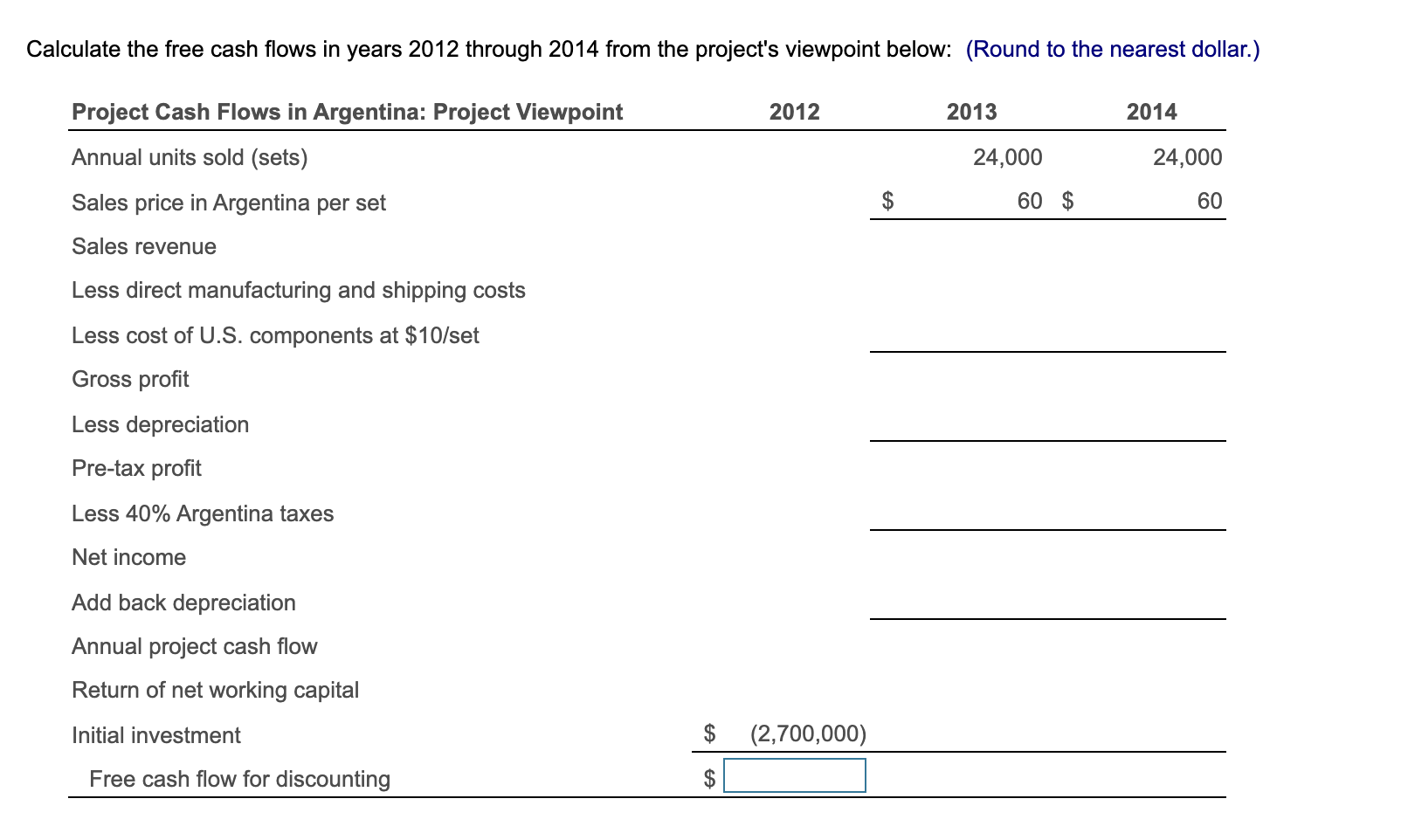
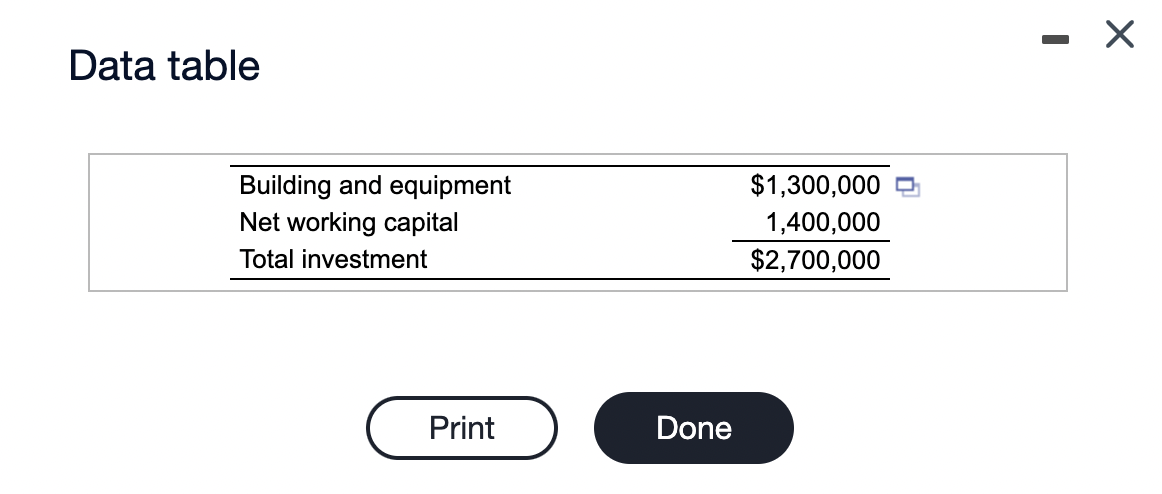
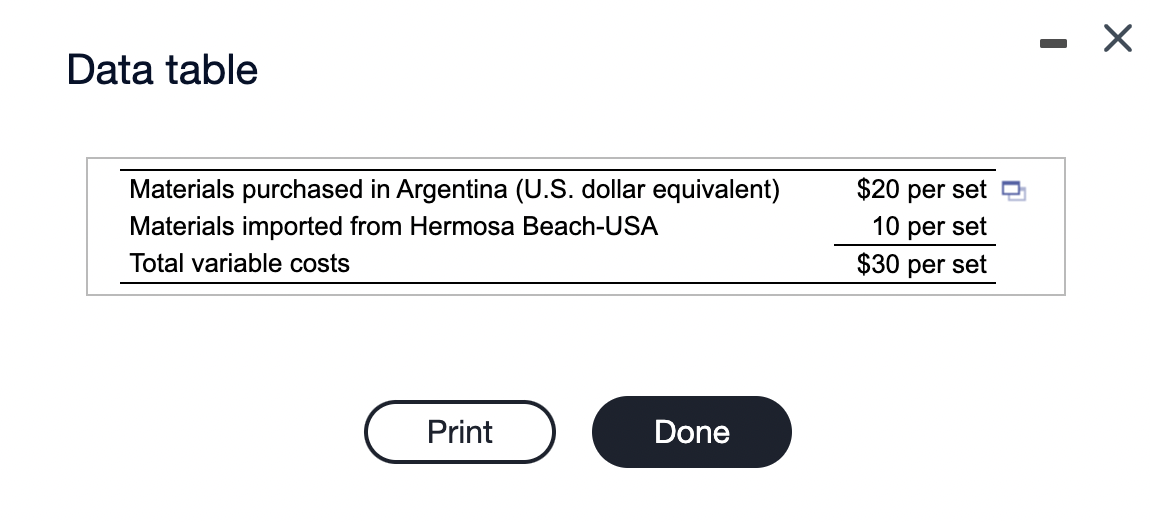
= Homework: Lab 11 Question 4, Problem 18-7 (algorithmic) Part 1 of 17 > HW Score: 19.41%, 0.97 of 5 points O Points: 0 of 1 O Save Hermosa Components: Baseline Analysis. Hermosa Beach Components, Inc., of California exports 24,000 sets of low-density light bulbs per year to Argentina under an import license that expires in five years. In Argentina, the bulbs are sold for the Argentine peso equivalent of $60 per set. Direct manufacturing costs in the United States and shipping together amount to $40 per set. The market for this type of bulb in Argentina is stable, neither growing nor shrinking, and Hermosa holds the major portion of the market. The Argentine government has invited Hermosa to open a manufacturing plant so imported bulbs can be replaced by local production. If Hermosa makes the investment, it will operate the plant for five years and then sell the building and equipment to Argentine investors at net book value at the time of sale plus the value of any net working capital. (Net working capital is the amount of current assets less any portion financed by local debt.) Hermosa will be allowed to repatriate all net income and depreciation funds to the United States each year. Hermosa traditionally evaluates all foreign investments in U.S. dollar terms. Investment. Hermosa's anticipated cash outlay in U.S. dollars in 2012 would be as follows: B. All investment outlays will be made in 2012, and all operating cash flows will occur at the end of years 2013 through 2017. Depreciation and Investment Recovery. Building and equipment will be depreciated over five years on a straight-line basis. At the end of the fifth year, the $1,400,000 of net working capital may also be repatriated to the United States, as may the remaining net book value of the plant. Sales Price of Bulbs. Locally manufactured bulbs will be sold for the Argentine peso equivalent of $60 per set. Operating Expenses per Set of Bulbs. Material purchases are as follows: E. Transfer Prices. The $10 transfer price per set for raw material sold by the parent consists of $5 of direct and indirect costs incurred in the United States on their manufacture, creating $5 of pre-tax profit to Hermosa Beach. Taxes. The corporate income tax rate is 40% in both Argentina and the United States (combined federal and state/province). There are no capital gains taxes on the future sale of the Argentine subsidiary, either in Argentina or the United States. Discount Rate. Hermosa Components uses a discount rate of 16% to evaluate all domestic and foreign projects. O Evaluate the proposed investment in Argentina by Hermosa Components (U.S.). Hermosa's management wishes the baseline analysis to be performed in U.S. dollars (and implicitly also assumes the exchange rate remains fixed throughout the life of the project). Create a project viewpoint capital budget and a parent viewpoint capital budget. What do you conclude from your analysis? Calculate the free cash flows in years 2012 through 2014 from the project's viewpoint below: (Round to the nearest dollar.) 2012 2013 2014 Project Cash Flows in Argentina: Project Viewpoint Annual units sold (sets) Sales price in Argentina per set 24,000 24,000 60 $ 60 Sales revenue Less direct manufacturing and shipping costs Less cost of U.S. components at $10/set Gross profit Less depreciation Pre-tax profit Less 40% Argentina taxes Net income Add back depreciation Annual project cash flow Return of net working capital Initial investment $ (2,700,000) Free cash flow for discounting $ - Data table Building and equipment Net working capital Total investment $1,300,000 1,400,000 $2,700,000 Print Done - Data table Materials purchased in Argentina (U.S. dollar equivalent) Materials imported from Hermosa Beach-USA Total variable costs $20 per set 10 per set $30 per set Print Done
Step by Step Solution
There are 3 Steps involved in it

Get step-by-step solutions from verified subject matter experts
 Study Help