







Question: I need d only d) Use the NMR data to complete the following table of carbon chemical shifts, proton chemical shifts and integrals. (Note: labels
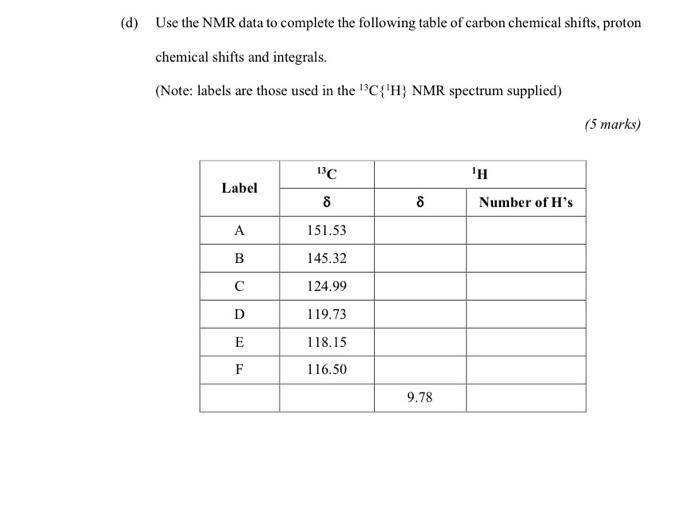
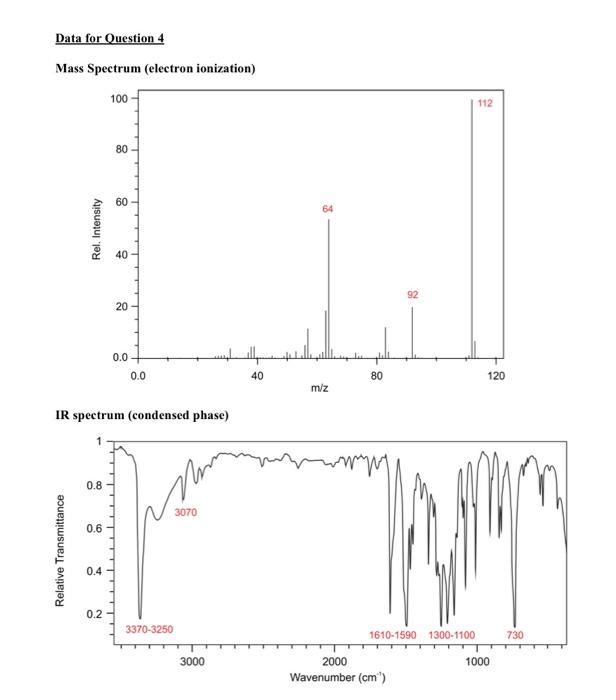
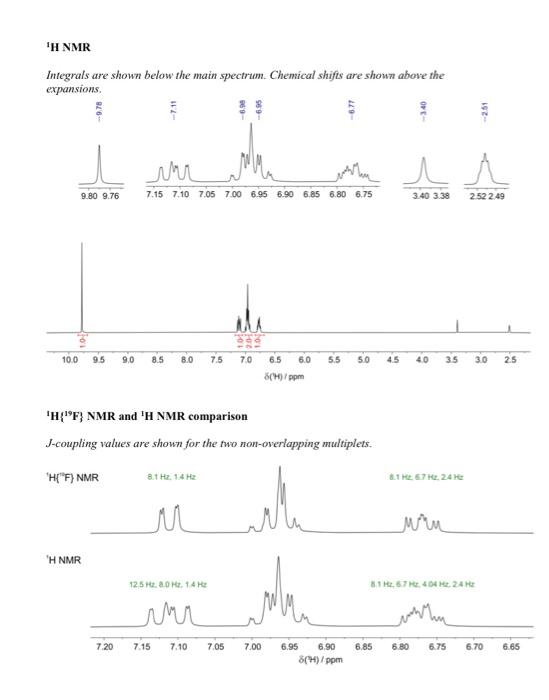
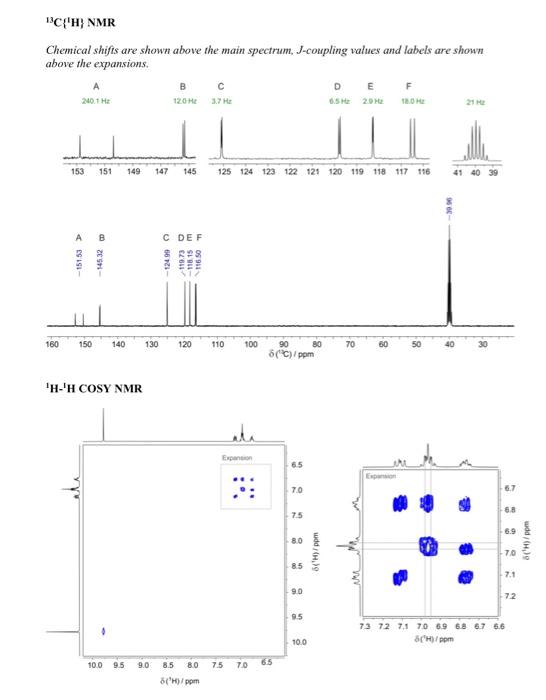
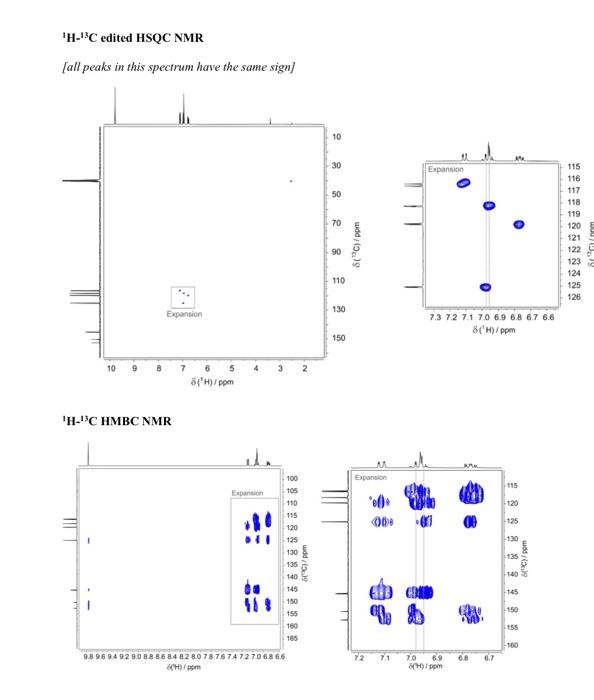
d) Use the NMR data to complete the following table of carbon chemical shifts, proton chemical shifts and integrals. (Note: labels are those used in the 13C{1H} NMR spectrum supplied) Data for Question 4 Mass Spectrum (electron ionization) IR spectrum (condensed phase) 1H NMR Integrals are shown below the main spectrum. Chemical shifts are shown above the 1H{19F} NMR and 1H NMR comparison J-coupling values are shown for the two non-overlapping multiplets. 13C{1H} NMR Chemical shifts are shown above the main spectrum, J-coupling values and labels are shown above the expansions. 1H1H COSY NMR 1H13C edited HSQC NMR [all peaks in this spectrum have the same sign] d) Use the NMR data to complete the following table of carbon chemical shifts, proton chemical shifts and integrals. (Note: labels are those used in the 13C{1H} NMR spectrum supplied) Data for Question 4 Mass Spectrum (electron ionization) IR spectrum (condensed phase) 1H NMR Integrals are shown below the main spectrum. Chemical shifts are shown above the 1H{19F} NMR and 1H NMR comparison J-coupling values are shown for the two non-overlapping multiplets. 13C{1H} NMR Chemical shifts are shown above the main spectrum, J-coupling values and labels are shown above the expansions. 1H1H COSY NMR 1H13C edited HSQC NMR [all peaks in this spectrum have the same sign]
Step by Step Solution
There are 3 Steps involved in it

Get step-by-step solutions from verified subject matter experts
 Study Help