







Question: I need one page IRAC format for this briefer case Gniadek v. Camp Sunshine at Sebago Lake, Inc. 11 A.3d 308 (Me. 2011) Camp Sunshine
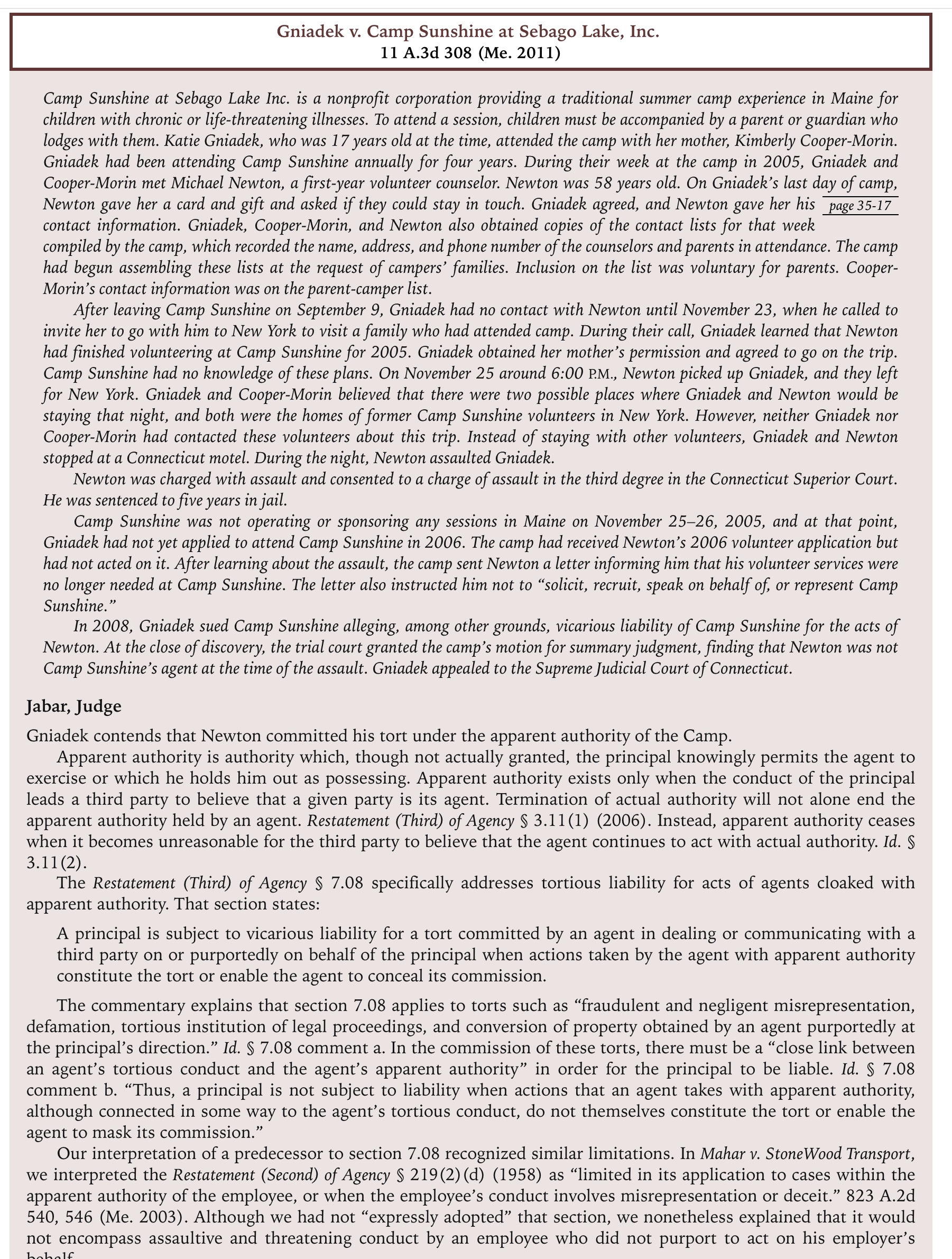
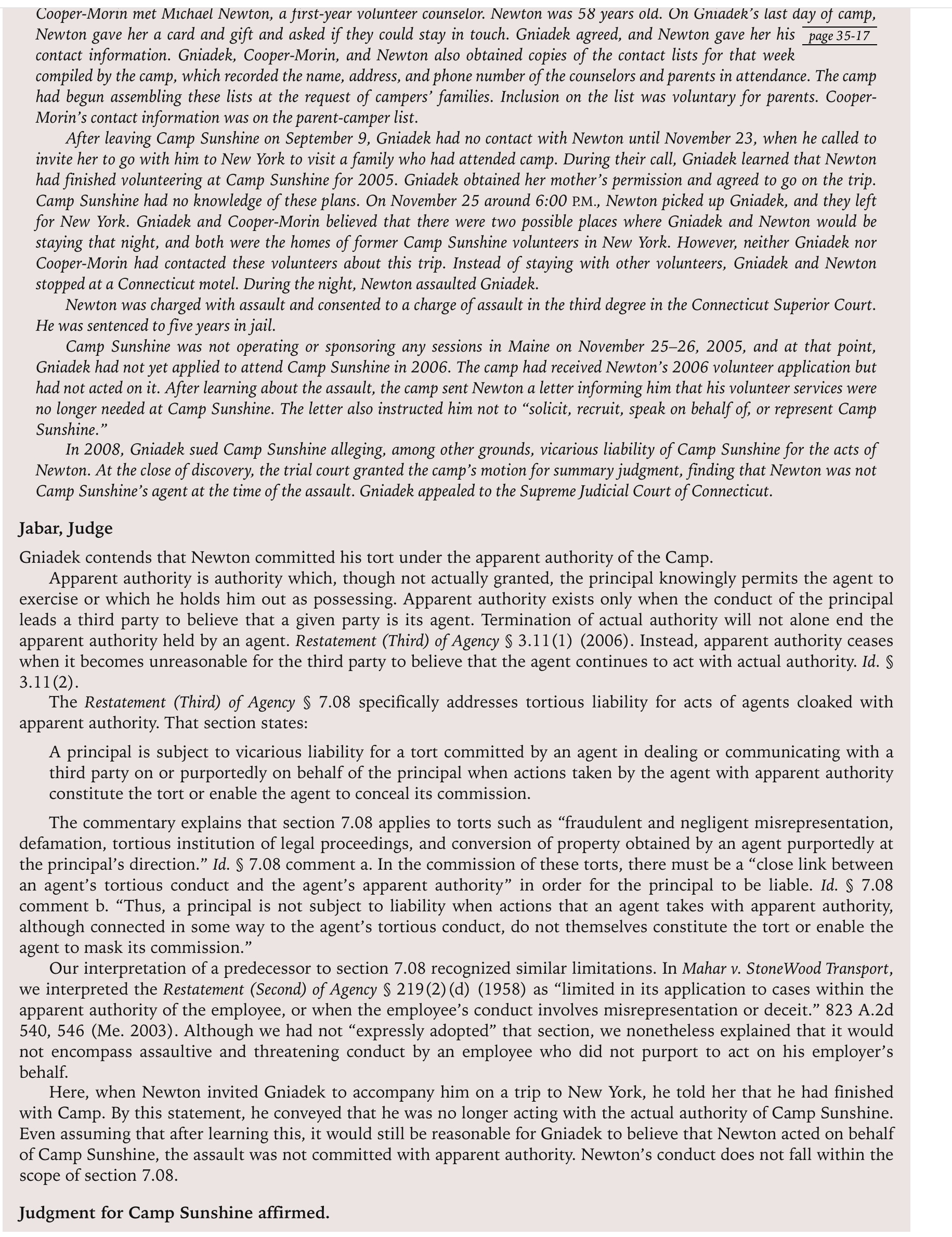
I need one page IRAC format for this briefer case
Gniadek v. Camp Sunshine at Sebago Lake, Inc. 11 A.3d 308 (Me. 2011) Camp Sunshine at Sebago Lake Inc. is a nonprofit corporation providing a traditional summer camp experience in Maine for children with chronic or life-threatening illnesses. To attend a session, children must be accompanied by a parent or guardian who lodges with them. Katie Gniadek, who was 17 years old at the time, attended the camp with her mother, Kimberly Cooper-Morin. Gniadek had been attending Camp Sunshine annually for four years. During their week at the camp in 2005, Gniadek and Cooper-Morin met Michael Newton, a first-year volunteer counselor. Newton was 58 years old. On Gniadek's last day of camp, Newton gave her a card and gift and asked if they could stay in touch. Gniadek agreed, and Newton gave her his page35-17 contact information. Gniadek, Cooper-Morin, and Newton also obtained copies of the contact lists for that week compiled by the camp, which recorded the name, address, and phone number of the counselors and parents in attendance. The camp had begun assembling these lists at the request of campers' families. Inclusion on the list was voluntary for parents. CooperMorin's contact information was on the parent-camper list. After leaving Camp Sunshine on September 9, Gniadek had no contact with Newton until November 23, when he called to invite her to go with him to New York to visit a family who had attended camp. During their call, Gniadek learned that Newton had finished volunteering at Camp Sunshine for 2005. Gniadek obtained her mother's permission and agreed to go on the trip. Camp Sunshine had no knowledge of these plans. On November 25 around 6:00 P.M., Newton picked up Gniadek, and they left for New York. Gniadek and Cooper-Morin believed that there were two possible places where Gniadek and Newton would be staying that night, and both were the homes of former Camp Sunshine volunteers in New York. However, neither Gniadek nor Cooper-Morin had contacted these volunteers about this trip. Instead of staying with other volunteers, Gniadek and Newton stopped at a Connecticut motel. During the night, Newton assaulted Gniadek. Newton was charged with assault and consented to a charge of assault in the third degree in the Connecticut Superior Court. He was sentenced to five years in jail. Camp Sunshine was not operating or sponsoring any sessions in Maine on November 25-26, 2005, and at that point, Gniadek had not yet applied to attend Camp Sunshine in 2006. The camp had received Newton's 2006 volunteer application but had not acted on it. After learning about the assault, the camp sent Newton a letter informing him that his volunteer services were no longer needed at Camp Sunshine. The letter also instructed him not to "solicit, recruit, speak on behalf of, or represent Camp Sunshine." In 2008, Gniadek sued Camp Sunshine alleging, among other grounds, vicarious liability of Camp Sunshine for the acts of Newton. At the close of discovery, the trial court granted the camp's motion for summary judgment, finding that Newton was not Camp Sunshine's agent at the time of the assault. Gniadek appealed to the Supreme Judicial Court of Connecticut. Jabar, Judge Gniadek contends that Newton committed his tort under the apparent authority of the Camp. Apparent authority is authority which, though not actually granted, the principal knowingly permits the agent to exercise or which he holds him out as possessing. Apparent authority exists only when the conduct of the principal leads a third party to believe that a given party is its agent. Termination of actual authority will not alone end the apparent authority held by an agent. Restatement (Third) of Agency S3.11(1) (2006). Instead, apparent authority ceases when it becomes unreasonable for the third party to believe that the agent continues to act with actual authority. Id. S 3.11(2). The Restatement (Third) of Agency 7.08 specifically addresses tortious liability for acts of agents cloaked with apparent authority. That section states: A principal is subject to vicarious liability for a tort committed by an agent in dealing or communicating with a third party on or purportedly on behalf of the principal when actions taken by the agent with apparent authority constitute the tort or enable the agent to conceal its commission. The commentary explains that section 7.08 applies to torts such as "fraudulent and negligent misrepresentation, defamation, tortious institution of legal proceedings, and conversion of property obtained by an agent purportedly at the principal's direction." Id. $7.08 comment a. In the commission of these torts, there must be a "close link between an agent's tortious conduct and the agent's apparent authority" in order for the principal to be liable. Id. S7.08 comment b. "Thus, a principal is not subject to liability when actions that an agent takes with apparent authority, although connected in some way to the agent's tortious conduct, do not themselves constitute the tort or enable the agent to mask its commission." Our interpretation of a predecessor to section 7.08 recognized similar limitations. In Mahar v. StoneWood Transport, we interpreted the Restatement (Second) of Agency S219(2)(d) (1958) as "limited in its application to cases within the apparent authority of the employee, or when the employee's conduct involves misrepresentation or deceit." 823 A.2d 540, 546 (Me. 2003). Although we had not "expressly adopted" that section, we nonetheless explained that it would not encompass assaultive and threatening conduct by an employee who did not purport to act on his employer's Cooper-Morm met Michael Newton, a first-year volunteer counselor. Newton was 58 years old. On Gniadek's last day of camp, Newton gave her a card and gift and asked if they could stay in touch. Gniadek agreed, and Newton gave her his page35-17 contact information. Gniadek, Cooper-Morin, and Newton also obtained copies of the contact lists for that week compiled by the camp, which recorded the name, address, and phone number of the counselors and parents in attendance. The camp had begun assembling these lists at the request of campers' families. Inclusion on the list was voluntary for parents. CooperMorin's contact information was on the parent-camper list. After leaving Camp Sunshine on September 9, Gniadek had no contact with Newton until November 23, when he called to invite her to go with him to New York to visit a family who had attended camp. During their call, Gniadek learned that Newton had finished volunteering at Camp Sunshine for 2005. Gniadek obtained her mother's permission and agreed to go on the trip. Camp Sunshine had no knowledge of these plans. On November 25 around 6:00 P.M., Newton picked up Gniadek, and they left for New York. Gniadek and Cooper-Morin believed that there were two possible places where Gniadek and Newton would be staying that night, and both were the homes of former Camp Sunshine volunteers in New York. However, neither Gniadek nor Cooper-Morin had contacted these volunteers about this trip. Instead of staying with other volunteers, Gniadek and Newton stopped at a Connecticut motel. During the night, Newton assaulted Gniadek. Newton was charged with assault and consented to a charge of assault in the third degree in the Connecticut Superior Court. He was sentenced to five years in jail. Camp Sunshine was not operating or sponsoring any sessions in Maine on November 25-26, 2005, and at that point, Gniadek had not yet applied to attend Camp Sunshine in 2006. The camp had received Newton's 2006 volunteer application but had not acted on it. After learning about the assault, the camp sent Newton a letter informing him that his volunteer services were no longer needed at Camp Sunshine. The letter also instructed him not to "solicit, recruit, speak on behalf of, or represent Camp Sunshine." In 2008, Gniadek sued Camp Sunshine alleging, among other grounds, vicarious liability of Camp Sunshine for the acts of Newton. At the close of discovery, the trial court granted the camp's motion for summary judgment, finding that Newton was not Camp Sunshine's agent at the time of the assault. Gniadek appealed to the Supreme Judicial Court of Connecticut. Jabar, Judge Gniadek contends that Newton committed his tort under the apparent authority of the Camp. Apparent authority is authority which, though not actually granted, the principal knowingly permits the agent to exercise or which he holds him out as possessing. Apparent authority exists only when the conduct of the principal leads a third party to believe that a given party is its agent. Termination of actual authority will not alone end the apparent authority held by an agent. Restatement (Third) of Agency S3.11(1) (2006). Instead, apparent authority ceases when it becomes unreasonable for the third party to believe that the agent continues to act with actual authority. Id. S 3.11(2). The Restatement (Third) of Agency S7.08 specifically addresses tortious liability for acts of agents cloaked with apparent authority. That section states: A principal is subject to vicarious liability for a tort committed by an agent in dealing or communicating with a third party on or purportedly on behalf of the principal when actions taken by the agent with apparent authority constitute the tort or enable the agent to conceal its commission. The commentary explains that section 7.08 applies to torts such as "fraudulent and negligent misrepresentation, defamation, tortious institution of legal proceedings, and conversion of property obtained by an agent purportedly at the principal's direction." Id. S7.08 comment a. In the commission of these torts, there must be a "close link between an agent's tortious conduct and the agent's apparent authority" in order for the principal to be liable. Id. S7.08 comment b. "Thus, a principal is not subject to liability when actions that an agent takes with apparent authority, although connected in some way to the agent's tortious conduct, do not themselves constitute the tort or enable the agent to mask its commission." Our interpretation of a predecessor to section 7.08 recognized similar limitations. In Mahar v. StoneWood Transport, apparent authority of the employee, or when the employee's conduct involves misrepresentation or deceit." 823 A.2d 540, 546 (Me. 2003). Although we had not "expressly adopted" that section, we nonetheless explained that it would not encompass assaultive and threatening conduct by an employee who did not purport to act on his employer's behalf. Here, when Newton invited Gniadek to accompany him on a trip to New York, he told her that he had finished with Camp. By this statement, he conveyed that he was no longer acting with the actual authority of Camp Sunshine. Even assuming that after learning this, it would still be reasonable for Gniadek to believe that Newton acted on behalf of Camp Sunshine, the assault was not committed with apparent authority. Newton's conduct does not fall within the scope of section 7.08 . Judgment for Camp Sunshine affirmed
Step by Step Solution
There are 3 Steps involved in it

Get step-by-step solutions from verified subject matter experts
 Study Help