







Question: I need this question answer asap . Feel free to incorporate your own language or ideas on the provided topics. Imagine you have been recruited
I need this question answer asap . Feel free to incorporate your own language or ideas on the provided topics.
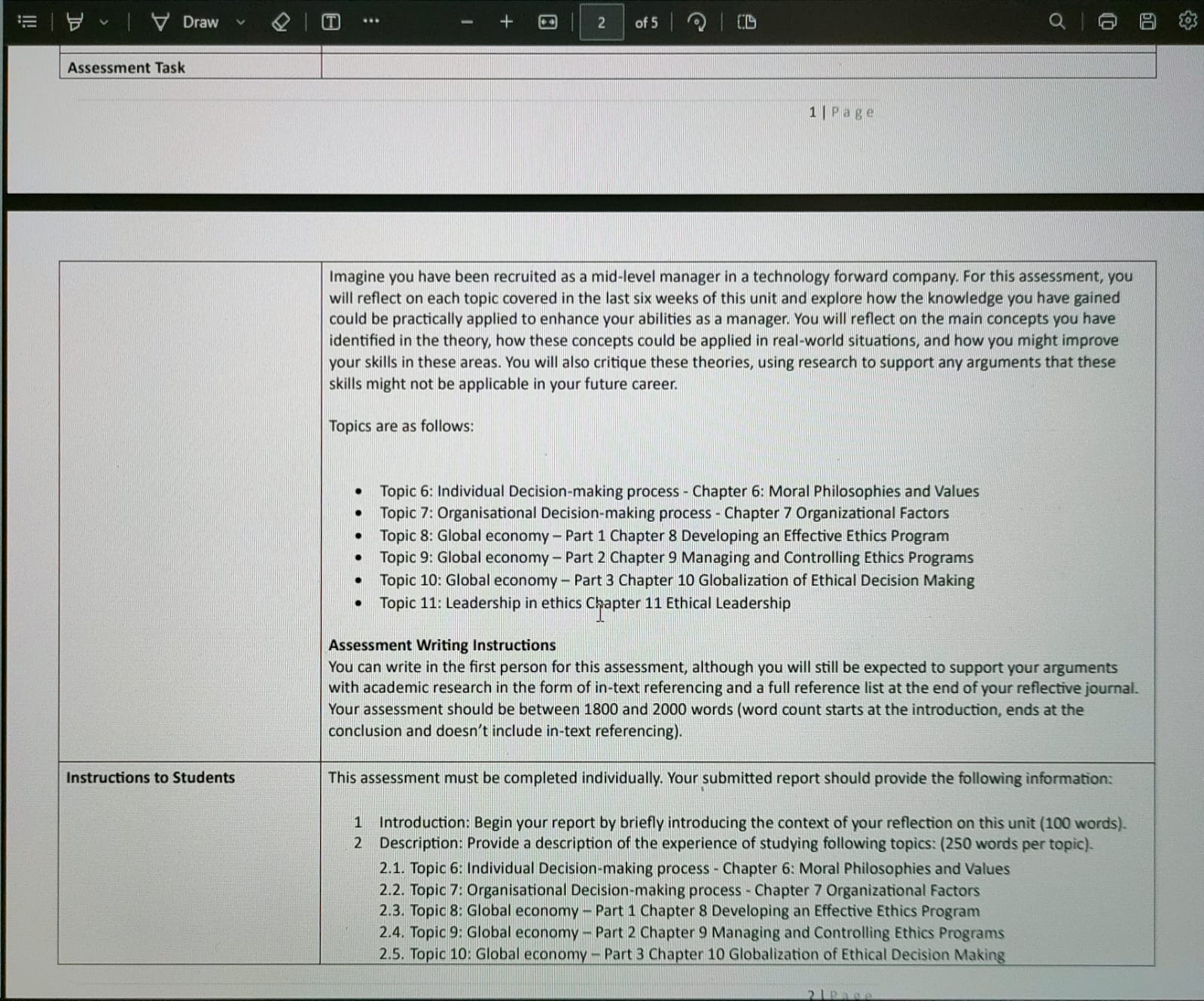
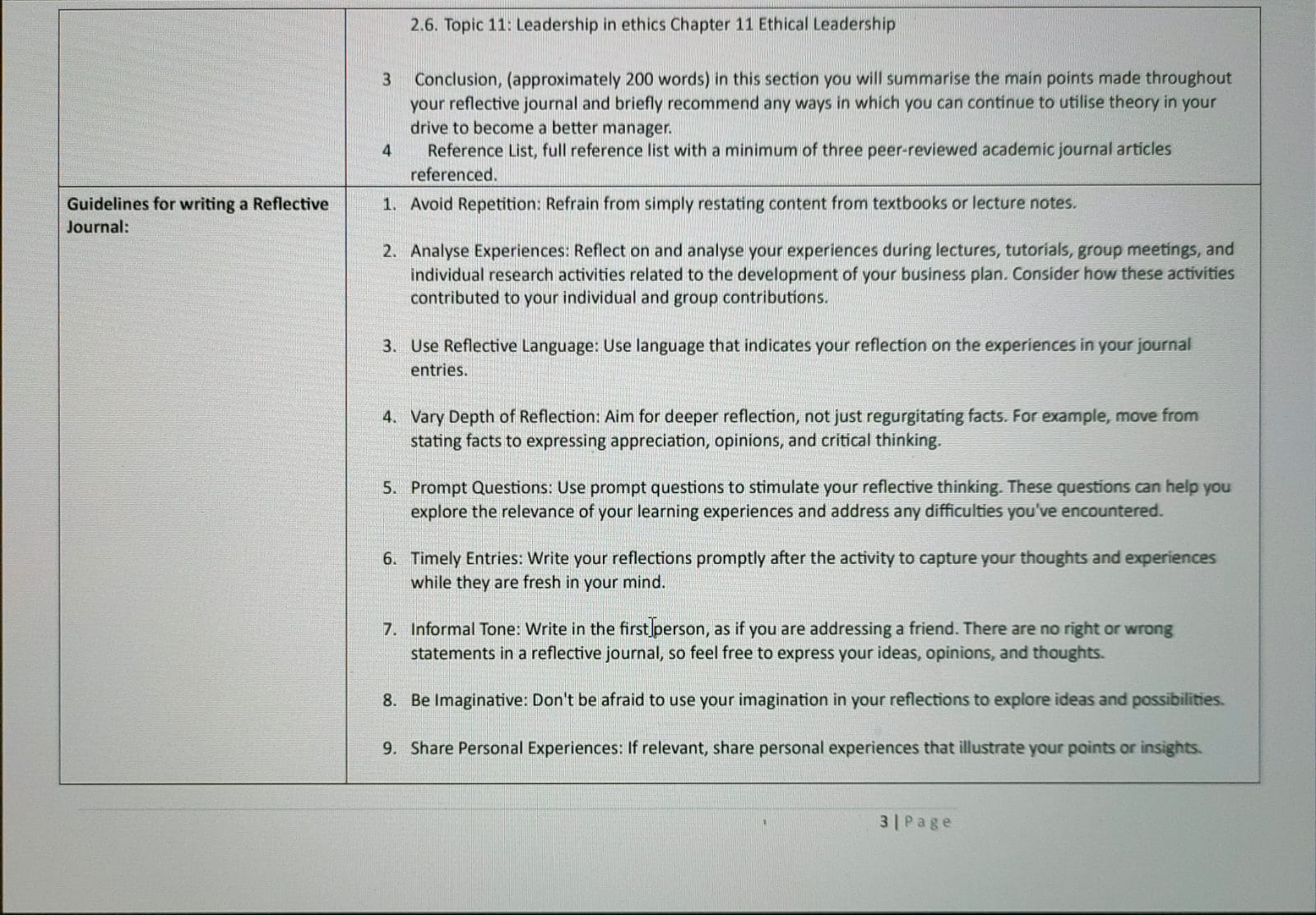
Imagine you have been recruited as a mid-level manager in a technology forward company. For this assessment, you will reflect on each topic covered in the last six weeks of this unit and explore how the knowledge you have gained could be practically applied to enhance your abilities as a manager. You will reflect on the main concepts you have identified in the theory, how these concepts could be applied in real-world situations, and how you might improve your skills in these areas. You will also critique these theories, using research to support any arguments that these skills might not be applicable in your future career. Topics are as follows: - Topic 6: Individual Decision-making process - Chapter 6: Moral Philosophies and Values - Topic 7: Organisational Decision-making process - Chapter 7 Organizational Factors - Topic 8: Global economy - Part 1 Chapter 8 Developing an Effective Ethics Program - Topic 9: Global economy - Part 2 Chapter 9 Managing and Controlling Ethics Programs - Topic 10: Global economy - Part 3 Chapter 10 Globalization of Ethical Decision Making - Topic 11: Leadership in ethics Chapter 11 Ethical Leadership Assessment Writing Instructions You can write in the first person for this assessment, although you will still be expected to support your arguments with academic research in the form of in-text referencing and a full reference list at the end of your reflective journal. Your assessment should be between 1800 and 2000 words (word count starts at the introduction, ends at the conclusion and doesn't include in-text referencing). This assessment must be completed individually. Your submitted report should provide the following information: 1 Introduction: Begin your report by briefly introducing the context of your reflection on this unit (100 words). 2 Description: Provide a description of the experience of studying following topics: ( 250 words per topic). 2.1. Topic 6: Individual Decision-making process - Chapter 6: Moral Philosophies and Values 2.2. Topic 7: Organisational Decision-making process - Chapter 7 Organizational Factors 2.3. Topic 8: Global economy - Part 1 Chapter 8 Developing an Effective Ethics Program 2.4. Topic 9: Global economy - Part 2 Chapter 9 Managing and Controlling Ethics Programs 2.5. Topic 10: Global economy - Part 3 Chapter 10 Globalization of Ethical Decision Making 2.6. Topic 11: Leadership in ethics Chapter 11 Ethical Leadership 3 Conclusion, (approximately 200 words) in this section you will summarise the main points made throughout your reflective journal and briefly recommend any ways in which you can continue to utilise theory in your drive to become a better manager. 4 Reference List, full reference list with a minimum of three peer-reviewed academic journal articles referenced. Guidelines for writing a Reflective Journal: 1. Avoid Repetition: Refrain from simply restating content from textbooks or lecture notes. 2. Analyse Experiences: Reflect on and analyse your experiences during lectures, tutorials, group meetings, and individual research activities related to the development of your business plan. Consider how these activities contributed to your individual and group contributions. 3. Use Reflective Language: Use language that indicates your reflection on the experiences in your journal entries. 4. Vary Depth of Reflection: Aim for deeper reflection, not just regurgitating facts. For example, move from stating facts to expressing appreciation, opinions, and critical thinking. 5. Prompt Questions: Use prompt questions to stimulate your reflective thinking. These questions can help you explore the relevance of your learning experiences and address any difficulties you've encountered. 6. Timely Entries: Write your reflections promptly after the activity to capture your thoughts and experiences while they are fresh in your mind. 7. Informal Tone: Write in the first]person, as if you are addressing a friend. There are no right or wrong statements in a reflective journal, so feel free to express your ideas, opinions, and thoughts. 8. Be Imaginative: Don't be afraid to use your imagination in your reflections to explore ideas and possibilities. 9. Share Personal Experiences: If relevant, share personal experiences that illustrate your points or insights. 3|page
Step by Step Solution
There are 3 Steps involved in it

Get step-by-step solutions from verified subject matter experts
 Study Help