







Question: Meta Activity: POGIL Research 1 Process-Oriented Guided Inquiry Learning (see pogil.org) is a student-centered, group-learning instructional strategy and philosophy developed through research on how
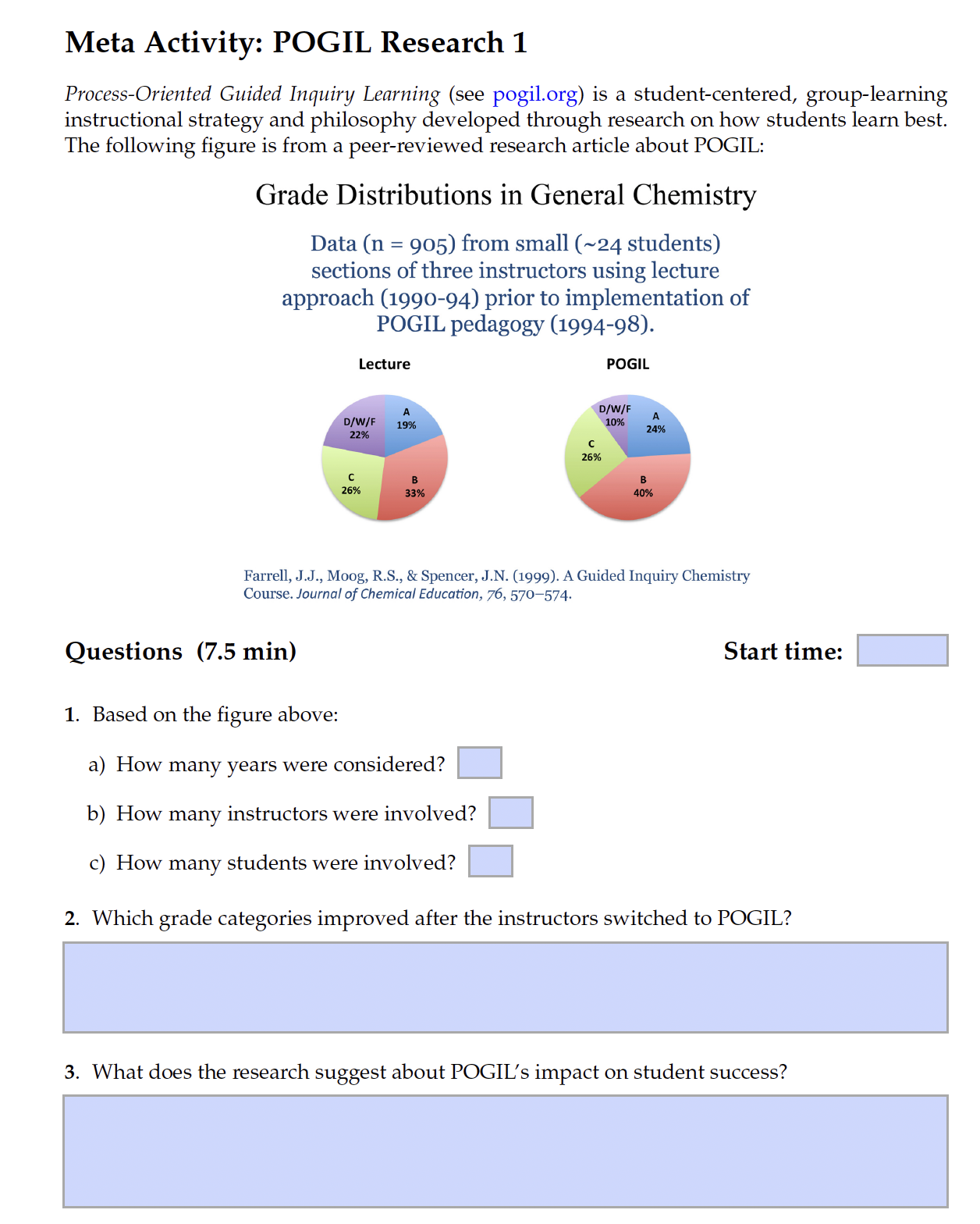
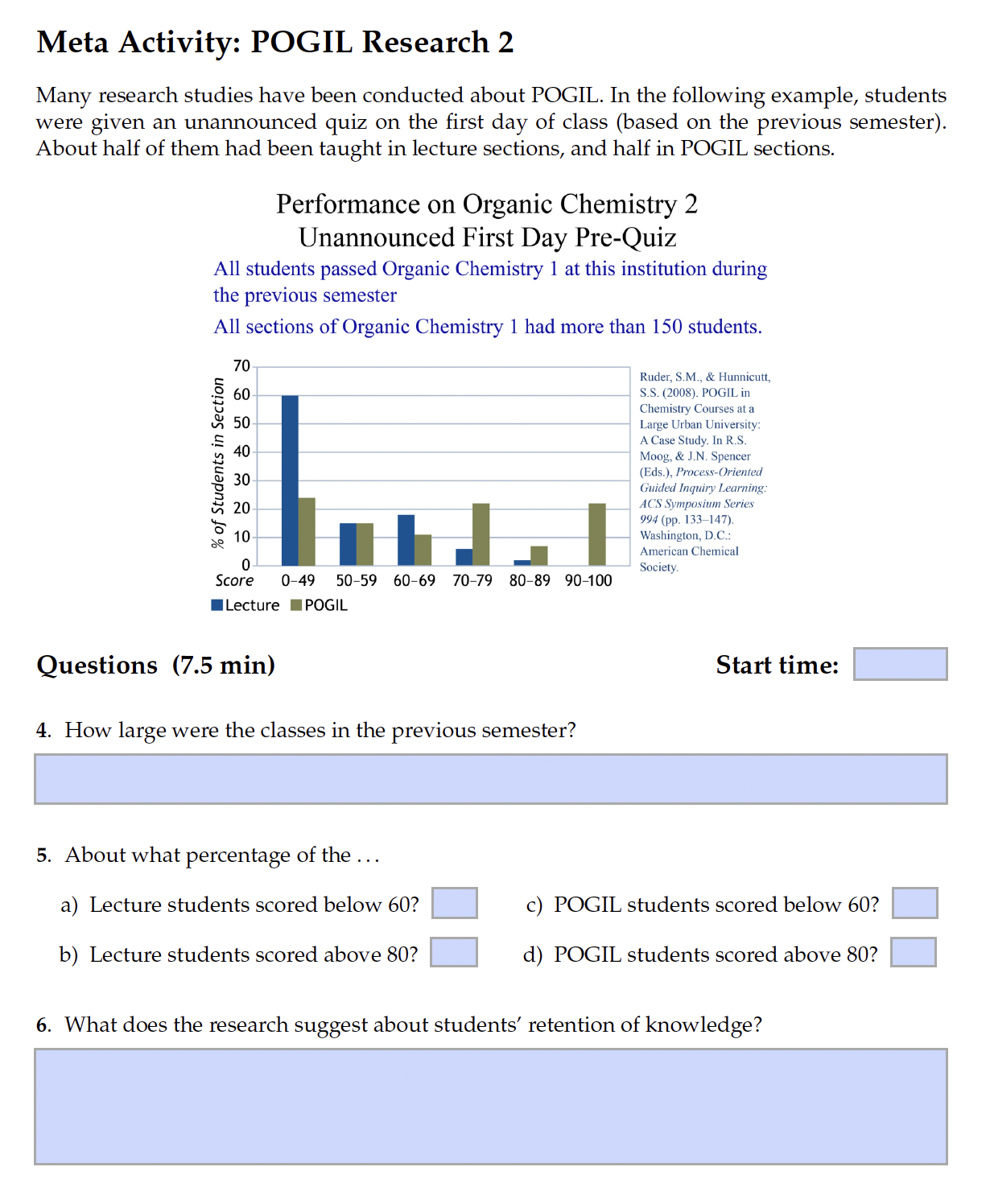
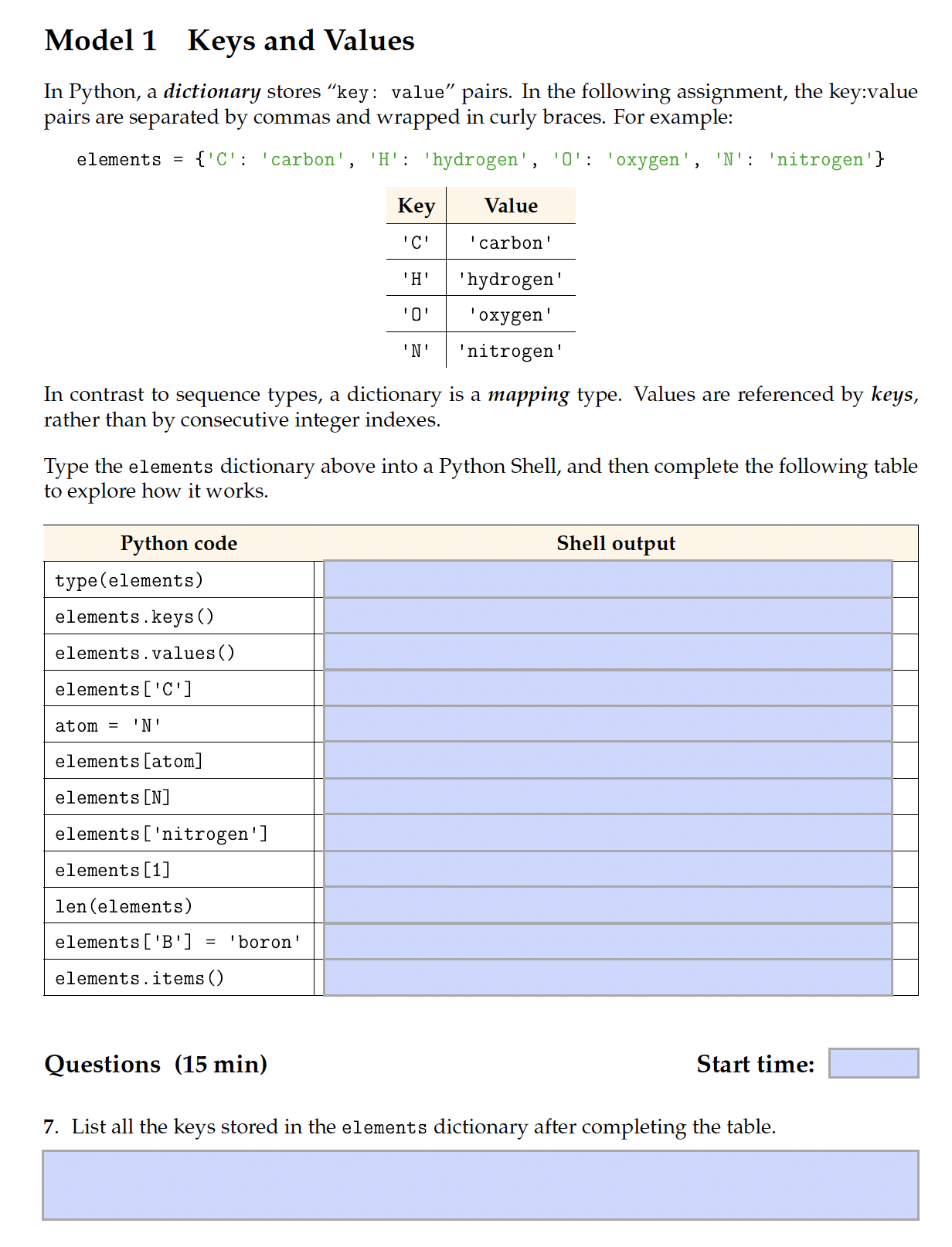
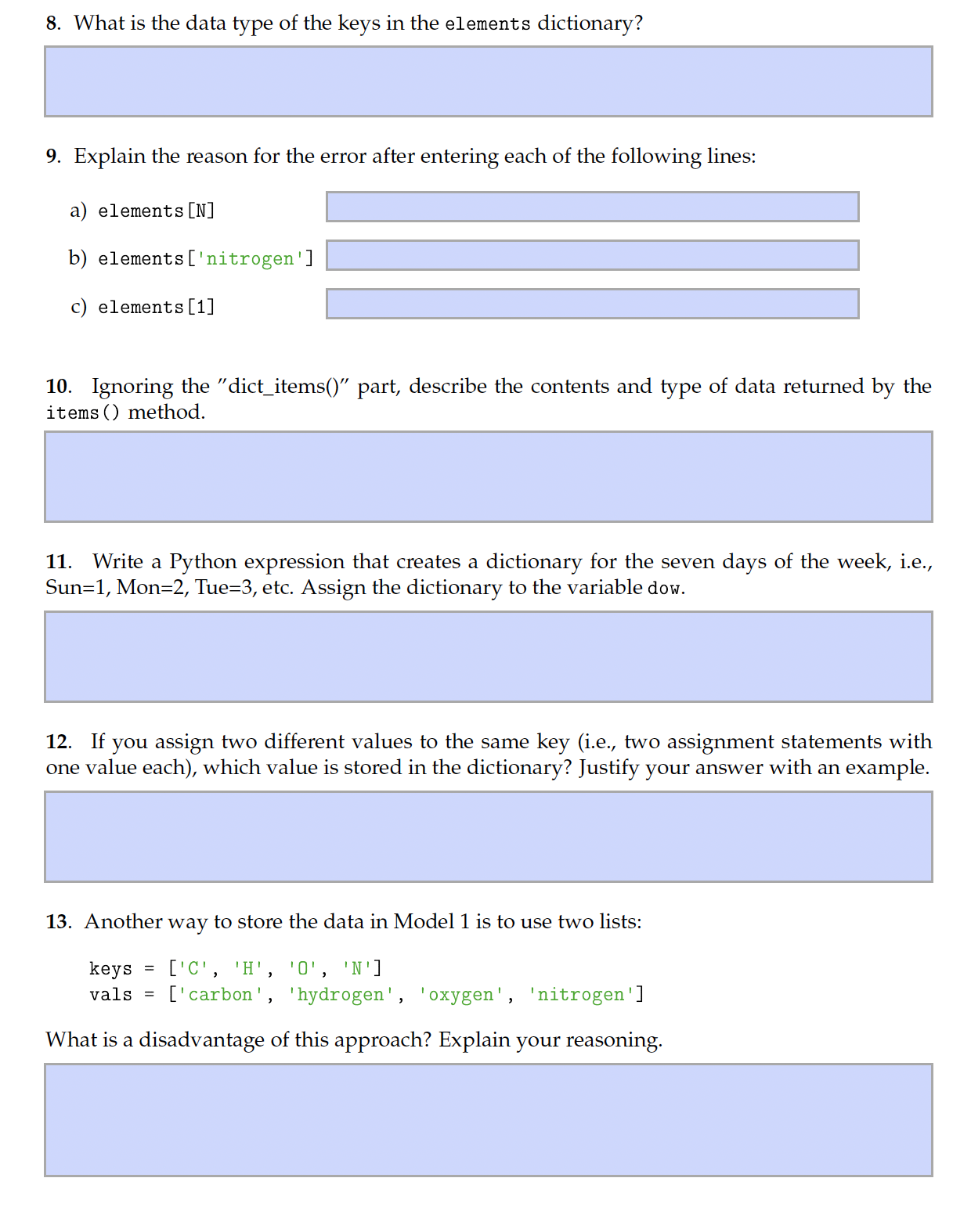
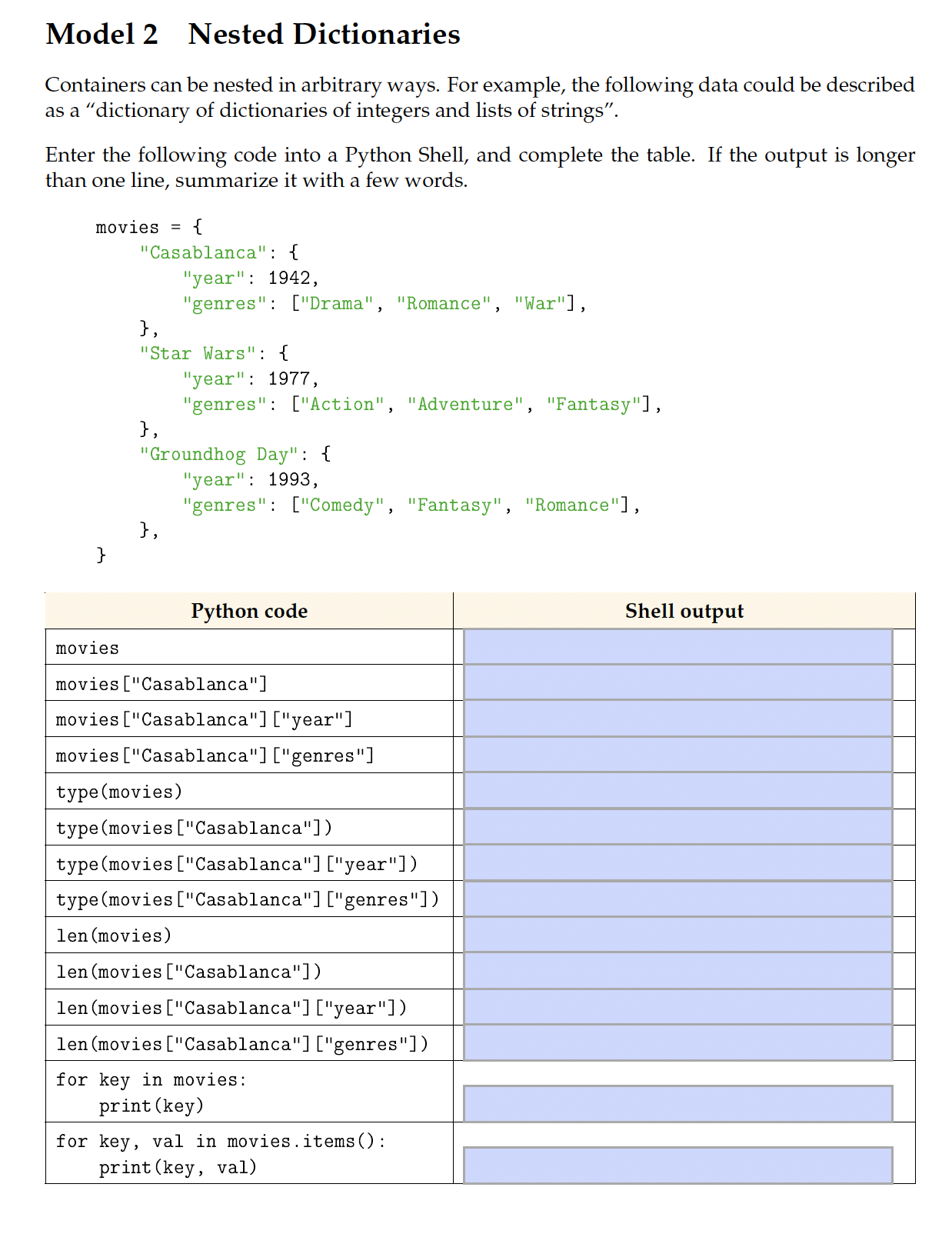
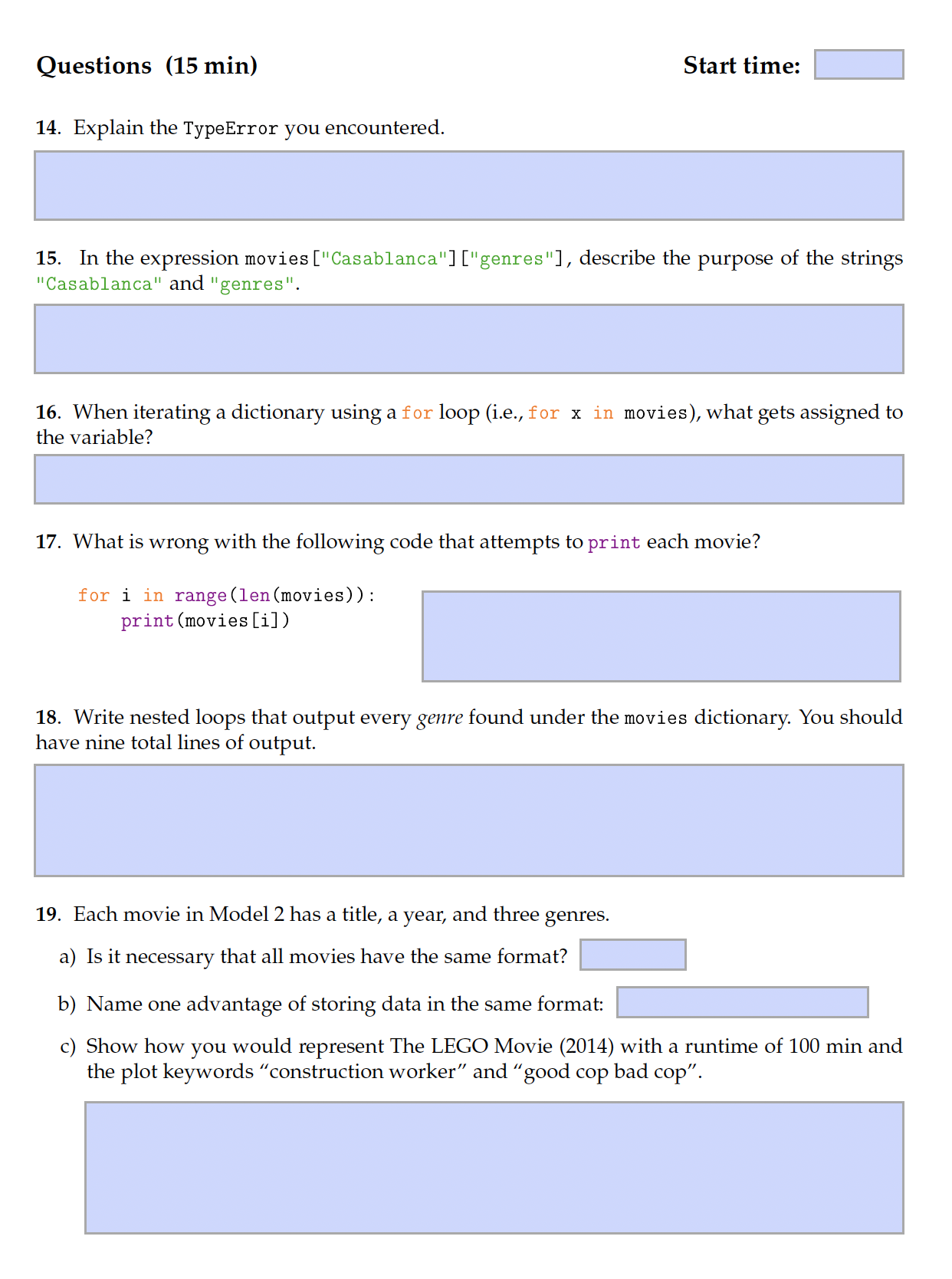
Meta Activity: POGIL Research 1 Process-Oriented Guided Inquiry Learning (see pogil.org) is a student-centered, group-learning instructional strategy and philosophy developed through research on how students learn best. The following figure is from a peer-reviewed research article about POGIL: Grade Distributions in General Chemistry Data (n = 905) from small (~24 students) sections of three instructors using lecture approach (1990-94) prior to implementation of POGIL pedagogy (1994-98). Lecture Questions (7.5 min) D/W/F 22% C 26% A 19% B 33% POGIL D/W/F 10% 26% A 24% B 40% Farrell, J.J., Moog, R.S., & Spencer, J.N. (1999). A Guided Inquiry Chemistry Course. Journal of Chemical Education, 76, 570-574. Start time: 1. Based on the figure above: a) How many years were considered? b) How many instructors were involved? c) How many students were involved? 2. Which grade categories improved after the instructors switched to POGIL? 3. What does the research suggest about POGIL's impact on student success? Meta Activity: POGIL Research 2 Many research studies have been conducted about POGIL. In the following example, students were given an unannounced quiz on the first day of class (based on the previous semester). About half of them had been taught in lecture sections, and half in POGIL sections. Performance on Organic Chemistry 2 Unannounced First Day Pre-Quiz All students passed Organic Chemistry 1 at this institution during the previous semester All sections of Organic Chemistry 1 had more than 150 students. % of Students in Section 70 60 50 40 30 20 10 h 0 Score 0-49 50-59 60-69 70-79 80-89 90-100 Lecture POGIL Questions (7.5 min) 4. How large were the classes in the previous semester? 5. About what percentage of the ... a) Lecture students scored below 60? b) Lecture students scored above 80? Ruder, S.M., & Hunnicutt, S.S. (2008). POGIL in Chemistry Courses at a Large Urban University: A Case Study. In R.S. Moog, & J.N. Spencer (Eds.), Process-Oriented Guided Inquiry Learning: ACS Symposium Series 994 (pp. 133-147). Washington, D.C.: American Chemical Society. Start time: c) POGIL students scored below 60? d) POGIL students scored above 80? 6. What does the research suggest about students' retention of knowledge? Model 1 Keys and Values In Python, a dictionary stores "key: value" pairs. In the following assignment, the key:value pairs are separated by commas and wrapped in curly braces. For example: elements = {'C': 'carbon'. 'H': 'hydrogen', '0': 'oxygen', 'N': 'nitrogen'} In contrast to sequence types, a dictionary is a mapping type. Values are referenced by keys, rather than by consecutive integer indexes. Python code Type the elements dictionary above into a Python Shell, and then complete the following table to explore how it works. type (elements) elements.keys () elements.values() elements ['C'] atom 'N' elements [atom] elements [N] elements ['nitrogen'] elements [1] len (elements) Key 'C' 'H' '0' 'N' elements ['B'] = 'boron' elements.items () Value 'carbon' 'hydrogen' 'oxygen' 'nitrogen' Questions (15 min) Shell output Start time: 7. List all the keys stored in the elements dictionary after completing the table. 8. What is the data type of the keys in the elements dictionary? 9. Explain the reason for the error after entering each of the following lines: a) elements [N] b) elements ['nitrogen'] c) elements [1] 10. Ignoring the "dict_items()" part, describe the contents and type of data returned by the items () method. 11. Write a Python expression that creates a dictionary for the seven days of the week, i.e., Sun=1, Mon=2, Tue=3, etc. Assign the dictionary to the variable dow. 12. If you assign two different values to the same key (i.e., two assignment statements with one value each), which value is stored in the dictionary? Justify your answer with an example. 13. Another way to store the data in Model 1 is to use two lists: ['C', 'H', '0', 'N'] ['carbon', 'hydrogen', 'oxygen', 'nitrogen'] What is a disadvantage of this approach? Explain your reasoning. keys vals = = Model 2 Nested Dictionaries Containers can be nested in arbitrary ways. For example, the following data could be described as a "dictionary of dictionaries of integers and lists of strings". Enter the following code into a Python Shell, and complete the table. If the output is longer than one line, summarize it with a few words. movies = { } "Casablanca": { "year": 1942, "genres": ["Drama", "Romance", "War"], }, "Star Wars": { }, "year": 1977, "genres": ["Action", "Adventure", "Fantasy"], }, "Groundhog Day": { "year": 1993, "genres": ["Comedy", "Fantasy", "Romance"], Python code movies movies ["Casablanca"] movies ["Casablanca"] ["year"] movies ["Casablanca"] ["genres"] type (movies) type (movies ["Casablanca"]) type (movies ["Casablanca"] ["year"]) type (movies ["Casablanca"] ["genres"]) len (movies) len (movies ["Casablanca"]) len (movies ["Casablanca"] ["year"]) len (movies ["Casablanca"] ["genres"]) for key in movies: print (key) for key, val in movies.items(): print (key, val) Shell output Questions (15 min) 14. Explain the TypeError you encountered. Start time: 15. In the expression movies ["Casablanca"]["genres"], describe the purpose of the strings "Casablanca" and "genres". 16. When iterating a dictionary using a for loop (i.e., for x in movies), what gets assigned to the variable? 17. What is wrong with the following code that attempts to print each movie? for i in range (len (movies)): print (movies [i]) 18. Write nested loops that output every genre found under the movies dictionary. You should have nine total lines of output. 19. Each movie in Model 2 has a title, a year, and three genres. a) Is it necessary that all movies have the same format? b) Name one advantage of storing data in the same format: c) Show how you would represent The LEGO Movie (2014) with a runtime of 100 min and the plot keywords "construction worker" and "good cop bad cop".
Step by Step Solution
There are 3 Steps involved in it

Get step-by-step solutions from verified subject matter experts
 Study Help