



Question: Old MathJax webview Price Comparison. Chapter 8 more details Yes, no proper questions. That's all Comparing Cash and Credit Purchases Purpose: To compare the costs
Old MathJax webview
Price Comparison. Chapter 8 more details
Yes, no proper questions. That's all
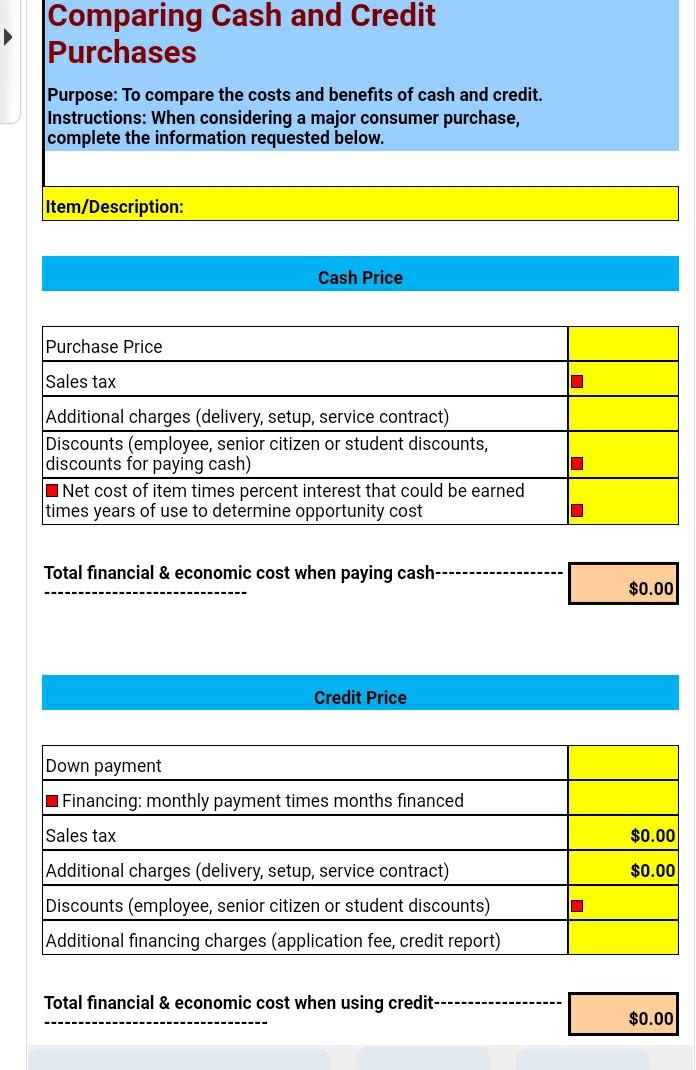
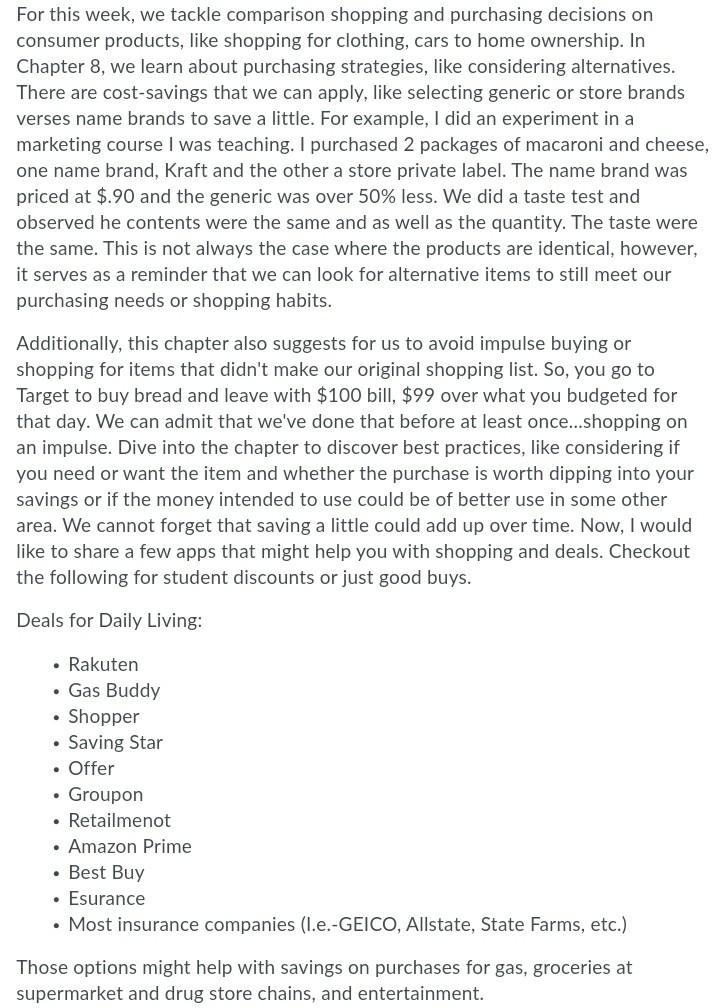
Comparing Cash and Credit Purchases Purpose: To compare the costs and benefits of cash and credit. Instructions: When considering a major consumer purchase, complete the information requested below. Item/Description: Cash Price Purchase Price Sales tax Additional charges (delivery, setup, service contract) Discounts (employee, senior citizen or student discounts, discounts for paying cash) Net cost of item times percent interest that could be earned times years of use to determine opportunity cost Total financial & economic cost when paying cash- $0.00 Credit Price Down payment Financing: monthly payment times months financed Sales tax $0.00 $0.00 Additional charges (delivery, setup, service contract) Discounts (employee, senior citizen or student discounts) Additional financing charges (application fee, credit report) Total financial & economic cost when using credit- $0.00 For this week, we tackle comparison shopping and purchasing decisions on consumer products, like shopping for clothing, cars to home ownership. In Chapter 8, we learn about purchasing strategies, like considering alternatives. There are cost-savings that we can apply, like selecting generic or store brands verses name brands to save a little. For example, I did an experiment in a marketing course I was teaching. I purchased 2 packages of macaroni and cheese, one name brand, Kraft and the other a store private label. The name brand was priced at $.90 and the generic was over 50% less. We did a taste test and observed he contents were the same and as well as the quantity. The taste were the same. This is not always the case where the products are identical, however, it serves as a reminder that we can look for alternative items to still meet our purchasing needs or shopping habits. Additionally, this chapter also suggests for us to avoid impulse buying or shopping for items that didn't make our original shopping list. So, you go to Target to buy bread and leave with $100 bill, $99 over what you budgeted for that day. We can admit that we've done that before at least once...shopping on an impulse. Dive into the chapter to discover best practices, like considering if you need or want the item and whether the purchase is worth dipping into your savings or if the money intended to use could be of better use in some other area. We cannot forget that saving a little could add up over time. Now, I would like to share a few apps that might help you with shopping and deals. Checkout the following for student discounts or just good buys. Deals for Daily Living: Rakuten Gas Buddy Shopper Saving Star Offer Groupon Retailmenot Amazon Prime Best Buy Esurance Most insurance companies (I.e.-GEICO, Allstate, State Farms, etc.) Those options might help with savings on purchases for gas, groceries at supermarket and drug store chains, and entertainmentStep by Step Solution
There are 3 Steps involved in it
1 Expert Approved Answer
Step: 1 Unlock

Question Has Been Solved by an Expert!
Get step-by-step solutions from verified subject matter experts
Step: 2 Unlock
Step: 3 Unlock