







Question: Please answer the following questions: Do you need additional information areas to evaluate the article findings/conclusions? Summarize the findings/conclusions. Were the findings substantively important? What


Please answer the following questions:
- Do you need additional information areas to evaluate the article findings/conclusions?
- Summarize the findings/conclusions. Were the findings substantively important?
- What additional questions are suggested by the articles conclusions?
Thank you.
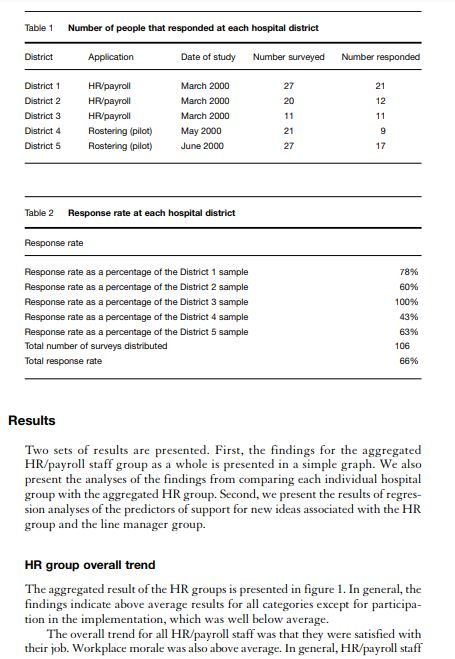
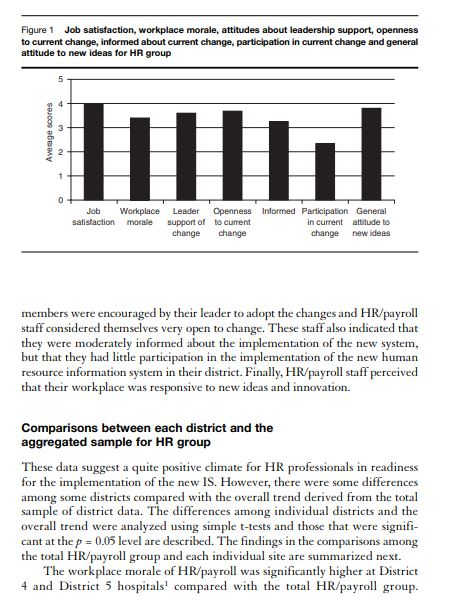
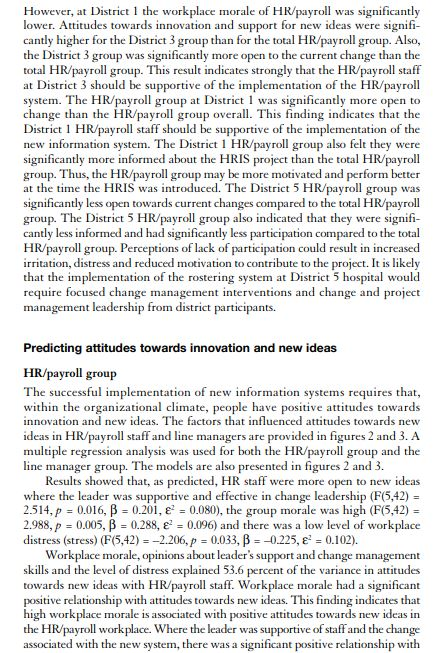
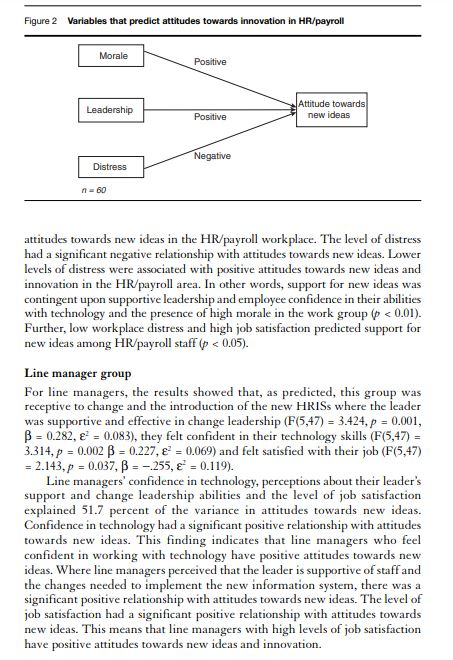
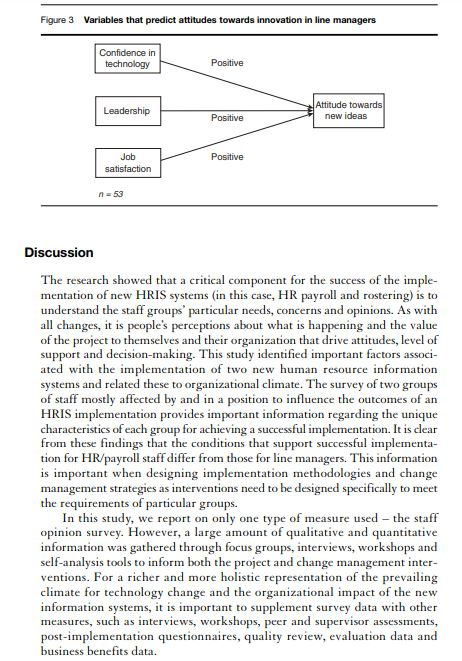
The role of information technology (IT) in industry and commerce has increased rapidly during the last decade. Automation and the IT enabled redesign of operational and business processes have reduced both costs and cycle times while improving output quality (Legare 2002; Martinson and Chong 1999). While human resource information systems (HRIS) are designed to improve performance, they can only do so if people are willing to use the technology and become effective users (Davis, Bagozzi, and Warshaw 1989; De Sanctis 1986, Goodhue 1995). Thus, the most critical determinant of the success of an information system (IS) is the human clement (Hrtel, 2008; Martinson and Chong 1999; Miller and Cardy 2000). This study identifies the key human resource (HR) issues that are important for the success of the implementation of new information systems. Such research is rarely carried out for three reasons. First, practitioner research is often fraught with method ological limitations. Second, IT project managers rarely have the resources to support such research. Third, organizations undergoing technological change rarely can support the time requirements to allow participation in research on top of the workload demands associated with the implementation. This article presents information obtained through the staff opinion survey of five hospital districts. After a short section on key factors associated with IS implementations, the methodology used to gather the information and the response rate by each district is presented. Then, the data from the aggre- gated sample of five organizations are presented. The variables presented are job satisfaction, workplace morale, leadership of the change process, openness to the current change, the degree to which staff feel they are informed, degree to which staff feel they are participating in the current change, and their general openness towards new ideas. The important indicators for successful implementation of the new information systems follow, for both HR/payroll staff and line managers. A summary of the findings is followed by some inter- pretations and recommendations for future HRIS implementations are offered. Key factors associated with information system mplementations The culture in which the new information system is being embedded has considerable influence on its effective utilization. An understanding of the culture is important both for informing the implementation process and for analysis of outcomes. The culture of an organization represents the collective beliefs and values of the people employed (Schneider 1990). These messages are often not made explicit and may be incongruent with espoused organiza- tional values but are visible in actions and decisions. Where the culture is open to new ideas, supportive of innovation and flexibility, it is more likely that the information system will be accepted by staff and used effectively (Davis, Bagozzi, and Warshaw 1989, Goodhue 1995). On the other hand, in an inflex- ible culture, the introduction of new technologies is likely to encounter resist ance. More time and resources will then be required to achieve effective systems uptake and costs associated with the project will increase. Strategic leaders need to articulate the way in which the information systems will assist in attaining the goals of the organization and, therefore, prepare to commit the resources and energy to achieve a return on investment. Climate also has a bearing on the integration of new technologies into the business of the organization. Climate represents the shared perceptions of how things actually are in an organization (James and McIntyre 1996). If there is a climate of limited trust and communication among groups, staff involve- ment in the information system implementation may be restrained (Kimberley and Hrtel 2008). Furthermore, resentment and resistance may occur, especially among certain groups, if the implementation coincides with important events such as restructuring (Bovey and Hede 2001; Burkhardt and Brass 1990). Culture and climate influence acceptance and optimization of new systems perhaps more so than the structure or design elements of an organization (Bass 1998). We propose that the environment within which the implementation occurs is a major determinant of HRIS success (Martinson and Chong 1999). This proposal is made notwithstanding important factors such as system usability, suitability and business fit as well as the cognitive factors around acceptance of technology and human-machine interaction (Carroll 1997; Szajina 1996; Hrtel and Tilton 2005). The importance of employee percep- tions of the way in which technological change affects them cannot be under- estimated. Where employees do not adapt to change or are not skilled to use systems to their potential, there will be additional time investment and employee costs resulting in diversion of profits and resources for services to manage failed technology change projects. Thus, finding ways to gain employee acceptance of new technologies through diagnosing influential issues in the organizational culture and climate warrants serious consideration. This study builds upon the last published study focusing on HRISs undertaken by DeSanctis in 1986. A number of studies have identified factors associated with the imple mentation of information systems (e.g. De Sanctis 1986). Job satisfaction and high workplace morale can influence the IS performance (Martinson and Chong 1999; Motowidlo and Borman 1978; Shamir et al. 1998), with the latter also affecting innovation (Wilson-Evered, Hrtel, and Neale 2001). Effective change also depends upon leadership of change and change leadership skills (Conger, Spreitzer, and Lawler 1999, Kanter 1997, Kotter 1999). However, as implementations affect operational staff the most, all staff members have a leadership role in terms of influencing change. Senior staff will model the approach to change and transition by building trust, inspiring teamwork, supporting team decisions, and foreseeing and encouraging a proactive approach to the change program (Bass 1998). Openness to change and new ideas is important for the success of any new initiative (Hosking and Anderson 1992) and we can assume this applies equally to ITAS implementations. Research suggests that keeping staff informed can increase empowerment, motivation and team performance (Martinson and Chong 1999). Higher levels of satis- faction are often reported in cases where employees participate in the imple mentation. Participation in the early part of the process can reduce irritation or distress (Barki and Hartwick 1994). Further, a favorable attitude towards new ideas and innovation is important to seamless implementation of new systems (Agrell and Gustafson 1996, West et al. 2001). Based on these research findings, we predict that workplace morale, workplace distress, effective change leadership, job satisfaction, participation and involvement, and confi- dence in technology skills will influence openness to change and innovation required for effective implementation of HRIS. Method The aim of the study is to assess staff attitudes towards and participation in the implementation of two applications: a HR/payroll integrated HRIS and an automated rostering system. The two systems were linked by in-house middleware so that pay is generated from a roster. The implementation affected all employees but the change impacts were most significant for line managers and HR/payroll staff. Only those employees involved directly in the implementation were surveyed. The survey assessed employee perceptions about their work environment. The measures were developed as a result of experience with IS implementations, research review and consultation with academics from a number of university departments. Surveys were customized for each district and separate surveys were developed for each application. Staff at various regional and metropolitan health service districts completed surveys during early phases of the project implementation. Five hospital districts were surveyed in the study, these organizations operate as separate businesses and service different cities and regions. The organiza- tions range in size from around 1000 to 3000 staff. The sample sizes were small because the numbers in the groups (HR/payroll staff and line managers) are relatively small compared to other groups (e.g. nurses). The survey asked participants to respond to various questions about the imple- mentation of the IS. Respondents in all districts were HR payroll staff with the exception of one district where line managers were included. The overall response rate for HR/payroll staff and for the individual districts is summar- ized in tables 1 and 2. The overall response rate of 66 percent (see table 1) is relatively high for organizational surveys especially during a change process. The response rate for one district was exceptional, and for two districts was a little below the average. The occupational position of each person who responded is presented in the appendix. Table 1 Number of people that responded at each hospital district District Application Date of study Number surveyed Number responded District 1 District 2 District 3 District 4 District 5 HR/payroll HR/payroll HR payroll Rostering (pilot) Rostering (pilot) March 2000 March 2000 March 2000 May 2000 June 2000 Table 2 Response rate at each hospital district Response rate 78% 60% 100% Response rate as a percentage of the District 1 sample Response rate as a percentage of the District 2 sample Response rate as a percentage of the District 3 sample Response rate as a percentage of the District 4 sample Response rate as a percentage of the District 5 sample Total number of surveys distributed Total response rate 43% 63% 66% Results Two sets of results are presented. First, the findings for the aggregated HR/payroll staff group as a whole is presented in a simple graph. We also present the analyses of the findings from comparing each individual hospital group with the aggregated HR group. Second, we present the results of regres- sion analyses of the predictors of support for new ideas associated with the HR group and the line manager group. HR group overall trend The aggregated result of the HR groups is presented in figure 1. In general, the findings indicate above average results for all categories except for participa tion in the implementation, which was well below average. The overall trend for all HR/payroll staff was that they were satisfied with their job. Workplace morale was also above average. In general, HR/payroll staff Figure 1 Job satisfaction, workplace morale, attitudes about leadership support, openness to current change, informed about current change, participation in current change and general attitude to new ideas for HR group Average scores Job Workplace satisfaction morale Leader Openness support of to current change change Informed Participation General in current attitude to change new ideas members were encouraged by their leader to adopt the changes and HR/payroll staff considered themselves very open to change. These staff also indicated that they were moderately informed about the implementation of the new system, but that they had little participation in the implementation of the new human resource information system in their district. Finally, HR/payroll staff perceived that their workplace was responsive to new ideas and innovation. Comparisons between each district and the aggregated sample for HR group These data suggest a quite positive climate for HR professionals in readiness for the implementation of the new IS. However, there were some differences among some districts compared with the overall trend derived from the total sample of district data. The differences among individual districts and the overall trend were analyzed using simple t-tests and those that were signifi- cant at the p = 0,05 level are described. The findings in the comparisons among the total HR/payroll group and each individual site are summarized next. The workplace morale of HR/payroll was significantly higher at District 4 and District 5 hospitals' compared with the total HR/payroll group. However, at District 1 the workplace morale of HR/payroll was significantly lower. Attitudes towards innovation and support for new ideas were signifi- cantly higher for the District 3 group than for the total HR/payroll group. Also, the District 3 group was significantly more open to the current change than the total HR/payroll group. This result indicates strongly that the HR/payroll staff at District 3 should be supportive of the implementation of the HR/payroll system. The HR/payroll group at District 1 was significantly more open to change than the HR/payroll group overall. This finding indicates that the District 1 HR/payroll staff should be supportive of the implementation of the new information system. The District 1 HR/payroll group also felt they were significantly more informed about the HRIS project than the total HR/payroll group. Thus, the HR/payroll group may be more motivated and perform better at the time the HRIS was introduced. The District 5 HR/payroll group was significantly less open towards current changes compared to the total HR/payroll group. The District 5 HR/payroll group also indicated that they were signifi- cantly less informed and had significantly less participation compared to the total HR/payroll group. Perceptions of lack of participation could result in increased irritation, distress and reduced motivation to contribute to the project. It is likely that the implementation of the rostering system at District 5 hospital would require focused change management interventions and change and project management leadership from district participants. Predicting attitudes towards innovation and new ideas HR/payroll group The successful implementation of new information systems requires that, within the organizational climate, people have positive attitudes towards innovation and new ideas. The factors that influenced attitudes towards new ideas in HR/payroll staff and line managers are provided in figures 2 and 3. A multiple regression analysis was used for both the HR/payroll group and the line manager group. The models are also presented in figures 2 and 3. Results showed that, as predicted, HR staff were more open to new ideas where the leader was supportive and effective in change leadership (F(5,42) - 2.514, p = 0.016, P = 0.201, E = 0.080), the group morale was high (F(5,42) = 2.988, p = 0,005, B = 0.288, E = 0.096) and there was a low level of workplace distress (stress) (F(5,42) = -2.206, p = 0.033, B = -0.225, E = 0.102). Workplace morale, opinions about leader's support and change management skills and the level of distress explained 53.6 percent of the variance in attitudes towards new ideas with HR/payroll staff. Workplace morale had a significant positive relationship with attitudes towards new ideas. This finding indicates that high workplace morale is associated with positive attitudes towards new ideas in the HR/payroll workplace. Where the leader was supportive of staff and the change associated with the new system, there was a significant positive relationship with Figure 2 Variables that predict attitudes towards innovation in HR/payroll Morale Positive Leadership Attitude towards new ideas Positive Negative Distress n=60 attitudes towards new ideas in the HR/payroll workplace. The level of distress had a significant negative relationship with attitudes towards new ideas. Lower levels of distress were associated with positive attitudes towards new ideas and innovation in the HR/payroll area. In other words, support for new ideas was contingent upon supportive leadership and employee confidence in their abilities with technology and the presence of high morale in the work group
Step by Step Solution
There are 3 Steps involved in it
1 Expert Approved Answer
Step: 1 Unlock

Question Has Been Solved by an Expert!
Get step-by-step solutions from verified subject matter experts
Step: 2 Unlock
Step: 3 Unlock
 Study Help