







Question: Please read the following article - Connect Then Lead by Amy Cuddy, Matthew Kohut, and John Neffinger. HBR, 2013. Then answer the question: IS IT
Please read the following article - Connect Then Lead by Amy Cuddy, Matthew Kohut, and John Neffinger. HBR, 2013.
Then answer the question: IS IT BETTER TO BE LOVED OR FEARED?
Explain why you think the way you do, using the article as your main source of information.
 .
.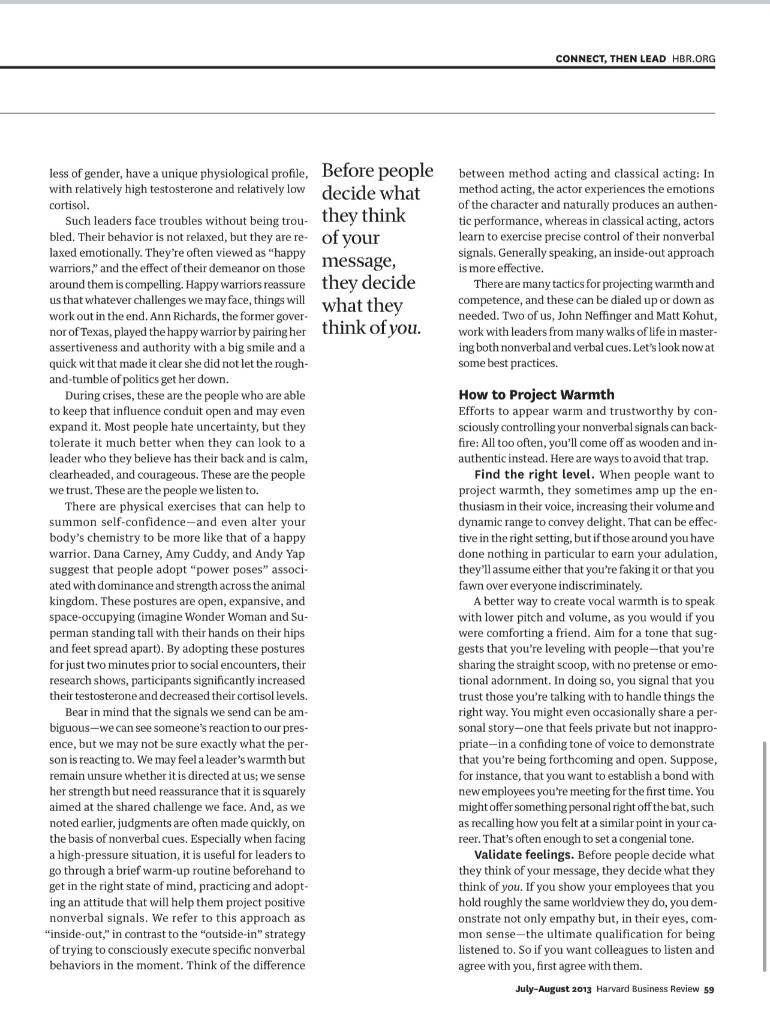
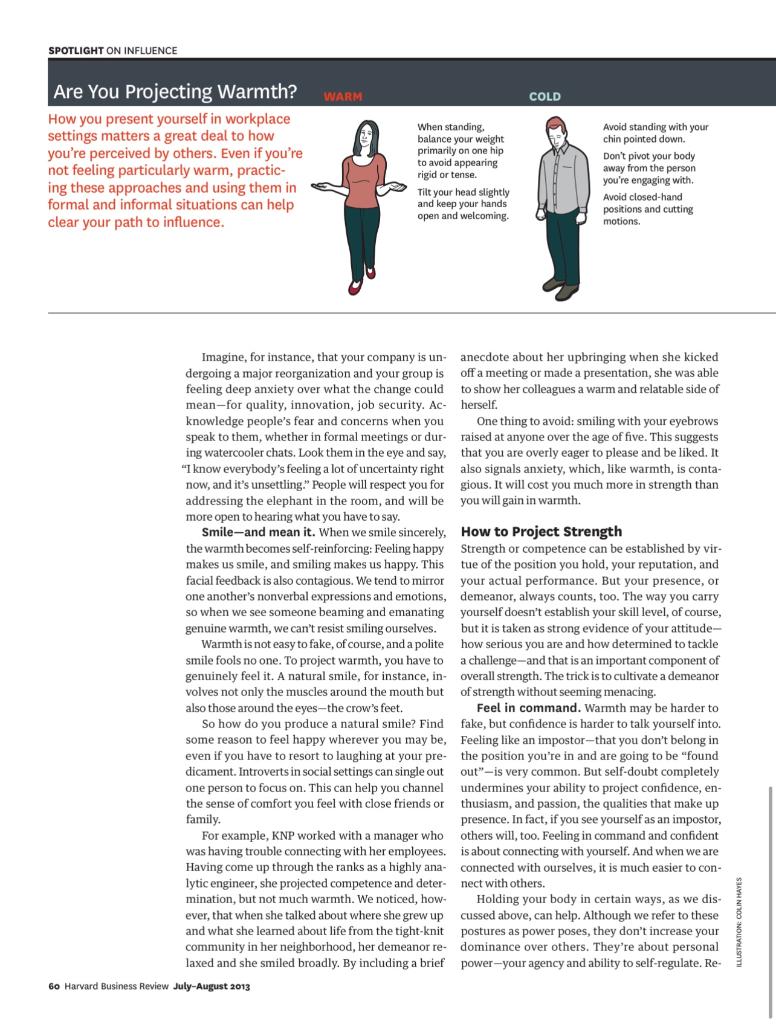
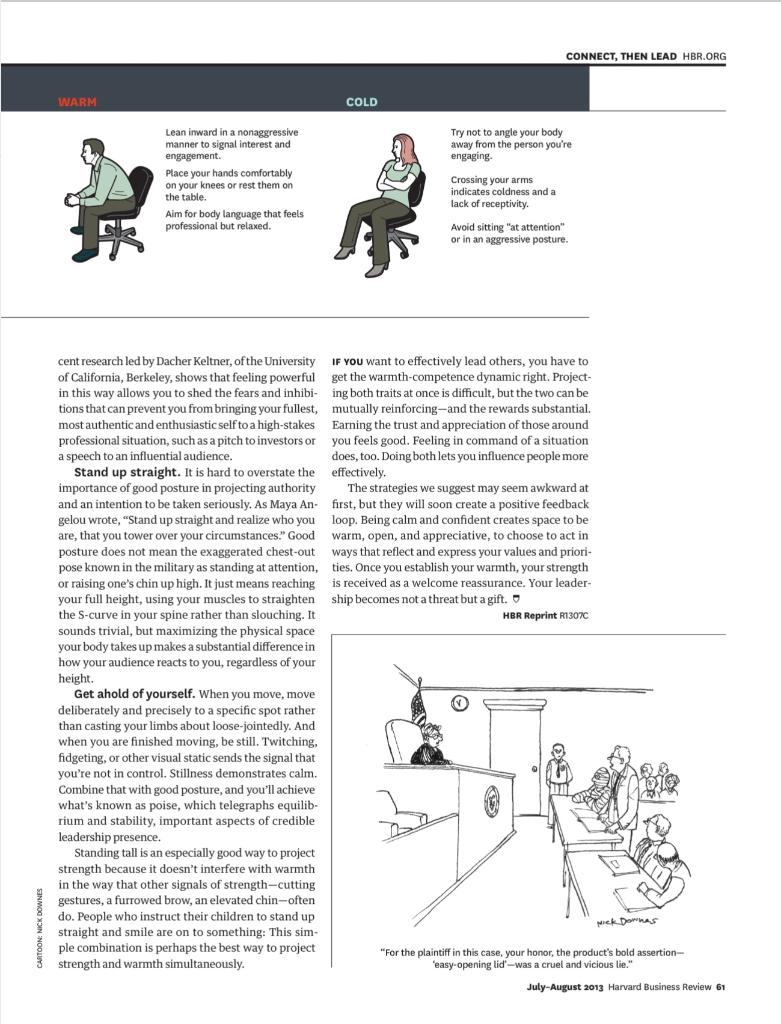
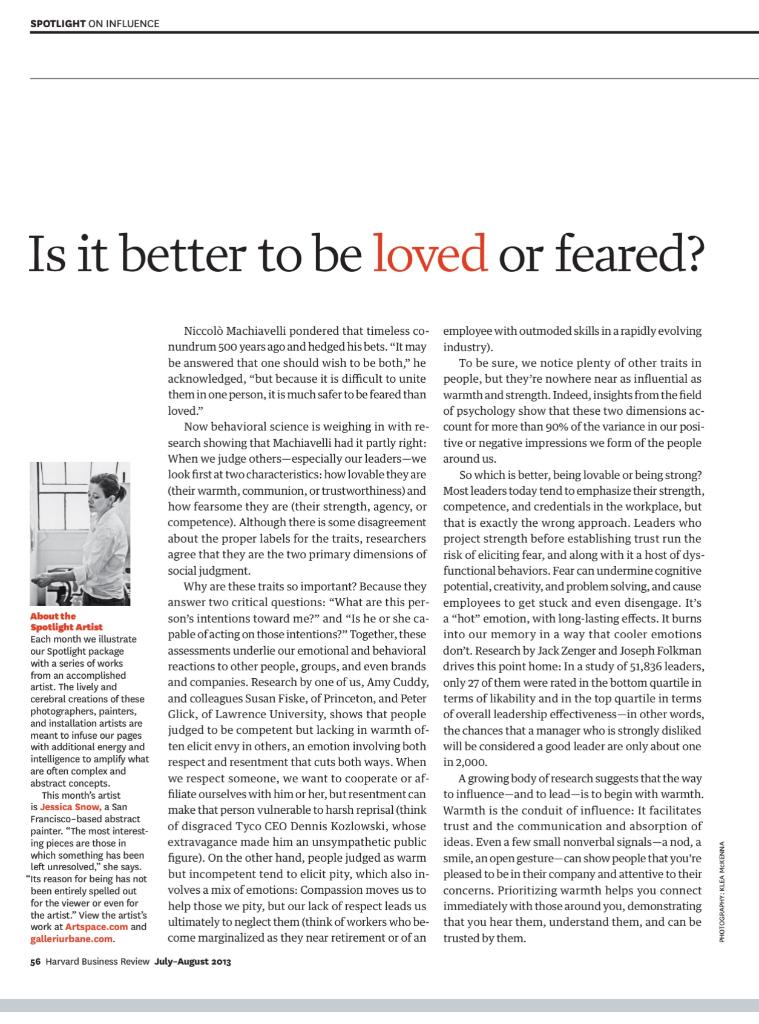
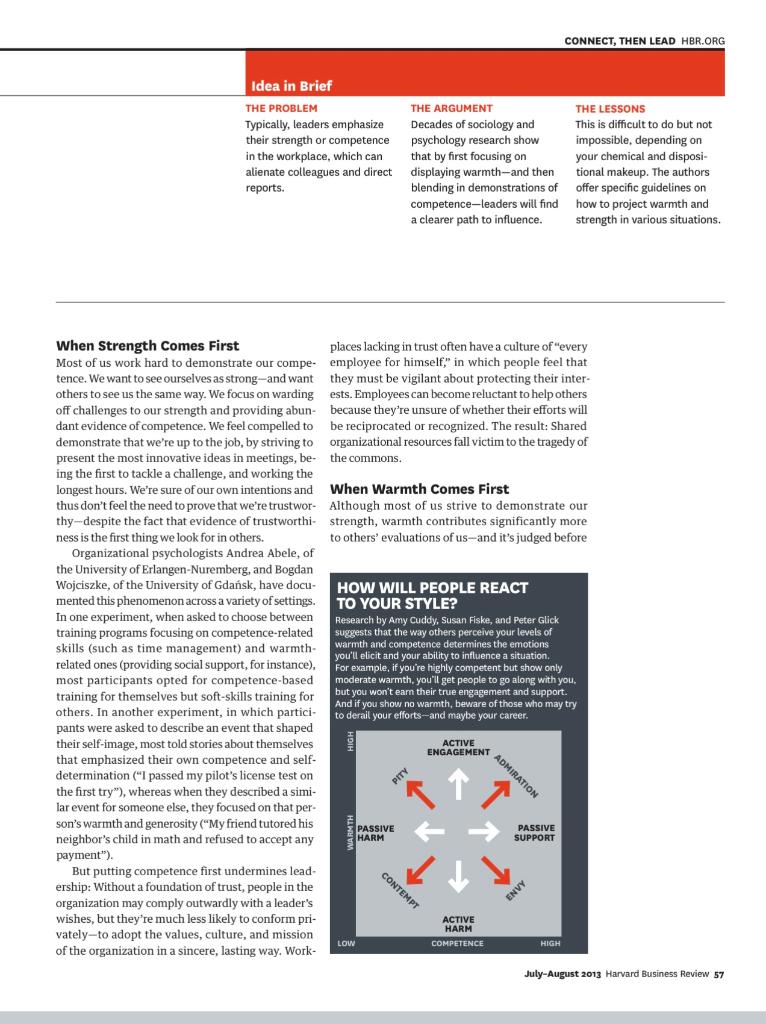
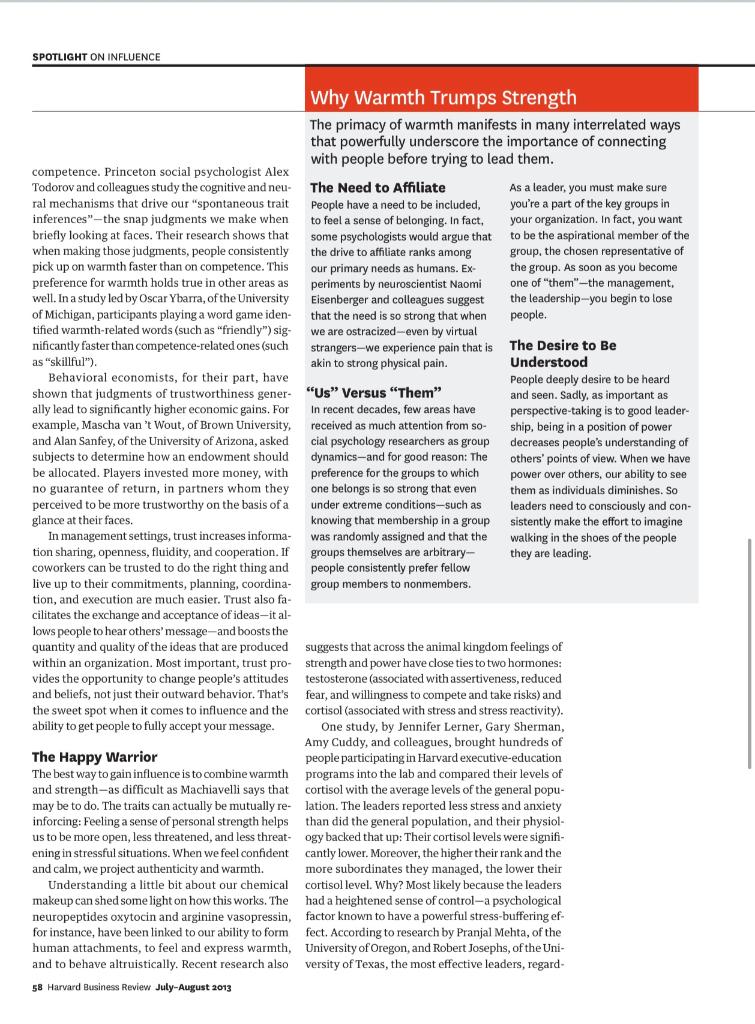
SPOTLIGHT ON INFLUENCE Is it better to be loved or feared? loved." social judgment. Niccol Machiavelli pondered that timeless co-employee with outmoded skills in a rapidly evolving nundrum 500 years ago and hedged his bets. "It may industry). be answered that one should wish to be both," he To be sure, we notice plenty of other traits in acknowledged, but because it is difficult to unite people, but they're nowhere near as influential as them in one person, it is much safer to be feared than warmth and strength. Indeed, insights from the field of psychology show that these two dimensions ac- Ne Now behavioral science is weighing in with re- count for more than 90% of the variance in our posi- search showing that Machiavelli had it partly right: tive or negative impressions we form of the people When we judge others-especially our leaders-we around us. look first at two characteristics: how lovable they are So which is better, being lovable or being strong? (their warmth, communion, or trustworthiness) and Most leaders today tend to emphasize their strength, how fearsome some they are (their strength, agency, or competence, and credentials in the workplace, but competence). Alth Although there is some disagreement that is exactly the wrong approach. Leaders who about the proper labels for the traits, researchers fore establishing trust run the agree that they are the two primary dimensions of risk of eliciting fear, and along with it a host of dys- functional behaviors. Fear can I can undermine cognitive Why are these traits so important? Because they potential, creativity, and problem solving, and cause answer two critical questions: "What are this per employees to get stuck and even disengage. It's son's intentions toward me?" and "Is he or she a " , with long-lasting effects. It burns pable of acting on those intentions?" Together, these into our memory in a way that cooler emotions assessments underlie erlie our emotional and behavioral don't. Research by Jack Zenger and r and Joseph Folkman reactions to other people, groups, and even brands drives this point home: In a study of 51,836 leaders, and companies. Research by one of us, Amy Cuddy, only 27 of them were rated in the bottom quartile in Susan Fiske, of Princeton, and Peter terms of likability and in the top quartile in Glick, of Lawrence University, shows that people of overall leadership effectiveness-in other words, judged to be competent but lacking in warmth of- the chances that a manager who is strongly disliked ten elicit envy in others, an emotion involving both will be considered a good leader are only about one respect and resentment that cuts both ways. When we respect someone, we want to cooperate or af- A growing body of research suggests that the way filiate ourselves with him or her, but resentment can to influence-and to lead-is to begin with warmth. make that person vulnerable to harsh reprisal (think Warmth is the conduit of influence: It facilitates of disgraced Tyco CEO Dennis Kozlowski, whose trust and the communication and absorption of extravagance made him an unsympathetic public ideas. Even a few small nonverbal signals-anod, a On the other hand, people judged as warm smile, an open gesture-can show people that you're but incompetent pity, which also pleased to be in their company attentive to their a mix of emotions: Compassion moves us to concerns. Prioritizing warmth helps you connect help those we pity, but our lack of respect leads us immediately with those around you, demonstrating ultimately to neglect them (think of workers who be that you hear them, understand them, and can be come marginalized as they near retirement or of an trusted by them. "hot" emotion, terms About the Spotlight Artist Each month we illustrate our Spotlight package with a series of works from an accomplished artist. The lively and cerebral creations of these photographers, painters, and installation artists are meant to infuse our pages with additional energy and intelligence to amplify what are often complex and abstract concepts. This month's artist is Jessica Snow, a San Francisco-based abstract painter. "The most interest- ing pieces are those in which something has been left unresolved," she says. "Its reason for being has not been entirely spelled out for the viewer or even for the artist." View the artist's work at Artspace.com and galleriurbane.com. in 2,000. figure). volves a 56 Harvard Business Review July-August 2013 CONNECT, THEN LEAD HBR.ORG Idea in Brief THE PROBLEM Typically, leaders emphasize their strength or competence in the workplace, which can alienate colleagues and direct reports. THE ARGUMENT Decades of sociology and psychology research show that by first focusing on displaying warmth-and then blending in demonstrations of competence-leaders will find a clearer path to influence. THE LESSONS This is difficult to do but not impossible, depending on your chemical and disposi- tional makeup. The authors offer specific guidelines on how to project warmth and strength in various situations. When Strength Comes First places lacking in trust often have a culture of "every Most of us work hard to demonstrate our compe- employee for himself," in which people feel that tence. We want to see ourselves as strong-and want they must be vigilant about protecting their inter- others to see us the same way. We focus on warding ests. Employees can become reluctant to help others off challenges to our strength and providing abun because they're unsure of whether their efforts will dant evidence of competence. We feel compelled to be reciprocated or recognized. The result: Shared demonstrate that we're up to the job, by striving to organizational resources fall victim to the tragedy of present the most innovative ideas in meetings, be the commons. ing the first to tackle a challenge, and working the longest hours. We're sure of our own intentions and when Warmth Comes First thus don't feel the need e need to prove that we're trustwor. Although most of us strive to demonstrate our thy-despite the fact that evidence of trustworthi- strength, warmth contributes significantly more ness is the first thing we look for in others. to others' evaluations of us-and it's judged before Organizational psychologists Andrea Abele, of the University of Erlangen-Nuremberg, and Bogdan Wojciszke, of the University of Gdask, have docu- HOW WILL PEOPLE REACT mented this phenomenon across a variety of settings. TO YOUR STYLE? In one experiment, when asked to choose between Research by Amy Cuddy, Susan Fiske, and Peter Glick training programs focusing on competence-related suggests that the way others perceive your levels of skills (such time management) and warmth- warmth and competence determines the emotions you'll elicit and your ability to influence a situation. related ones (providing social support, for instances , For example, if you're highly competent but show only opted for moderate warmth, you'll get people to go along with you. training for themselves but soft-skills training for but you won't earn their true engagement and support. And if you show no warmth, beware of those who may try others. In another experiment, in which partici- to derail your efforts-and maybe your career. pants were asked to describe an event that shaped their self-image, most told stories about themselves ACTIVE ENGAGEMENT that emphasized their own competence and self- determination ("I passed my pilot's license test on the first try"), whereas when they described a simi- that lar event for someone else, they focused on that per- son's warmth and generosity ("My friend tutored his PASSIVE neighbor's child in math and refused to accept any HARM SUPPORT payment"). But putting competence first undermines lead ership: Without a foundation of trust, people in the organization may comply outwardly with a leader's wishes, but they're much less likely to conform pri- HARM vately-to adopt the values, culture, and mission COMPETENCE of the organization in a sincere, lasting way. Work- July-August 2013 Harvard Business Review 57 most participants opte or competence-based ADMIRATION PASSIVE CONTEMPT ENVY ACTIVE LOW HIGH SPOTLIGHT ON INFLUENCE as "skillful"). Why Warmth Trumps Strength The primacy of warmth manifests in many interrelated ways that powerfully underscore the importance of connecting with people before trying to lead them. competence. Princeton social psychologist Alex Todorov and colleagues study the cognitive and neu- The Need to Affiliate As a leader, you must make sure ral mechanisms that drive our "spontaneous trait People have a need to be included, you're a part of the key groups in inferences"-the snap judgments we make when to feel a sense of belonging. In fact, your organization. In fact, you want briefly looking at faces. Their research shows that some psychologists would argue that to be the aspirational member of the when making those judgments, people consistently the drive to affiliate ranks among group, the chosen representative of pick up on warmth faster than on competence. This our primary needs as humans. Ex- the group. As soon as you become preference for warmth holds true in other areas as periments by neuroscientist Naomi one of them"-the management, well. In a study led by Oscar Ybarra, of the University Eisenberger and colleagues suggest the leadership-you begin lose of Michigan, participants playing a word game iden that the need is so strong that when people. tified warmth-related words (such as "friendly") sig- we are ostracized-even by virtual nificantly faster than competence-related ones (such strangers-we experience pain that is The Desire to Be akin to strong physical pain. Understood Behavioral economists, for their part, have People deeply desire to be heard shown that judgments of trustworthiness gener. "Us Versus "Them and seen. Sadly. s important as y lead to significantly higher economic gains. For In recent decades, few areas have perspective-taking is to good leader- example, Mascha van 't Wout, of Brown University, received as much attention from so- ship, being in a position of power and Alan Sanfey, ey, of the University of Arizona, asked cial psychology researchers as group decreases people's understanding of subjects to determine how an endowment should dynamics-and for good reason: The others' points of view. When we have be allocated. Players invested more money, with preference for the groups to which power over others, our ability to see no guarantee of return, in partners whom they one belongs is so strong that even them as individuals diminishes. So perceived to be more trustworthy on the basis of a under extreme conditions-such as leaders need to consciously and con- glance at their faces. knowing that membership in a group sistently make the effort to imagine In n management settings, trust increases informa- was randomly assigned and that the walking in the shoes of the people tion sharing, openness, fluidity, and cooperation. If groups themselves are arbitrary- they are leading coworkers can be trusted to do the right thing and people consistently prefer fellow live up to their commitments, planning, coordina- group members to nonmembers. tion, and execution are much easier. Trust also fa- cilitates the exchange and acceptance of ideas-it al- lows people to hearothers' message and boosts the quantity and quality of the ideas that are produced suggests that across the animal kingdom feelings of within an organization. Most important, trust pro- strength and power have close ties to two hormones: vides the opportunity to change people's attitudes testosterone (associated with assertiveness, reduced and beliefs, not just their outward behavior. That's fear, and willingness to compete and take risks) and the sweet spot when it comes to influence and the cortisol (associated with stress a s and stress reactivity). ability to get people to fully accept your message. One study, by Jennifer Lerner, Gary Sherman, tudy. The Happy Warrior people participating in Harvard executive-education t way to gain influence is to combine warmth programs into the lab and compared their levels of and strength-as difficult as Machiavelli says that cortisol with the average levels of the general popu may be to do. The traits can actually be mutually relation. The leaders reported less stress and apply inforcing: Feeling a sense of personal strength helps us to be more open, less threatened, and less threat- ogy backed that up: Their cortisol levels were signifi- than did the general population, and their physiol- ening in stressful situations. When we feel confident cantly lower. Moreover, the hi e higher their rank and the and calm, we projecta tauthenticity and warmth. more subordinates they managed, the lower their Understanding a little bit about our chemical cortisol level. Why? Most likely because the leaders makeup can shed some light on how this works. The had a heightened sense of control-a psychological neuropeptides oxytocin and arginine vasopressin, factor known to have a powerful stress-buffering ef- for instance, have been linked to our ability to form fect. According to research by Pranjal Mehta, of the human attachments, to feel and express warmth, University of Oregon, and Robert Josephs, of the Uni- and to behave altruistically. Recent research also versity of Texas, the most effective leaders, regard- 58 Harvard Business Review July-August 2013 Amy Cuddy, and colleagues, brous brought hundreds of The best CONNECT, THEN LEAD HBR.ORG method acting, between method acting and classical acting: In the actor experiences the emotions of the character and naturally produces an authen- tic performance, whereas in classical acting, actors learn to exercise precise control of their nonverbal signals. Generally speaking, an inside-out approach more effective. . There are many tactics for projecting warmth and competence, and these can be dialed up or down as needed. Two of us, John Neffinger and Matt Kohut, work with leaders from many walks of life in master- ing both nonverbal and verbal cues. Let's look nowat some best practices. less of gender, have a unique physiological profile. Before people with relatively high testosterone and relatively low decide what cortisol. Such leaders face troubles without being trou- they think bled. Their behavior is not relaxed, but they are re- of your laxed emotionally. They're often viewed as "happy warriors," and the effect of their demeanor on those message, around them is compelling, Happy warriors reassure they decide us that whatever challenges we may face, things will what they work out in the end. Ann Richards, the former gover- nor of Texas, played the happy warrior by pairing her think of you. assertiveness and authority with a big smile and la quick wit that made it clear she did not let the rough- and-tumble of politics get her down. During crises, these are the people who are able to to keep that influence conduit open and may even expand it. Most people hate uncertainty, but they tolerate it much better when they can look to a leader who they believe has their back and is calm, clearheaded, and courageous. These are the people we trust. These are the people we listen to. There are physical exercises that can help to summon self-confidence-and even alter your body's chemistry to be more like that of a happy warrior. Dana Carney, Amy Cuddy, and Andy Yap suggest that people adopt "power poses" associ- ated with dominance and strength across the animal kingdom. These postures are open, space-occupying (imagine Wonder Woman and Su- standing tall with their hands on their hips and feet for just two minutes prior to social encounters, their just spread apart). By adopting these postures research shows, participants significantly increased their testosterone and decreased their cortisol levels. Bear in mind that the signals we send can be am biguous-we can see someone's reaction to our pres- ence, but we may not be sure exactly what the per- son is reacting to. We may feel a leader's warmth but pemain unsure whether it is directed at us; we sense remain her strength but need reassurance that it is squarely aimed at the shared challenge we face. And, as we noted earlier , judgments are often made quickly, ce the basis of nonverbal cues. Especially when facing a high-pressure situation, it is useful for leaders to go through a brief warm-up routine beforehand to get in the right state of mind, practicing and adopt- ing an attitude that will help them project positive nonverbal signals. We refer to this approach as "inside-out," in contrast to the "outside-in" strategy of trying to consciously execute specific nonverbal behaviors in the moment. Think of the difference , expansive, and How to Project Warmth Efforts to appear warm and trustworthy by con- sciously controlling your nonverbal signals can back- fire: All too often, you'll come off as wooden and in- authentic instead. Here are ways to avoid that trap. Find the right level. When people want to project warmth, they sometimes amp up the en- thusiasm in their voice, increasing their volume and dynamic range to convey delight. That can be effec- tive in the right setting, but if those avou , but if those around you have done nothing in particular to earn your adulation, they'll assume either that you're faking it or that you fawn over everyone indiscriminately. better way to create vocal warmth is to speak with lower pitch and volume, as you would if you were comforting a friend. Aim for a tone that sug- gests that you're leveling with people that you're sharing the straight scoop, , with no pretense or emo- tional adornment. In doing so, you signal that you trust those you're talking with to handle things the right way. You might even occasionally share a per- sonal story-one that feels private but not inappro- priate-in a confiding tone of voice to demonstrate that you're being forthcoming and open. Suppose, for instance, that you want to establish a bond with new employees you're meeting for the first time. You mightoffer something personal right off the bat, such as recalling how you felt at a similar point in your ca- reer. That's often enough to set a congenial tone. Validate feelings. Before people decide what they think of your message, they decide what they think of you. If you show your employees that you hold roughly the same worldview they do, you dem- onstrate not only empathy but, in their eyes, com- mon sense-the ultimate qualification for being listened to. So if you want colleagues to listen and agree with you, first agree with them. July-August 2013 Harvard Business Review 59 SPOTLIGHT ON INFLUENCE WARM COLD Are You Projecting Warmth? How you present yourself in workplace settings matters a great deal to how you're perceived by others. Even if you're not feeling particularly warm, practic- ing these approaches and using them in formal and informal situations can help clear your path to influence. When standing, balance your weight primarily on one hip to avoid appearing rigid or tense. Tilt your head slightly and keep your hands open and welcoming Avoid standing with your chin pointed down. Don't pivot your body away from the person you're engaging with Avoid closed-hand positions and cutting motions, makes us Your genuine warmth. Imagine, for instance, that your company is un anecdote about her upbringing when she kicked dergoing a major reorganization and your group is off a meeting or made a presentation, she was able feeling deep anxiety over what the change could to show her colleagues a warm and relatable side of mean-for quality, innovation, job security. Ac- herself. knowledge people's fear and concerns when you One thing to avoid: smiling with your eyebrows speak to them, whether in formal meetings or dur- raised at anyone over the age of five. This suggests ing watercooler chats. Look them in the eye and say, that you are overly eager to please and be liked. It "I know everybody's feeling al a lot of uncertainty right also signals anxiety, which, like warmth, is conta- now, and it's unsettling." People will respect you for gious. It will cost you much more in strength than addressing the elephant in the room, and will be you will gain in warmth. more open to hearing what you have to say. the warmth becomes self-reinforcing: Feeling happy Strength or competence can be established by vir- heSmile- and mean it. When we smile sincerely, How to Project Strength makes us smile, and smiling sus happy. This tue of the position you hold, your reputation, and facial feedback is also contagious. We tend to mirror actual performance. But your presence, or one another's nonverbal s nonverbal expressions and emotions, demeanor, always counts, too. The way you carry so when we see someone beamming and emanating yoursemestrong evidence of your attitude- testablish your skill level, of course, e warmth, we can't resist smiling ourselves. but it is taken as Warmth is not easy to fake, of course, and a polite how serious you are and how determined to tackle smile fools no one. To project warmth, you have to a challengeand that is an important component of genuinely feel it. A natural smile, for instance, in- overall strength. The trick is to cultivate a demeanor volves not only the muscles around the of strength without seeming menacing. also those around the eyes-the crow's feet. Feel in command. Warmth may be harder to So how do you produce a natural smile? Find fake, but confidence is harder to talk yourself into. some reason to feel happy where r you may be, Feeling like an impostor-that you don't belong in even n if you have to resort to laughing at your pre- the position you're in and are going to be "found dicament. Introverts in social settings can single out out-is very common. But self-doubt completely one person to to focus on. This can help you channel undermines your ability to project confidence, en- thusiasm, and passion, the qualities that make up family. In fact, if you see yourself as an impostor, For example, KNP worked with a manager who others will, too. Feeling in command and confident was having trouble connecting with her employees. is about connecting with yourself. And when we are Having come up through the ranks as a highly ana- connected with ourselves, it is much easier to con- lytic engineer, she projected competence and deter- nect with others. mination, but not much warmth. We noticed, how Holding your body in certain ways, as we dis- ever, that when she talked about where she grew up cussed above, can help. Although we refer to these and what she learned about life from the tight-knit postures as power poses, they don't increase your community in her neighborhood, her demeanor re- dominance over others. They're about personal laxed and she smiled broadly. By including a brief power your agency and ability to self-regulate. Re- 60 Harvard Business Review July-August 2013 mouth but presence. CONNECT, THEN LEAD HBR.ORG WARM COLD Try not to angle your body away from the person you're engaging Lean inward in a nonaggressive manner to signal interest and engagement Place your hands comfortably on your knees or rest them on the table Aim for body language that feels professional but relaxed. Crossing your arms indicates coldness and a lack of receptivity Avoid sitting "at attention" or in an aggressive posture. cent research led by Dacher Keltner, of the University IF YOU want to effectively lead others, you have to of California, Berkeley, shows that feeling powerful get the warmth-competence dynamic right. Project- in this way allows you to shed the fears and inhibi- ing both traits at once is difficult, but the two can be tions that can prevent you from bringing your fullest, mutually reinforcing-and the rewards substantial. most authentic and enthusiastic self to a high-stakes Earning the trust and appreciation of those around professional situation, such as a pitch to investors or you feels good. Feeling in command of a situation a speech to an influential audience. does, too. Doing both lets you influence people more Stand up straight. It hard to overstate the effectively. importance of good posture in projecting authority The strategies we suggest may seem awkward at and an intention to be taken seriously. As Maya An- first, but they will soon create a positive feedback gelou wrote, "Stand up straight and realize who you loop. Being calm and confident creates space to be are that you tower over your circumstances." Good warm, open, and appreciative, to choose to act in posture does not mean the exaggerated chest-out ways that reflect and express your values and priori- pose known in the military as standing at attention, ties. Once you establish your warmth, your strength or raising one's chin up high. It just means reaching is received as a welcome reassurance. Your leader- your full height, using your muscles to straighten ship becomes not a threat but a gift. the S-curve in your spine rather than slouching. It HBR Reprint R1307C sounds trivial, but maximizing the physical space your body takes up makes a substantial difference in how your audience reacts to you, regardless of your height. Get ahold of yourself. When you move, move deliberately and precisely to a specific spot rather than casting your limbs about loose-jointedly. And when you are finished moving, be still. Twitching, fidgeting, or other visual static sends the signal that you're not in control. Stillness demonstrates calm. Combine that with good posture, and you'll achieve what's known as poise, which telegraphs equilib- rium and stability, aspects of credible Standing tall is an especially good way to project strength because it doesn't interfere with warmth in the way that other signals of strength-cutting gestures, a furrowed brow, an elevated chin-often do. People who instruct their children to stand up Wiek Dewas straight and smile are on to something: This sim- ple combination is perhaps the best way to project "For the plaintiff in this case, your honor, the product's bold assertion- strength and warmth simultaneously. easyopening lid'-was a cruel and vicious lie." July-August 2013 Harvard Business Review 61 leadership presence. important: CARTOON NICK DOWNES Harvard Business Review Notice of Use Restrictions, May 2009 Harvard Business Review and Harvard Business Publishing Newsletter content on EBSCOhost is licensed for the private individual use of authorized EBSCOhost users. It is not intended for use as assigned course material in academic institutions nor as corporate learning or training materials in businesses. Academic licensees may not use this content in electronic reserves, electronic course packs, persistent linking from syllabi or by any other means of incorporating the content into course resources. Business licensees may not host this content on learning management systems or use persistent linking or other means to incorporate the content into learning management systems. Harvard Business Publishing will be pleased to grant permission to make this content available through such means. For rates and permission, contact permissions@harvardbusiness.org
Step by Step Solution
There are 3 Steps involved in it
1 Expert Approved Answer
Step: 1 Unlock

Question Has Been Solved by an Expert!
Get step-by-step solutions from verified subject matter experts
Step: 2 Unlock
Step: 3 Unlock
 Study Help