







Question: please solve it through SQL Language and show a screenshot for your work on your computer. Thank you Exercises 1. Write a SELECT statement that
please solve it through SQL Language and show a screenshot for your work on your computer. Thank you
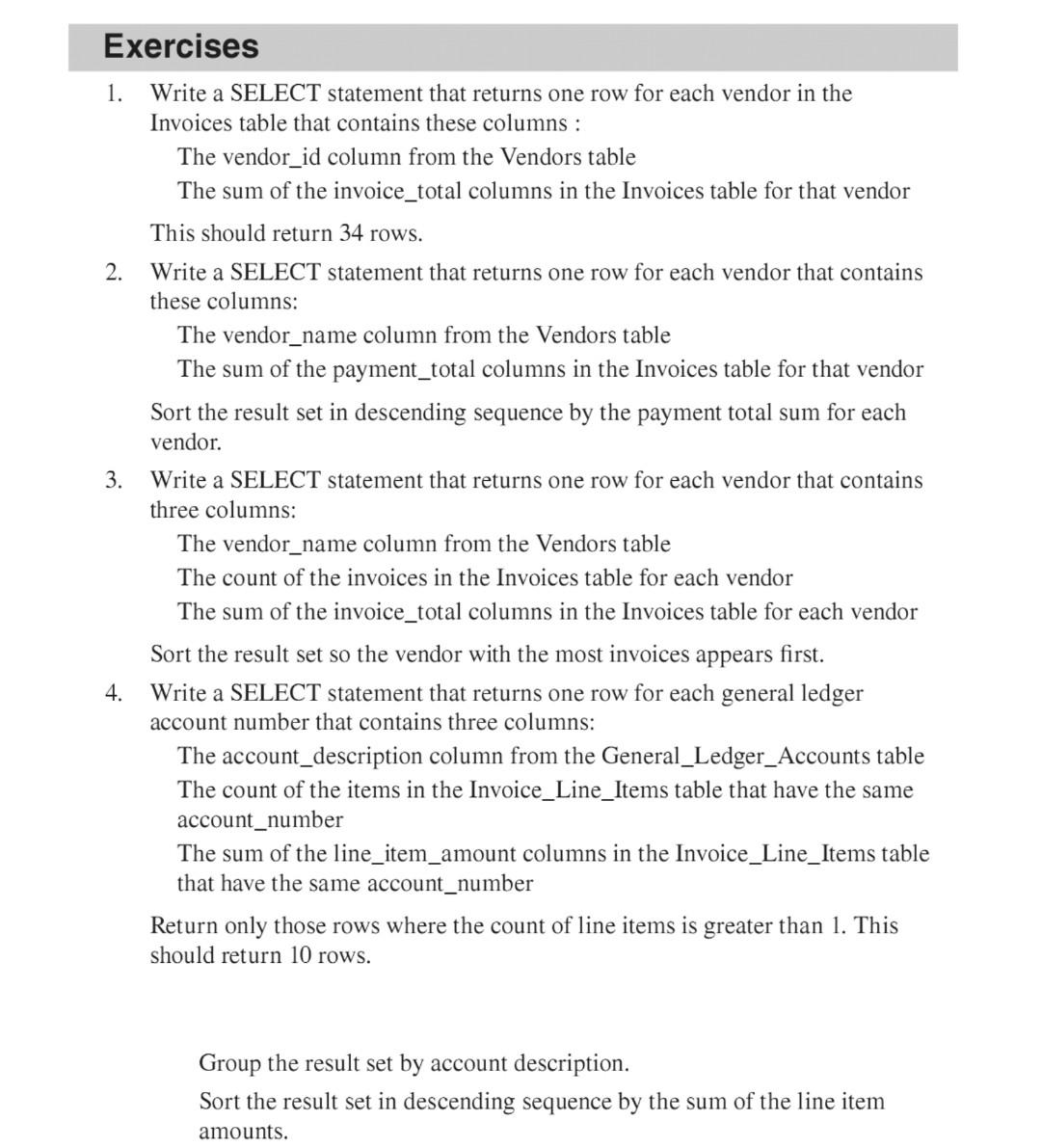
Exercises 1. Write a SELECT statement that returns one row for each vendor in the Invoices table that contains these columns : The vendor_id column from the Vendors table The sum of the invoice_total columns in the Invoices table for that vendor This should return 34 rows. 2. Write a SELECT statement that returns one row for each vendor that contains these columns: The vendor_name column from the Vendors table The sum of the payment_total columns in the Invoices table for that vendor Sort the result set in descending sequence by the payment total sum for each vendor. 3. Write a SELECT statement that returns one row for each vendor that contains three columns: The vendor_name column from the Vendors table The count of the invoices in the Invoices table for each vendor The sum of the invoice_total columns in the Invoices table for each vendor Sort the result set so the vendor with the most invoices appears first. 4. Write a SELECT statement that returns one row for each general ledger account number that contains three columns: The account_description column from the General_Ledger_Accounts table The count of the items in the Invoice_Line_Items table that have the same account_number The sum of the line_item_amount columns in the Invoice_Line_Items table that have the same account_number Return only those rows where the count of line items is greater than 1 . This should return 10 rows. Group the result set by account description. Sort the result set in descending sequence by the sum of the line item amounts
Step by Step Solution
There are 3 Steps involved in it

Get step-by-step solutions from verified subject matter experts
 Study Help