



Question: please solve using handwiten and have this code below your answer QSRT65 fSo using above formula, differentiation of equation (1) can be written as F(y)=
please solve using handwiten and have this code below your answer "QSRT65"
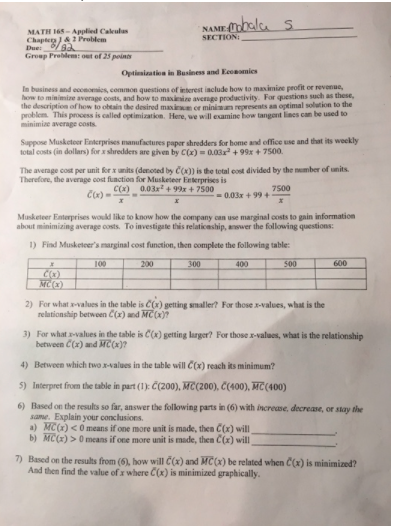
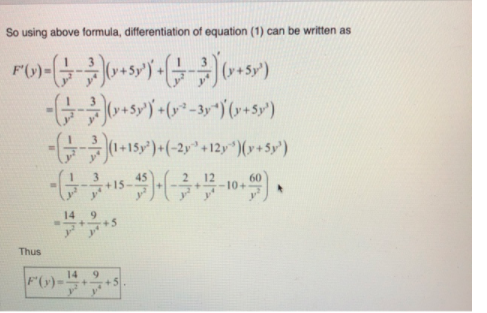
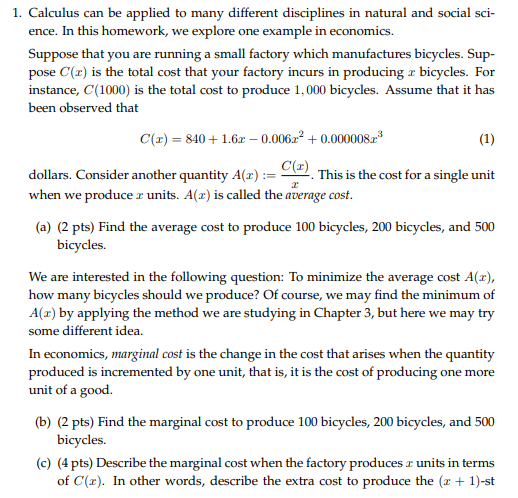
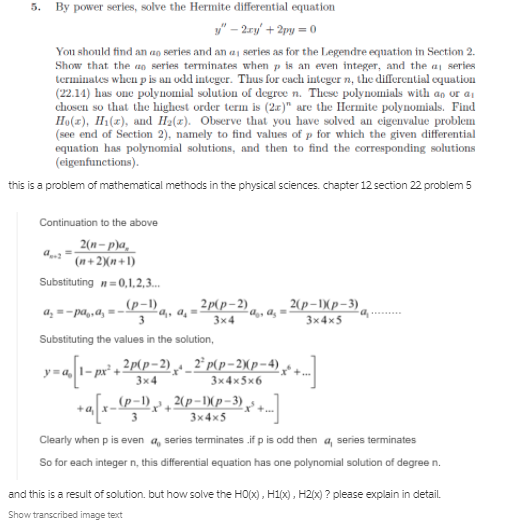
\fSo using above formula, differentiation of equation (1) can be written as F(y)= (1+5y)+(14 - 3y " ) (1+5y') (1+1547)+(-2y+12y")(1+5y') +15 -$3 )- (-3+13-10+60 ). 14 Thus 14 F() +51. Calculus can be applied to many different disciplines in natural and social sci- ence. In this homework, we explore one example in economics. Suppose that you are running a small factory which manufactures bicycles. Sup- pose C(r) is the total cost that your factory incurs in producing r bicycles. For instance, C(1000) is the total cost to produce 1, 000 bicycles. Assume that it has been observed that C(x) = 840 + 1.6r - 0.006x- + 0.000008r* (1) dollars. Consider another quantity A(x) := _ This is the cost for a single unit when we produce r units. A(x) is called the average cost. (a) (2 pts) Find the average cost to produce 100 bicycles, 200 bicycles, and 500 bicycles. We are interested in the following question: To minimize the average cost A(r), how many bicycles should we produce? Of course, we may find the minimum of A(r) by applying the method we are studying in Chapter 3, but here we may try some different idea. In economics, marginal cost is the change in the cost that arises when the quantity produced is incremented by one unit, that is, it is the cost of producing one more unit of a good. (b) (2 pts) Find the marginal cost to produce 100 bicycles, 200 bicycles, and 500 bicycles. (c) (4 pts) Describe the marginal cost when the factory produces a units in terms of C(x). In other words, describe the extra cost to produce the (c + 1)-st
Step by Step Solution
There are 3 Steps involved in it

Get step-by-step solutions from verified subject matter experts