



Question: Plot the results for r=0.2 and r=0.75 and solve the problem using the information and figure given. (20 pts) Consider the study of replica voting
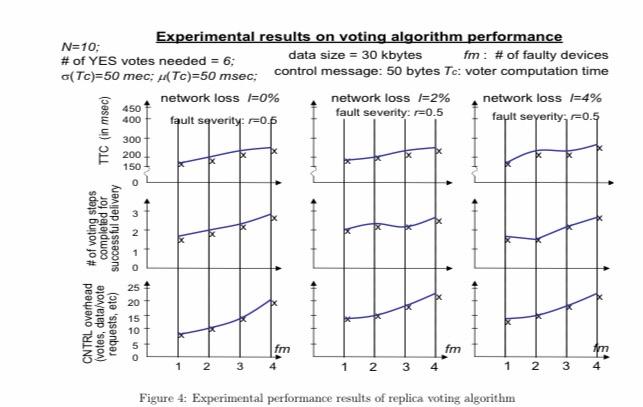
(20 pts) Consider the study of replica voting algorithm you had done as part of the first warm-up project. For an extended analysis, Figure 4 shows the key performance results of the voting algorithms. The performance parameters are the time to deliver a data to the end-user (TTC). the number of distinct data proposals before effecting a data delivery, and the control message overhead expended to deliver a data. One of the influential parameters is the fault severity of a mis-behaving voter: denoted as a parameter r, where r is the probability that a faulty device does in fact behave incorrectly. For e.g., r=0.1 means that a faulty device X behaves incorrectly only for 10% of the times X participates in the algorithm operations - which means that X behaves correctly for 90% of the times. The results are shown for a case of r=0.5. Empirically plot the results for two other cases: r=0.2 and r=0.75. Show the plots on top of the results given for r=0.5. N=10;Experimentalresultsonvotingalgorithmperformance#ofYESvotesneeded=6;datasize=30kbytesfm:#offaultydevices(Tc)=50mec;(Tc)=50msec;controlmessage:50bytesTc:votercomputationtime Figure 4: Experimental performance results of replica voting algorithm
Step by Step Solution
There are 3 Steps involved in it

Get step-by-step solutions from verified subject matter experts