







Question: Problem 2: Write a function with the following signature that takes a list L of numbers as argument and returns the largest sum of a
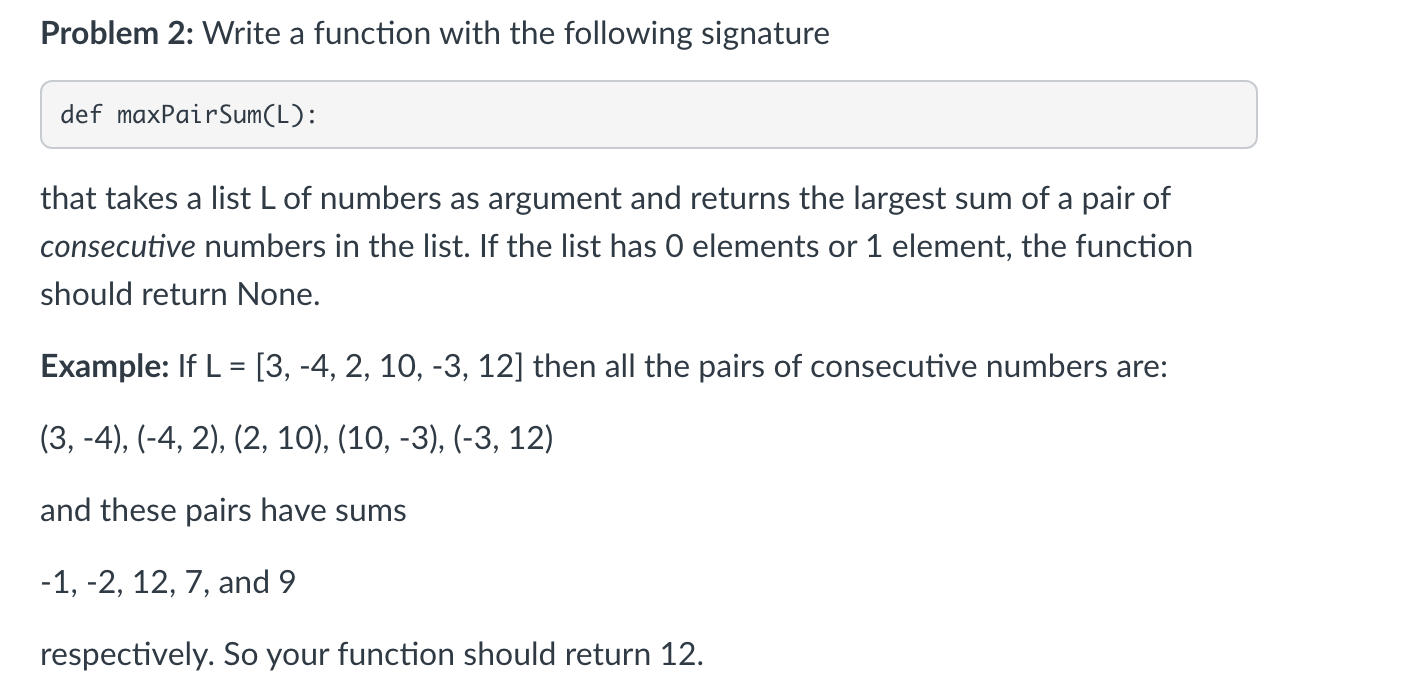
Problem 2: Write a function with the following signature that takes a list L of numbers as argument and returns the largest sum of a pair of consecutive numbers in the list. If the list has 0 elements or 1 element, the function should return None. Example: If L=[3,4,2,10,3,12] then all the pairs of consecutive numbers are: (3,4),(4,2),(2,10),(10,3),(3,12) and these pairs have sums 1,2,12,7, and 9 respectively. So your function should return 12
Step by Step Solution
There are 3 Steps involved in it
1 Expert Approved Answer
Step: 1 Unlock

Question Has Been Solved by an Expert!
Get step-by-step solutions from verified subject matter experts
Step: 2 Unlock
Step: 3 Unlock
 Study Help