







Question: Profit maximization and loss minimization 1. SHADE THE GRAPH (using the following information): BYOB is a monopolist in beer production and distribution in the imaginary


Profit maximization and loss minimization
1. SHADE THE GRAPH (using the following information):
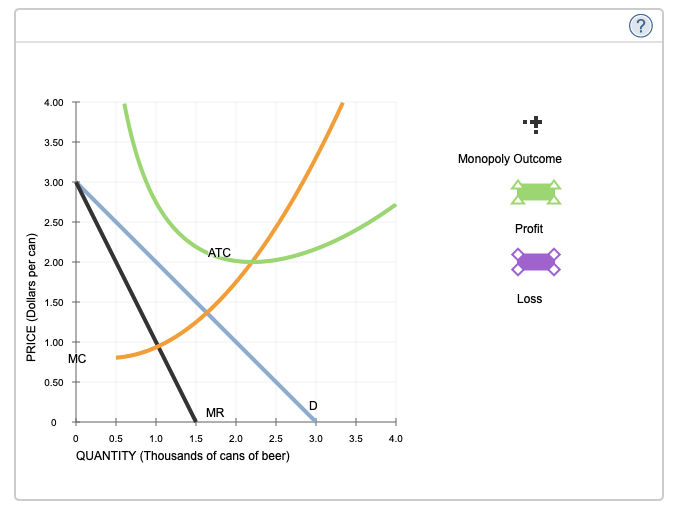
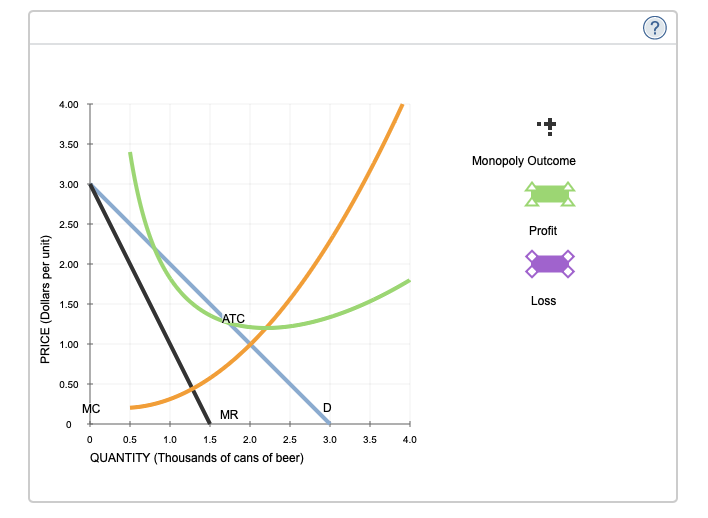
BYOB is a monopolist in beer production and distribution in the imaginary economy of Hopsville. Suppose that BYOB cannot price discriminate; that is, it sells its beer at the same price per can to all customers. The following graph shows the marginal cost (MC), marginal revenue (MR), average total cost (ATC), and demand (D) for beer in this market.
Place the black point (plus symbol) on the graph to indicate the profit-maximizing price and quantity for BYOB.
If BYOB is making a profit, use the green rectangle (triangle symbols) to shade in the area representing its profit.
On the other hand, if BYOB is suffering a loss, use the purple rectangle (diamond symbols) to shade in the area representing its loss.
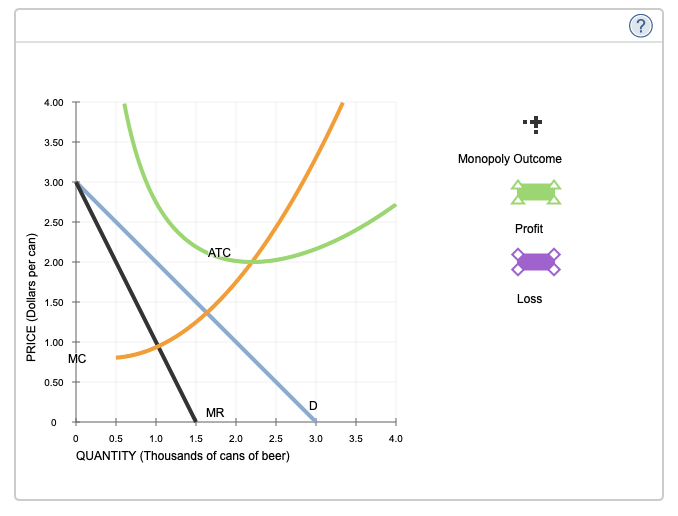

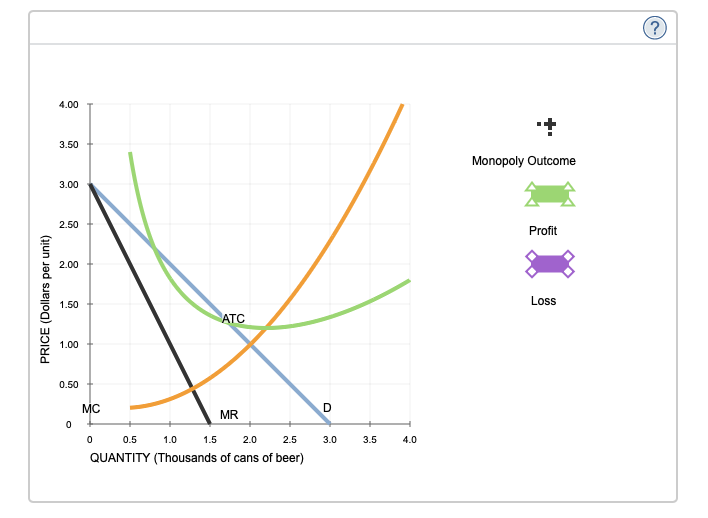

4.00 e . 3.50 Monopoly Outcome 300 Z3 Profit 220 - Loss PRICE (Dollars per can) g B 0.50 0 05 10 15 20 25 30 35 40 QUANTITY (Thousands of cans of beer) Given the earlier information, Musashi correct in his assertion that BYOB should charge $2.25 per can. is not is4.00 v H 3.50 Monopoly Outcome 3.00 =M Profit a - Loss PRICE (Dollars per unit) g B 0.50 0 05 10 45 20 25 30 35 40 QUANTITY (Thousands of cans of beer) Complete the following table to determine whether Musashi is correct. Price Quantity Demanded Total Revenue Total Cost Profit (Dollars per can) (Cans) (Dollars) (Dollars) (Dollars) 2.00 - v 2.25 v v
Step by Step Solution
There are 3 Steps involved in it

Get step-by-step solutions from verified subject matter experts
 Study Help