







Question: Python function Heat and Temperature In formula below physics illustrate the rotation between heat and temperature change: Q = m middot C middot Delta T
Python function
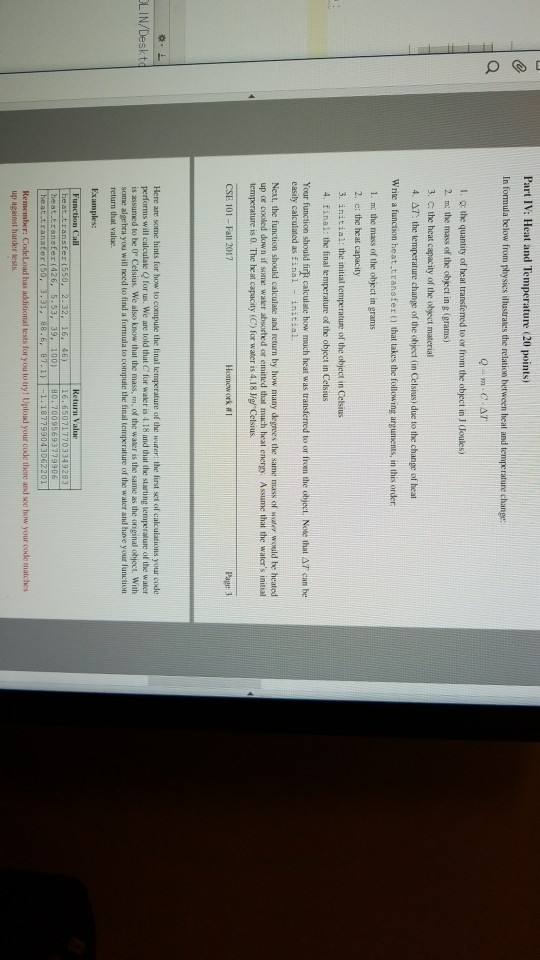
Heat and Temperature In formula below physics illustrate the rotation between heat and temperature change: Q = m middot C middot Delta T 1. Q: the quantity of heat transferred to or from the object in J (Joules) 2. m: the mass of the object in g (grams) 3. C: the heat capacity of the object material 4. Delta T: the temperature change of the object (in Celsius) due to the change of heat Write a function heat_transfer() that take the following arguments, in this order: 1. m: the mass of the object in grams 2. c: the heat capacity 3. initial: the initial temperature of the object in Celsius 4. final: the final temperature of the object in Celsius Your function should first calculate how much heat was transferred to or from the object. Note that Delta T can be easily calculated as final - initial. Next, the function should calculate and return by how many degrees the same mass of water would he heated up or cooled down if some water absorbed or emitted that much heat energy. Assume that the water's initial temperature is 0. The heat capacity (C) for water is 4.18 J/g/degree Celsius. Here are some hints for how to compute the final temperature of the water: the first set of calculations your code performs will calculate Q for us. We are told that C for water is 4.18 and that the starting temperature of the water is assumed to be 0 degree Celsius. We also know that the mass, m, of the water is the same as the original object. With some algebra you will need to find a formula to compute the final temperature of the water and have your function return that value
Step by Step Solution
There are 3 Steps involved in it

Get step-by-step solutions from verified subject matter experts
 Study Help