







Question: PYTHON QUESTION 3. So far we have assumed all input to our programs is correct. In practice, however, programs must do extensive error checking. Here
PYTHON QUESTION
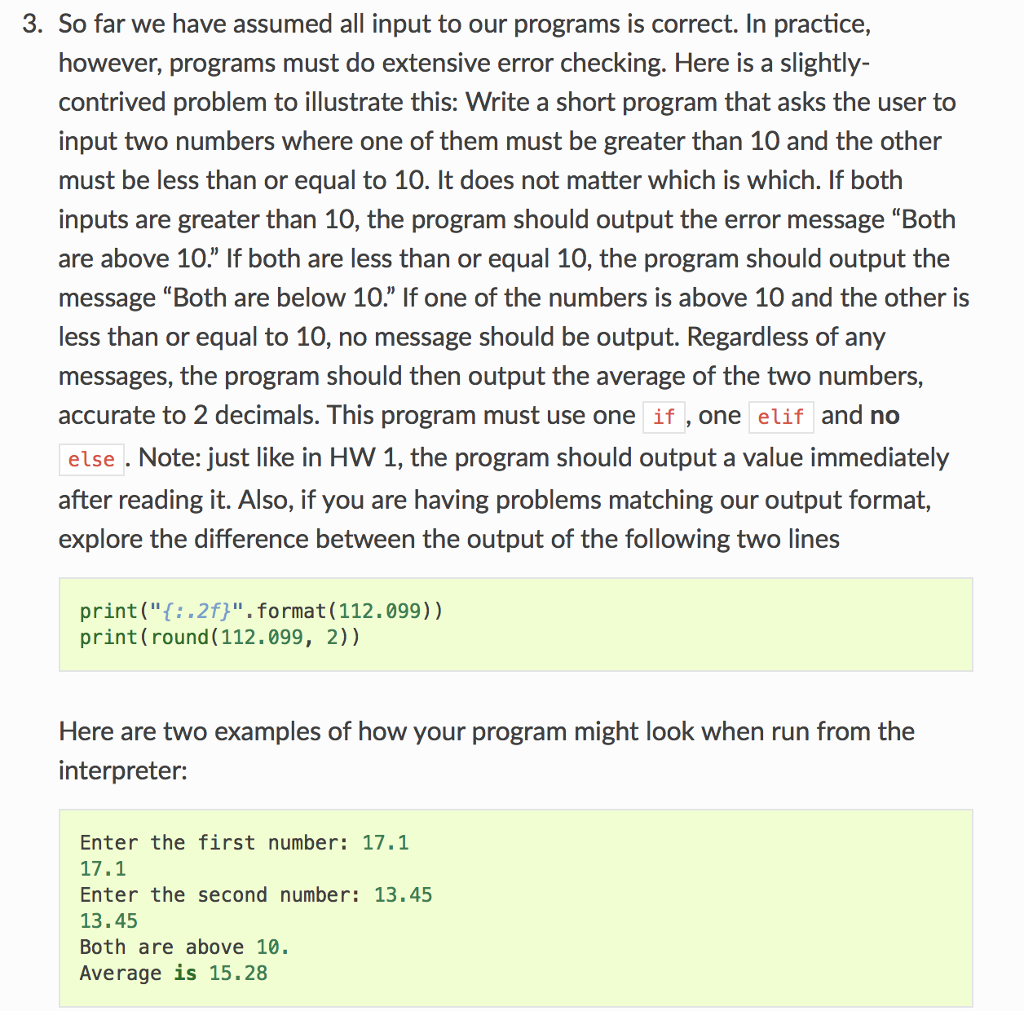
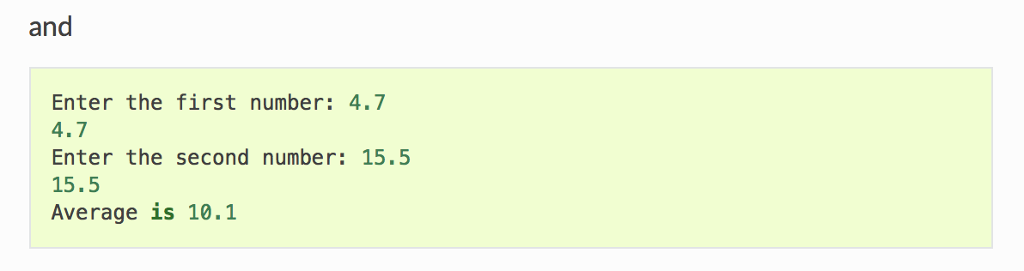
3. So far we have assumed all input to our programs is correct. In practice, however, programs must do extensive error checking. Here is a slightly- contrived problem to illustrate this: Write a short program that asks the user to input two numbers where one of them must be greater than 10 and the other must be less than or equal to 10. It does not matter which is which. If both inputs are greater than 10, the program should output the error message "Both are above 10." If both are less than or equal 10, the program should output the message "Both are below 10. If one of the numbers is above 10 and the other is less than or equal to 10, no message should be output. Regardless of any messages, the program should then output the average of the two numbers, accurate to 2 decimals. This program must use one if , one elif and no else . Note: just like in HW 1, the program should output a value immediately after reading it. Also, if you are having problems matching our output format, explore the difference between the output of the following two lines print(":.2f)".format (112.099)) print (round (112.099, 2)) Here are two examples of how your program might look when run from the interpreter: Enter the first number: 17.1 17.1 Enter the second number: 13.45 13.45 Both are above 10. Average is 15.28
Step by Step Solution
There are 3 Steps involved in it

Get step-by-step solutions from verified subject matter experts
 Study Help