







Question: Qualitative Annotated Bibliography For this assignment, you will undertake a review of different types of qualitative literature. Write a bibiolograhy on the article below. Use
Qualitative Annotated Bibliography
For this assignment, you will undertake a review of different types of qualitative literature. Write a bibiolograhy on the article below. Use each of the following research methods
Case Study
Ethnography
Phenomenological
Grounded Theory
Content Analysis
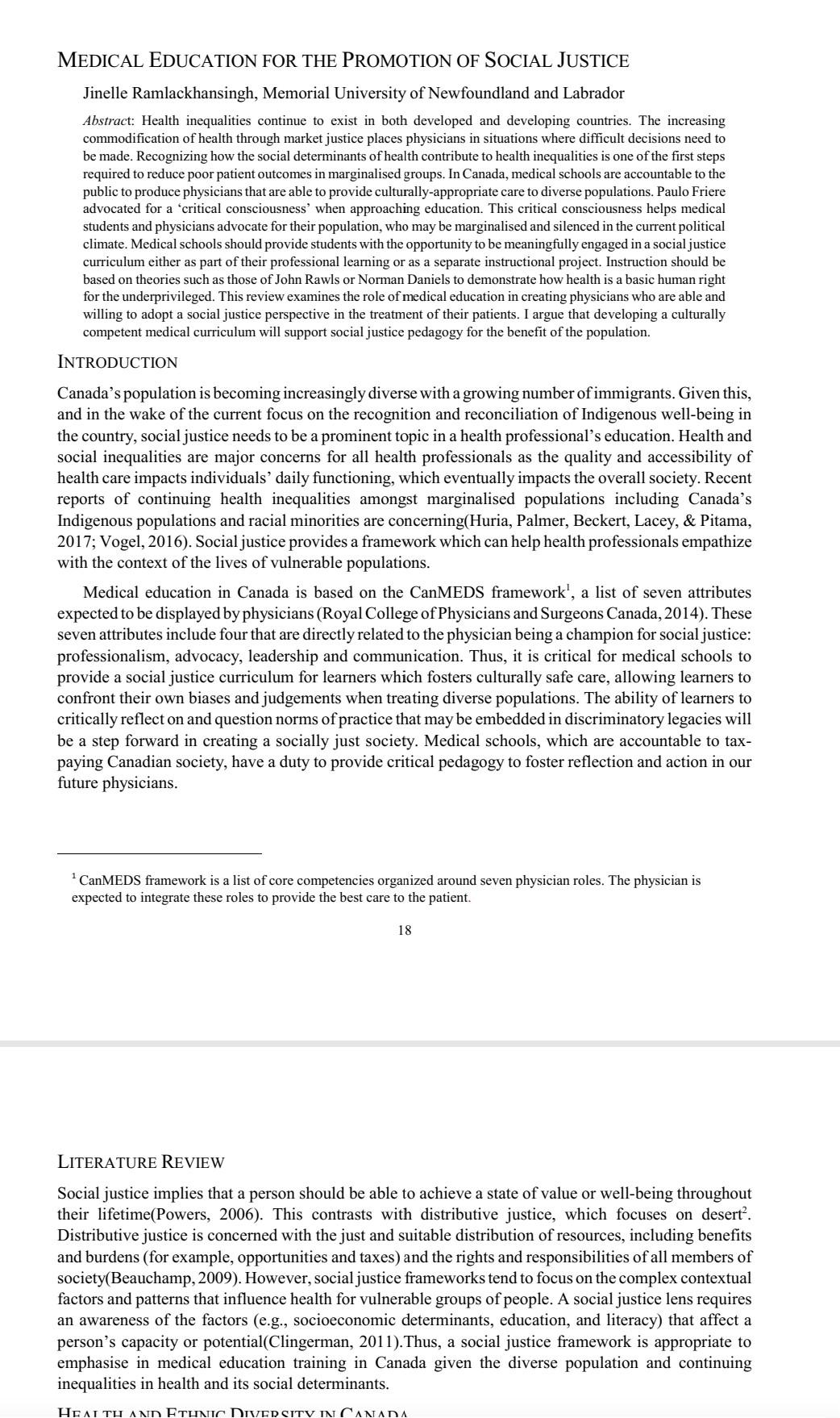
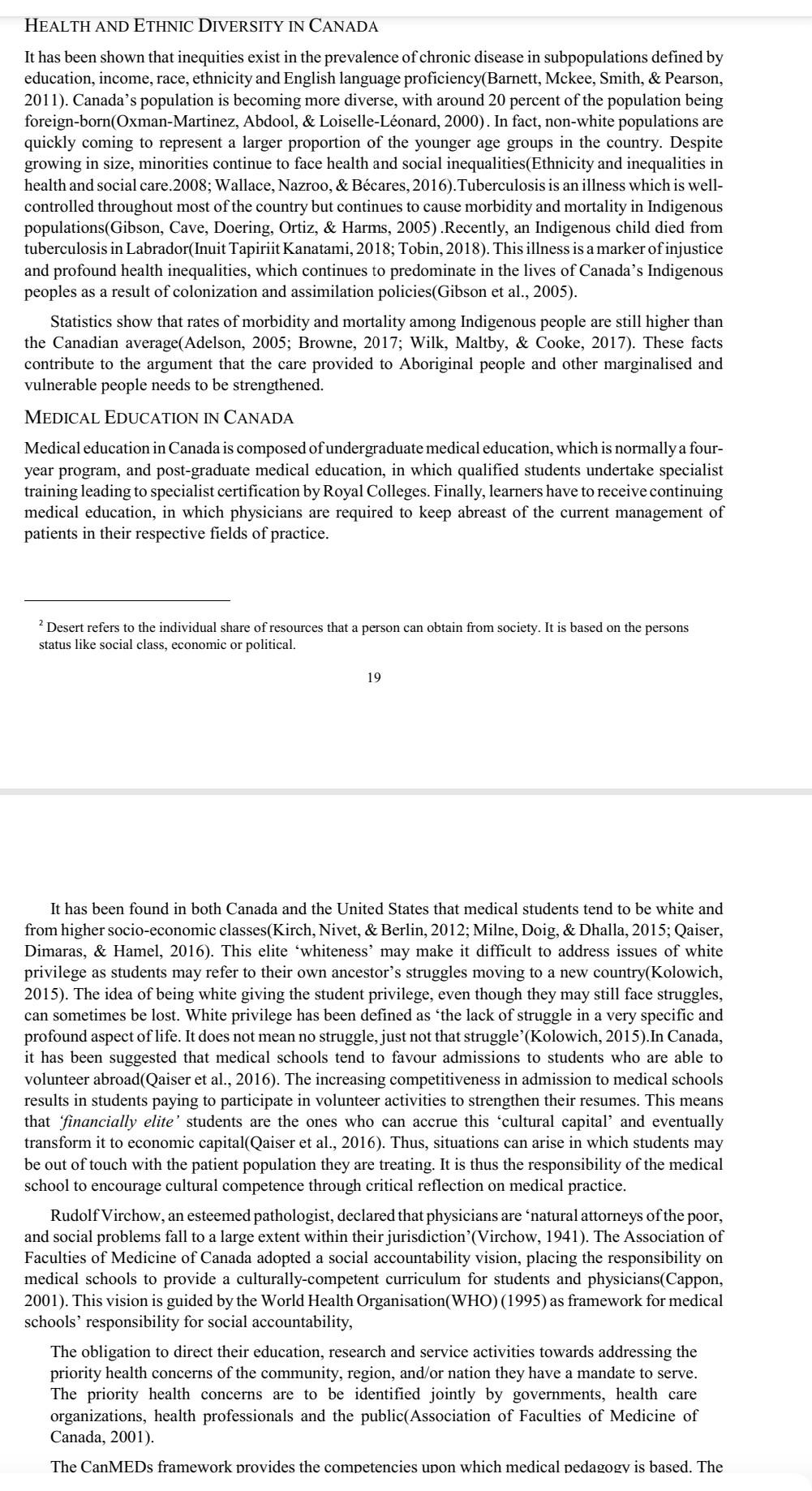
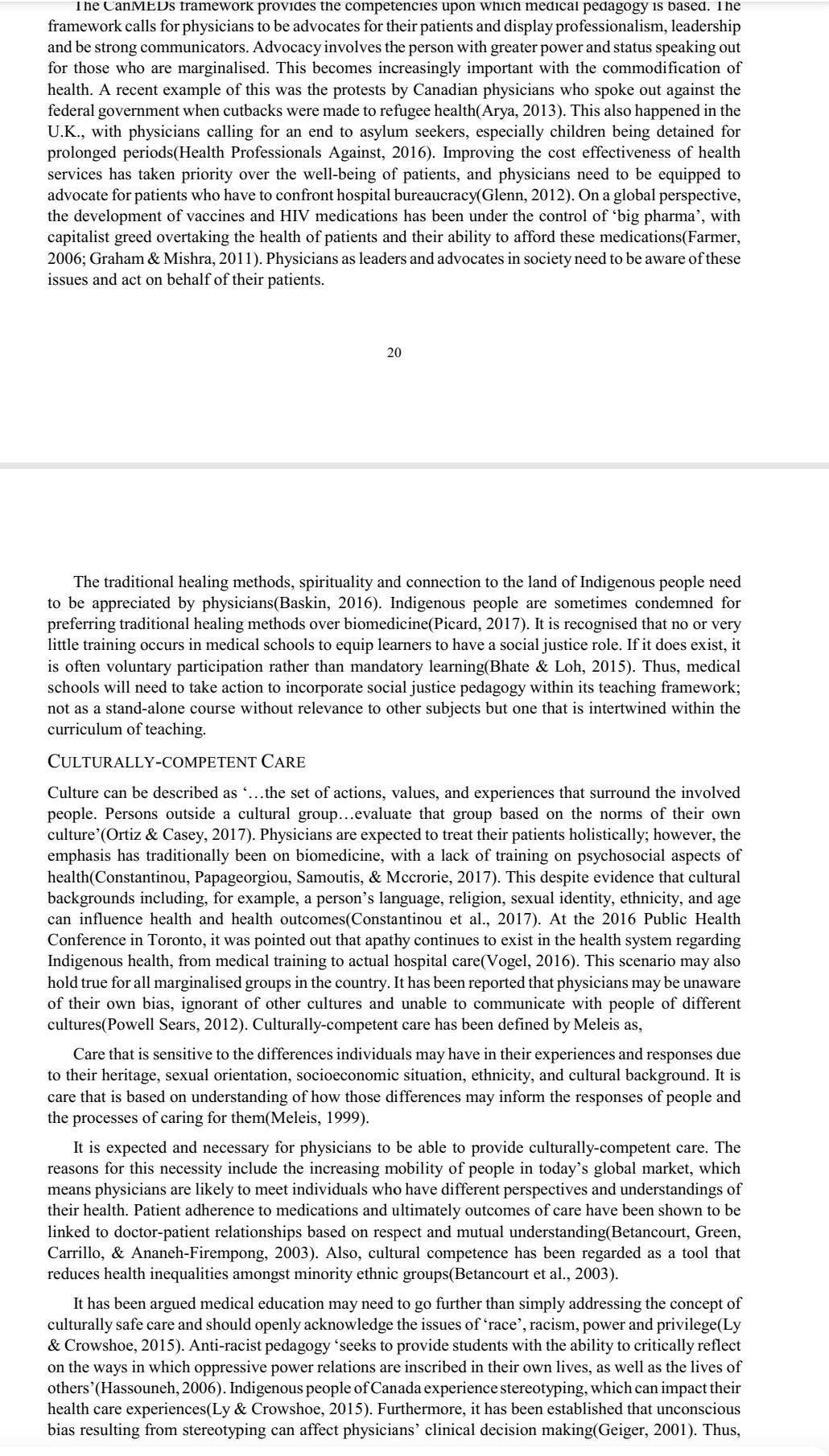
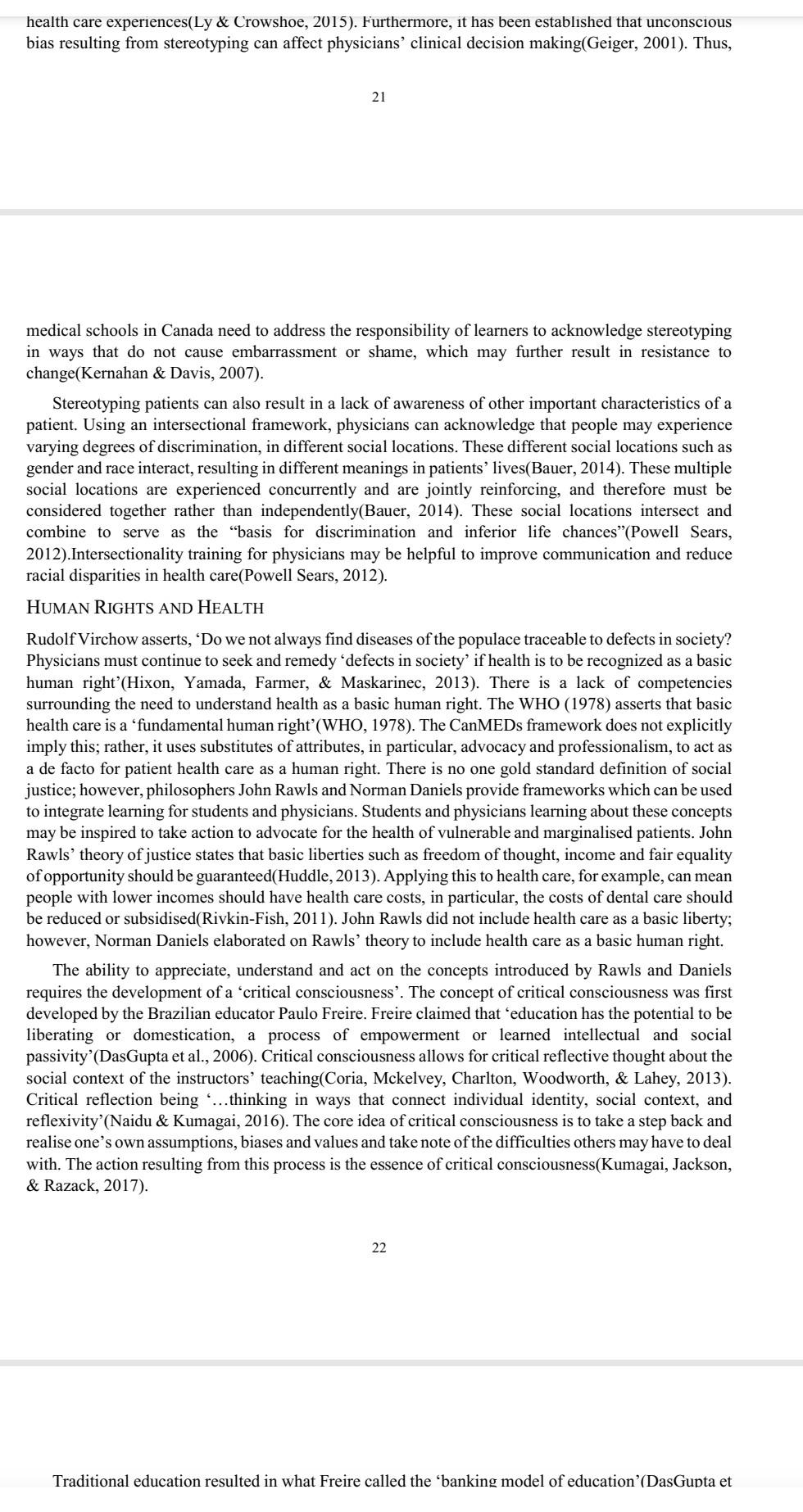
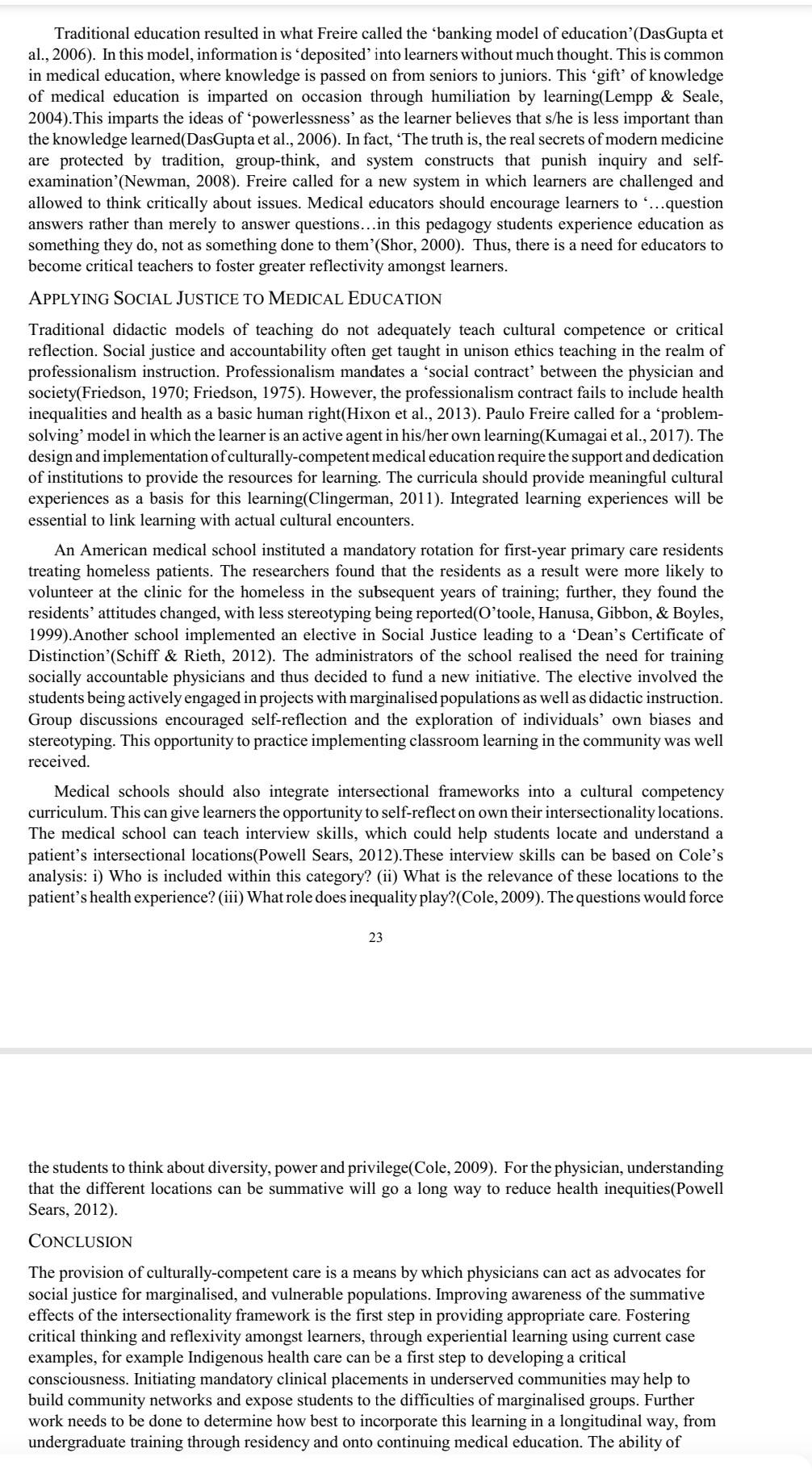
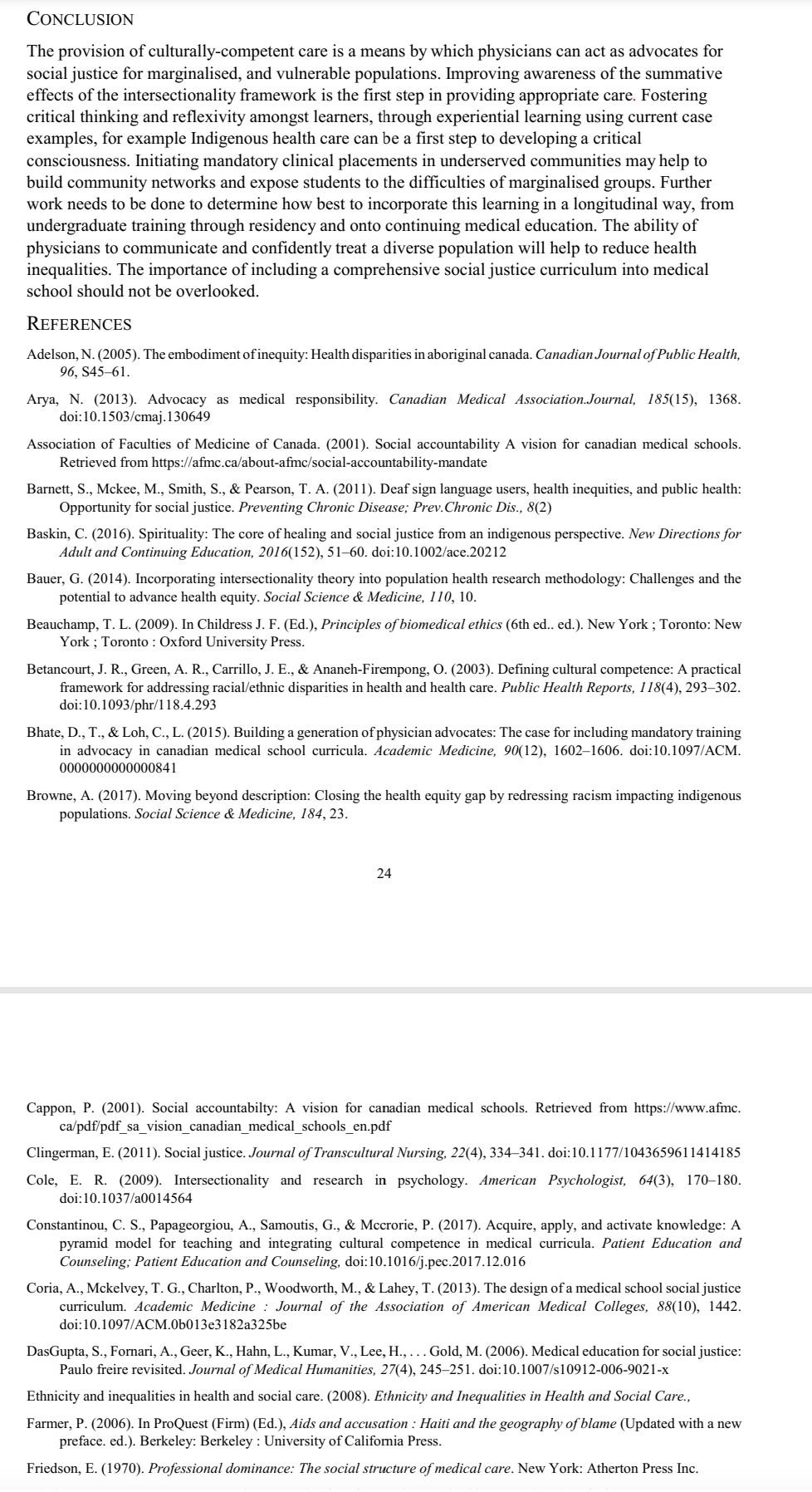
Medical EduCAtion for the Promotion of Social Justice Jinelle Ramlackhansingh, Memorial University of Newfoundland and Labrador Abstract: Health inequalities continue to exist in both developed and developing countries. The increasing commodification of health through market justice places physicians in situations where difficult decisions need to be made. Recognizing how the social determinants of health contribute to health inequalities is one of the first steps required to reduce poor patient outcomes in marginalised groups. In Canada, medical schools are accountable to the public to produce physicians that are able to provide culturally-appropriate care to diverse populations. Paulo Friere advocated for a 'critical consciousness' when approaching education. This critical consciousness helps medical students and physicians advocate for their population, who may be marginalised and silenced in the current political climate. Medical schools should provide students with the opportunity to be meaningfully engaged in a social justice curriculum either as part of their professional learning or as a separate instructional project. Instruction should be based on theories such as those of John Rawls or Norman Daniels to demonstrate how health is a basic human right for the underprivileged. This review examines the role of medical education in creating physicians who are able and willing to adopt a social justice perspective in the treatment of their patients. I argue that developing a culturally competent medical curriculum will support social justice pedagogy for the benefit of the population. INTRODUCTION Canada's population is becoming increasingly diverse with a growing number of immigrants. Given this, and in the wake of the current focus on the recognition and reconciliation of Indigenous well-being in the country, social justice needs to be a prominent topic in a health professional's education. Health and social inequalities are major concerns for all health professionals as the quality and accessibility of health care impacts individuals' daily functioning, which eventually impacts the overall society. Recent reports of continuing health inequalities amongst marginalised populations including Canada's Indigenous populations and racial minorities are concerning(Huria, Palmer, Beckert, Lacey, \& Pitama, 2017; Vogel, 2016). Social justice provides a framework which can help health professionals empathize with the context of the lives of vulnerable populations. Medical education in Canada is based on the CanMEDS framework 1, a list of seven attributes expected to be displayed by physicians (Royal College of Physicians and Surgeons Canada, 2014). These seven attributes include four that are directly related to the physician being a champion for social justice: professionalism, advocacy, leadership and communication. Thus, it is critical for medical schools to provide a social justice curriculum for learners which fosters culturally safe care, allowing learners to confront their own biases and judgements when treating diverse populations. The ability of learners to critically reflect on and question norms of practice that may be embedded in discriminatory legacies will be a step forward in creating a socially just society. Medical schools, which are accountable to taxpaying Canadian society, have a duty to provide critical pedagogy to foster reflection and action in our future physicians. 1 CanMEDS framework is a list of core competencies organized around seven physician roles. The physician is expected to integrate these roles to provide the best care to the patient. 18 LITERATURE REVIEW Social justice implies that a person should be able to achieve a state of value or well-being throughout their lifetime(Powers, 2006). This contrasts with distributive justice, which focuses on desert 2. Distributive justice is concerned with the just and suitable distribution of resources, including benefits and burdens (for example, opportunities and taxes) and the rights and responsibilities of all members of society(Beauchamp, 2009). However, social justice frameworks tend to focus on the complex contextual factors and patterns that influence health for vulnerable groups of people. A social justice lens requires an awareness of the factors (e.g., socioeconomic determinants, education, and literacy) that affect a person's capacity or potential(Clingerman, 2011). Thus, a social justice framework is appropriate to emphasise in medical education training in Canada given the diverse population and continuing inequalities in health and its social determinants. HEALTH AND ETHNIC DIVERSITY IN CANADA It has been shown that inequities exist in the prevalence of chronic disease in subpopulations defined by education, income, race, ethnicity and English language proficiency(Barnett, Mckee, Smith, \& Pearson, 2011). Canada's population is becoming more diverse, with around 20 percent of the population being foreign-born(Oxman-Martinez, Abdool, \& Loiselle-Lonard, 2000). In fact, non-white populations are quickly coming to represent a larger proportion of the younger age groups in the country. Despite growing in size, minorities continue to face health and social inequalities(Ethnicity and inequalities in health and social care.2008; Wallace, Nazroo, \& Bcares, 2016). Tuberculosis is an illness which is wellcontrolled throughout most of the country but continues to cause morbidity and mortality in Indigenous populations(Gibson, Cave, Doering, Ortiz, \& Harms, 2005) .Recently, an Indigenous child died from tuberculosis in Labrador(Inuit Tapiriit Kanatami, 2018; Tobin, 2018). This illness is a marker of injustice and profound health inequalities, which continues to predominate in the lives of Canada's Indigenous peoples as a result of colonization and assimilation policies(Gibson et al., 2005). Statistics show that rates of morbidity and mortality among Indigenous people are still higher than the Canadian average(Adelson, 2005; Browne, 2017; Wilk, Maltby, \& Cooke, 2017). These facts contribute to the argument that the care provided to Aboriginal people and other marginalised and vulnerable people needs to be strengthened. Medical Education in CANada Medical education in Canada is composed of undergraduate medical education, which is normally a fouryear program, and post-graduate medical education, in which qualified students undertake specialist training leading to specialist certification by Royal Colleges. Finally, learners have to receive continuing medical education, in which physicians are required to keep abreast of the current management of patients in their respective fields of practice. 2 Desert refers to the individual share of resources that a person can obtain from society. It is based on the persons status like social class, economic or political. 19 It has been found in both Canada and the United States that medical students tend to be white and from higher socio-economic classes(Kirch, Nivet, \& Berlin, 2012; Milne, Doig, \& Dhalla, 2015; Qaiser, Dimaras, \& Hamel, 2016). This elite 'whiteness' may make it difficult to address issues of white privilege as students may refer to their own ancestor's struggles moving to a new country(Kolowich, 2015). The idea of being white giving the student privilege, even though they may still face struggles, can sometimes be lost. White privilege has been defined as 'the lack of struggle in a very specific and profound aspect of life. It does not mean no struggle, just not that struggle'(Kolowich, 2015).In Canada, it has been suggested that medical schools tend to favour admissions to students who are able to volunteer abroad(Qaiser et al., 2016). The increasing competitiveness in admission to medical schools results in students paying to participate in volunteer activities to strengthen their resumes. This means that 'financially elite' students are the ones who can accrue this 'cultural capital' and eventually transform it to economic capital(Qaiser et al., 2016). Thus, situations can arise in which students may be out of touch with the patient population they are treating. It is thus the responsibility of the medical school to encourage cultural competence through critical reflection on medical practice. Rudolf Virchow, an esteemed pathologist, declared that physicians are 'natural attorneys of the poor, and social problems fall to a large extent within their jurisdiction'(Virchow, 1941). The Association of Faculties of Medicine of Canada adopted a social accountability vision, placing the responsibility on medical schools to provide a culturally-competent curriculum for students and physicians(Cappon, 2001). This vision is guided by the World Health Organisation(WHO) (1995) as framework for medical schools' responsibility for social accountability, The obligation to direct their education, research and service activities towards addressing the priority health concerns of the community, region, and/or nation they have a mandate to serve. The priority health concerns are to be identified jointly by governments, health care organizations, health professionals and the public(Association of Faculties of Medicine of Canada, 2001). The CanMEDs framework provides the competencies upon which medical pedagogy is based. The I he CanMEUs iramework provides the competencies upon which medical pedagogy is based. Ine framework calls for physicians to be advocates for their patients and display professionalism, leadership and be strong communicators. Advocacy involves the person with greater power and status speaking out for those who are marginalised. This becomes increasingly important with the commodification of health. A recent example of this was the protests by Canadian physicians who spoke out against the federal government when cutbacks were made to refugee health(Arya, 2013). This also happened in the U.K., with physicians calling for an end to asylum seekers, especially children being detained for prolonged periods(Health Professionals Against, 2016). Improving the cost effectiveness of health services has taken priority over the well-being of patients, and physicians need to be equipped to advocate for patients who have to confront hospital bureaucracy(Glenn, 2012). On a global perspective, the development of vaccines and HIV medications has been under the control of 'big pharma', with capitalist greed overtaking the health of patients and their ability to afford these medications(Farmer, 2006; Graham \& Mishra, 2011). Physicians as leaders and advocates in society need to be aware of these issues and act on behalf of their patients. The traditional healing methods, spirituality and connection to the land of Indigenous people need to be appreciated by physicians(Baskin, 2016). Indigenous people are sometimes condemned for preferring traditional healing methods over biomedicine(Picard, 2017). It is recognised that no or very little training occurs in medical schools to equip learners to have a social justice role. If it does exist, it is often voluntary participation rather than mandatory learning(Bhate \& Loh, 2015). Thus, medical schools will need to take action to incorporate social justice pedagogy within its teaching framework; not as a stand-alone course without relevance to other subjects but one that is intertwined within the curriculum of teaching. CULtURALlY-COMPETENT CARE Culture can be described as '...the set of actions, values, and experiences that surround the involved people. Persons outside a cultural group...evaluate that group based on the norms of their own culture'(Ortiz \& Casey, 2017). Physicians are expected to treat their patients holistically; however, the emphasis has traditionally been on biomedicine, with a lack of training on psychosocial aspects of health(Constantinou, Papageorgiou, Samoutis, \& Mccrorie, 2017). This despite evidence that cultural backgrounds including, for example, a person's language, religion, sexual identity, ethnicity, and age can influence health and health outcomes(Constantinou et al., 2017). At the 2016 Public Health Conference in Toronto, it was pointed out that apathy continues to exist in the health system regarding Indigenous health, from medical training to actual hospital care(Vogel, 2016). This scenario may also hold true for all marginalised groups in the country. It has been reported that physicians may be unaware of their own bias, ignorant of other cultures and unable to communicate with people of different cultures(Powell Sears, 2012). Culturally-competent care has been defined by Meleis as, Care that is sensitive to the differences individuals may have in their experiences and responses due to their heritage, sexual orientation, socioeconomic situation, ethnicity, and cultural background. It is care that is based on understanding of how those differences may inform the responses of people and the processes of caring for them(Meleis, 1999). It is expected and necessary for physicians to be able to provide culturally-competent care. The reasons for this necessity include the increasing mobility of people in today's global market, which means physicians are likely to meet individuals who have different perspectives and understandings of their health. Patient adherence to medications and ultimately outcomes of care have been shown to be linked to doctor-patient relationships based on respect and mutual understanding(Betancourt, Green, Carrillo, \& Ananeh-Firempong, 2003). Also, cultural competence has been regarded as a tool that reduces health inequalities amongst minority ethnic groups(Betancourt et al., 2003). It has been argued medical education may need to go further than simply addressing the concept of culturally safe care and should openly acknowledge the issues of 'race', racism, power and privilege(Ly \& Crowshoe, 2015). Anti-racist pedagogy 'seeks to provide students with the ability to critically reflect on the ways in which oppressive power relations are inscribed in their own lives, as well as the lives of others'(Hassouneh, 2006). Indigenous people of Canada experience stereotyping, which can impact their health care experiences(Ly \& Crowshoe, 2015). Furthermore, it has been established that unconscious health care experiences( Ly \& Crowshoe, 2015). Furthermore, it has been established that unconscious bias resulting from stereotyping can affect physicians' clinical decision making(Geiger, 2001). Thus, 21 medical schools in Canada need to address the responsibility of learners to acknowledge stereotyping in ways that do not cause embarrassment or shame, which may further result in resistance to change(Kernahan \& Davis, 2007). Stereotyping patients can also result in a lack of awareness of other important characteristics of a patient. Using an intersectional framework, physicians can acknowledge that people may experience varying degrees of discrimination, in different social locations. These different social locations such as gender and race interact, resulting in different meanings in patients' lives(Bauer, 2014). These multiple social locations are experienced concurrently and are jointly reinforcing, and therefore must be considered together rather than independently(Bauer, 2014). These social locations intersect and combine to serve as the "basis for discrimination and inferior life chances"(Powell Sears, 2012).Intersectionality training for physicians may be helpful to improve communication and reduce racial disparities in health care(Powell Sears, 2012). HUMAN RIGHTS AND HEALTH Rudolf Virchow asserts, 'Do we not always find diseases of the populace traceable to defects in society? Physicians must continue to seek and remedy 'defects in society' if health is to be recognized as a basic human right'(Hixon, Yamada, Farmer, \& Maskarinec, 2013). There is a lack of competencies surrounding the need to understand health as a basic human right. The WHO (1978) asserts that basic health care is a 'fundamental human right'(WHO, 1978). The CanMEDs framework does not explicitly imply this; rather, it uses substitutes of attributes, in particular, advocacy and professionalism, to act as a de facto for patient health care as a human right. There is no one gold standard definition of social justice; however, philosophers John Rawls and Norman Daniels provide frameworks which can be used to integrate learning for students and physicians. Students and physicians learning about these concepts may be inspired to take action to advocate for the health of vulnerable and marginalised patients. John Rawls' theory of justice states that basic liberties such as freedom of thought, income and fair equality of opportunity should be guaranteed(Huddle, 2013). Applying this to health care, for example, can mean people with lower incomes should have health care costs, in particular, the costs of dental care should be reduced or subsidised(Rivkin-Fish, 2011). John Rawls did not include health care as a basic liberty; however, Norman Daniels elaborated on Rawls' theory to include health care as a basic human right. The ability to appreciate, understand and act on the concepts introduced by Rawls and Daniels requires the development of a 'critical consciousness'. The concept of critical consciousness was first developed by the Brazilian educator Paulo Freire. Freire claimed that 'education has the potential to be liberating or domestication, a process of empowerment or learned intellectual and social passivity'(DasGupta et al., 2006). Critical consciousness allows for critical reflective thought about the social context of the instructors' teaching(Coria, Mckelvey, Charlton, Woodworth, \& Lahey, 2013). Critical reflection being '...thinking in ways that connect individual identity, social context, and reflexivity'(Naidu \& Kumagai, 2016). The core idea of critical consciousness is to take a step back and realise one's own assumptions, biases and values and take note of the difficulties others may have to deal with. The action resulting from this process is the essence of critical consciousness(Kumagai, Jackson, & Razack, 2017). 22 Traditional education resulted in what Freire called the 'banking model of education'(DasGupta et Traditional education resulted in what Freire called the 'banking model of education'(DasGupta et al., 2006). In this model, information is 'deposited' into learners without much thought. This is common in medical education, where knowledge is passed on from seniors to juniors. This 'gift' of knowledge of medical education is imparted on occasion through humiliation by learning(Lempp \& Seale, 2004).This imparts the ideas of 'powerlessness' as the learner believes that s/ he is less important than the knowledge learned(DasGupta et al., 2006). In fact, 'The truth is, the real secrets of modern medicine are protected by tradition, group-think, and system constructs that punish inquiry and selfexamination'(Newman, 2008). Freire called for a new system in which learners are challenged and allowed to think critically about issues. Medical educators should encourage learners to '...question answers rather than merely to answer questions...in this pedagogy students experience education as something they do, not as something done to them'(Shor, 2000). Thus, there is a need for educators to become critical teachers to foster greater reflectivity amongst learners. APPLYing SoCIAl JustiCE TO MEDICAL EDUCATION Traditional didactic models of teaching do not adequately teach cultural competence or critical reflection. Social justice and accountability often get taught in unison ethics teaching in the realm of professionalism instruction. Professionalism mandates a 'social contract' between the physician and society(Friedson, 1970; Friedson, 1975). However, the professionalism contract fails to include health inequalities and health as a basic human right(Hixon et al., 2013). Paulo Freire called for a 'problemsolving' model in which the learner is an active agent in his/her own learning(Kumagai et al., 2017). The design and implementation of culturally-competent medical education require the support and dedication of institutions to provide the resources for learning. The curricula should provide meaningful cultural experiences as a basis for this learning(Clingerman, 2011). Integrated learning experiences will be essential to link learning with actual cultural encounters. An American medical school instituted a mandatory rotation for first-year primary care residents treating homeless patients. The researchers found that the residents as a result were more likely to volunteer at the clinic for the homeless in the subsequent years of training; further, they found the residents' attitudes changed, with less stereotyping being reported(O'toole, Hanusa, Gibbon, \& Boyles, 1999).Another school implemented an elective in Social Justice leading to a 'Dean's Certificate of Distinction'(Schiff \& Rieth, 2012). The administrators of the school realised the need for training socially accountable physicians and thus decided to fund a new initiative. The elective involved the students being actively engaged in projects with marginalised populations as well as didactic instruction. Group discussions encouraged self-reflection and the exploration of individuals' own biases and stereotyping. This opportunity to practice implementing classroom learning in the community was well received. Medical schools should also integrate intersectional frameworks into a cultural competency curriculum. This can give learners the opportunity to self-reflect on own their intersectionality locations. The medical school can teach interview skills, which could help students locate and understand a patient's intersectional locations(Powell Sears, 2012). These interview skills can be based on Cole's analysis: i) Who is included within this category? (ii) What is the relevance of these locations to the patient's health experience? (iii) What role does inequality play?(Cole, 2009). The questions would force 23 the students to think about diversity, power and privilege(Cole, 2009). For the physician, understanding that the different locations can be summative will go a long way to reduce health inequities(Powell Sears, 2012). CONCLUSION The provision of culturally-competent care is a means by which physicians can act as advocates for social justice for marginalised, and vulnerable populations. Improving awareness of the summative effects of the intersectionality framework is the first step in providing appropriate care. Fostering critical thinking and reflexivity amongst learners, through experiential learning using current case examples, for example Indigenous health care can be a first step to developing a critical consciousness. Initiating mandatory clinical placements in underserved communities may help to build community networks and expose students to the difficulties of marginalised groups. Further work needs to be done to determine how best to incorporate this learning in a longitudinal way, from undergraduate training through residency and onto continuing medical education. The ability of CONCLUSION The provision of culturally-competent care is a means by which physicians can act as advocates for social justice for marginalised, and vulnerable populations. Improving awareness of the summative effects of the intersectionality framework is the first step in providing appropriate care. Fostering critical thinking and reflexivity amongst learners, through experiential learning using current case examples, for example Indigenous health care can be a first step to developing a critical consciousness. Initiating mandatory clinical placements in underserved communities may help to build community networks and expose students to the difficulties of marginalised groups. Further work needs to be done to determine how best to incorporate this learning in a longitudinal way, from undergraduate training through residency and onto continuing medical education. The ability of physicians to communicate and confidently treat a diverse population will help to reduce health inequalities. The importance of including a comprehensive social justice curriculum into medical school should not be overlooked. REFERENCES Adelson, N. (2005). The embodiment of inequity: Health disparities in aboriginal canada. Canadian Journal of Public Health, 96, S45-61. Arya, N. (2013). Advocacy as medical responsibility. Canadian Medical Association.Journal, 185(15), 1368. doi:10.1503/cmaj. 130649 Association of Faculties of Medicine of Canada. (2001). Social accountability A vision for canadian medical schools. Retrieved from https://afmc.ca/about-afmc/social-accountability-mandate Barnett, S., Mckee, M., Smith, S., \& Pearson, T. A. (2011). Deaf sign language users, health inequities, and public health: Opportunity for social justice. Preventing Chronic Disease; Prev.Chronic Dis., 8(2) Baskin, C. (2016). Spirituality: The core of healing and social justice from an indigenous perspective. New Directions for Adult and Continuing Education, 2016(152), 51-60. doi:10.1002/ace.20212 Bauer, G. (2014). Incorporating intersectionality theory into population health research methodology: Challenges and the potential to advance health equity. Social Science \& Medicine, 110,10. Beauchamp, T. L. (2009). In Childress J. F. (Ed.), Principles of biomedical ethics (6th ed.. ed.). New York ; Toronto: New York ; Toronto : Oxford University Press. Betancourt, J. R., Green, A. R., Carrillo, J. E., \& Ananeh-Firempong, O. (2003). Defining cultural competence: A practical framework for addressing racial/ethnic disparities in health and health care. Public Health Reports, 118(4), 293-302. doi:10.1093/phr/118.4.293 Bhate, D., T., \& Loh, C., L. (2015). Building a generation of physician advocates: The case for including mandatory training in advocacy in canadian medical school curricula. Academic Medicine, 90(12), 1602-1606. doi:10.1097/ACM. 0000000000000841 Browne, A. (2017). Moving beyond description: Closing the health equity gap by redressing racism impacting indigenous populations. Social Science \& Medicine, 184, 23. 24 Cappon, P. (2001). Social accountabilty: A vision for canadian medical schools. Retrieved from https://www.afmc. ca/pdf/pdf_sa_vision_canadian_medical_schools_en.pdf Clingerman, E. (2011). Social justice. Journal of Transcultural Nursing, 22(4), 334-341. doi:10.1177/1043659611414185 Cole, E. R. (2009). Intersectionality and research in psychology. American Psychologist, 64(3), 170-180. doi:10.1037/a0014564 Constantinou, C. S., Papageorgiou, A., Samoutis, G., \& Mccrorie, P. (2017). Acquire, apply, and activate knowledge: A pyramid model for teaching and integrating cultural competence in medical curricula. Patient Education and Counseling; Patient Education and Counseling, doi:10.1016/j.pec.2017.12.016 Coria, A., Mckelvey, T. G., Charlton, P., Woodworth, M., \& Lahey, T. (2013). The design of a medical school social justice curriculum. Academic Medicine : Journal of the Association of American Medical Colleges, 88(10), 1442. doi:10.1097/ACM.0b013e3182a325be DasGupta, S., Fornari, A., Geer, K., Hahn, L., Kumar, V., Lee, H., .. Gold, M. (2006). Medical education for social justice: Paulo freire revisited. Journal of Medical Humanities, 27(4), 245-251. doi:10.1007/s10912-006-9021-x Ethnicity and inequalities in health and social care. (2008). Ethnicity and Inequalities in Health and Social Care., Farmer, P. (2006). In ProQuest (Firm) (Ed.), Aids and accusation : Haiti and the geography of blame (Updated with a new preface. ed.). Berkeley: Berkeley : University of California Press. Friedson, E. (1970). Professional dominance: The social structure of medical care. New York: Atherton Press Inc
Step by Step Solution
There are 3 Steps involved in it

Get step-by-step solutions from verified subject matter experts
 Study Help