







Question: Qualitative Annotated Bibliography For this assignment, you will undertake a review of different types of qualitative literature.Find one article that used each of the following
Qualitative Annotated Bibliography
For this assignment, you will undertake a review of different types of qualitative literature.Find one article that used each of the following research methods below and write a bibliography
Case Study
Ethnography
Phenomenological
Grounded Theory
Content Analysis
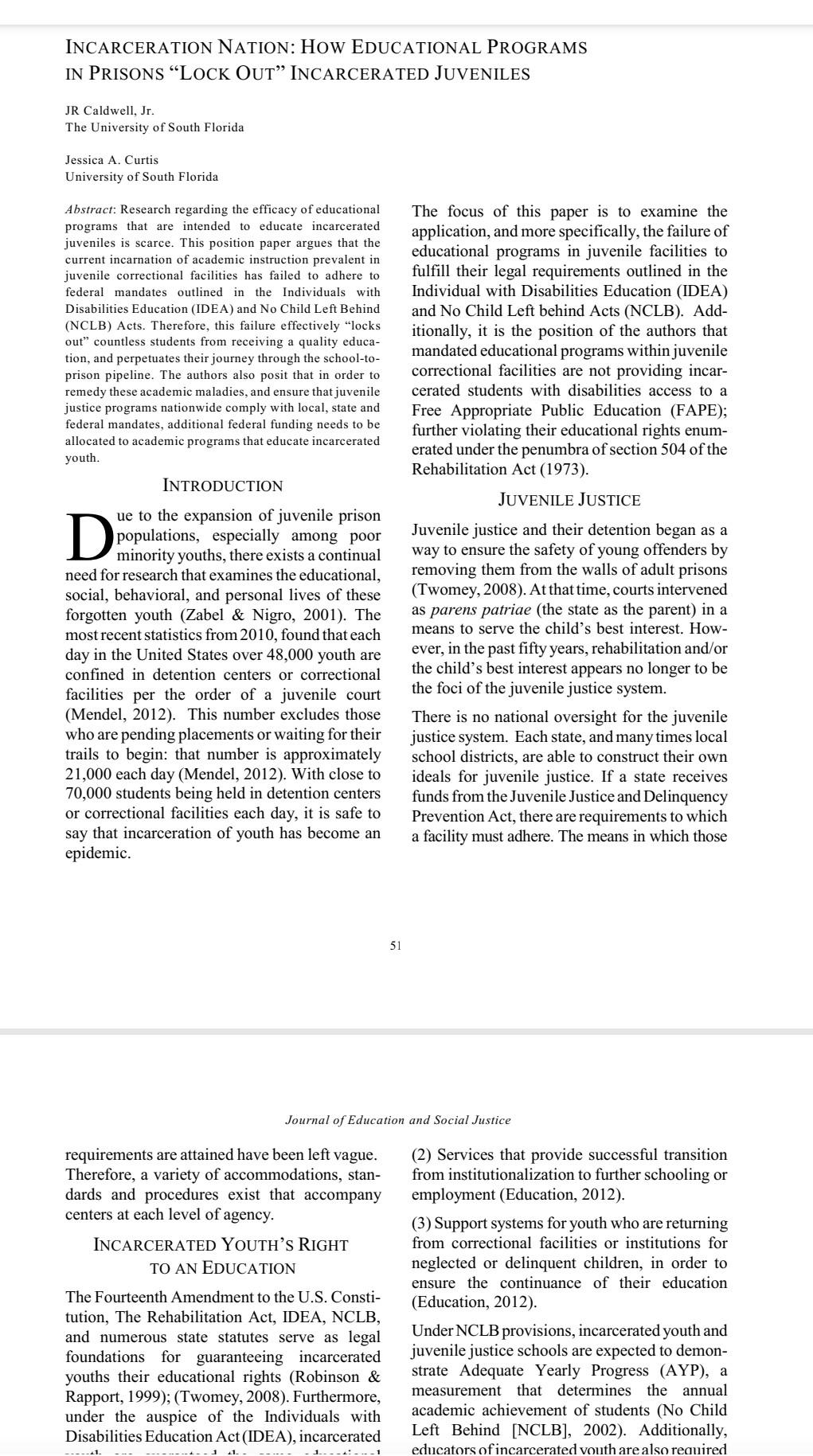
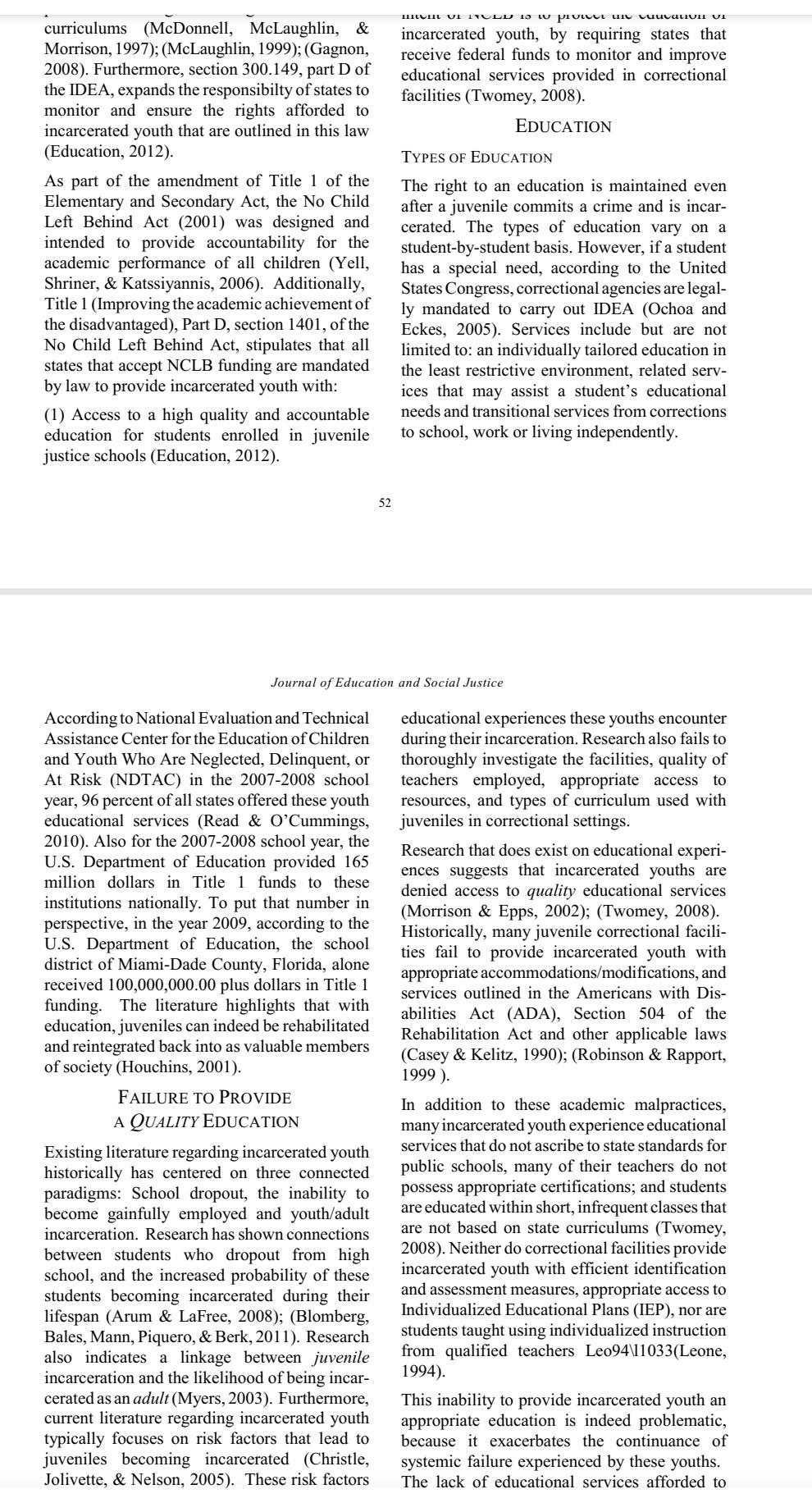
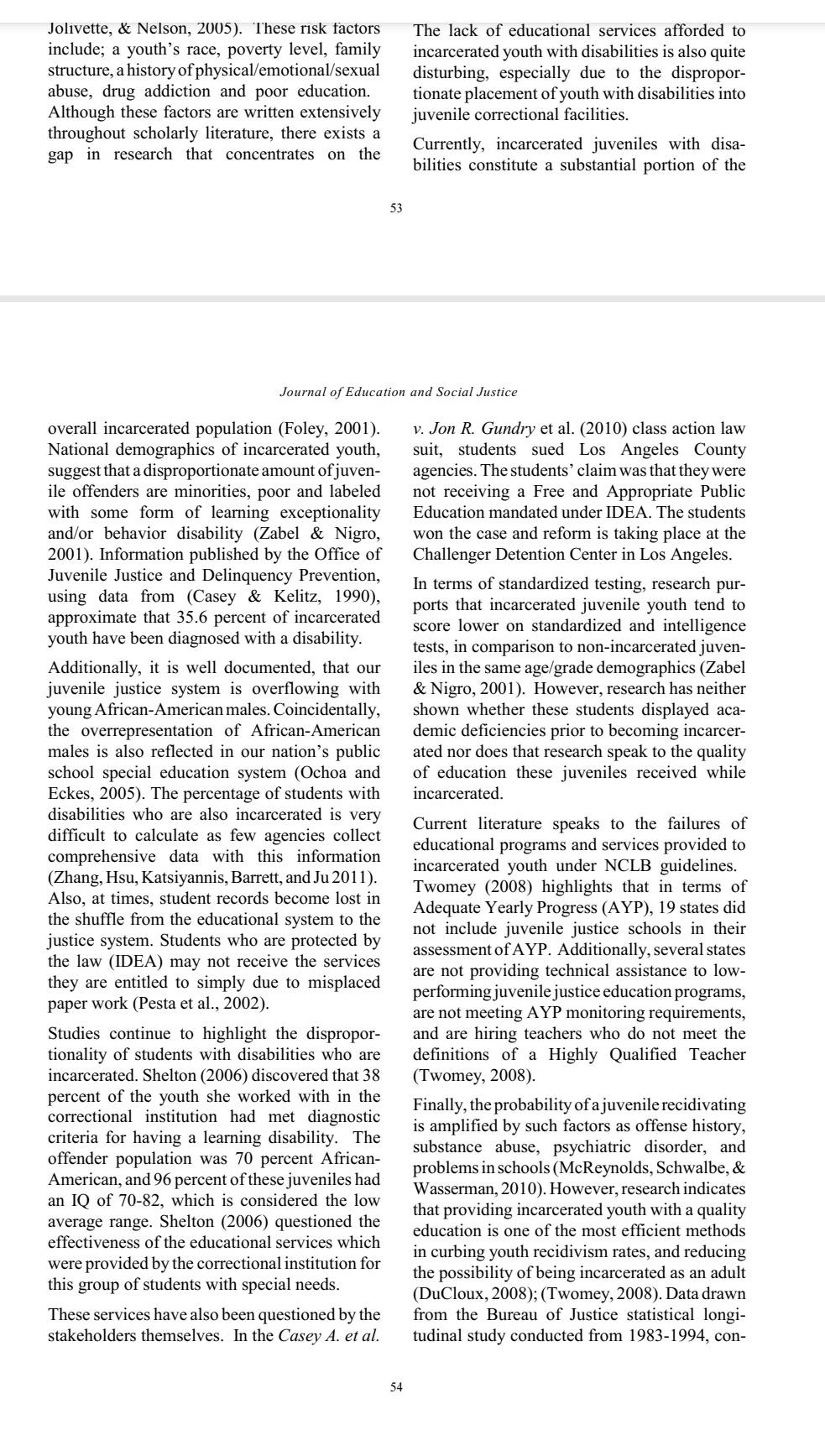
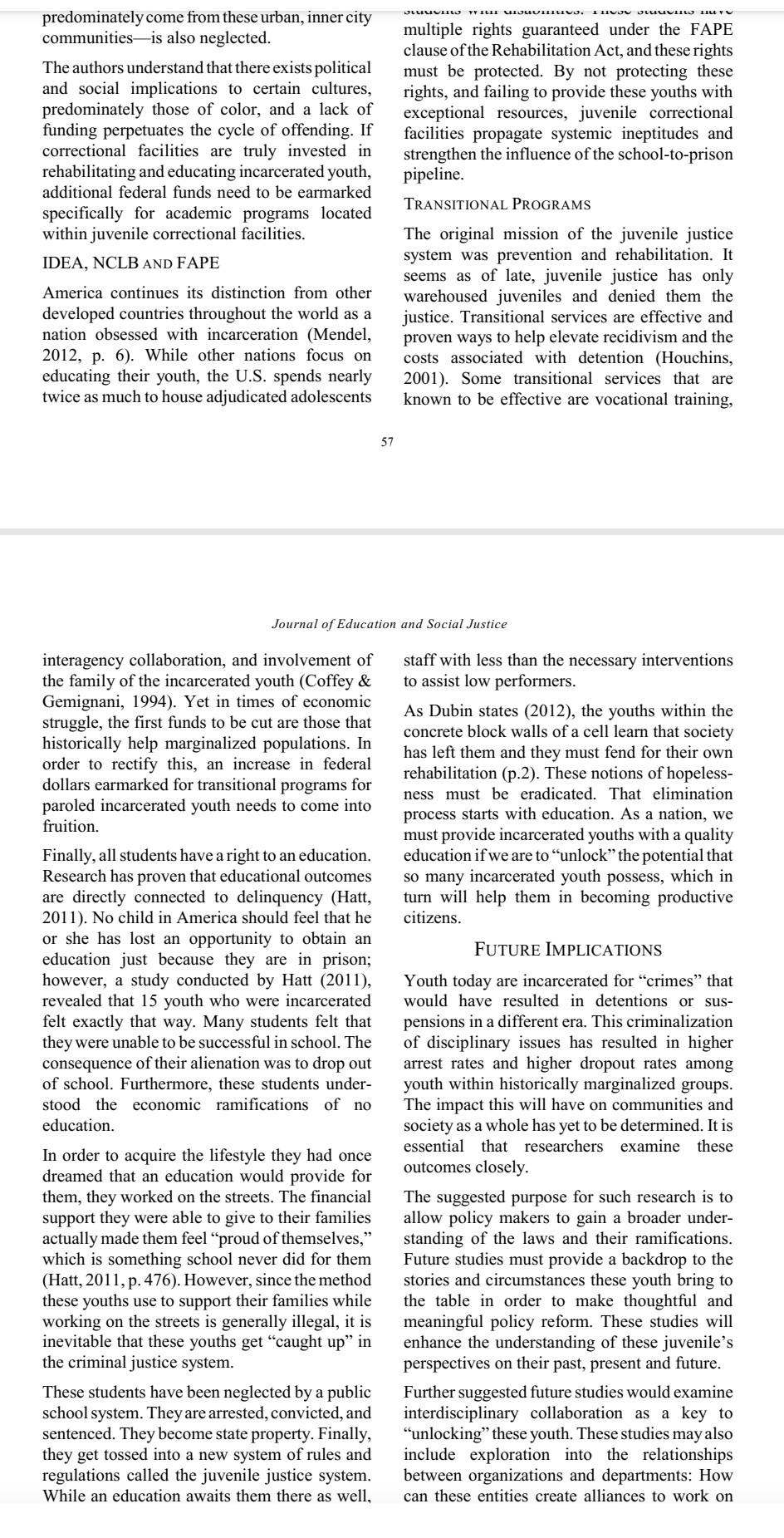
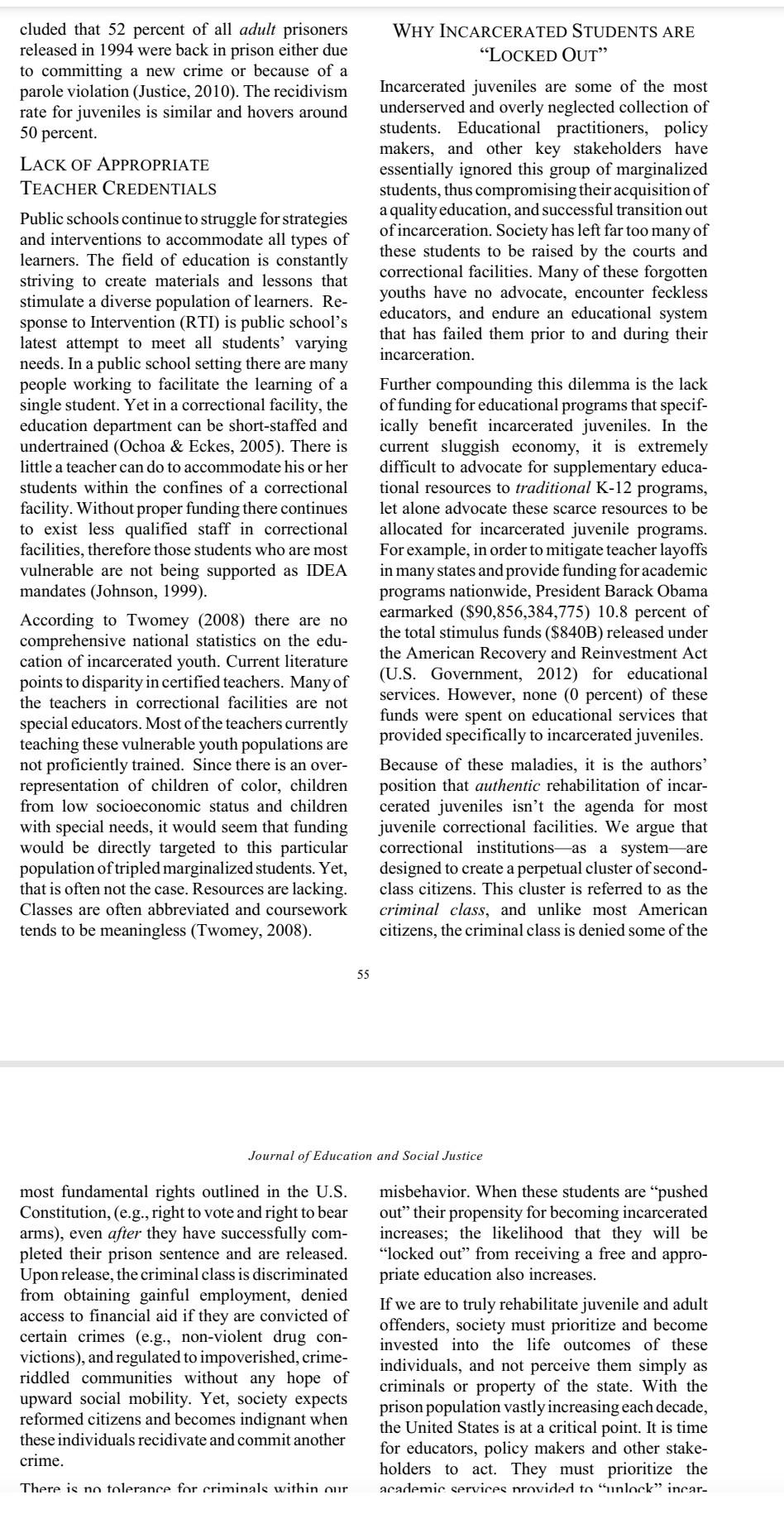
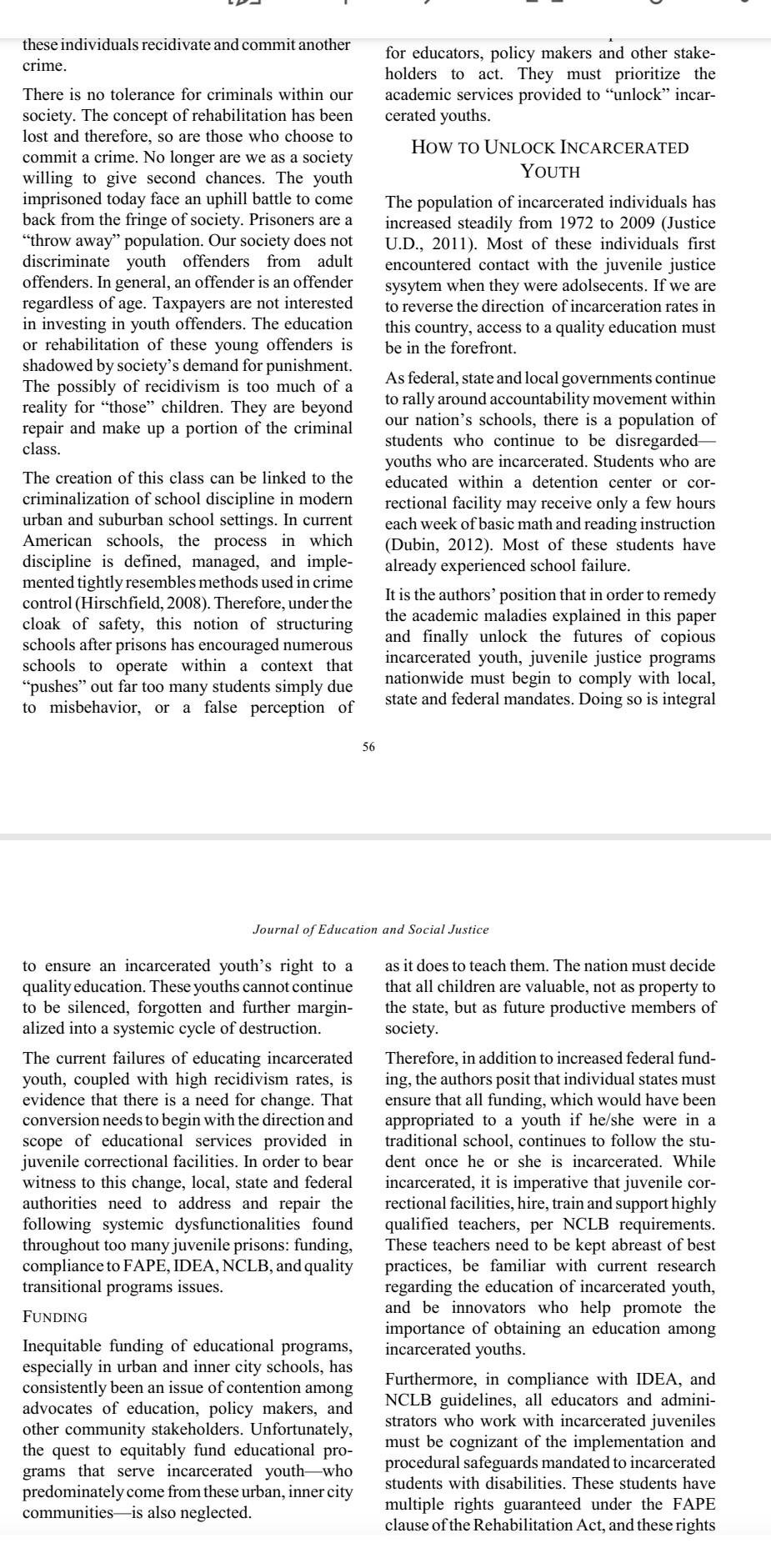
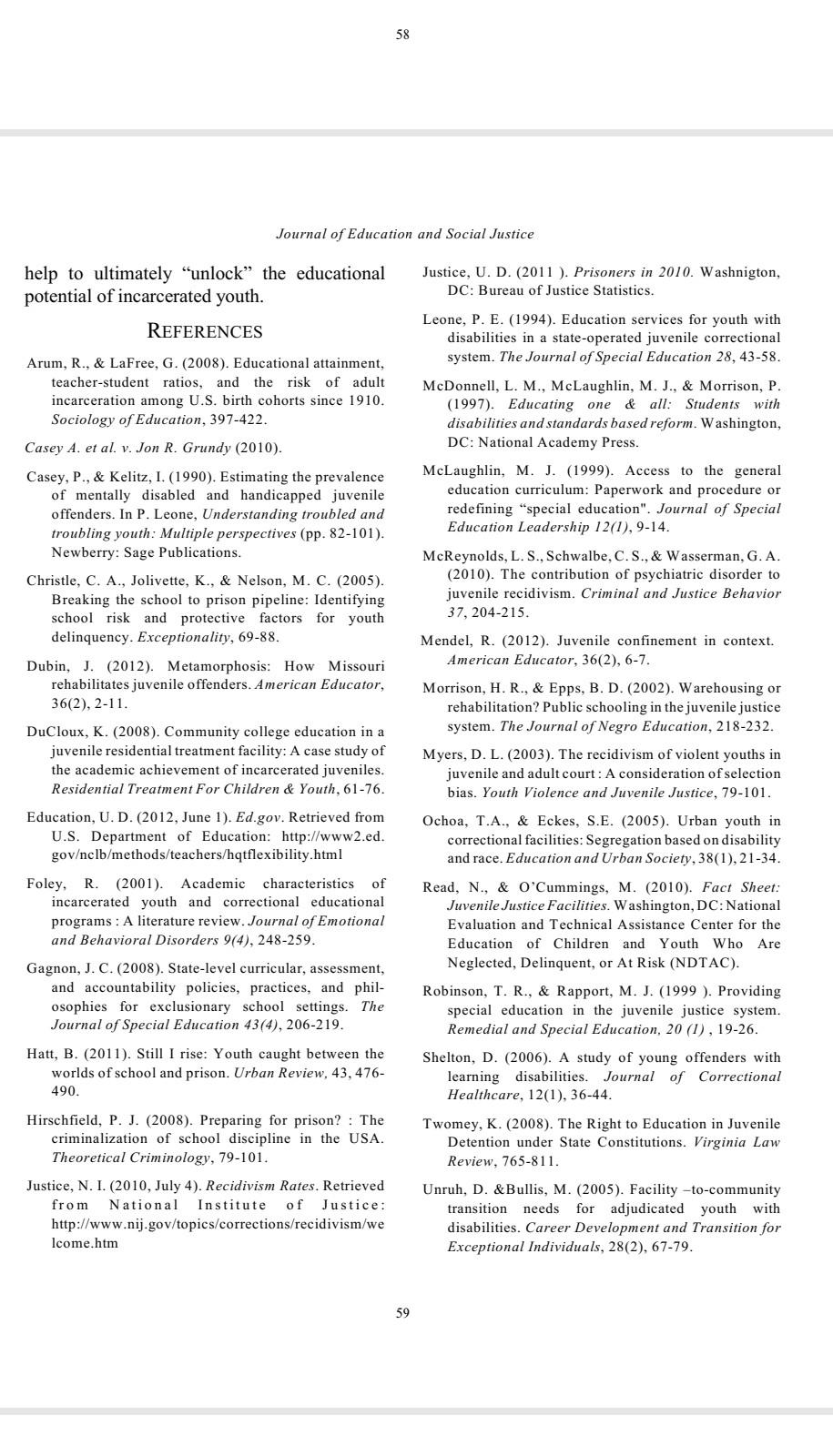
curriculums (McDonnell, McLaughlin, \& incarcerated youth, by requiring states that Morrison, 1997); (McLaughlin, 1999); (Gagnon, receive federal funds to monitor and improve 2008). Furthermore, section 300.149, part D of educational services provided in correctional the IDEA, expands the responsibilty of states to facilities (Twomey, 2008). monitor and ensure the rights afforded to incarcerated youth that are outlined in this law EDUCATION (Education, 2012). TYPES OF EDUCATION As part of the amendment of Title 1 of the The right to an education is maintained even Elementary and Secondary Act, the No Child after a juvenile commits a crime and is incarLeft Behind Act (2001) was designed and cerated. The types of education vary on a intended to provide accountability for the student-by-student basis. However, if a student academic performance of all children (Yell, has a special need, according to the United Shriner, \& Katssiyannis, 2006). Additionally, States Congress, correctional agencies are legalTitle 1 (Improving the academic achievement of ly mandated to carry out IDEA (Ochoa and the disadvantaged), Part D, section 1401, of the Eckes, 2005). Services include but are not No Child Left Behind Act, stipulates that all limited to: an individually tailored education in states that accept NCLB funding are mandated the least restrictive environment, related servby law to provide incarcerated youth with: ices that may assist a student's educational (1) Access to a high quality and accountable needs and transitional services from corrections education for students enrolled in juvenile to school, work or living independently. justice schools (Education, 2012). 52 Journal of Education and Social Justice According to National Evaluation and Technical educational experiences these youths encounter Assistance Center for the Education of Children during their incarceration. Research also fails to and Youth Who Are Neglected, Delinquent, or thoroughly investigate the facilities, quality of At Risk (NDTAC) in the 2007-2008 school teachers employed, appropriate access to year, 96 percent of all states offered these youth resources, and types of curriculum used with educational services (Read \& O'Cummings, juveniles in correctional settings. 2010). Also for the 2007-2008 school year, the Research that does exist on educational experiU.S. Department of Education provided 165 ences suggests that incarcerated youths are million dollars in Title 1 funds to these denied access to quality educational services institutions nationally. To put that number in (Morrison \& Epps, 2002); (Twomey, 2008). perspective, in the year 2009, according to the Historically, many juvenile correctional faciliU.S. Department of Education, the school ties fail to provide incarcerated youth with district of Miami-Dade County, Florida, alone appropriate accommodations/modifications, and received 100,000,000.00 plus dollars in Title 1 services outlined in the Americans with Disfunding. The literature highlights that with abilities Act (ADA), Section 504 of the education, juveniles can indeed be rehabilitated Rehabilitation Act and other applicable laws and reintegrated back into as valuable members (Casey \& Kelitz, 1990); (Robinson \& Rapport, of society (Houchins, 2001). 1999 ). FAILURE to Provide AQUALITYEDUCATIONmanyincarceratedyouthexperienceeducationalInadditiontotheseacademicmalpractices, Existing literature regarding incarcerated youth services that do not ascribe to state standards for historically has centered on three connected public schools, many of their teachers do not paradigms: School dropout, the inability to possess appropriate certifications; and students become gainfully employed and youth/adult are educated within short, infrequent classes that incarceration. Research has shown connections are not based on state curriculums (Twomey, between students who dropout from high 2008). Neither do correctional facilities provide school, and the increased probability of these incarcerated youth with efficient identification students becoming incarcerated during their and assessment measures, appropriate access to lifespan (Arum \& LaFree, 2008); (Blomberg, Individualized Educational Plans (IEP), nor are Bales, Mann, Piquero, \& Berk, 2011). Research students taught using individualized instruction also indicates a linkage between juvenile from qualified teachers Leo94111033(Leone, incarceration and the likelihood of being incar- 1994). cerated as an adult (Myers, 2003). Furthermore, This inability to provide incarcerated youth an current literature regarding incarcerated youth appropriate education is indeed problematic, typically focuses on risk factors that lead to because it exacerbates the continuance of juveniles becoming incarcerated (Christle, systemic failure experienced by these youths. Jolivette, \& Nelson, 2005). These risk factors The lack of educational services afforded to Jolivette, \& Nelson, 2005). These risk factors The lack of educational services afforded to include; a youth's race, poverty level, family incarcerated youth with disabilities is also quite structure, a history of physical/emotional/sexual disturbing, especially due to the disproporabuse, drug addiction and poor education. tionate placement of youth with disabilities into Although these factors are written extensively juvenile correctional facilities. throughout scholarly literature, there exists a gap in research that concentrates on the Currently, incarcerated juveniles with disabilities constitute a substantial portion of the 53 Journal of Education and Social Justice overall incarcerated population (Foley, 2001). v. Jon R. Gundry et al. (2010) class action law National demographics of incarcerated youth, suit, students sued Los Angeles County suggest that a disproportionate amount of juven- agencies. The students' claim was that they were ile offenders are minorities, poor and labeled not receiving a Free and Appropriate Public with some form of learning exceptionality Education mandated under IDEA. The students and/or behavior disability (Zabel \& Nigro, won the case and reform is taking place at the 2001). Information published by the Office of Challenger Detention Center in Los Angeles. Juvenile Justice and Delinquency Prevention, In terms of standardized testing, research purusing data from (Casey \& Kelitz, 1990), ports that incarcerated juvenile youth tend to approximate that 35.6 percent of incarcerated score lower on standardized and intelligence youth have been diagnosed with a disability. tests, in comparison to non-incarcerated juvenAdditionally, it is well documented, that our iles in the same age/grade demographics (Zabel juvenile justice system is overflowing with \& Nigro, 2001). However, research has neither young African-American males. Coincidentally, shown whether these students displayed acathe overrepresentation of African-American demic deficiencies prior to becoming incarcermales is also reflected in our nation's public ated nor does that research speak to the quality school special education system (Ochoa and of education these juveniles received while Eckes, 2005). The percentage of students with incarcerated. disabilities who are also incarcerated is very Current literature speaks to the failures of difficult to calculate as few agencies collect educational programs and services provided to comprehensive data with this information incarcerated youth under NCLB guidelines. (Zhang, Hsu, Katsiyannis, Barrett, and Ju 2011). Twomey (2008) highlights that in terms of Also, at times, student records become lost in Adequate Yearly Progress (AYP), 19 states did the shuffle from the educational system to the not include juvenile justice schools in their justice system. Students who are protected by assessment of AYP. Additionally, several states the law (IDEA) may not receive the services are not providing technical assistance to lowthey are entitled to simply due to misplaced performing juvenile justice education programs, paper work (Pesta et al., 2002). are not meeting AYP monitoring requirements, Studies continue to highlight the dispropor- and are hiring teachers who do not meet the tionality of students with disabilities who are definitions of a Highly Qualified Teacher incarcerated. Shelton (2006) discovered that 38 (Twomey, 2008). percent of the youth she worked with in the Finally, the probability of ajuvenile recidivating correctional institution had met diagnostic is amplified by such factors as offense history, criteria for having a learning disability. The substance abuse, psychiatric disorder, and offender population was 70 percent African- problems in schools (McReynolds, Schwalbe, \& American, and 96 percent of these juveniles had Wasserman, 2010). However, research indicates an IQ of 70-82, which is considered the low that providing incarcerated youth with a quality average range. Shelton (2006) questioned the education is one of the most efficient methods effectiveness of the educational services which in curbing youth recidivism rates, and reducing were provided by the correctional institution for the possibility of being incarcerated as an adult this group of students with special needs. (DuCloux, 2008); (Twomey, 2008). Data drawn These services have also been questioned by the from the Bureau of Justice statistical longistakeholders themselves. In the Casey A. et al. tudinal study conducted from 1983-1994, con- predominately come from these urban, inner city communities - is also neglected. multiple rights guaranteed under the FAPE clause of the Rehabilitation Act, and these rights rights, and failing to provide these youths with specifically for academic programs located TRANSITIONAL PROGRAMS within juvenile correctional facilities. The original mission of the juvenile justice IDEA, NCLB AND FAPE system was prevention and rehabilitation. It America continues its distinction from other nation obsessed with incarceration (Mendel, justice. Transitional services are effective and proven ways to help elevate recidivism and the 57 Journal of Education and Social Justice interagency collaboration, and involvement of staff with less than the necessary interventions the family of the incarcerated youth (Coffey \& to assist low performers. Gemignani, 1994). Yet in times of economic struggle, the first funds to be cut are those that As Dubin states (2012), the youths within the historically help marginalized populations. In concrete block walls of a cell learn that society order to rectify this, an increase in federal has left them and they must fend for their own dollars earmarked for transitional programs for rehabilitation (p.2). These notions of hopelessparoled incarcerated youth needs to come into ness must be eradicated. That elimination fruition. process starts with education. As a nation, we Finally, all students have a right to an education. mustprovideincarceratedyouthswithaqualityeducationifweareto"unlock"thepotentialthat Research has proven that educational outcomes so many incarcerated youth possess, which in are directly connected to delinquency (Hatt, turn will help them in becoming productive 2011). No child in America should feel that he citizens. or she has lost an opportunity to obtain an education just because they are in prison; FUTURE IMPLICATIONS however, a study conducted by Hatt (2011), Youth today are incarcerated for "crimes" that revealed that 15 youth who were incarcerated would have resulted in detentions or susfelt exactly that way. Many students felt that pensions in a different era. This criminalization they were unable to be successful in school. The of disciplinary issues has resulted in higher consequence of their alienation was to drop out arrest rates and higher dropout rates among of school. Furthermore, these students under- youth within historically marginalized groups. stood the economic ramifications of no The impact this will have on communities and education. society as a whole has yet to be determined. It is In order to acquire the lifestyle they had once essential that researchers examine these dreamed that an education would provide for outcomes closely. them, they worked on the streets. The financial The suggested purpose for such research is to support they were able to give to their families allow policy makers to gain a broader underactually made them feel "proud of themselves," standing of the laws and their ramifications. which is something school never did for them Future studies must provide a backdrop to the (Hatt, 2011, p. 476). However, since the method stories and circumstances these youth bring to these youths use to support their families while the table in order to make thoughtful and working on the streets is generally illegal, it is meaningful policy reform. These studies will inevitable that these youths get "caught up" in enhance the understanding of these juvenile's the criminal justice system. perspectives on their past, present and future. These students have been neglected by a public Further suggested future studies would examine school system. They are arrested, convicted, and interdisciplinary collaboration as a key to sentenced. They become state property. Finally, "unlocking" these youth. These studies may also they get tossed into a new system of rules and include exploration into the relationships regulations called the juvenile justice system. between organizations and departments: How While an education awaits them there as well, can these entities create alliances to work on cluded that 52 percent of all adult prisoners WHY INCARCERATED STUDENTS ARE released in 1994 were back in prison either due "LOCKED OUT" to committing a new crime or because of a parole violation (Justice, 2010). The recidivism Incarcerated juveniles are some of the most rate for juveniles is similar and hovers around underserved and overly neglected collection of 50 percent. students. Educational practitioners, policy LACK OF APPROPRIATE makers, and other key stakeholders have TEACHER CREDENTIALS essentially ignored this group of marginalized Public schools continue to struggle for strategies a quality education, and successful transition out and interventions to accommodate all types of of incarceration. Society has left far too many of learners. The field of education is constantly these students to be raised by the courts and striving to create materials and lessons that correctional facilities. Many of these forgotten stimulate a diverse population of learners. Re- youths have no advocate, encounter feckless sponse to Intervention (RTI) is public school's educators, and endure an educational system latest attempt to meet all students' varying that has failed them prior to and during their needs. In a public school setting there are many incarceration. people working to facilitate the learning of a Further compounding this dilemma is the lack single student. Yet in a correctional facility, the of funding for educational programs that specifeducation department can be short-staffed and ically benefit incarcerated juveniles. In the undertrained (Ochoa \& Eckes, 2005). There is current sluggish economy, it is extremely little a teacher can do to accommodate his or her difficult to advocate for supplementary educastudents within the confines of a correctional tional resources to traditional K-12 programs, facility. Without proper funding there continues let alone advocate these scarce resources to be to exist less qualified staff in correctional allocated for incarcerated juvenile programs. facilities, therefore those students who are most For example, in order to mitigate teacher layoffs vulnerable are not being supported as IDEA in many states and provide funding for academic mandates (Johnson, 1999). programs nationwide, President Barack Obama According to Twomey (2008) there are no earmarked ($90,856,384,775)10.8 percent of comprehensive national statistics on the edu- the total stimulus funds (\$840B) released under cation of incarcerated youth. Current literature the American Recovery and Reinvestment Act points to disparity in certified teachers. Many of (U.S. Government, 2012) for educational the teachers in correctional facilities are not services. However, none (0 percent) of these special educators. Most of the teachers currently funds were spent on educational services that teaching these vulnerable youth populations are provided specifically to incarcerated juveniles. not proficiently trained. Since there is an over- Because of these maladies, it is the authors' representation of children of color, children position that authentic rehabilitation of incarfrom low socioeconomic status and children cerated juveniles isn't the agenda for most with special needs, it would seem that funding juvenile correctional facilities. We argue that would be directly targeted to this particular correctional institutions-as a system-are population of tripled marginalized students. Yet, designed to create a perpetual cluster of secondthat is often not the case. Resources are lacking. class citizens. This cluster is referred to as the Classes are often abbreviated and coursework criminal class, and unlike most American tends to be meaningless (Twomey, 2008). citizens, the criminal class is denied some of the 55 Journal of Education and Social Justice most fundamental rights outlined in the U.S. misbehavior. When these students are "pushed Constitution, (e.g., right to vote and right to bear out" their propensity for becoming incarcerated arms), even after they have successfully com- increases; the likelihood that they will be pleted their prison sentence and are released. "locked out" from receiving a free and approUpon release, the criminal class is discriminated priate education also increases. from obtaining gainful employment, denied If we are to truly rehabilitate juvenile and adult access to financial aid if they are convicted of offenders, society must prioritize and become certain crimes (e.g., non-violent drug con- invested into the life outcomes of these victions), and regulated to impoverished, crime- individuals, and not perceive them simply as riddled communities without any hope of criminals or property of the state. With the upward social mobility. Yet, society expects prison population vastly increasingeach decade, reformed citizens and becomes indignant when the United States is at a critical point. It is time these individuals recidivate and commit another for educators, policy makers and other stakecrime. holders to act. They must prioritize the There is no tolerance for criminals within our academic services nrovided to "unlock" incar
Step by Step Solution
There are 3 Steps involved in it

Get step-by-step solutions from verified subject matter experts
 Study Help