







Question: QUESTION 2 (a) Explain the difference between a temporal and a state event. (4 marks) (b) From the case study above 4S, give an example
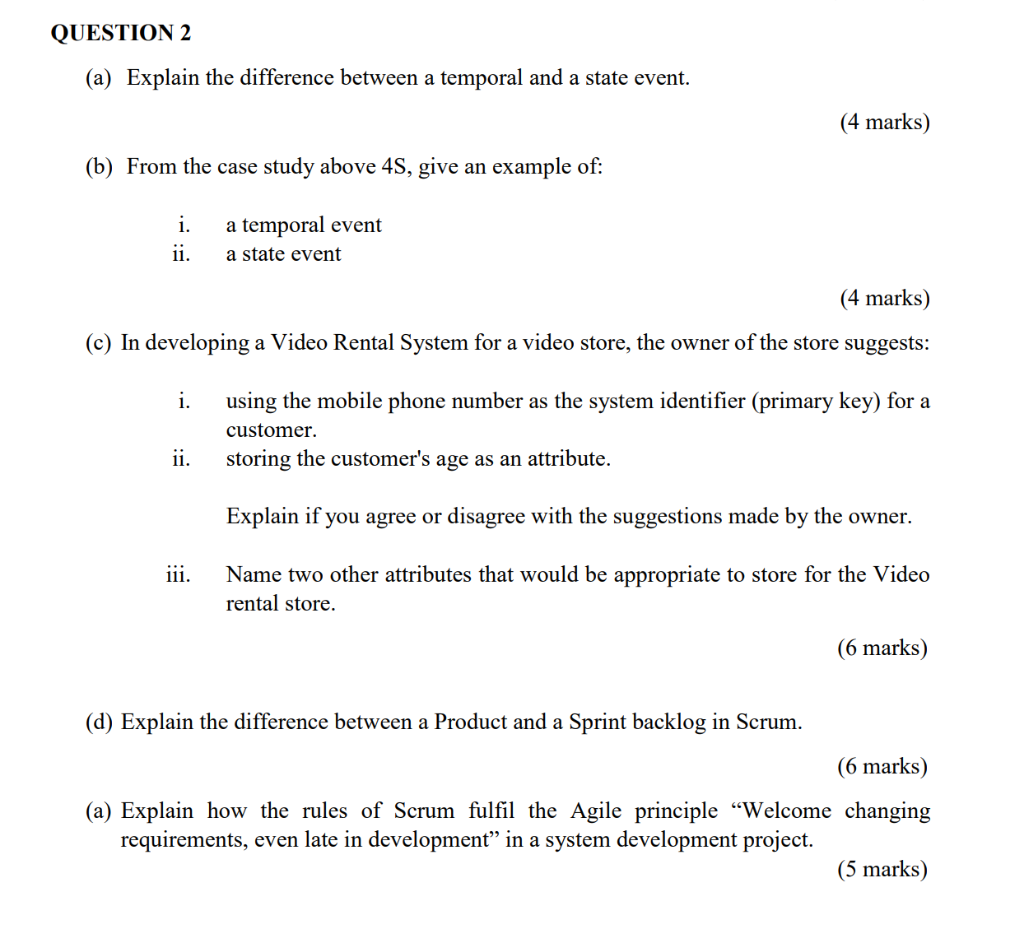
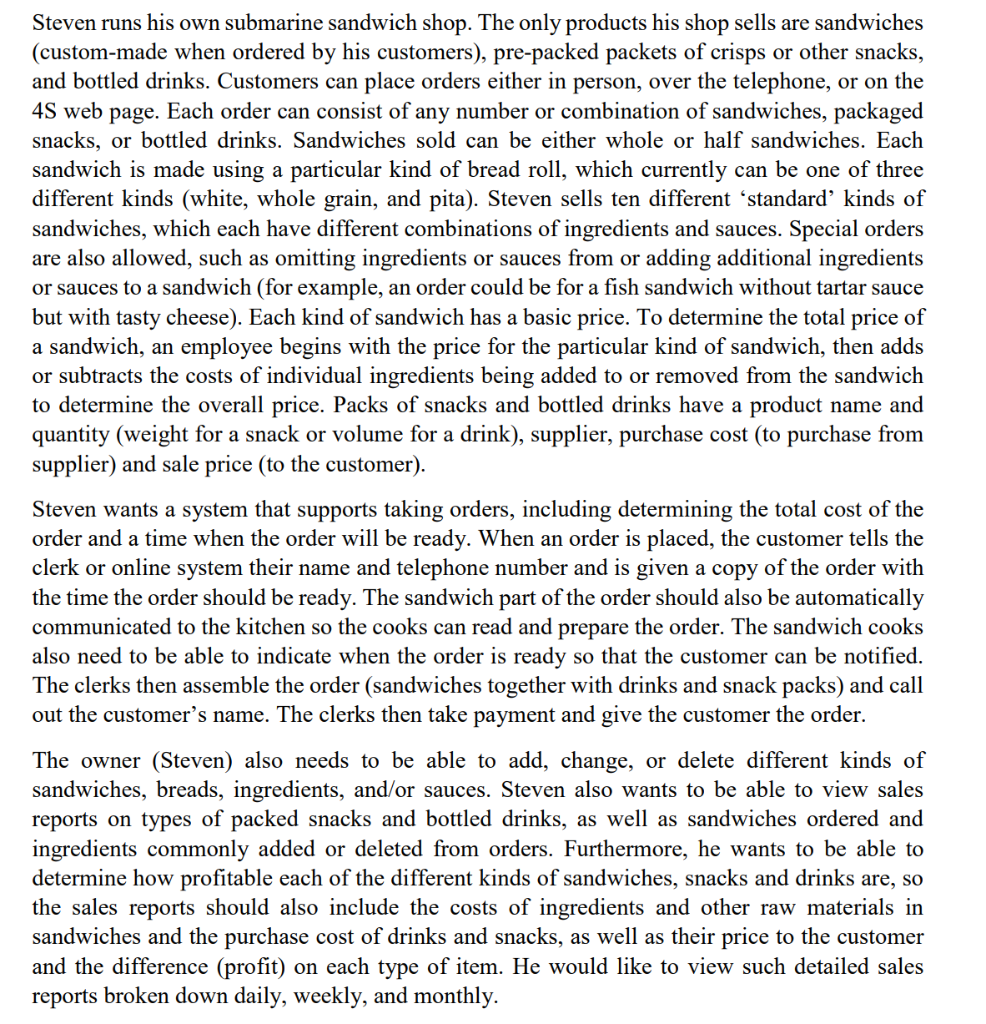
QUESTION 2 (a) Explain the difference between a temporal and a state event. (4 marks) (b) From the case study above 4S, give an example of: i. ii. a temporal event a state event (4 marks) (c) In developing a Video Rental System for a video store, the owner of the store suggests: i. using the mobile phone number as the system identifier (primary key) for a customer. storing the customer's age as an attribute. ii. Explain if you agree or disagree with the suggestions made by the owner. 111. Name two other attributes that would be appropriate to store for the Video rental store. (6 marks) (d) Explain the difference between a Product and a Sprint backlog in Scrum. a (6 marks) (a) Explain how the rules of Scrum fulfil the Agile principle Welcome changing requirements, even late in development in a system development project. (5 marks) Steven runs his own submarine sandwich shop. The only products his shop sells are sandwiches (custom-made when ordered by his customers), pre-packed packets of crisps or other snacks, and bottled drinks. Customers can place orders either in person, over the telephone, or on the 4S web page. Each order can consist of any number or combination of sandwiches, packaged snacks, or bottled drinks. Sandwiches sold can be either whole or half sandwiches. Each sandwich is made using a particular kind of bread roll, which currently can be one of three different kinds (white, whole grain, and pita). Steven sells ten different standard kinds of sandwiches, which each have different combinations of ingredients and sauces. Special orders are also allowed, such as omitting ingredients or sauces from or adding additional ingredients or sauces to a sandwich (for example, an order could be for a fish sandwich without tartar sauce but with tasty cheese). Each kind of sandwich has a basic price. To determine the total price of a sandwich, an employee begins with the price for the particular kind of sandwich, then adds or subtracts the costs of individual ingredients being added to or removed from the sandwich to determine the overall price. Packs of snacks and bottled drinks have a product name and quantity (weight for a snack or volume for a drink), supplier, purchase cost (to purchase from supplier) and sale price (to the customer). Steven wants a system that supports taking orders, including determining the total cost of the order and a time when the order will be ready. When an order is placed, the customer tells the clerk or online system their name and telephone number and is given a copy of the order with the time the order should be ready. The sandwich part of the order should also be automatically communicated to the kitchen so the cooks can read and prepare the order. The sandwich cooks also need to be able to indicate when the order is ready so that the customer can be notified. The clerks then assemble the order (sandwiches together with drinks and snack packs) and call out the customer's name. The clerks then take payment and give the customer the order. The owner (Steven) also needs to be able to add, change, or delete different kinds of sandwiches, breads, ingredients, and/or sauces. Steven also wants to be able to view sales reports on types of packed snacks and bottled drinks, as well as sandwiches ordered and ingredients commonly added or deleted from orders. Furthermore, he wants to be able to determine how profitable each of the different kinds of sandwiches, snacks and drinks are, so the sales reports should also include the costs of ingredients and other raw materials in sandwiches and the purchase cost of drinks and snacks, as well as their price to the customer and the difference (profit) on each type of item. He would like to view such detailed sales reports broken down daily, weekly, and monthly
Step by Step Solution
There are 3 Steps involved in it

Get step-by-step solutions from verified subject matter experts
 Study Help