







Question: questions 1, 2, and 3 please BA Case 40 DODO Nina's Fashions, Inc. Mergers Directed Nina's Fashions, Inc., operates a chain of retail clothing stores
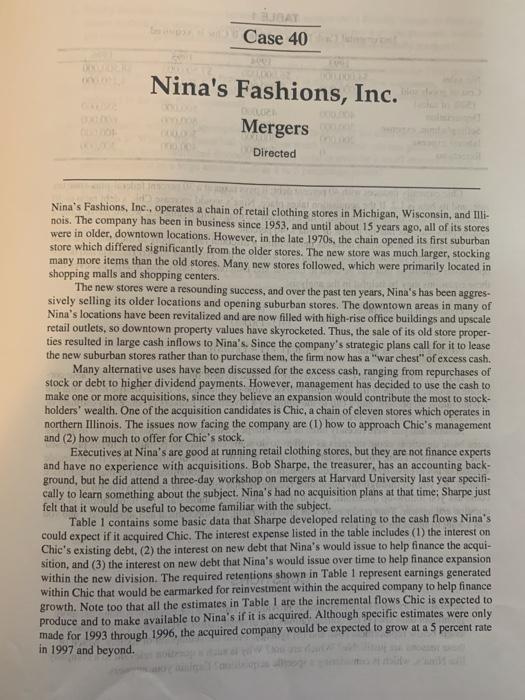
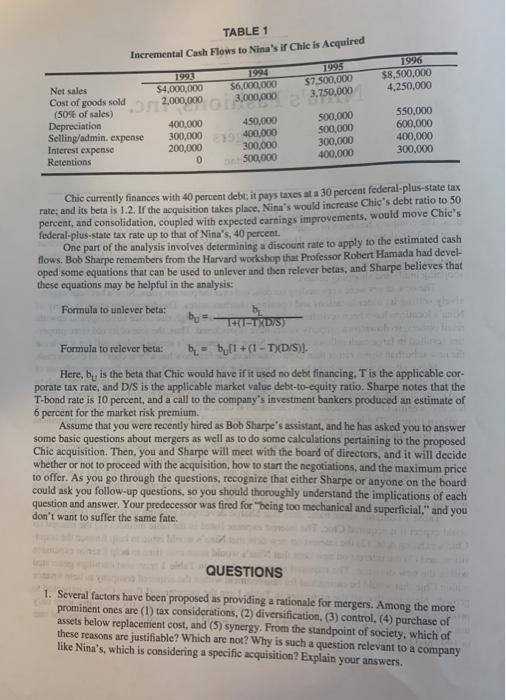
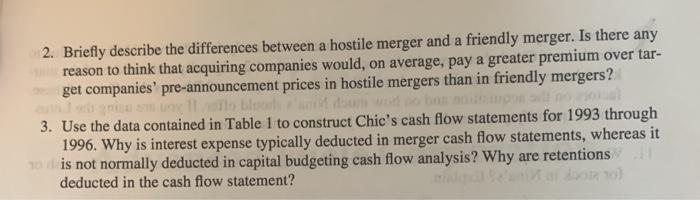
BA Case 40 DODO Nina's Fashions, Inc. Mergers Directed Nina's Fashions, Inc., operates a chain of retail clothing stores in Michigan, Wisconsin, and Illi- nois. The company has been in business since 1953, and until about 15 years ago, all of its stores were in older, downtown locations. However, in the late 1970s, the chain opened its first suburban store which differed significantly from the older stores. The new store was much larger, stocking many more items than the old stores. Many new stores followed, which were primarily located in shopping malls and shopping centers. The new stores were a resounding success, and over the past ten years, Nina's has been aggres- sively selling its older locations and opening suburban stores. The downtown areas in many of Nina's locations have been revitalized and are now filled with high-rise office buildings and upscale retail outlets, so downtown property values have skyrocketed. Thus, the sale of its old store proper- ties resulted in large cash inflows to Nina's. Since the company's strategic plans call for it to lease the new suburban stores rather than to purchase them, the firm now has a "war chest" of excess cash. Many alternative uses have been discussed for the excess cash, ranging from repurchases of stock or debt to higher dividend payments. However, management has decided to use the cash to make one or more acquisitions, since they believe an expansion would contribute the most to stock- holders' wealth. One of the acquisition candidates is Chic, a chain of eleven stores which operates in northern Illinois. The issues now facing the company are (1) how to approach Chic's management and (2) how much to offer for Chic's stock. Executives at Nina's are good at running retail clothing stores, but they are not finance experts and have no experience with acquisitions. Bob Sharpe, the treasurer, has an accounting back- ground, but he did attend a three-day workshop on mergers at Harvard University last year specifi- cally to learn something about the subject. Nina's had no acquisition plans at that time; Sharpe just felt that it would be useful to become familiar with the subject Table 1 contains some basic data that Sharpe developed relating to the cash flows Nina's could expect if it acquired Chic. The interest expense listed in the table includes (1) the interest on Chic's existing debt, (2) the interest on new debt that Nina's would issue to help finance the acqui- sition, and (3) the interest on new debt that Nina's would issue over time to help finance expansion within the new division. The required retentions shown in Table 1 represent earnings generated within Chic that would be earmarked for reinvestment within the acquired company to help finance growth. Note too that all the estimates in Table 1 are the incremental flows Chic is expected to produce and to make available to Nina's if it is acquired. Although specific estimates were only made for 1993 through 1996, the acquired company would be expected to grow at a 5 percent rate in 1997 and beyond. TABLE 1 Incremental Cash Flows to Nina'sir Chic is Acquired 1993 $4,000,000 1995 $7.500.000 1996 $8,500,000 4.250,000 $6,000,000 3,000,000 52.000.000 13.00 33,750,000 Net sales Cost of goods sold (50% of sales) Depreciation Selling/admin. expense Interest expense Retentions 450,000 400,000 300,000 200,000 0 9 400,000 500,000 500,000 300,000 400,000 550,000 600,000 400,000 300,000 300,000 500,000 Chic currently finances with 40 percent debt; it pays taxes at a 30 percent federal-plus-state tax rate, and its beta is 1.2. If the acquisition takes place. Nina's would increase Chic's debt ratio to 50 percent, and consolidation, coupled with expected earnings improvements, would move Chic's federal-plus-state tax rate up to that of Nina's, 40 percent. One part of the analysis involves determining a discount rate to apply to the estimated cash flows. Bob Sharpe remembers from the Harvard workshop that Professor Robert Hamada had devel- oped some equations that can be used to unlever and then relever betas, and Sharpe believes that these equations may be helpful in the analysis: Formula to unlever beta: - S) Formula to relever beta: Du[1 + (1 - 1)(D/S) Here, by is the beta that Chic would have if it used no debt financing, T is the applicable cor- porate tax rate, and D/S is the applicable market value debt-to-equity ratio. Sharpe notes that the T-bond rate is 10 percent, and a call to the company's investment bankers produced an estimate of 6 percent for the market risk premium. Assume that you were recently hired as Bob Sharpe's assistant, and he has asked you to answer some basic questions about mergers as well as to do some calculations pertaining to the proposed Chic acquisition. Then, you and Sharpe will meet with the board of directors, and it will decide whether or not to proceed with the acquisition, how to start the negotiations, and the maximum price to offer. As you go through the questions, recognize that either Sharpe or anyone on the board could ask you follow-up questions, so you should thoroughly understand the implications of each question and answer. Your predecessor was fired for being too mechanical and superficial." and you don't want to suffer the same fate. QUESTIONS 1. Several factors have been proposed as providing a rationale for mergers. Among the more prominent ones are (1) tax considerations, (2) diversification, (3) control. (4) purchase of assets below replacement cost, and (5) synergy. From the standpoint of society, which of these reasons are justifiable? Which are not? Why is such a question relevant to a company like Nina's, which is considering a specific acquisition? Explain your answers. 2. Briefly describe the differences between a hostile merger and a friendly merger. Is there any reason to think that acquiring companies would, on average, pay a greater premium over tar- get companies' pre-announcement prices in hostile mergers than in friendly mergers? noble 3. Use the data contained in Table 1 to construct Chic's cash flow statements for 1993 through 1996. Why is interest expense typically deducted in merger cash flow statements, whereas it is not normally deducted in capital budgeting cash flow analysis? Why are retentions deducted in the cash flow statement? BA Case 40 DODO Nina's Fashions, Inc. Mergers Directed Nina's Fashions, Inc., operates a chain of retail clothing stores in Michigan, Wisconsin, and Illi- nois. The company has been in business since 1953, and until about 15 years ago, all of its stores were in older, downtown locations. However, in the late 1970s, the chain opened its first suburban store which differed significantly from the older stores. The new store was much larger, stocking many more items than the old stores. Many new stores followed, which were primarily located in shopping malls and shopping centers. The new stores were a resounding success, and over the past ten years, Nina's has been aggres- sively selling its older locations and opening suburban stores. The downtown areas in many of Nina's locations have been revitalized and are now filled with high-rise office buildings and upscale retail outlets, so downtown property values have skyrocketed. Thus, the sale of its old store proper- ties resulted in large cash inflows to Nina's. Since the company's strategic plans call for it to lease the new suburban stores rather than to purchase them, the firm now has a "war chest" of excess cash. Many alternative uses have been discussed for the excess cash, ranging from repurchases of stock or debt to higher dividend payments. However, management has decided to use the cash to make one or more acquisitions, since they believe an expansion would contribute the most to stock- holders' wealth. One of the acquisition candidates is Chic, a chain of eleven stores which operates in northern Illinois. The issues now facing the company are (1) how to approach Chic's management and (2) how much to offer for Chic's stock. Executives at Nina's are good at running retail clothing stores, but they are not finance experts and have no experience with acquisitions. Bob Sharpe, the treasurer, has an accounting back- ground, but he did attend a three-day workshop on mergers at Harvard University last year specifi- cally to learn something about the subject. Nina's had no acquisition plans at that time; Sharpe just felt that it would be useful to become familiar with the subject Table 1 contains some basic data that Sharpe developed relating to the cash flows Nina's could expect if it acquired Chic. The interest expense listed in the table includes (1) the interest on Chic's existing debt, (2) the interest on new debt that Nina's would issue to help finance the acqui- sition, and (3) the interest on new debt that Nina's would issue over time to help finance expansion within the new division. The required retentions shown in Table 1 represent earnings generated within Chic that would be earmarked for reinvestment within the acquired company to help finance growth. Note too that all the estimates in Table 1 are the incremental flows Chic is expected to produce and to make available to Nina's if it is acquired. Although specific estimates were only made for 1993 through 1996, the acquired company would be expected to grow at a 5 percent rate in 1997 and beyond. TABLE 1 Incremental Cash Flows to Nina'sir Chic is Acquired 1993 $4,000,000 1995 $7.500.000 1996 $8,500,000 4.250,000 $6,000,000 3,000,000 52.000.000 13.00 33,750,000 Net sales Cost of goods sold (50% of sales) Depreciation Selling/admin. expense Interest expense Retentions 450,000 400,000 300,000 200,000 0 9 400,000 500,000 500,000 300,000 400,000 550,000 600,000 400,000 300,000 300,000 500,000 Chic currently finances with 40 percent debt; it pays taxes at a 30 percent federal-plus-state tax rate, and its beta is 1.2. If the acquisition takes place. Nina's would increase Chic's debt ratio to 50 percent, and consolidation, coupled with expected earnings improvements, would move Chic's federal-plus-state tax rate up to that of Nina's, 40 percent. One part of the analysis involves determining a discount rate to apply to the estimated cash flows. Bob Sharpe remembers from the Harvard workshop that Professor Robert Hamada had devel- oped some equations that can be used to unlever and then relever betas, and Sharpe believes that these equations may be helpful in the analysis: Formula to unlever beta: - S) Formula to relever beta: Du[1 + (1 - 1)(D/S) Here, by is the beta that Chic would have if it used no debt financing, T is the applicable cor- porate tax rate, and D/S is the applicable market value debt-to-equity ratio. Sharpe notes that the T-bond rate is 10 percent, and a call to the company's investment bankers produced an estimate of 6 percent for the market risk premium. Assume that you were recently hired as Bob Sharpe's assistant, and he has asked you to answer some basic questions about mergers as well as to do some calculations pertaining to the proposed Chic acquisition. Then, you and Sharpe will meet with the board of directors, and it will decide whether or not to proceed with the acquisition, how to start the negotiations, and the maximum price to offer. As you go through the questions, recognize that either Sharpe or anyone on the board could ask you follow-up questions, so you should thoroughly understand the implications of each question and answer. Your predecessor was fired for being too mechanical and superficial." and you don't want to suffer the same fate. QUESTIONS 1. Several factors have been proposed as providing a rationale for mergers. Among the more prominent ones are (1) tax considerations, (2) diversification, (3) control. (4) purchase of assets below replacement cost, and (5) synergy. From the standpoint of society, which of these reasons are justifiable? Which are not? Why is such a question relevant to a company like Nina's, which is considering a specific acquisition? Explain your answers. 2. Briefly describe the differences between a hostile merger and a friendly merger. Is there any reason to think that acquiring companies would, on average, pay a greater premium over tar- get companies' pre-announcement prices in hostile mergers than in friendly mergers? noble 3. Use the data contained in Table 1 to construct Chic's cash flow statements for 1993 through 1996. Why is interest expense typically deducted in merger cash flow statements, whereas it is not normally deducted in capital budgeting cash flow analysis? Why are retentions deducted in the cash flow statement
Step by Step Solution
There are 3 Steps involved in it

Get step-by-step solutions from verified subject matter experts
 Study Help