Question: Questions 1. Present a five-item ethics code that a retailer could impose on its suppliers with regard to fake and counterfeit merchandise. 2. As the
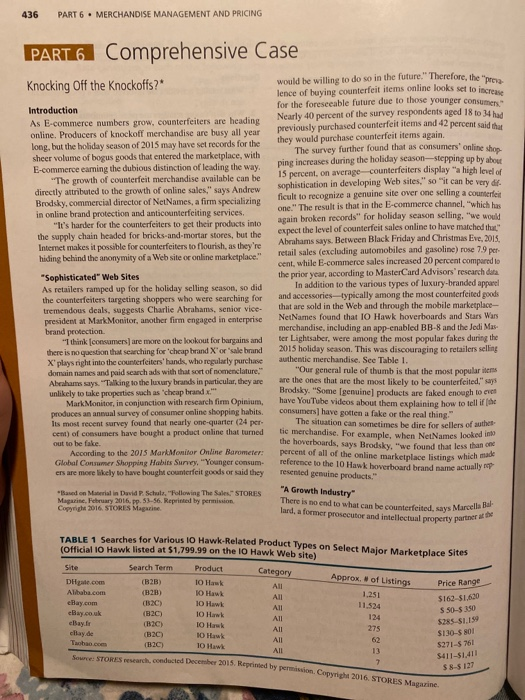
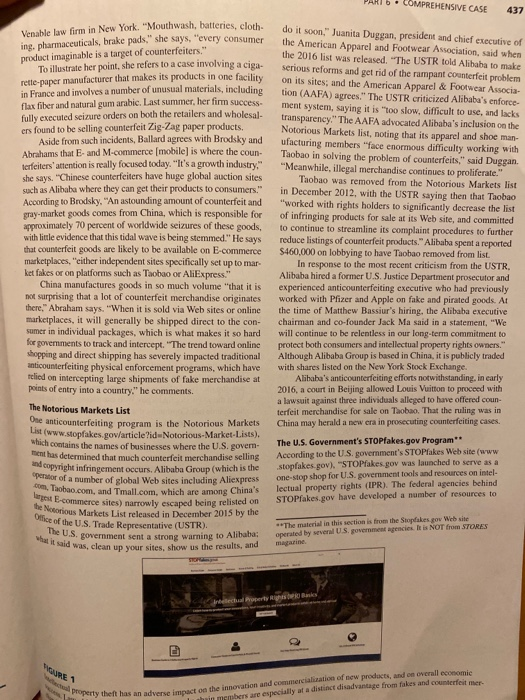
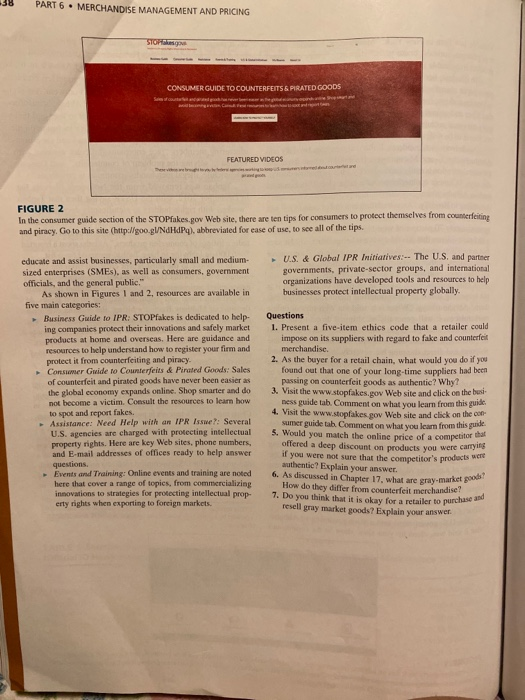
Questions 1. Present a five-item ethics code that a retailer could impose on its suppliers with regard to fake and counterfeit merchandise. 2. As the buyer for a retail chain, what would you do if you found out that one of your long-time suppliers had been passing on counterfeit goods as authentic? Why? 3. Visit the www.stopfakes.gov Web site and click on the busi- ness guide tab. Comment on what you learn from this guide. 4. Visit the www.stopfakes.gov Web site and click on the con- sumer guide tab. Comment on what you learn from this guide. 5. Would you match the online price of a competitor that offered a deep discount on products you were carrying if you were not sure that the competitor's products were authentic? Explain your answer. 6. As discussed in Chapter 17, what are gray-market goods? ng How do they differ from counterfeit merchandise? 7. Do you think that it is okay for a retailer to purchase and resell gray market goods? Explain your answer. . ed Op- -38 PART 6. MERCHANDISE MANAGEMENT AND PRICING CONSUMER GUIDE TO COUNTERFEITS & PIRATED GOODS FEATURED VIDEOS FIGURE 2 In the consumer guide section of the STOPfakes.goy Web site, there are in tips for consumers to protect themselves from counterfeitin and piracy. Go to this site (http://goo.gl/NHJPq), abbreviated for ease of use, to see all of the tips. U.S. & Global IPR Initiatives - The U.S. and partner governments, private sector groups, and international organizations have developed tools and resources to help businesses protect intellectual property globally. educate and assist businesses, particularly small and medium- sized enterprises (SMEs), as well as consumers, government officials, and the general public." As shown in Figures 1 and 2, resources are available in five main categories: Business Guide to IPR: STOPfakes is dedicated to help. ing companies protect their innovations and safely market products at home and overseas. Here are guidance and resources to help understand how to register your firm and protect it from counterfeiting and piracy Consumer Guide to Counterfeits & Pirated Goods: Sales of counterfeit and pirated goods have never been easier as the global economy expands online. Shop smarter and do not become a victim. Consult the resources to learn how to spot and report fakes. Assistance: Need Help with an IPR Isswe?: Several US agencies are charged with protecting intellectual property rights. Here are key Web sites, phone numbers, and E-mail addresses of offices ready to help answer questions, E n d Training Online events and training are noted bere that cover a range of topics, from commercializing inations to strategies for protecting intellectual prop- erty rights when exporting to foreign markets. Questions L. Present a five-item ethics code that a retailer could impose on its suppliers with regard to fake and counterfeit merchandise 2. As the buyer for a retail chain, what would you do if you found out that one of your long-time suppliers had been passing on counterfeit goods as authentic? Why? 3. Visit the www.stopfakes.goy Web site and click on the busi- ness guide tab. Comment on what you learn from this guide 4. Visit the www.stopfakes.gov Web site and click on the con sumer guide tab. Comment on what you learn from this guide S. Would you match the online price of a competitor that offered a deep discount on products you were carrying if you were not sure that the competitor's products were authentic? Explain your answer. 6. As discussed in Chapter 17. what are ray-market go How do they differ from counterfeit merchandise? 7. Do you think that it is okay for a retailer to purchase resell gray market goods? Explain your answer Questions 1. Present a five-item ethics code that a retailer could impose on its suppliers with regard to fake and counterfeit merchandise. 2. As the buyer for a retail chain, what would you do if you found out that one of your long-time suppliers had been passing on counterfeit goods as authentic? Why? 3. Visit the www.stopfakes.gov Web site and click on the busi- ness guide tab. Comment on what you learn from this guide. 4. Visit the www.stopfakes.gov Web site and click on the con- sumer guide tab. Comment on what you learn from this guide. 5. Would you match the online price of a competitor that offered a deep discount on products you were carrying if you were not sure that the competitor's products were authentic? Explain your answer. 6. As discussed in Chapter 17, what are gray-market goods? ng How do they differ from counterfeit merchandise? 7. Do you think that it is okay for a retailer to purchase and resell gray market goods? Explain your answer. . ed Op- -38 PART 6. MERCHANDISE MANAGEMENT AND PRICING CONSUMER GUIDE TO COUNTERFEITS & PIRATED GOODS FEATURED VIDEOS FIGURE 2 In the consumer guide section of the STOPfakes.goy Web site, there are in tips for consumers to protect themselves from counterfeitin and piracy. Go to this site (http://goo.gl/NHJPq), abbreviated for ease of use, to see all of the tips. U.S. & Global IPR Initiatives - The U.S. and partner governments, private sector groups, and international organizations have developed tools and resources to help businesses protect intellectual property globally. educate and assist businesses, particularly small and medium- sized enterprises (SMEs), as well as consumers, government officials, and the general public." As shown in Figures 1 and 2, resources are available in five main categories: Business Guide to IPR: STOPfakes is dedicated to help. ing companies protect their innovations and safely market products at home and overseas. Here are guidance and resources to help understand how to register your firm and protect it from counterfeiting and piracy Consumer Guide to Counterfeits & Pirated Goods: Sales of counterfeit and pirated goods have never been easier as the global economy expands online. Shop smarter and do not become a victim. Consult the resources to learn how to spot and report fakes. Assistance: Need Help with an IPR Isswe?: Several US agencies are charged with protecting intellectual property rights. Here are key Web sites, phone numbers, and E-mail addresses of offices ready to help answer questions, E n d Training Online events and training are noted bere that cover a range of topics, from commercializing inations to strategies for protecting intellectual prop- erty rights when exporting to foreign markets. Questions L. Present a five-item ethics code that a retailer could impose on its suppliers with regard to fake and counterfeit merchandise 2. As the buyer for a retail chain, what would you do if you found out that one of your long-time suppliers had been passing on counterfeit goods as authentic? Why? 3. Visit the www.stopfakes.goy Web site and click on the busi- ness guide tab. Comment on what you learn from this guide 4. Visit the www.stopfakes.gov Web site and click on the con sumer guide tab. Comment on what you learn from this guide S. Would you match the online price of a competitor that offered a deep discount on products you were carrying if you were not sure that the competitor's products were authentic? Explain your answer. 6. As discussed in Chapter 17. what are ray-market go How do they differ from counterfeit merchandise? 7. Do you think that it is okay for a retailer to purchase resell gray market goods? Explain your









 Study Help