







Question: Read and give a substantive comment on this: To influence or persuade readers, researchers and publishers can use bias and create a narrative to their
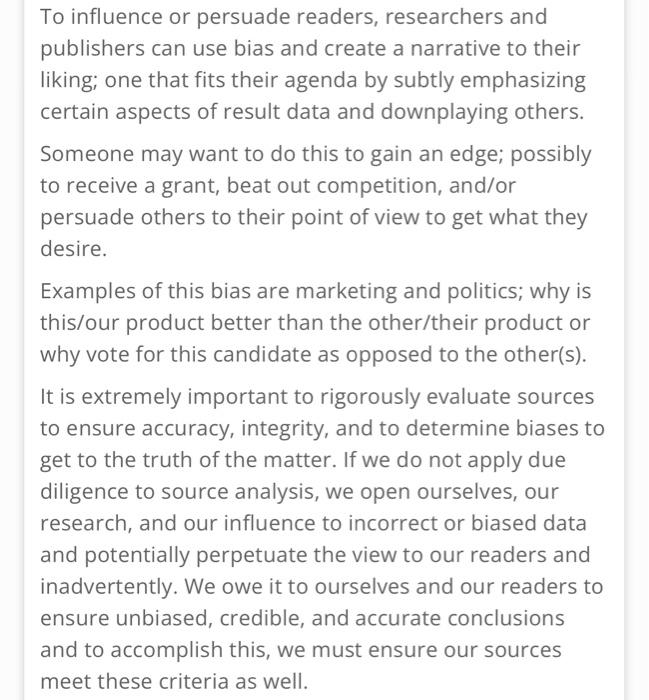
To influence or persuade readers, researchers and publishers can use bias and create a narrative to their liking; one that fits their agenda by subtly emphasizing certain aspects of result data and downplaying others. Someone may want to do this to gain an edge; possibly to receive a grant, beat out competition, and/or persuade others to their point of view to get what they desire. Examples of this bias are marketing and politics; why is this/our product better than the other/their product or why vote for this candidate as opposed to the other(s). It is extremely important to rigorously evaluate sources to ensure accuracy, integrity, and to determine biases to get to the truth of the matter. If we do not apply due diligence to source analysis, we open ourselves, our research, and our influence to incorrect or biased data and potentially perpetuate the view to our readers and inadvertently. We owe it to ourselves and our readers to ensure unbiased, credible, and accurate conclusions and to accomplish this, we must ensure our sources meet these criteria as well
Step by Step Solution
There are 3 Steps involved in it

Get step-by-step solutions from verified subject matter experts
 Study Help