





Question: s described by Krajewski, an effective process strategy is the result of a series of process decisions that, when taken together and balanced, achieve an

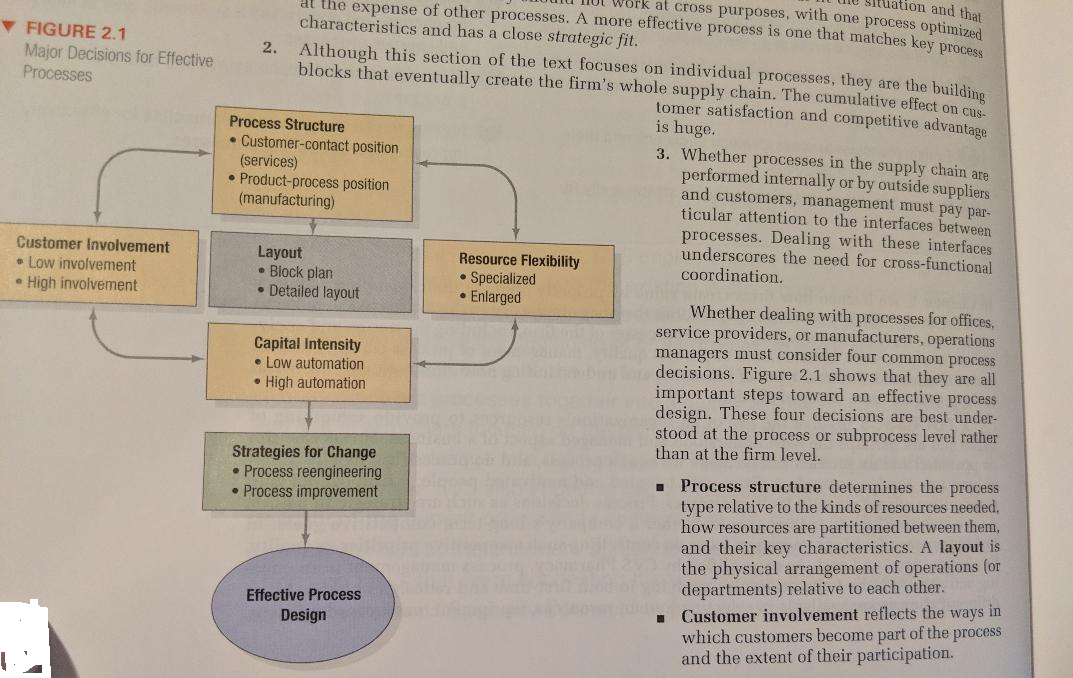
s described by Krajewski, an effective process strategy is the result of a series of process decisions that, when taken together and balanced, achieve an "effective process design." These decisions are illustrated in Figure 2.1 of Krajewski, and further supported by the accompanying text. For purposes of this exercise the process decisions are: 1) process structure; 2) customer involvement; 3) resource flexibility; 4) capital intensity; and 5) strategies for change.

Select any organization of your choice, and any process within that organization. It does not have to be the organization for which you work, but it must be one you understand with some sense of detail. For example, a restaurant you frequent often. Then through the application of the process strategy decisions determine if the organization maintains an "effective process design." You may very well come to the conclusion that the organization does not have an effective process design. Perfectly acceptable.

With regard to the organization of your choice, carefully label and describe each of the process decisions such that you are able to clearly see that you understand 1) the meaning and use of each process decision and 2) how the organization utilizes the process decision for the better or worse. As for the format of your response there is not particular form. Perhaps in a short introductory paragraph describe the organization and the specific area of the organization under review. Then label and discuss each process decision through a series of bullet points under each decision such that I can see you have demonstrated the two requirements in this paragraph.
s described by Krajewski, an effective process

FIGURE 2.1 Major Decisions for Effective Processes Customer Involvement Low involvement High involvement I work at cross purposes, with one process optimized U situation and that at the expense of other processes. A more effective process is one that matches key proc characteristics and has a close strategic fit. 2. Although this section of the text focuses on individual processes, they are the buildin blocks that eventually create the firm's whole supply chain. The cumulative effect on tomer satisfaction and competitive advantage Process Structure is huge. Customer-contact position 3. Whether processes in the supply chain are (services) performed internally or by outside suppliers Product-process position and customers, management must pay par (manufacturing) ticular attention to the interfaces between processes. Dealing with these interfaces underscores the need for cross-functional Layout Resource Flexibility Block plan Specialized coordination. Detailed layout Enlarged Whether dealing with processes for offices, service providers, or manufacturers, operations Capital Intensity managers must consider four common process Low automation decisions. Figure 2.1 shows that they are all High automation important steps toward an effective process design. These four decisions are best under- stood at the process or subprocess level rather than at the firm level. Strategies for Change Process reengineering Process structure determines the process Process improvement type relative to the kinds of resources needed. how resources are partitioned between them, and their key characteristics. A layout is the physical arrangement of operations (or departments) relative to each other. Effective Process Customer involvement reflects the ways in Design which customers become part of the process and the extent of their participation

Step by Step Solution

There are 3 Steps involved in it

1 Expert Approved Answer
Step: 1 Unlock blur-text-image
Question Has Been Solved by an Expert!

Get step-by-step solutions from verified subject matter experts

Step: 2 Unlock
Step: 3 Unlock

Students Have Also Explored These Related General Management Questions!