







Question: TCP data segments arriving at a server from different clients are typically destined for different sockets, yet all such segments contain the same destination IP
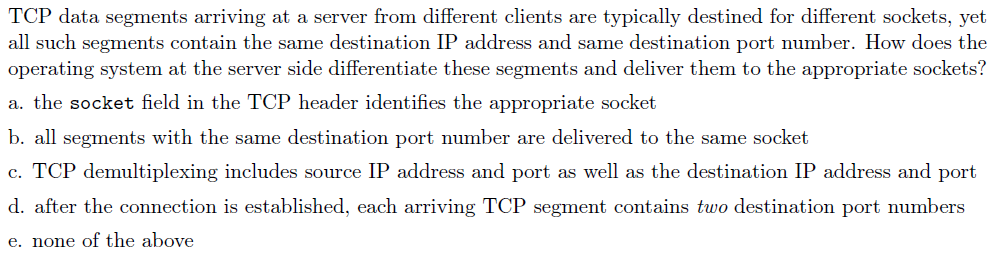
TCP data segments arriving at a server from different clients are typically destined for different sockets, yet all such segments contain the same destination IP address and same destination port number. How does the operating system at the server side differentiate these segments and deliver them to the appropriate sockets? a. the socket field in the TCP header identifies the appropriate socket b. all segments with the same destination port number are delivered to the same socket c. TCP demultiplexing includes source IP address and port as well as the destination IP address and port d. after the connection is established, each arriving TCP segment contains two destination port numbers e. none of the above TCP data segments arriving at a server from different clients are typically destined for different sockets, yet all such segments contain the same destination IP address and same destination port number. How does the operating system at the server side differentiate these segments and deliver them to the appropriate sockets? a. the socket field in the TCP header identifies the appropriate socket b. all segments with the same destination port number are delivered to the same socket c. TCP demultiplexing includes source IP address and port as well as the destination IP address and port d. after the connection is established, each arriving TCP segment contains two destination port numbers e. none of the above
Step by Step Solution
There are 3 Steps involved in it

Get step-by-step solutions from verified subject matter experts
 Study Help